
Selling your old kitchen items or skipping them at a thrift store without knowing whether they’re valuable could cost you a lot today. Why? Because some of those vintage kitchenware pieces are actually hot collectibles today.
So before you clean out that estate or drop a box at the thrift store, take a slow look.
Today, let’s find out which are the most popular antique and vintage kitchen items that collectors are chasing today, and what they sell for in the secondary market.
1. Vintage Pyrex Mixing Bowls & Casseroles
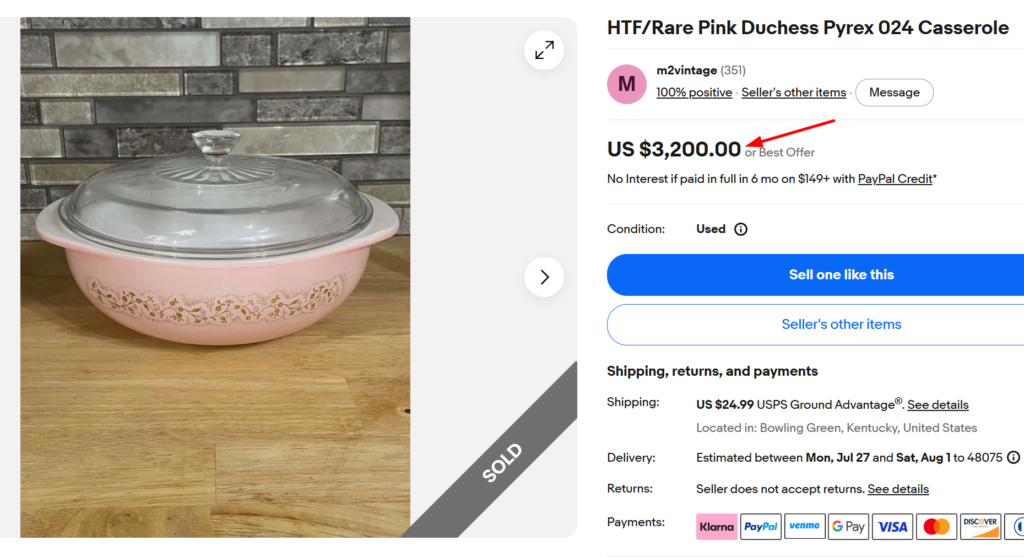
Sold for $3,200
Pyrex is the biggest name in vintage kitchen collecting. The 1959 “Lucky in Love” casserole with pink hearts and green clovers is the holy grail, since it barely reached stores. Pink Butterprint, Pink Duchess, Fleur De Lis, and Greek Oak Leaf Casserole Dishes are another set of chase pieces.
The 1945 Primary Colors mixing bowl set (401 to 404 in blue, red, green, yellow) started the whole collector craze. Regular Butterprint, Gooseberry, and Snowflake sell for less but stay collectible.
- Estimated Value: $20 to $4,000+ (Lucky in Love)
- Production Years: 1945 to the late 1980s
- What to Check: T.M. Reg backstamp, unfaded pattern
2. Griswold Cast Iron Skillets and Cookware
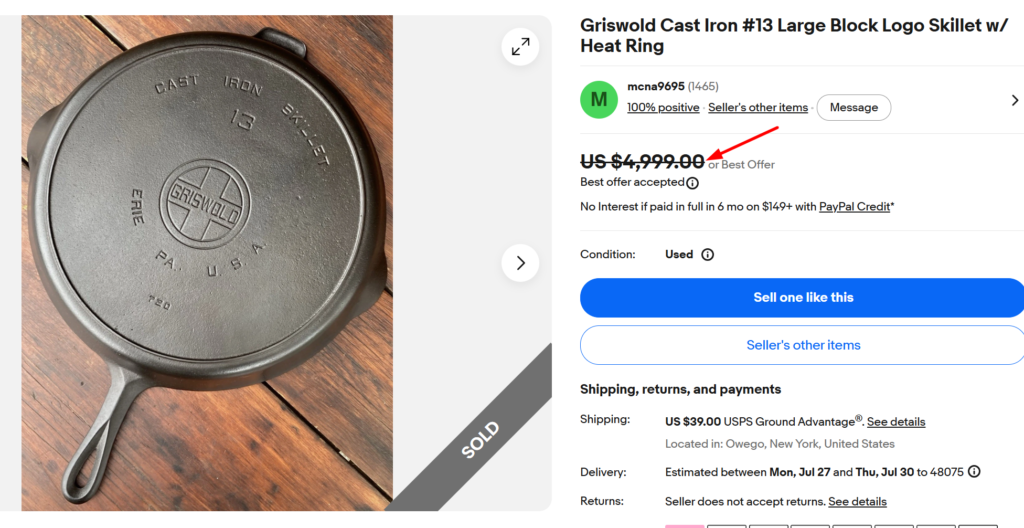
Sold for $5,000
Griswold cast-iron cookware is among the most valuable vintage kitchen utensils. Rare sizes like the No. 2 and No. 13 bring the strongest prices in the secondary market.
The logo on the underside is the key to dating. The earliest “ERIE” mark from 1880 to 1907 has no Griswold cross at all, and those pieces bring four figures. The Large Block Logo era from 1920 to 1940 is a classic, common piece.
A machined-smooth cooking surface is your quickest authenticity check.
- Estimated Value: $50 to $2,800+
- Production Years: 1865 to 1957
- What to Check: Logo style, machined smooth surface
3. Fire-King Jadeite Dinnerware
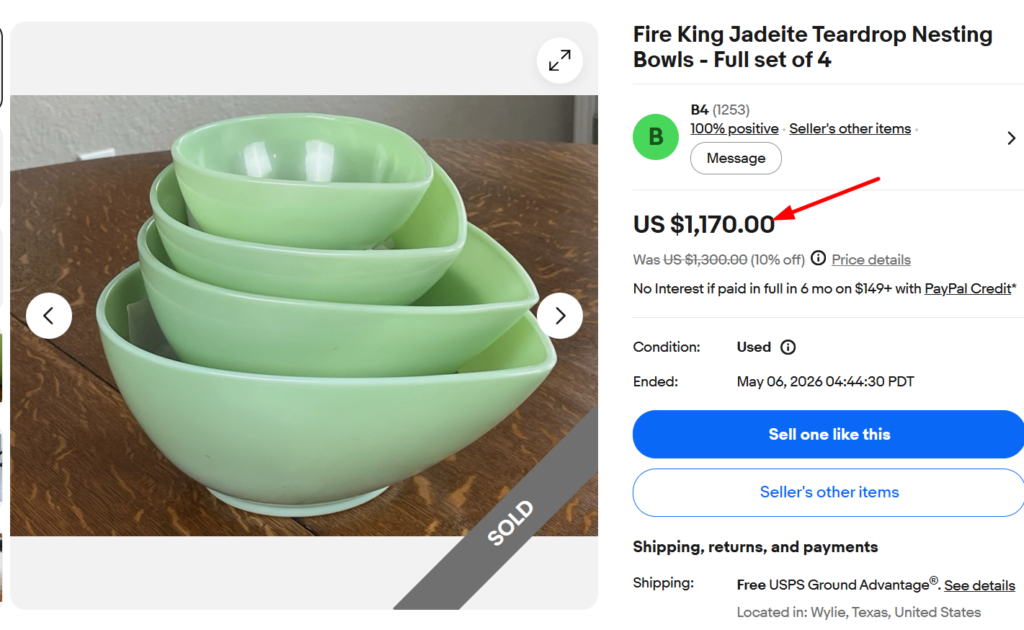
Sold for $1,170
Anchor Hocking’s Jadeite line ran from 1942 to 1975 in that soft, pale green everyone recognizes. It came in several patterns. Jane Ray, with its rayed rim border, is the easiest pattern to collect. Alice from 1945 to 1949 has a floral edge and a short production window, so it’s scarcer.
The Ball Jug pitcher, teardrop nesting bowls, and flanged 9-inch soup bowl are the grail pieces here. Restaurant Ware from 1948 through the 1960s is also quite collectible.
- Estimated Value: $15 to $475+
- Production Years: 1942 to 1975
- What to Check: Fire-King script or anchor over H mark
4. McCoy Pottery Cookie Jars
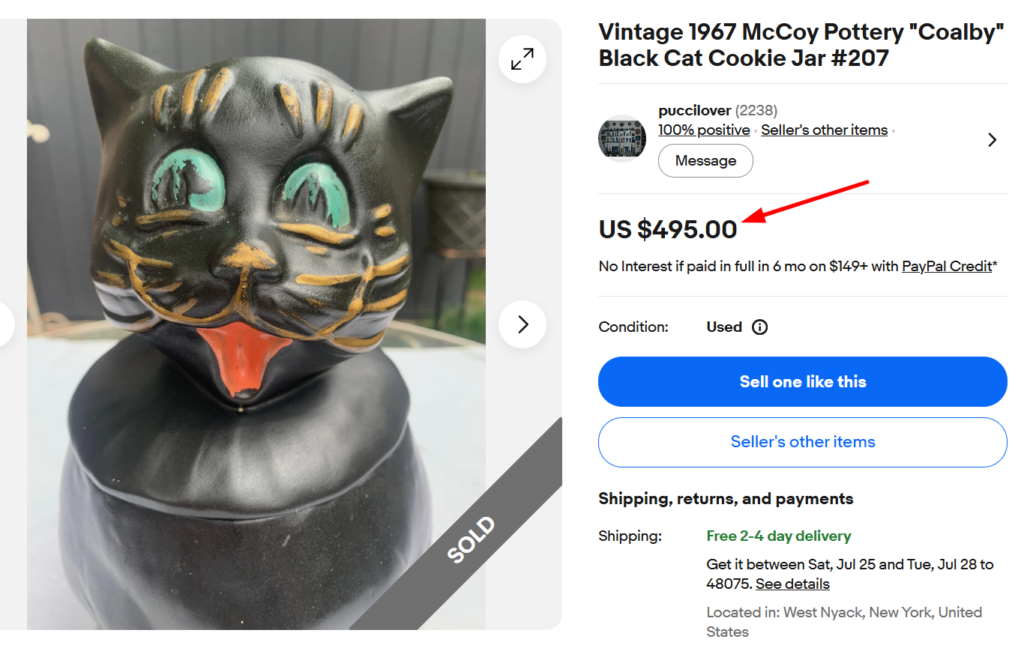
Sold for $495
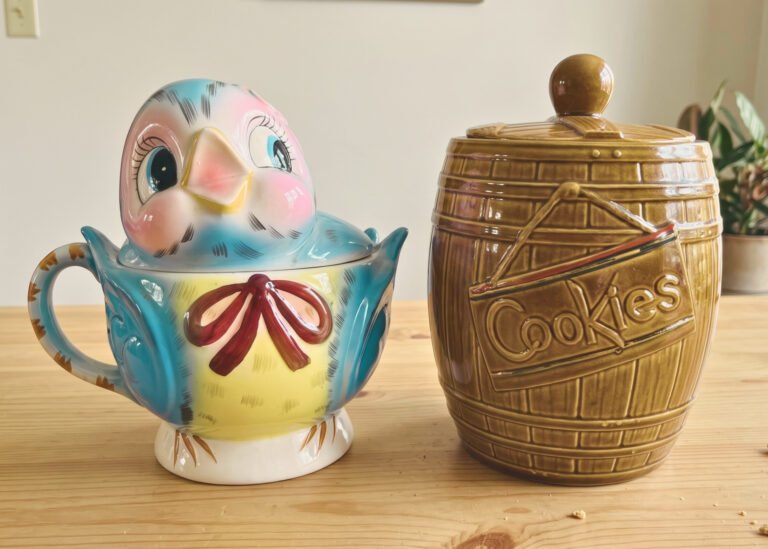
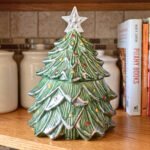
McCoy made cookie jars from the 1930s through the 1970s, and a handful of designs bring serious money. Some of the most desirable ones are the Black Mammy jar in white, yellow, or aqua, Freddy the Gleep, Coalby Cat, and Jack O’ Lantern.
Common jars like the Strawberry (mold 263 from 1971) or Honey Bear sell under $100. So check the base mark and the cold paint condition before paying anything.
- Estimated Value: $30 to $2,500+ (Freddy the Gleep)
- Production Years: 1940s to 1970s
- What to Check: McCoy USA base mark, original cold paint
5. Shawnee Pottery Corn King and Figural Jars
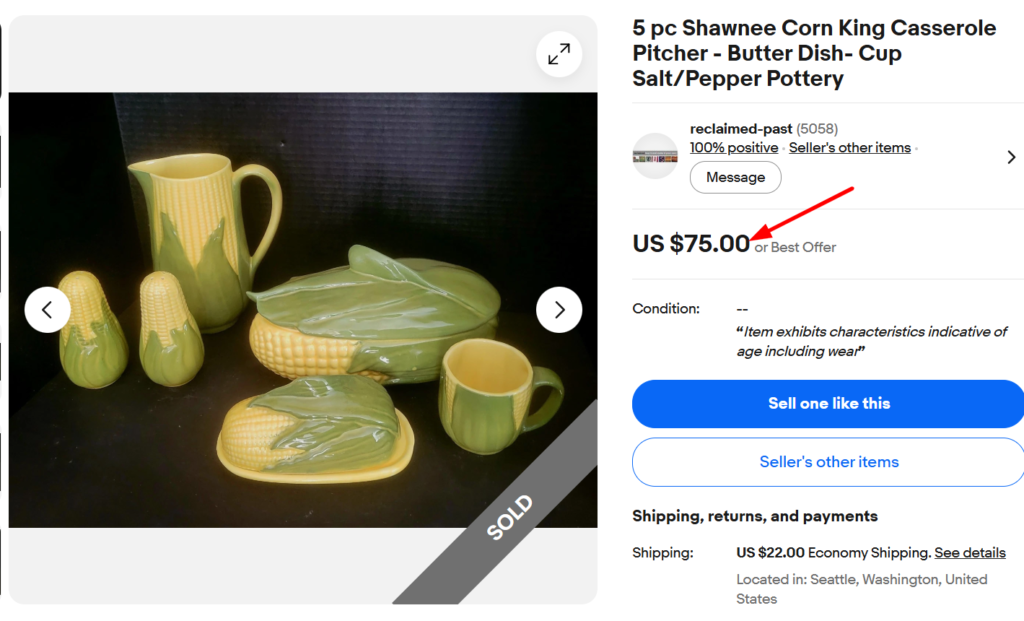
Sold for $75 (set of 5 pieces)
Shawnee made pottery from 1937 to 1961, and the Corn King line (1946 to 1954) is their most collectible. Pieces are molded to look like ears of corn with yellow kernels and light green husks. The latter Corn Queen (1954 to 1961) has lighter kernels and darker shucks, and it’s worth less.
Shawnee’s figural cookie jars, like Smiley Pig, Winnie Pig, Puss ‘n Boots, and Muggsy Dog, with intact gold trim, are other highly collectible pieces.
ID Tip: Look for “Patented / Shawnee USA” on the base.
- Estimated Value: $75 to $800+ (gold-trimmed pieces)
- Production Years: 1937 to 1961
- What to Check: Shawnee USA mark, gold trim intact
- Quick Facts: Terrace Ceramics used old Shawnee molds, so check the mark.
6. Fiestaware by Homer Laughlin
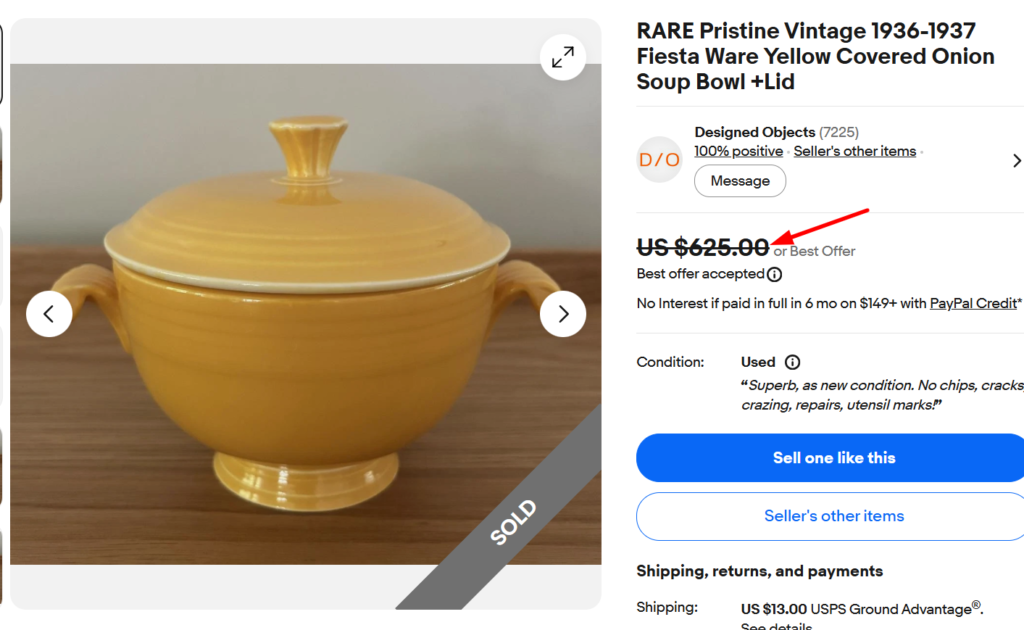
Sold for $625
Fiesta started in 1936, and the original run went until 1972 before the modern revival in 1986. And the vintage pieces are quite popular among collectors.
Color and era drive the whole market here. Medium Green and original Yellow are the rarest of the originals and sell for two to five times the common colors. The original Red pieces, 1936 to 1943, with uranium oxide glaze, are highly sought after.
- Estimated Value: $30 to $300+ per piece
- Production Years: 1936 to 1972 (vintage)
- What to Check: Incised HLC mark, true color match
7. CorningWare Casseroles
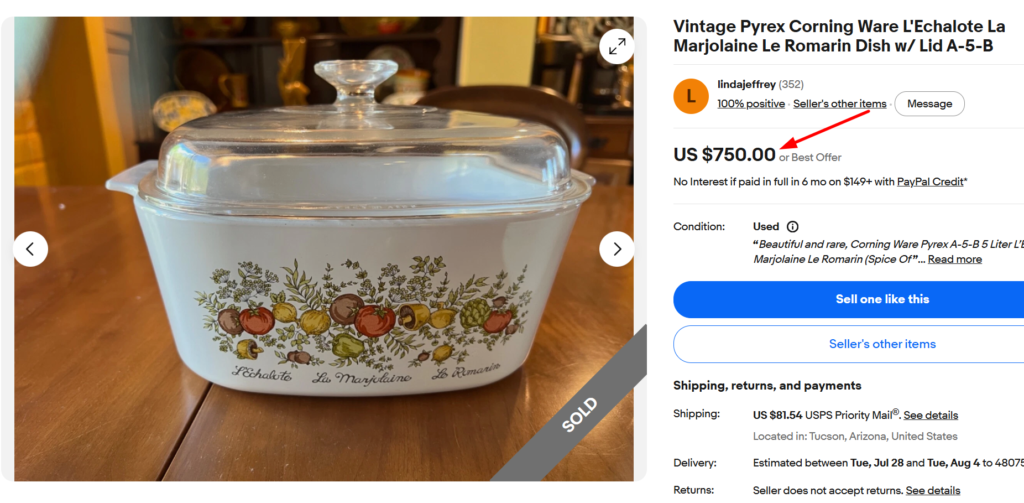
Sold for $750
CorningWare debuted in 1958 with Blue Cornflower, a simple three-flower pattern on white ceramic. The earliest casseroles from 1958 to about 1972 had gently sloped sides before Corning switched to straighter walls.
Those sloped-side pieces with the original glass lid are the ones that collectors chase today.
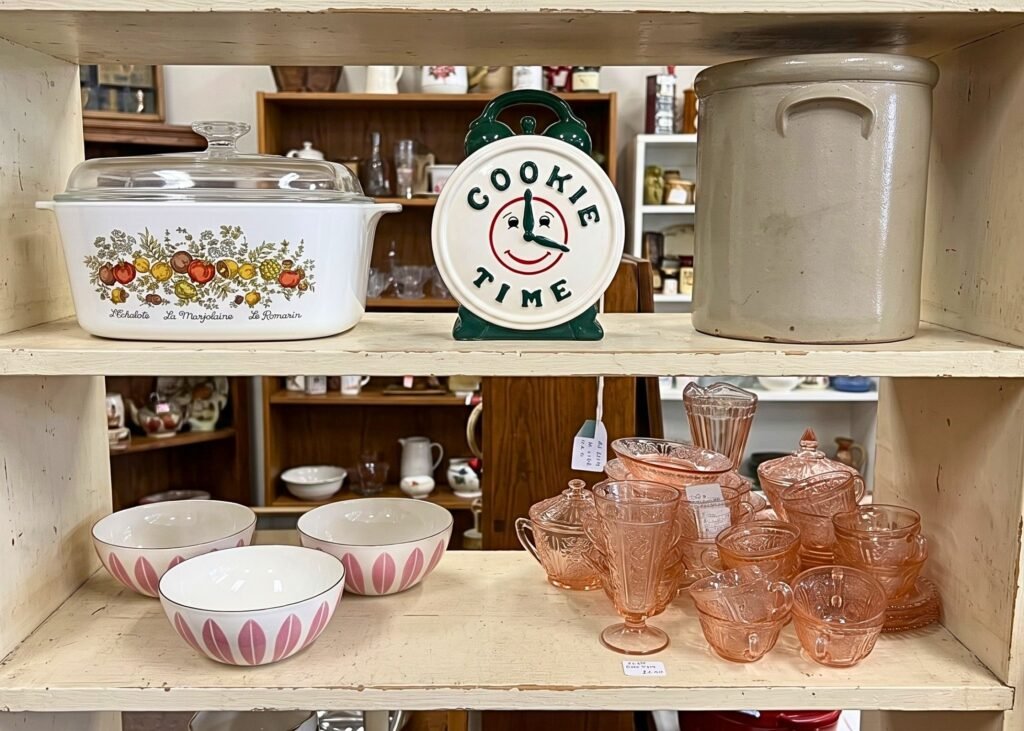
The L’Echalote Spice of Life pattern with vegetables ran from 1972 to 1987. The 4-quart casserole is the rarest form, and pieces with the French pattern name printed under the design pull the strongest prices.
- Estimated Value: $15 to $750+
- Production Years: 1958 to the late 1980s
- What to Check: Sloped sides, French pattern name under design
- Quick Tip: Ignore the viral $10,000 price hype
8. Depression Glass Kitchenware
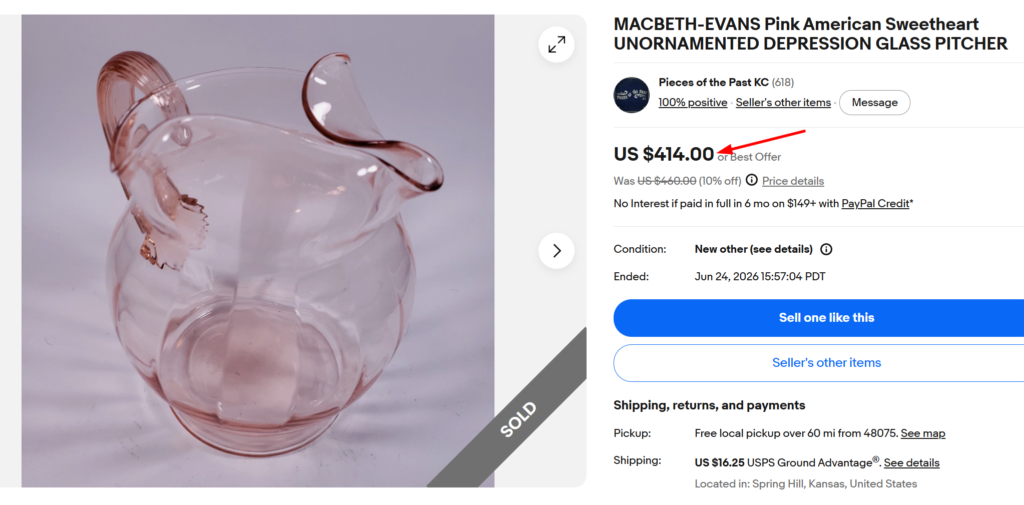
Sold for $414
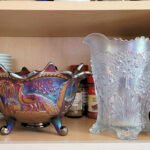
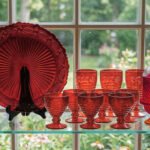
Depression glass kitchenware is the pieces made from the late 1920s through the early 1940s. It includes everything from covered mixing bowls and refrigerator dishes to measuring cups and butter dishes.
Hazel-Atlas, Jeannette, Anchor Hocking, McKee, and Federal Glass were the big makers, and Criss-Cross, Cabbage Rose, Cherry Blossom, Princess, and Miss America are some of the most popular patterns today.
Most pieces are moderately valued, but are quite collectible. Pink and cobalt blue are the most desirable colors here. Complete refrigerator boxes with matching lids are the hardest to find.
- Estimated Value: $30 to $400+ per piece
- Production Years: Late 1920s to early 1940s
- What to Check: Pattern name, color depth, matching lid
9. Cathrineholm Lotus Enamelware
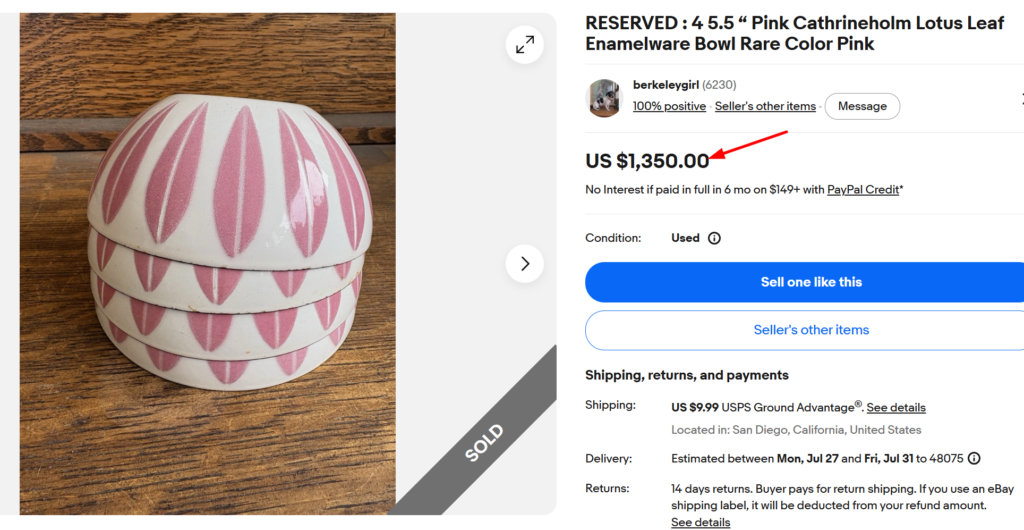
Sold for $1,350 (set of 4)
The Lotus pattern was designed by Arne Clausen at the Cathrineholm factory, and became the brand’s best seller during the early to mid-1960s. It’s white steel enamelware with big petal-shaped lotus leaves in turquoise, mustard yellow, avocado green, orange, and cobalt blue.
Pink is the hardest to find variant.
ID Test: Authentic lotus petals are widest near the top and narrow at the base like a real leaf. Fakes look wider in the middle, more like a coffee bean.
- Estimated Value: $50 to $300+ per piece
- Production Years: Early to the mid 1960s
- What to Check: Petal shape wider at top, polished top rim
10. Holt-Howard Pixieware Condiment Jars
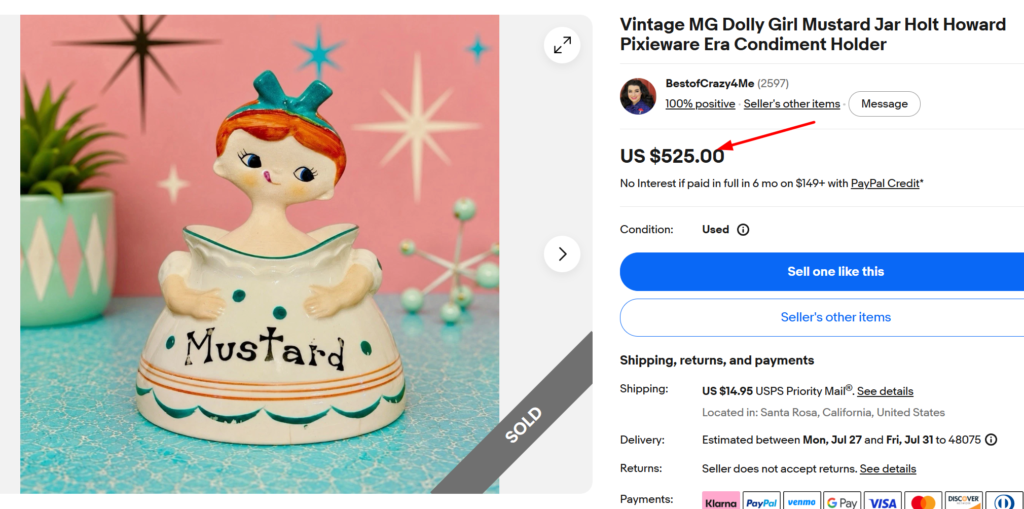
Sold for $525
Holt-Howard’s Pixieware line from 1958 to 1962 is some of the most collectible mid-century ceramics. The condiment jars feature winking pixie heads as lids on jars for ketchup, mustard, cocktail cherries, olives, jam, and instant coffee.
Common condiments like ketchup and mustard run $35 to $200. Rare pieces like the Devil Brew liquor decanter have sold for $4,051 in the last few years. Any Pixieware “cookie jar” is a fake, since Holt-Howard never made one.
- Estimated Value: $35 to $1,000+
- Production Years: 1958 to 1962
- What to Check: Ink stamp base mark, winking pixie lid
- Quick Notes: Pixieware cookie jars do not exist.
11. Red Wing Stoneware Crocks and Butter Churns
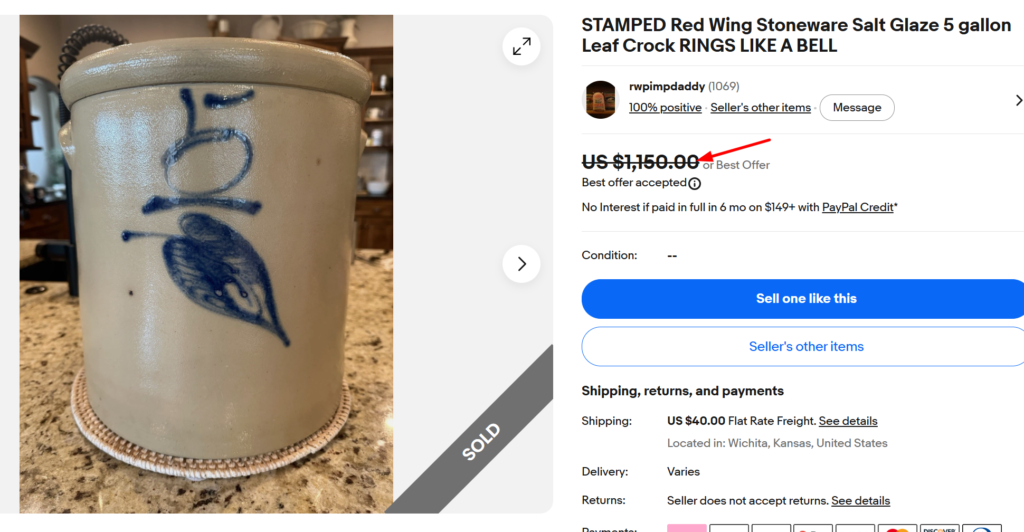
Sold for $1,150
Red Wing Union Stoneware in Minnesota made salt-glazed crocks, jugs, and butter churns from the 1870s through the 1940s. Large crocks and butter churns with the original wooden dasher and lid pull the strongest prices.
Small pantry jars and the rare 20-gallon “butterfly” crock can bring over $1,000 in good condition.
The classic marks include the red wing logo, the oval “Red Wing Union Stoneware Co.” stamp, and the North Star mark on the earliest pieces. Size is stamped as a gallon number on the front.
- Estimated Value: $100 to $1,500+
- Production Years: 1870s to 1940s
- What to Check: Wing logo, oval stamp, gallon number
12. Antique French Copper Cookware
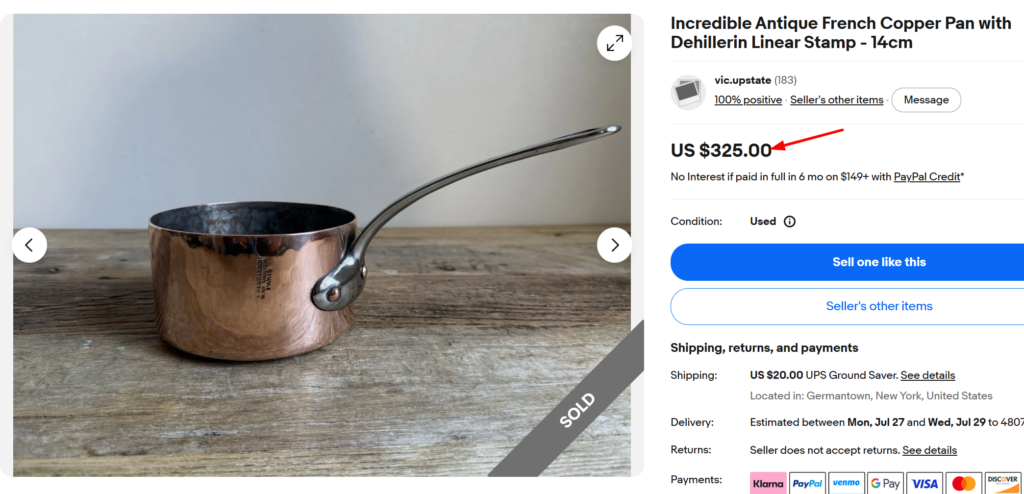
Sold for $325
Hand-forged French copper pots from the mid-1800s through the 1930s are something serious kitchen collectors chase. You can identify genuine pieces by the dovetail seam (cramp seam), a brassy yellow zig-zag line running around the base and up one side.
Look for maker stamps like Mauviel, Gaillard, or Villedieu on the base. Heavy-gauge, iron riveted handles and original tin lining all push the value up.
- Estimated Value: $150 to $2,000+
- Production Years: Mid-1800s to 1930s (antique)
- What to Check: Dovetail seam, iron handle, maker stamp
13. Kitchen Tins and Canisters
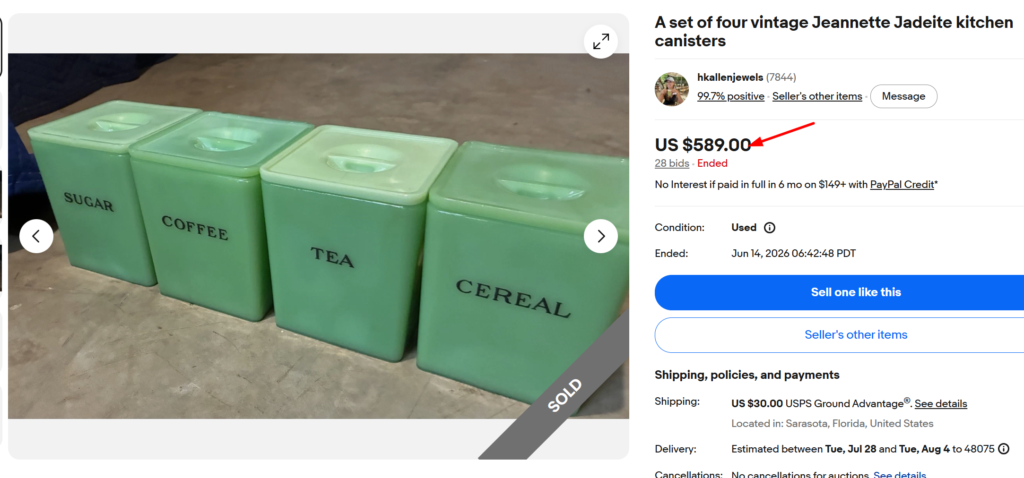
Sold for $590 (set of 4)
Kitchen tins and canister sets from the 1920s through the 1960s cover a huge collector range. Lithographed tin sets by brands like Kreamer, Parmeco, and Empeco came in flour, sugar, coffee, and tea sizes with matching graphics.
As for canisters, Jadeite ones are the most collectible ones. Anodized aluminum sets in pink, turquoise, and yellow from the 1950s also pull strong money, and so do 1970s Sears Merry Mushroom sets.
- Estimated Value: $40 to $450+ (complete sets)
- Production Years: 1920s to 1970s
- What to Check: Matching graphics, intact lids, no rust
14. Salt and Pepper Shakers
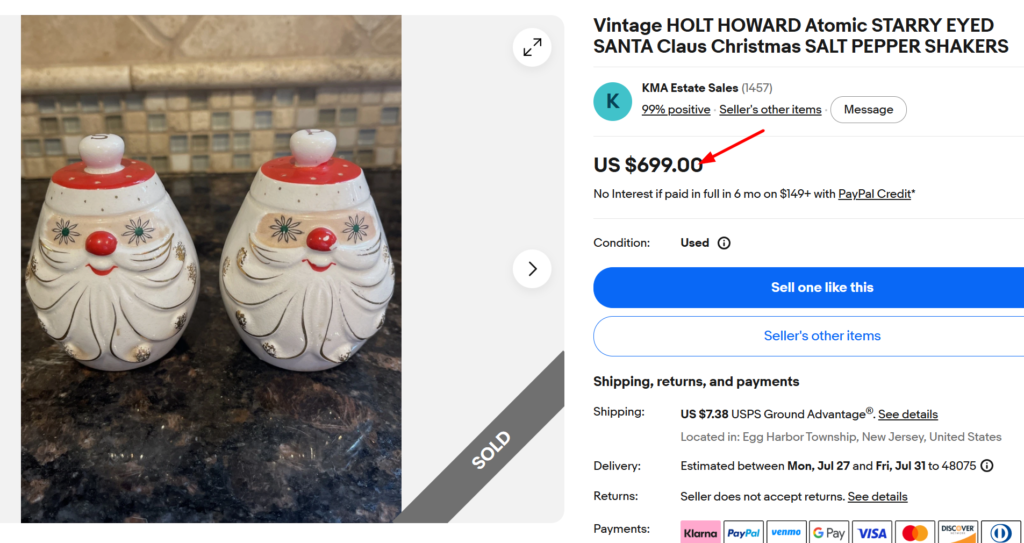
Sold for 700 (pair)
Novelty salt and pepper shakers from the 1940s through the 1960s are one of the most active collector categories. Holt-Howard’s winking pixies and Santa pairs, Cozy Kittens, and Rock ‘n Roll pieces bring the strongest prices.
Regal China’s Old MacDonald farm series, Shawnee’s Smiley Pig and Winnie shakers, and Japanese lusterware pieces from the same era are all hot collectibles.
- Estimated Value: $25 to $500+ per pair
- Production Years: 1940s to 1960s
- What to Check: Original stoppers, maker’s mark on base
15. KitchenAid Stand Mixers
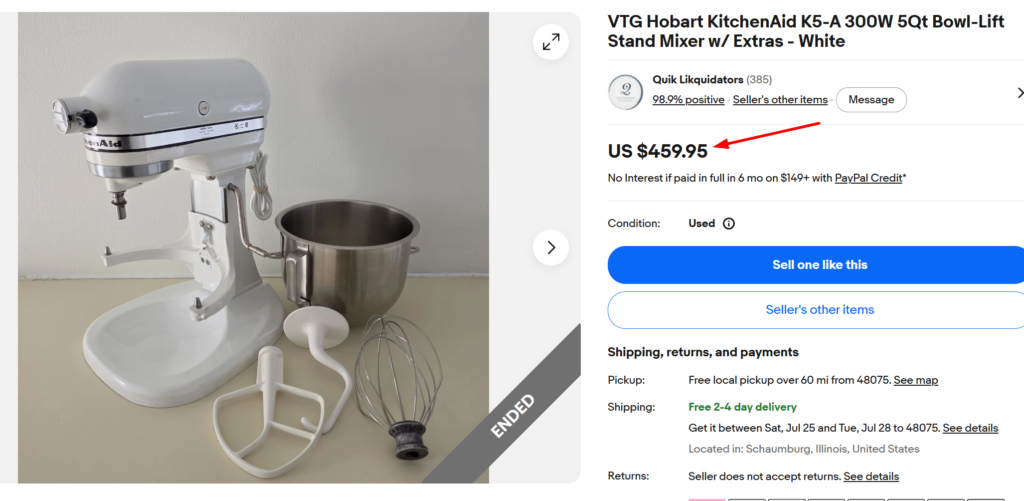
Sold for $460
Hobart introduced the Model K in 1937 for home kitchens, priced at $55, which was expensive back then. Anything made before 1986 is the Hobart era, before Whirlpool bought the KitchenAid line. Those mixers are built like tanks with all-metal gearing.
A K-5A from the 1940s in working, unrestored condition is a genuine collector’s piece. Flip it over and look for the Hobart name stamped on the base along with the model number. Original attachments and rare colors matter for top value.
- Estimated Value: $200 to $5,000 (rare early models)
- Production Years: 1937 to 1986 (Hobart era)
- What to Check: Hobart stamp on base, K model designation
How to Spot a Valuable Vintage Kitchen Item?
Now you know which items to look for. But how do you actually know which one is a genuine and valuable piece, and catch it at an estate sale before somebody else does? Here’s all that you need to keep in mind.
- Check the mark – The mark on the base is the first clue to check. Look for maker’s marks, mold numbers, “MADE IN USA” stamps, and date codes. Cross-reference the marks using online resources or the brand’s marking guides for authenticity.
- Know your grail patterns and colors – Certain patterns and designs are simply more collectible and sought-after than others. Like Pink Butterprint and Lucky in Love for Pyrex, Medium Green for Fiesta, sloped-side Blue Cornflower for CorningWare. So, do quick research to learn about the pattern, its current market value (via eBay sales), and rare variants.
- Assess the Condition – Condition kills the value fast. So check for dishwasher fading on Pyrex, chips on Fiestaware, missing lids on cookie jars, worn cold paint on Mammy jars, cracked spouts on Fire-King pitchers. Any one of these can cut the value by half or more.
- Check the eBay “sold” items – This is the most useful trick. Active listings show what sellers are hoping to get. Sold listings show what buyers actually paid for that piece, and that lets you know the actual market value.
Most old kitchen items end up being underpriced or simply donated. So if you inherit a box of old kitchen stuff, or spot something at a yard sale for a few bucks, always check the marks, pattern, and the sold data. It might really be a $500 find.