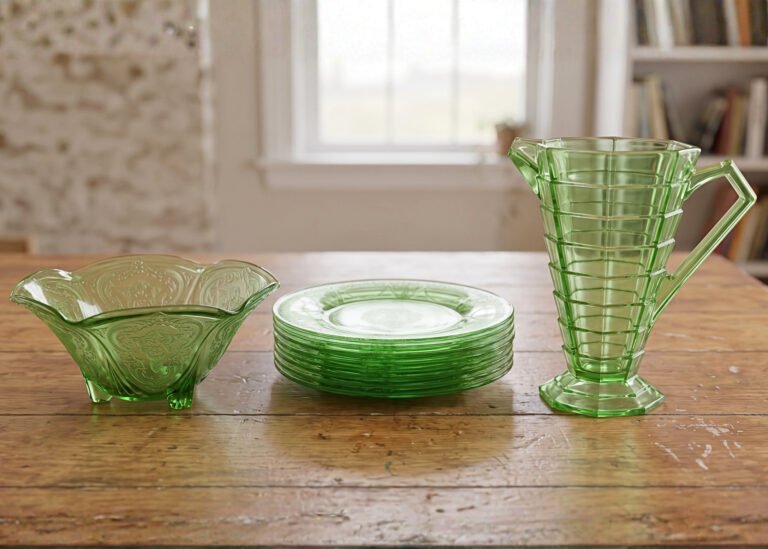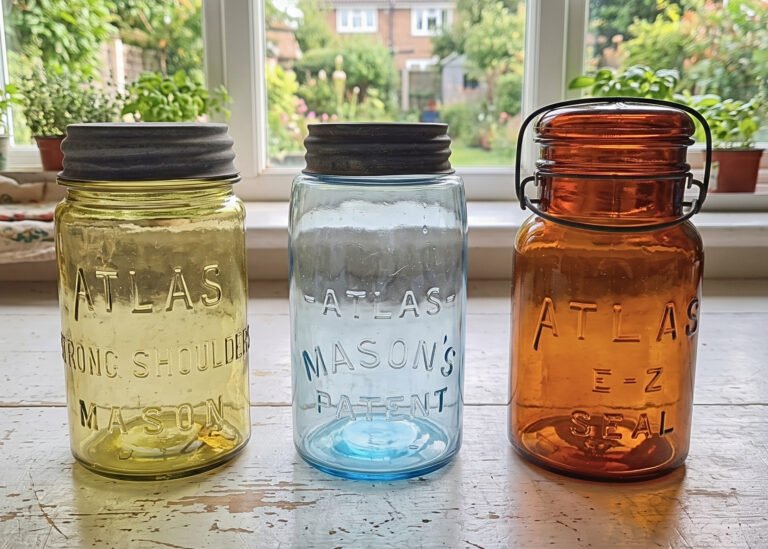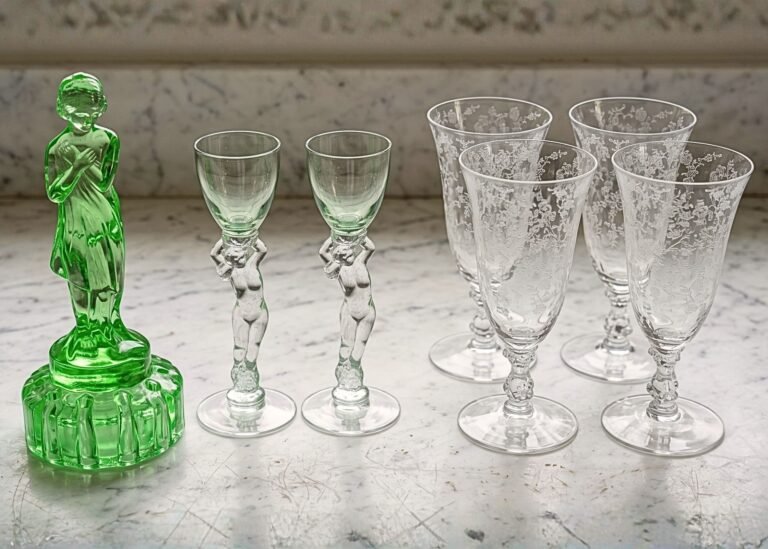

Old glass plates and serving dishes made between the late 1800s and the 1970s, which are now roughly 20 to 100 years old, are common in many kitchens and garage or estate sales today.
And because these are common, most people overlook them, thinking they’re worth less. While most vintage glass dishes are, some rare colors, patterns, and forms can actually be worth a few hundred dollars. Let’s see how to spot valuable glass dishes, what makes them valuable, and the pieces that make rounds today.
How to Identify Vintage Glass Dishes? 5 Easy Tips
Identification of an old glass dish starts with placing the piece into one of the main families of vintage glass. Each family has its own look, era, and set of makers. Once you know the family, getting the maker and pattern name gets easier.
Know the Four Main Categories
The majority of older glasses can be classified under one of four types of glass. All were made in a different way, for a different audience, and have their own unique qualities and price limit.
- Depression glass was very thin, produced using a press, and came in many colors. It was mass-produced during the late 1920s and the 1930s, and was usually given away as a promotion with cereal boxes, oatmeal bags, and movies.
- Elegant glass was hand-finished tableware sold through department stores during that same stretch. Fostoria, Heisey, and Cambridge led the pack.
- The carnival glass has an iridescent rainbow effect and has been produced mainly from 1908 to the 1930s.
- Milk glass is a white and sometimes colored opaque glass that was extensively manufactured in the Victorian age up to the 1970s.
Check the Pattern
When you have determined the glass type, the pattern will give you the quickest route to establish the manufacturer and date range. Look for repeated designs or motifs that have been impressed on the glass.
Then cross-check the design against a good pattern guide or the Replacements Ltd. database. You can also use eBay to search for the item using relevant terms.
Check the Base and Maker’s Marks
Flip the piece over and look for any etched, impressed, or embossed mark. For example, an “N” inside a circle (Northwood), an “H” over an anchor (Anchor Hocking), or a script Fenton logo used from 1970 forward.
Also check for mold seams, tiny air bubbles, and small “straw marks.” Those are all normal signs of pressed glass from the era.
Look at the Color
The glass color also helps narrow down both the era and the value. For example, pink and green rule the 1930s. Cobalt blue, ruby red, and amber were popular but made in smaller amounts. Yellow (called topaz) and jadeite show up less often, and the rare colors carry big premiums.
Try the UV Light Test
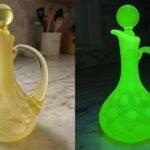
If you have a yellowish-green glass, shine a 365nm blacklight on it in a dark room. If it lights up a bright neon green, you’re looking at uranium glass, which contains a tiny amount of uranium oxide in the mix. Green depression pieces often glow, too.
Glowing uranium glass pieces are more valuable than standard green glassware.
Spot the Reproductions
Repros from the 1970s and later are the biggest trap for new collectors. The design is among the fastest clues to spot the difference between the two.
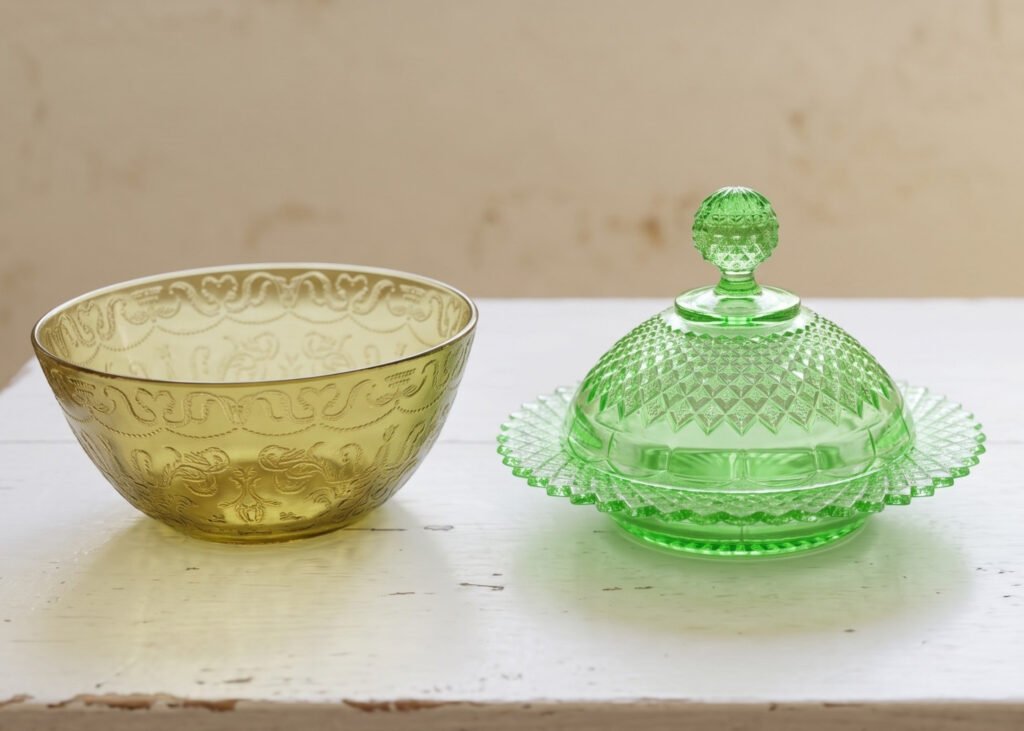
An original Miss America butter lid, for example, has glass under the knob that curves inward when you feel it from underneath. On the newer version, it bulges outward instead.
Repro colors also tend to look either too bright or a little washed out, and the glass feels thicker and less crisp overall.
Most Collectible Vintage Glass Dishes to Search for!
Here are some of the popular patterns and pieces that actively show up in online sales as well as thrift stores again and again.
1. Cherry Blossom Pitcher & Tumblers (Jeannette)
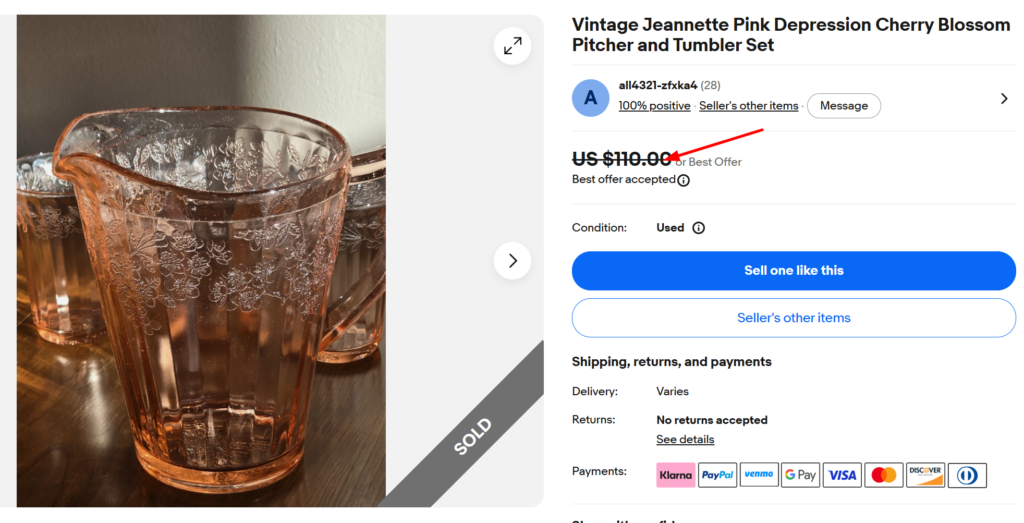
Jeannette Glass made Cherry Blossom for nearly a full decade, which is a longer run than most depression patterns. The design shows little cherry branches with leaves and twigs, framed by soft arcs and tiny dots.
Those sprays sit slightly off-center, and that’s part of what gives the pattern its lively feel.
Pink is what most people collect, but you’ll also spot green, Delphite (opaque blue), jadeite, and yellow.
- Estimated Value: $50 to $300+
- Production Years: 1930 to 1939
- What to Check: Cherry sprays, twigs, arced dots
- Quick Notes: Heavily reproduced; newer copies feel thicker with weaker color.
2. Royal Lace Cobalt Blue Cookie Jar (Hazel-Atlas)
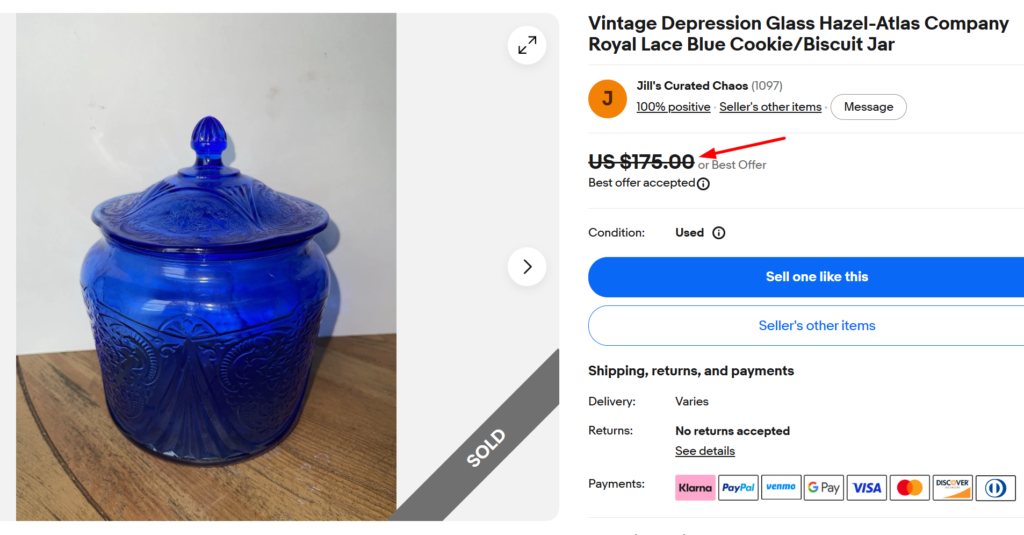
Sold for $175
Hazel-Atlas made Royal Lace in cobalt (often called Ritz blue), crystal, green, pink, and a tiny bit of amethyst. The design features delicate scrolls and lacy ribs around the body.
Cobalt is the top color, and the cookie jar is one of the most chased forms, and fine examples can easily fetch up to $500.
But the cookie jar and tumblers have both been reproduced in cobalt, and the fakes lean toward a darker, more muddy blue than the original.
- Estimated Value: $150 to $500+
- Production Years: 1934 to 1941
- What to Check: Lacy scrollwork, ribbon border
- Quick Notes: Cobalt cookie jars reproduced; watch the color
3. Miss America Pink Butter Dish (Hocking)
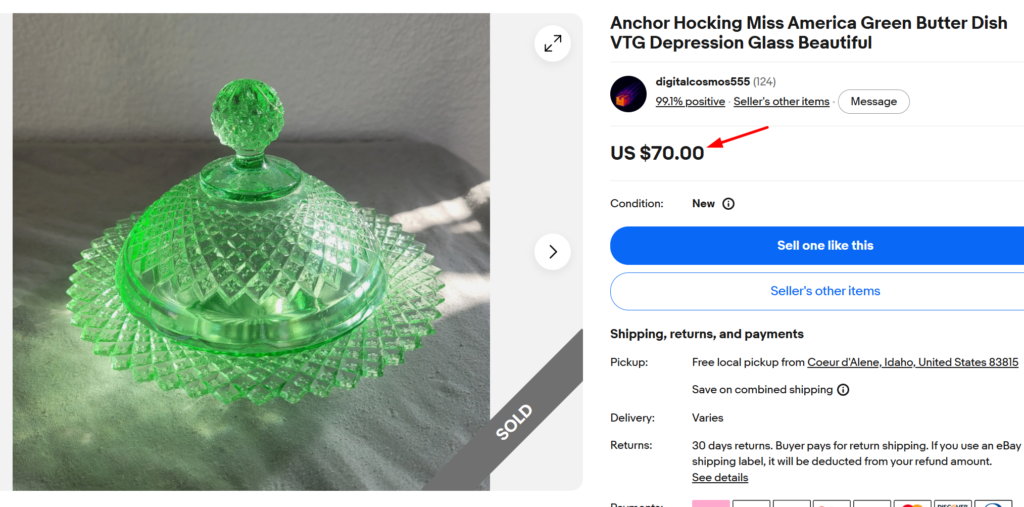
Sold for 70
Hocking’s Miss America is easy to spot thanks to its sharp, faceted hobnails that almost look cut like crystal. The company made it in pink, green, clear, ruby, and blue for just a few years, making it collectible.
Pink is by far the most collected color, and the butter dish is one of the priciest everyday forms in the set.
But you have to check the knob to identify originals. Slide your finger up inside the lid. If the glass curves inward, it’s original; if it bulges outward, it’s a 1970s repro.
- Estimated Value: $250 to $600
- Production Years: 1935 to 1938
- What to Check: Sharp hobnails, rayed base
- ID Check: Concave inside knob = original
4. Cameo (Ballerina) Yellow Pitcher (Hocking)
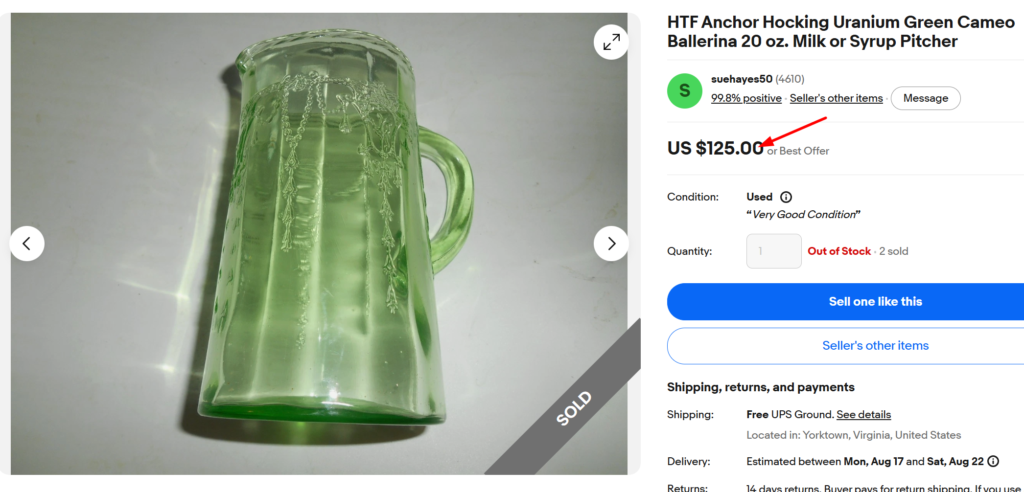
Sold for $125
Hocking made Cameo from 1930 to 1934. It earned the nickname “Ballerina” because of the little dancing girl pressed into the center of nearly every piece, surrounded by scrolls and swags.
Green was the volume color, though yellow, pink, and crystal all exist and are rarer. Yellow Cameo pitchers turn up less often than green ones, but green usually pulls the higher prices at auction.
Note that a lot of imported repros exist. So, check for muddy, soft-detail child-sized pieces.
- Estimated Value: $80 to $300
- Production Years: 1930 to 1934
- What to Check: Central dancing girl figure
5. Northwood Grape & Cable Marigold Lamp
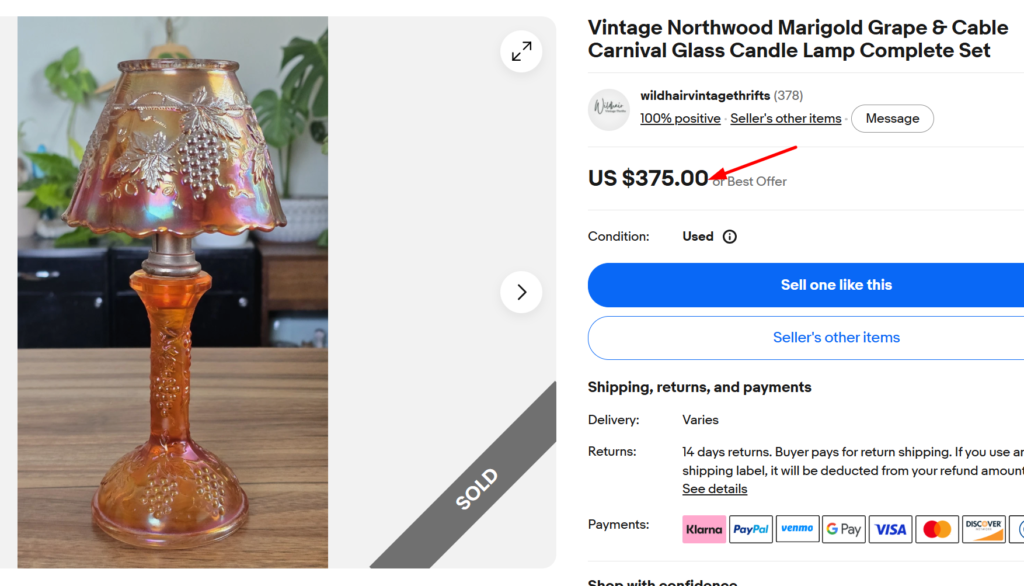
Sold for $375
Grape and Cable came out in 1910 and quickly became Northwood’s most famous pattern. The company ended up pressing it into more than 60 different shapes, but the candle lamp is one of the scarcer and more valuable forms.
Marigold is the everyday color for most Grape and Cable pieces, but on the candle lamp form it still commands strong money because the shape itself is so hard to find.
ID Note: Always flip the base and look for the N-in-a-circle mark to confirm real Northwood.
- Estimated Value: $300 to $600
- Production Years: 1910 to early 1920s
- What to Check: Grape clusters, cable rope border
6. American Sweetheart Ruby Red Plate (MacBeth-Evans)
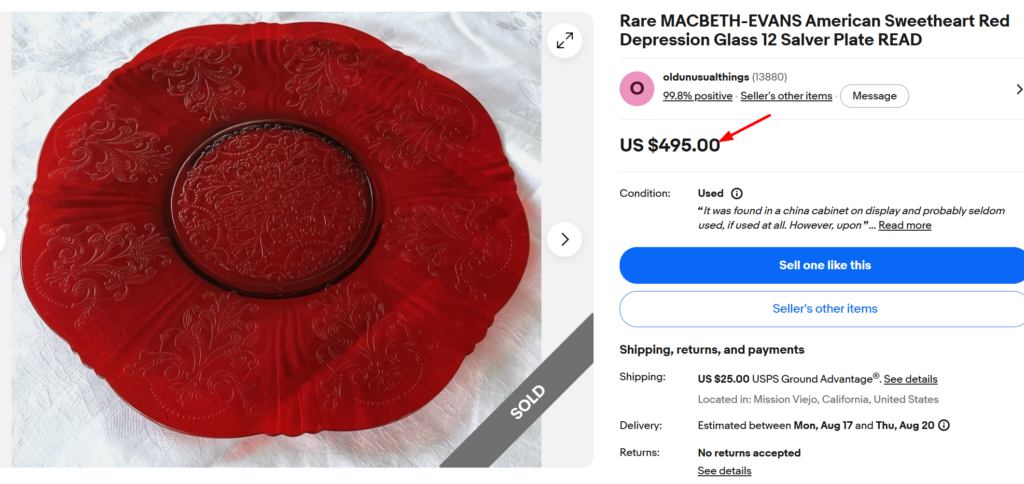
Sold for $495
MacBeth-Evans’ American Sweetheart was made for only six years, mostly in translucent white Monax and soft pink. But they also ran limited amounts in ruby red, cobalt blue, crystal, and a beige version called Cremax.
Ruby and cobalt are the most valuable versions. The glass is unusually thin and delicate for a depression-era piece, so chips are common; clean, undamaged ruby plates are worth the most.
- Estimated Value: $75 to $200
- Production Years: 1930 to 1936
- What to Check: Thin glass, scrolled edge, floral center
7. Madrid Amber Console Bowl (Federal)
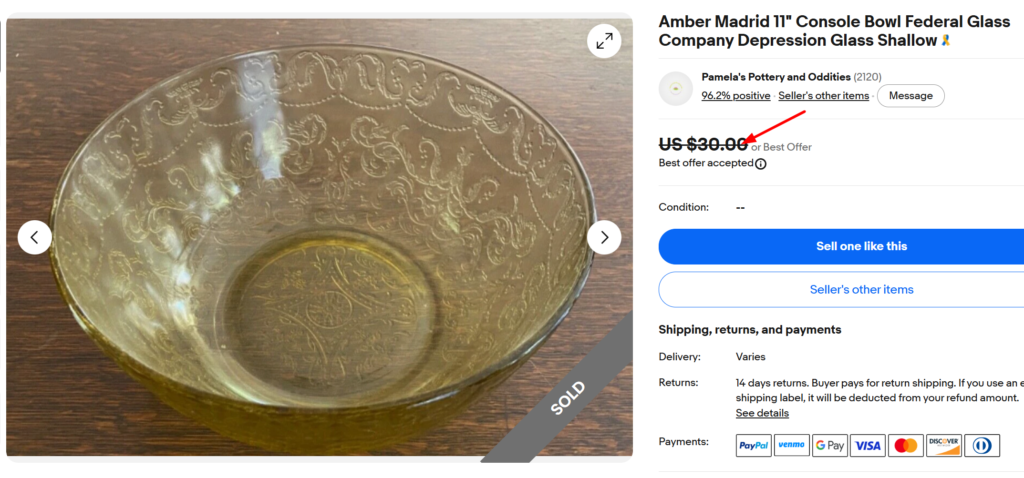
Sold for $30
Madrid was Federal Glass’s best-selling amber line, made from 1932 to 1939. The pattern combines a geometric lattice with small stylized floral centers and a fine rope-like border around the rim.
What makes it interesting is that Federal reissued Madrid for the 1976 Bicentennial and pressed a tiny “76” right into the design. Later, Indiana Glass bought the molds and stripped that mark off.
So always check the base carefully before you pay real Depression-era prices.
- Estimated Value: $30 to $100
- Production Years: 1932 to 1939
- What to Check: Geometric lattice, floral centers
- Quick Notes: “76” mark is a 1976 reissue.
8. Manhattan Pink Relish Tray (Anchor Hocking)
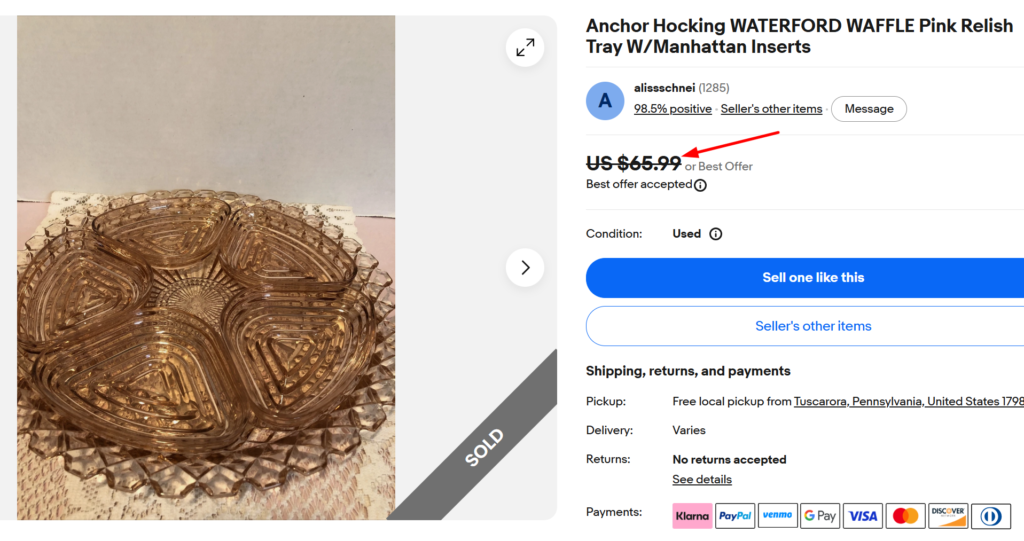
Sold for $65
Manhattan is one of the boldest Art Deco designs in depression glass. Anchor Hocking made it from 1938 to 1943, and every piece is wrapped in bold horizontal ribs that give it a strong, geometric look.
Most Manhattan came in crystal, but pink pieces are what collectors actually want. The 5-part relish with its inserts (sometimes paired with Royal Ruby glass) is a real standout.
- Estimated Value: $40 to $150
- Production Years: 1938 to 1943
- What to Check: Concentric horizontal ribs
9. Fenton Milk Glass Hobnail Candy Dish
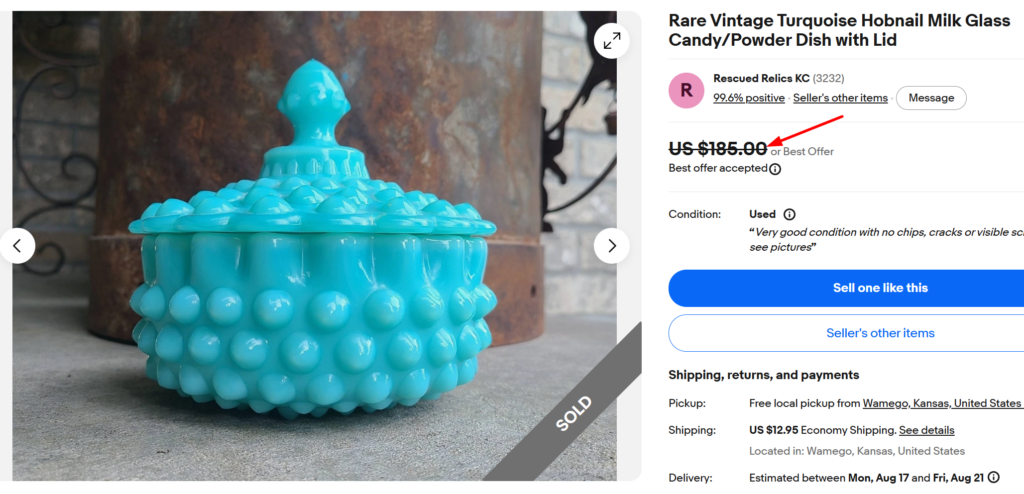
Sold for $185
Fenton first launched its hobnail line in 1939, but the white milk glass version really took off in the 1950s and became the company’s most popular design for decades. Every hob is a perfect little dome, arranged in a tight, even grid.
Most milk glass hobnail pieces stay affordable. But turquoise, cranberry opalescent, plum opalescent, or topaz opalescent examples bring much more.
ID Tip: Anything made before 1970 will be unmarked, so you have to ID it by the pattern’s perfect grid.
- Estimated Value: $20 to $100
- Production Years: 1950 onward
- What to Check: Uniform hexagonal hob grid
10. Sharon (Cabbage Rose) Pink Jam Dish (Federal)
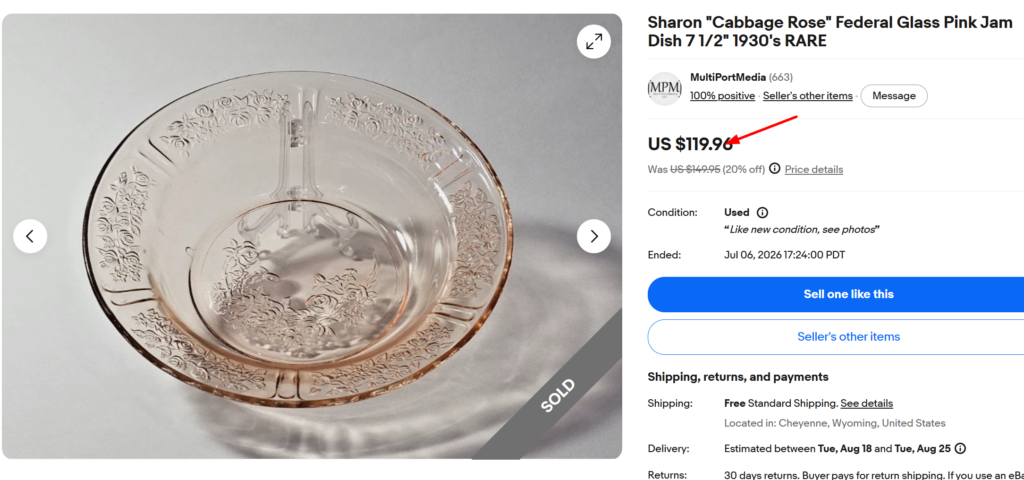
Sold for $120
Sharon (nicknamed Cabbage Rose by collectors) came out of Federal Glass between 1935 and 1939. The design has full-blown stemmed roses covering the piece, and it holds up as one of the most beloved pink patterns of the depression era.
It was made in pink, amber, and a little green. The butter dish is a well-known form, but the pink jam dish (pressed from the same mold, just minus the inner lid indent) is the real rarity and can pull over $100-$300 in good shape.
- Estimated Value: $60 to $300+
- Production Years: 1935 to 1939
- What to Check: All-over cabbage rose motif
11. Fostoria American Clear Serving Piece
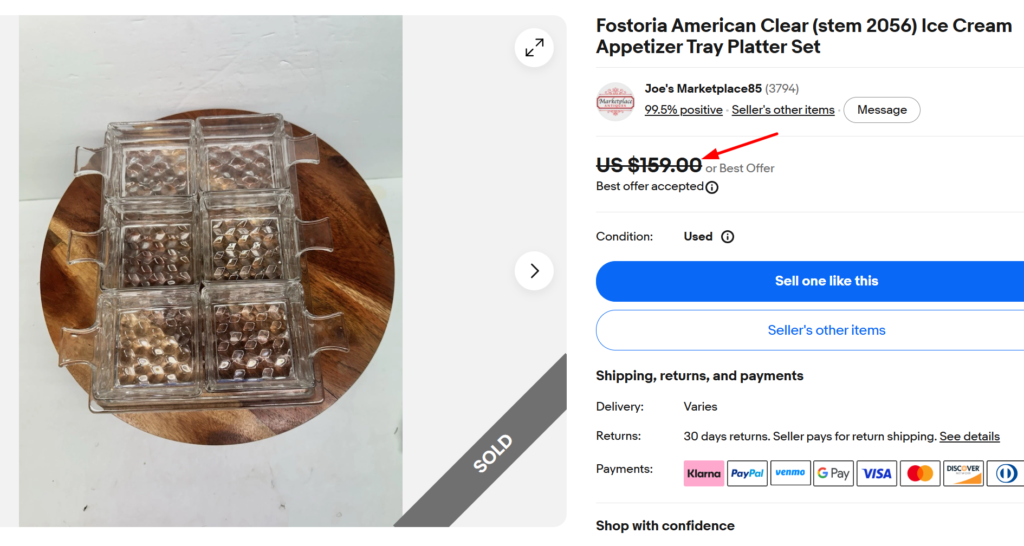
Sold for $160
Fostoria launched the American pattern in 1915, and it stayed in production for over 70 years, making it the longest-running pressed glass line in American history. You can easily spot the design by the unique raised cube pattern.
Common pieces are cheap because of the long run, but rare forms like the Tom-and-Jerry punch bowl or large centerpieces like tray platter sets bring real money.
- Estimated Value: $10 to $200+
- Production Years: 1915 to 1986
- What to Check: Cube pattern, heavy, glossy
5 Things That Decide the Value of Vintage Glass Dishes
Vintage glass values can range from $5 to $500. This range comes from a mix of factors, not just one. Two dishes in the same pattern can sell for wildly different prices based on these 5 key details.
- Pattern rarity – Short-run patterns from notable glass makers like Miss America or Royal Lace outprice common everyday patterns.
- Maker – Verified Northwood, Fenton, or Heisey pieces command more than unmarked equivalents.
- Color – Rare shades like cobalt blue, ruby red, and jadeite are usually more collectible and valuable than common pink or amber in the same pattern.
- Piece type – The more unique the shape or form, the higher the value. So, butter dishes, cookie jars, and pitchers beat plates and cups every time.
- Condition – A single chip can knock 50 to 80 percent off the value on a glass dish. Cloudy “sick glass” from dishwasher damage is permanent and kills value fast.
For accurate valuation, always cross-check with recent eBay sold listings instead of asking prices for that piece. That’s what the collectors are actually paying for it.
In conclusion, the three things that turn a $10 glass dish into a $300 find are pattern, color, and condition. Learn the marks, keep a small UV flashlight on your keychain, and check recent sold prices before you buy or sell.