

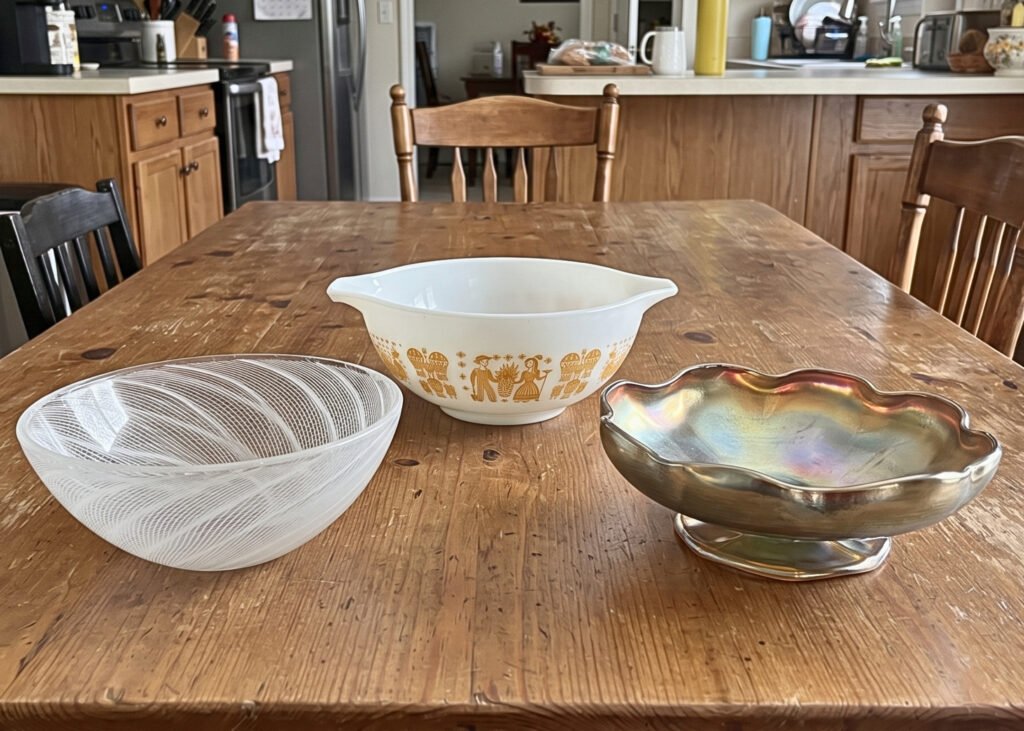
An old cut-glass punch bowl selling for more than $33,000 at auction may sound overstated, but it’s true: a rare T.G. Hawkes punch bowl in the Panel & Pillar pattern sold for $33,600 at Woody Auction in September 2023, as Antique Trader reported.
This is an extreme case, but many old glass bowls sitting in cabinets and on thrift store shelves are worth far more than their owners and buyers think. Valuable old glass bowls worth money usually have three features: a reputed maker, a rare color, and limited production.
The 13 glass bowls below tick at least one of the three boxes and are worth knowing. 12 of them sold for between $200 (a Cambridge uranium bowl) and around $800 (a Tiffany Favrile bowl). The best makers and rare colors can go well beyond that.
What Makes an Old Glass Bowl Valuable?
Before exploring the list, it helps to know what really makes an old glass bowl valuable. In contrast to what most people think, age alone rarely drives the price. Here are all the things that decide an old glass bowl’s value:
- Maker and signature – Big names like Tiffany or Steuben command premium prices. Use a loupe and good light to spot etched, engraved, and molded marks.
- Rare color – Shades made in small batches, like aqua opalescent, are most collectible and valuable.
- Production period – Early, short runs are worth more than later reissues.
- Handwork – Hand-blown or hand-cut pieces outprice mass-pressed bowls. Hand-cut glass has crisp, sharp edges, while pressed glass feels softer, often with faint mold seams.
- Condition – The better the condition, the higher the value; chips, cracks, and cloudy “sick glass” drop the value.
13 Antique and Vintage Glass Bowls Worth Money
Here are some of the most valuable glass bowls, from art glass to kitchen and Depression-era finds, with the key features to spot them and their market value.
1. Tiffany Favrile Glass Bowls
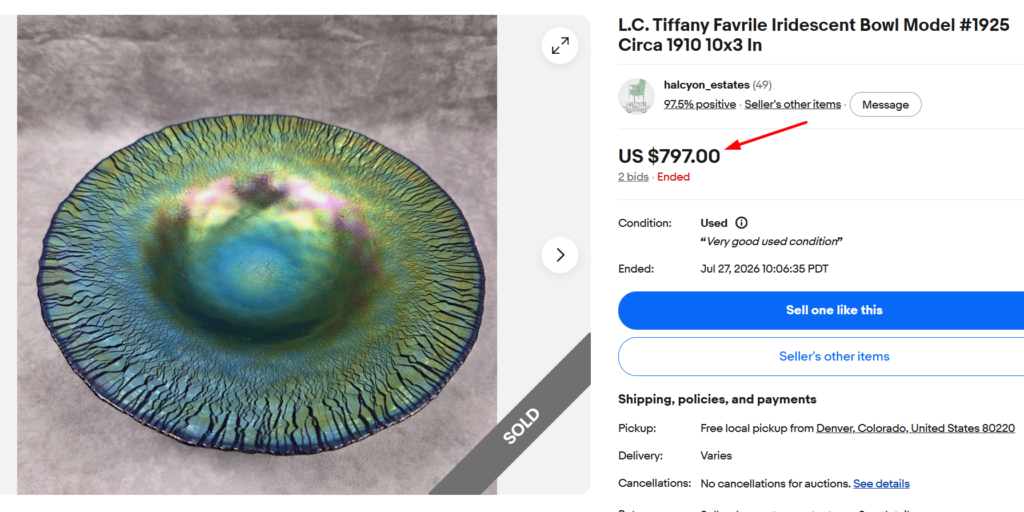
Louis Comfort Tiffany trademarked the name Favrile one year after he started iridescent art glass production in 1893. These bowls were hand-blown, with a metallic finish, usually gold or blue.
Plain gold bowls sell steadily, but decorated ones with leaves or pulled feathers are more desirable.
Genuine pieces usually have an engraved “L.C. Tiffany Favrile” or “L.C.T.” signature, with a number.
- Estimated Value: $500 to $5,000+
- Production Years: 1893 to early 1930s
- What to Check: Metallic finish, engraved mark on the base
- Quick Notes: Fake signatures exist; check details
2. Lalique Opalescent Bowls
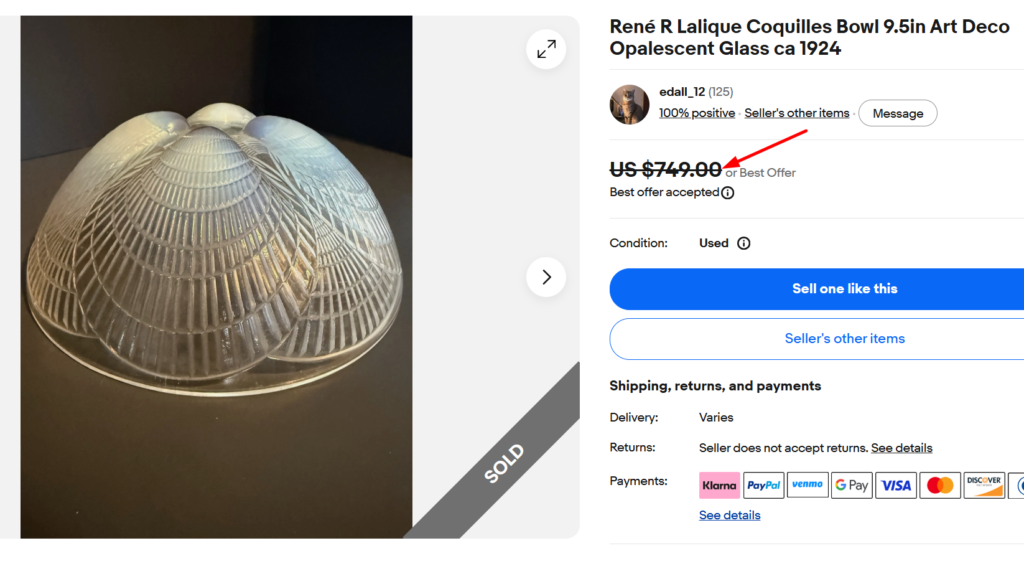
Glassware collectors constantly hunt René Lalique’s pre-1945 molded glass bowls. The 1931 Perruches bowl with its parakeets is one of the most sought-after Lalique bowls, especially the opalescent version.
The bowl shown above is a different design, Coquilles (shells), which its seller dated to about 1924.
The signature tells you which era your bowl belongs to. “R. Lalique” means his lifetime, while “Lalique France” points to later factory production.
- Estimated Value: $400 to $5,000+
- Production Years: 1920s to 1945 (Perruches designed 1931)
- What to Check: R. Lalique signature, crisp molding
- Quick Notes: Post-1945 “Lalique France” pieces are worth less
3. Steuben Aurene Glass Bowls
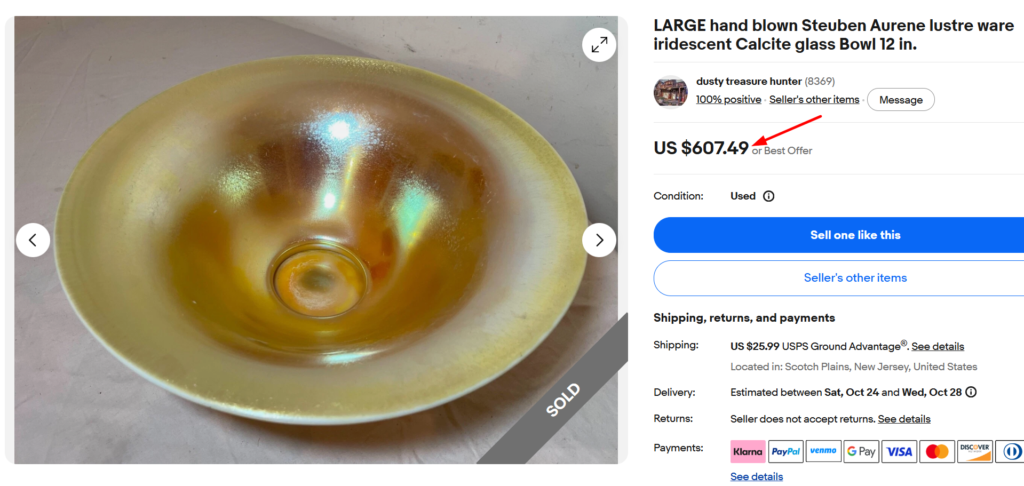
Frederick Carder of Steuben Glass Works introduced Aurene around 1904. It’s an iridescent finish that gave the glass a gold or blue metallic surface. Of the two, blue bowls are rarer than gold and usually sell for significantly more.
The 12-inch bowl shown above is gold Aurene on calcite: a cream-white calcite glass body with an iridescent gold Aurene surface. Most Aurene bowls have an “Aurene” or “Steuben” sign, along with a shape number, on the base.
- Estimated Value: $300 to $2,500+
- Production Years: 1904 to early 1930s
- What to Check: Metallic finish, signature, and shape number
4. American Brilliant Period Cut Glass Bowls
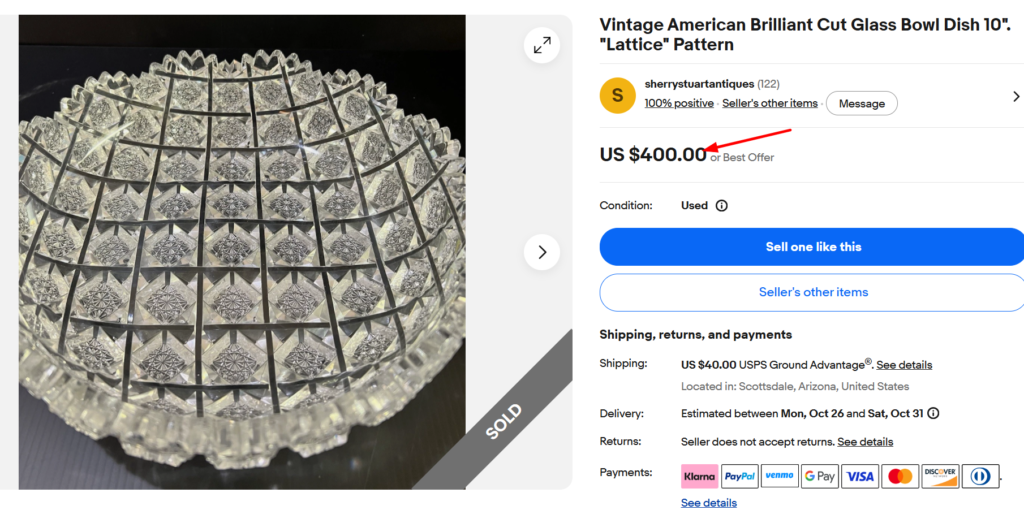
Between 1876 and 1917 (the American Brilliant Period), American companies like Libbey, Hawkes, and Dorflinger released hand-cut, heavy lead-glass bowls with deep, sharp patterns. These are especially popular among collectors today.
Signed pieces fetch more for their confirmed attribution, so always check the bowl’s base in good light to spot any acid-etched or engraved mark. However, many old bowls were not signed, so the rarity of the pattern drives their value.
To tell if a cut glass bowl is valuable, run a finger over the cuts (they should feel sharp, not rounded), feel the weight (heavy for its size), and gently tap the rim: lead glass gives a clear, bell-like ring, while most later pressed glass sounds duller (early flint pressed glass can ring too).
- Estimated Value: $150 to $2,000+ (punch bowls far higher)
- Production Years: 1876 to 1917
- What to Check: Deep sharp cuts, heavy weight
5. Carnival Glass Bowls (Northwood and Millersburg)
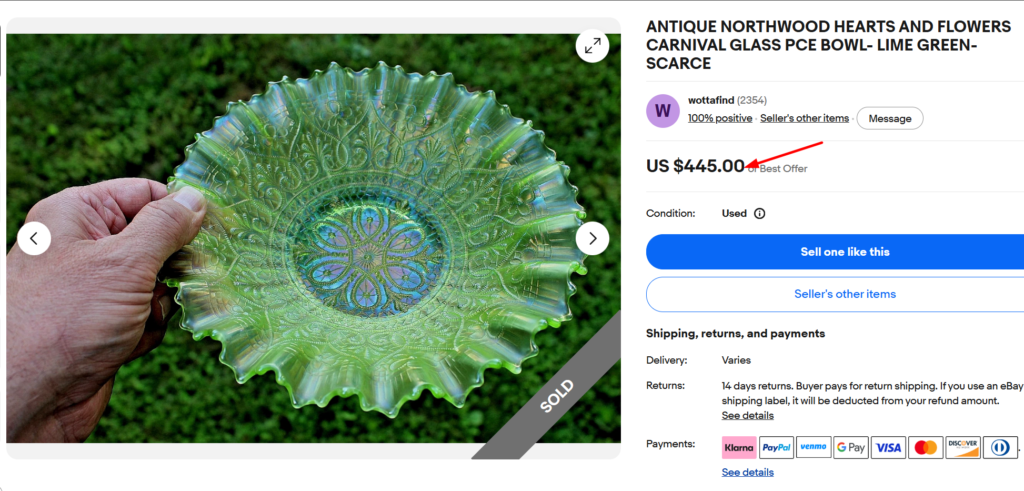
Carnival glass (pressed glass sprayed with a metallic iridescent coating) became popular around 1907. Some of the best bowls of that era came from Northwood and Millersburg.
Look for patterns like Grape and Cable or Peacocks, and check for Northwood’s underlined N mark.
For carnival glass bowls, color is crucial. Northwood’s lime green, ice blue, ice green, and aqua opalescent are the most valuable ones.
- Estimated Value: $50 to $5,000+
- Production Years: 1908 to mid-1920s (Millersburg 1909 to 1911)
- What to Check: Pattern, color, underlined N mark
- Quick Notes: Millersburg pieces are usually unmarked
6. Fenton Opalescent Carnival Glass Bowls
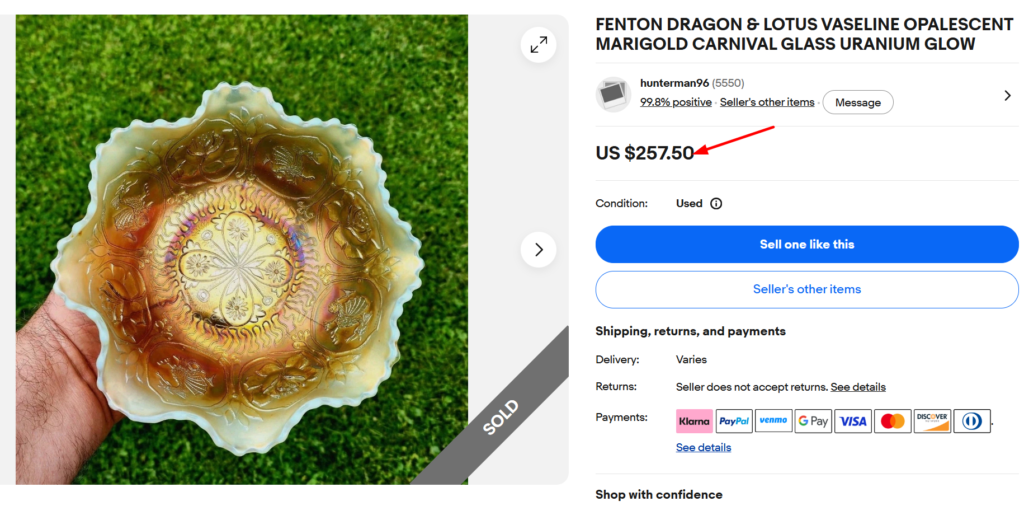
Fenton was one of the first in America to make carnival glass. Its Orange Tree and Dragon and Lotus bowls are common, but rare colors and styles are quite collectible.
Dragon and Lotus bowls with opalescent edges, like peach or aqua opal, are among the rarest pieces. Pieces made from 1970 onward show a Fenton logo; unmarked examples are usually older.
- Estimated Value: $40 to $1,500+
- Production Years: 1907 to 1920s (carnival era)
- What to Check: Opalescent edge, color, pattern
7. Mid-Century Murano Glass Bowls
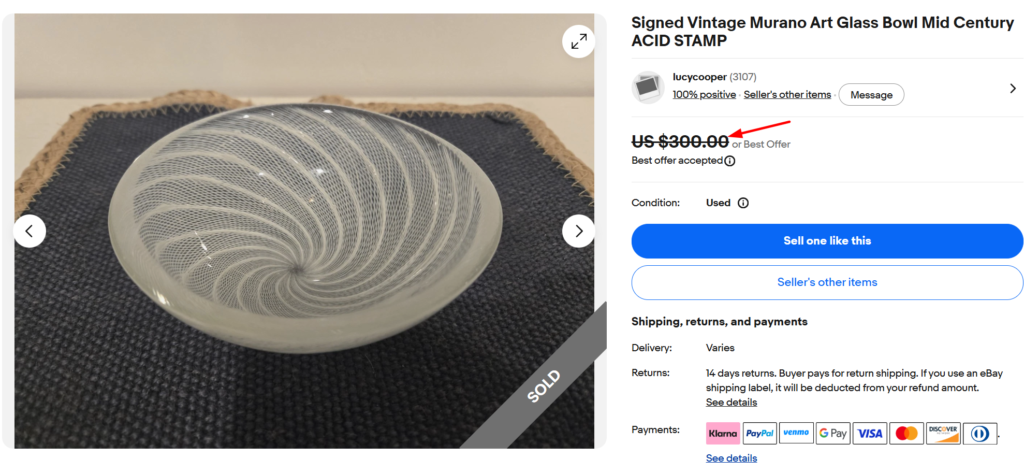
Murano has made glass for centuries, but bowls from the 1930s to the 1970s are the most collectible now, especially signed work from Venini, Seguso, or Barovier & Toso.
The value also depends on the glass-making technique; sommerso pieces with layers of color cased inside each other are highly desirable.
- Estimated Value: $200 to $5,000+
- Production Years: 1930s to 1970s
- What to Check: Acid signature or paper label
- Quick Notes: Many modern souvenirs copy old styles
8. Rare Pyrex Bowls: Lucky in Love and Butterprint
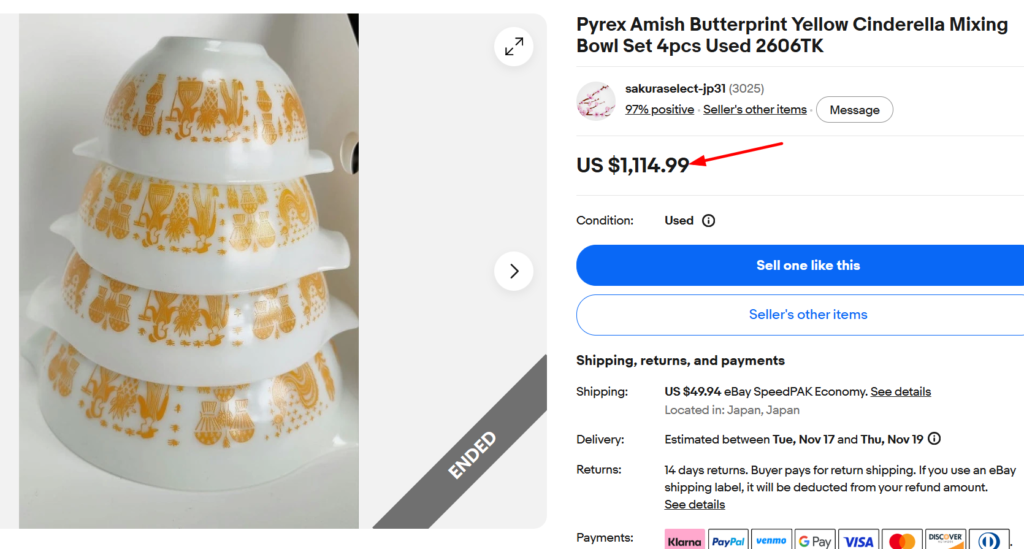
Pyrex is mostly known for everyday mixing bowls, and most of those sell for modest prices. But Lucky in Love, a 1959 pattern on a 1-quart round casserole, is the one every Pyrex fan dreams of finding.
It shows pink hearts and green clovers on white opal glass. Very few were made, and one sold through Goodwill’s auction site for $5,994 in 2017.
The set pictured above is not Lucky in Love: it is a four-bowl Amish Butterprint Cinderella mixing bowl set, another Pyrex pattern collectors look for.
- Estimated Value: $4,000 to $6,000+ for Lucky in Love; common patterns sell for far less
- Production Years: 1959
- What to Check: Hearts, clovers, Pyrex backstamp
- Quick Notes: 2018 clear-glass reissue isn’t valuable
9. Émile Gallé Cameo Glass Bowls
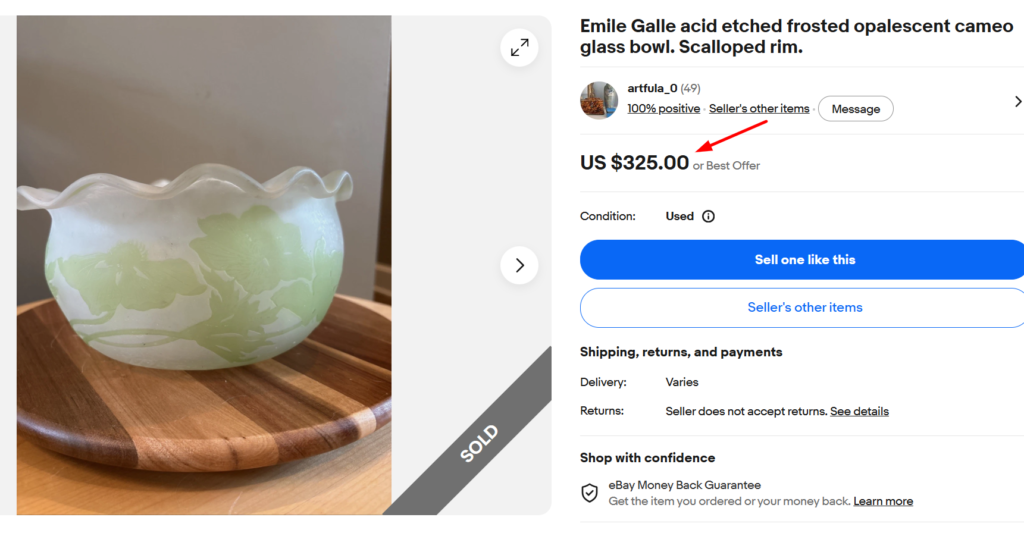
Émile Gallé is the most renowned French Art Nouveau glass artist. His most popular pieces are the cameo bowls, made by layering colored glass with carving or acid-etching on the top layers, creating flowers and leaves in relief.
Gallé passed away in 1904, but his factory kept making glass after his death and closed by 1936.
Some pieces made after his death have a tiny star next to the Gallé signature, but Christie’s Gallé collecting guide says the star appears only occasionally, so a missing star doesn’t prove a piece is early.
- Estimated Value: $300 to $5,000+
- Production Years: 1870s to 1936
- What to Check: Cameo signature, layered carving
- Quick Notes: Romanian “Tip Gallé” copies are common
10. Daum Nancy Art Glass Bowls
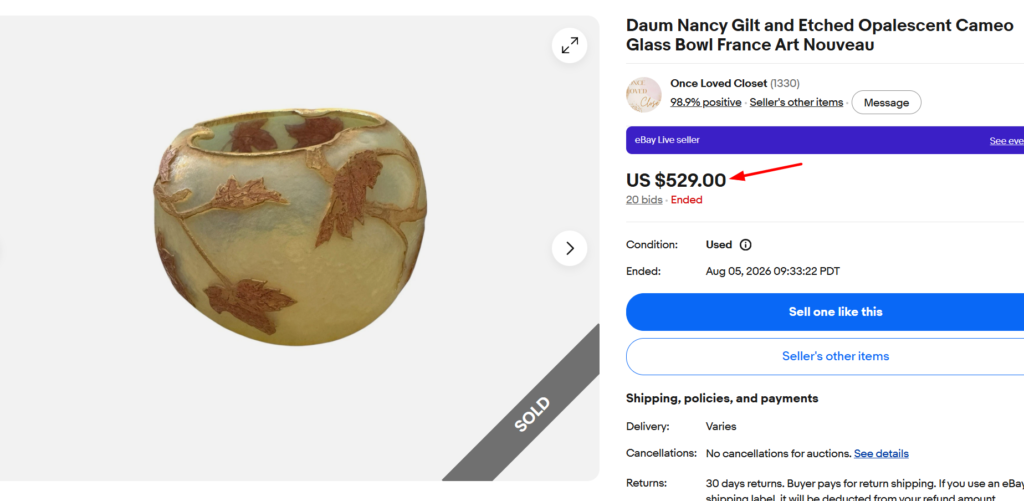
Daum Nancy is another popular crystal and art glass studio from Nancy, France. Like Gallé, Daum made acid-etched cameo pieces, often with enamel or gilding.
Pre-1914 Art Nouveau bowls with floral designs are the most collectible. Also, gilding wear directly impacts value.
Make sure to confirm authenticity by the “Daum Nancy” signature with the two-bar Cross of Lorraine. It can be carved, gilded, engraved, or painted on.
- Estimated Value: $300 to $3,000+
- Production Years: 1891 to 1930s
- What to Check: Signature with Cross of Lorraine
11. Baccarat Antique Crystal Bowls
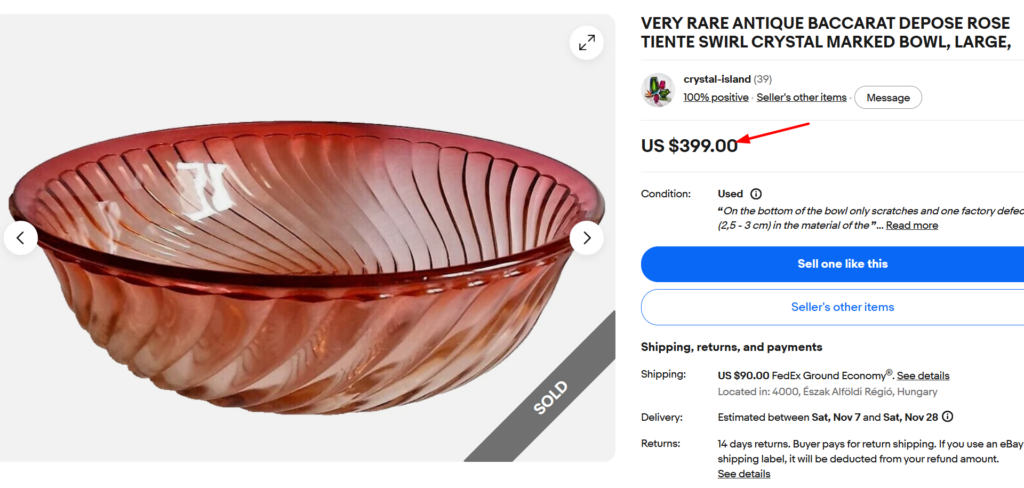
Baccarat’s antique crystal is heavier and clearer than most pressed glass. The swirled Bambou Tors pattern in the Rose Tiente (pink) shade is a favorite in bowls.
Check the base for a molded “Baccarat Déposé” mark, which points to the early 1900s. Similar swirl bowls came from Bohemia too, but they lack that mark.
- Estimated Value: $150 to $800+
- Production Years: Late 1800s to 1930s (Rose Tiente)
- What to Check: “Baccarat Déposé” molded mark
12. Heisey Glass Bowls in Rare Colors
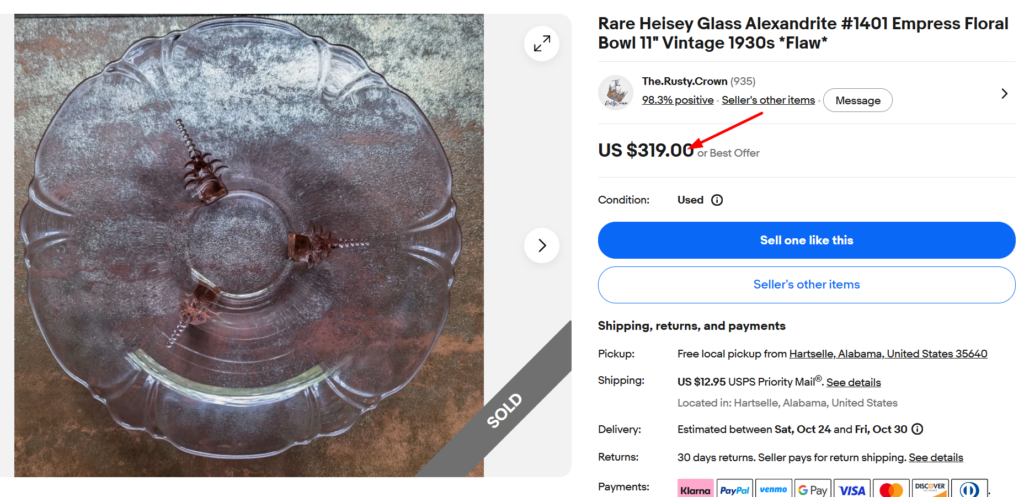
A.H. Heisey & Co. made high-quality pressed and blown glass in Ohio from 1896 until 1957. Most of its pieces were clear, but the company also released a few colors for only a few years.
Alexandrite is the most notable name. It looks lavender in daylight and shifts to blue under fluorescent light. It was made only from 1930 to 1935, making it super rare.
- Estimated Value: $40 to $800+
- Production Years: 1896 to 1957 (Alexandrite 1930 to 1935)
- What to Check: Raised Diamond H, color
- Quick Notes: Not every genuine piece is marked
13. Rare Depression Glass Bowls
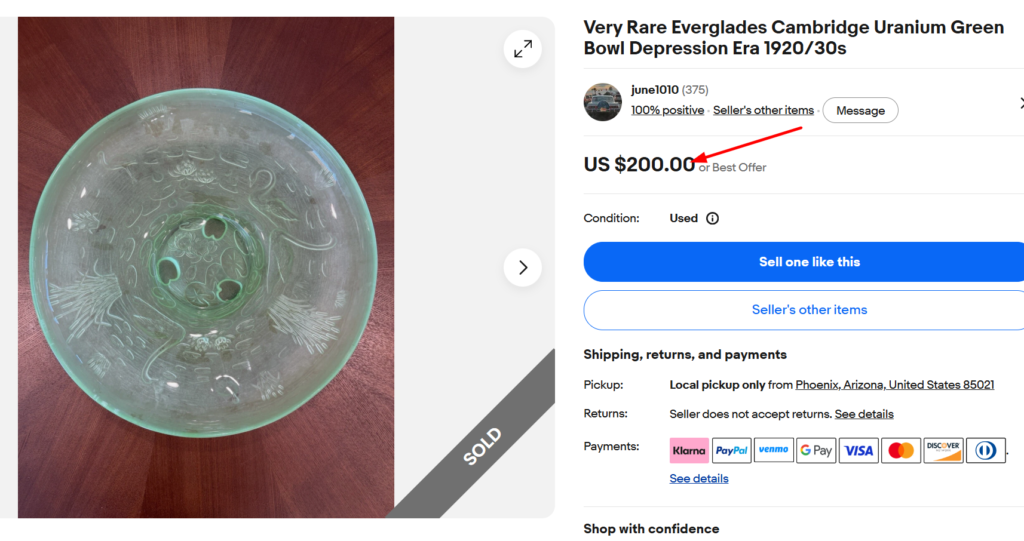
Depression glass bowls from 1929 to the early 1940s were often handed out as premiums. Most bowls sell for small change today, but a few rare patterns and colors stand out.
Hazel-Atlas Royal Lace in cobalt blue, Hocking’s Cameo “Ballerina” in green, and Mayfair “Open Rose” in blue are the ones to know.
The green bowl shown above comes from a different maker: it was sold as an Everglades bowl in uranium green by the Cambridge Glass Company, which made finer “elegant” glass in the same years.
- Estimated Value: $25 to $400
- Production Years: 1929 to early 1940s
- What to Check: Pattern, color, rim chips
So, before you discard your own glass bowls or pay a premium for one at a garage sale, make sure to check for marks, glass type, pattern, and condition to separate common and rare bowls.
Found this guide useful?
Save it for later
Share it with someone
Keep the old finds coming
New guides and finds worth looking for, delivered to your inbox.
Keep exploring
More guides in Kitchen Collectibles
 11 findsOld Libbey Glassware: How to Spot Rare Vintage PiecesTop sale $595
 9 finds9 Types of Vintage Tea Cups That Are Highly Collectible TodayTop sale $289
 12 finds12 Rare 1950s Cookie Jars That Are Worth Collecting TodayTop sale $377
 11 finds11 Rare Antique Victorian Tea Cups to Add to Your Collection (& What They’re Worth)Top sale $3,100