
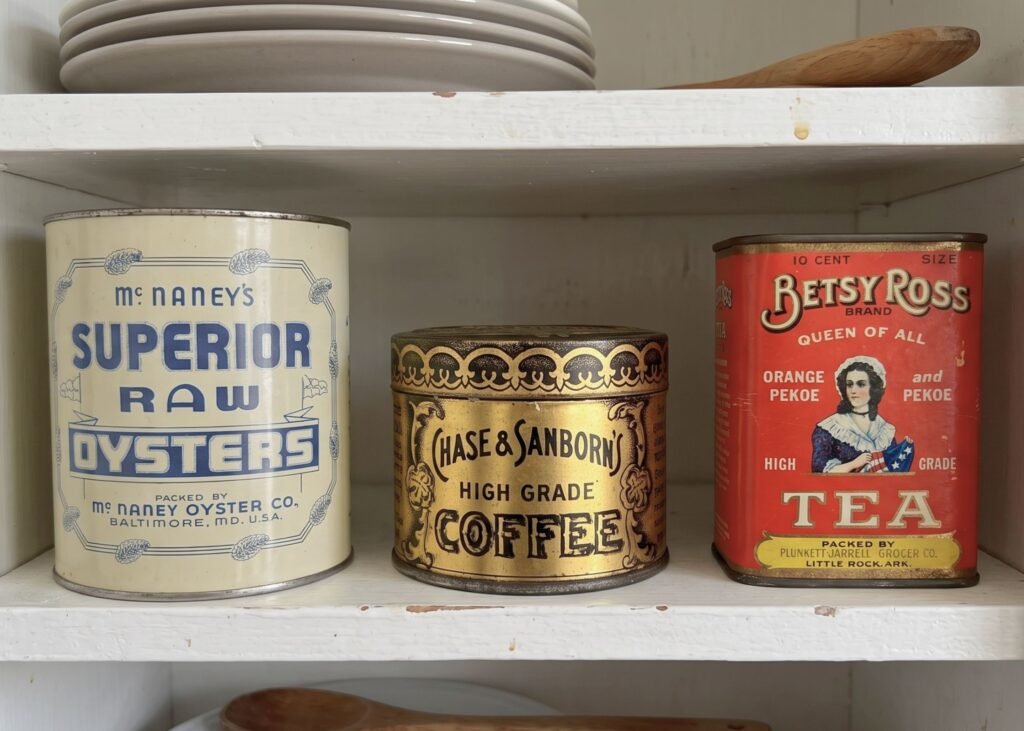
Do you still have those old coffee, tea, and biscuit tins in your kitchen shelves or cabinets? If yes, there are chances that one of them is a rare tin with a resale value of hundreds, or even thousands of dollars.
The tin litho printing is what pulls collectors in. So does the brand history. Plus, the fact that these were meant to be thrown away, so survivors in nice shape are genuinely uncommon.
Below, you will find 13 rare vintage tins that are popular among collectors today, with real prices, dates, and makers. You’ll learn what makes each tin valuable, how to identify one yourself.
What Makes a Vintage Tin Valuable?
Well, the value of old tin depends on several things altogether. That’s why some are worth $5, but others cross into the hundreds and occasionally thousands. Here’s what determines the value:
1. Age and Era
Tins prior to 1920 tend to be more expensive than mid-century tins, but that is not always the case. Lithographing on tins became common in the 1880s, and the earliest colorful tins are highly valued by collectors.
Tins from the mid-century era are those from the 1940s through the 1960s. Tins from the 1970s are not particularly valuable, unless they have a brand name or are of low production.
2. Brand and Maker
A recognizable brand adds real dollars. Prince Albert, Hershey, Maxwell House, Cadbury, Coca-Cola, Cracker Jack, and Chase & Sanborn all have a decent collector base.
The same goes for tin makers like Daher Decorated Ware, Ballonoff, Cheinco, and Guildcraft. If the tin has a brand people grew up with, someone out there wants it on a shelf.
3. Condition and Litho Quality
Condition matters more with tins than with most collectibles. That’s because the lithograph printing on the metal is fragile. Rust, dents, fading, damage to the print, and no lid all reduce the value quickly. A tin with clear graphics that is not rusty can bring in three times the money as a damaged one.
4. Rarity and Regional Variants
Sample tins, salesman’s tins, export versions, and short-run promo tins are where the real money lives. So are the early production years of long-running brands, since those early runs are usually thinner on the ground.
If a tin has a date that’s outside the normal production range, it’s worth researching before you sell.
5. Graphics and Subject Matter
Character tins, holiday themes, and detailed advertising art command a premium. Anything with children, animals, sports themes, or cultural references from a specific era is collected more. Plain text-only tins from the same brand and year are worth a fraction of the illustrated ones.
Vintage Tin Categories Every Collector Should Know
Among different types of vintage tins, some categories are worth knowing so you can know what to look for at garage and estate sales.
- Vintage Coffee Tins. One of the biggest sub-categories. Watch for Maxwell House, Folgers, Chase & Sanborn, Hills Bros., MJB, Chock Full o’ Nuts, and Luzianne. Sample and three-pound sizes usually beat one-pound tins.
- Antique Tobacco and Cigarette Tins. A serious hobby with its own price guides. Prince Albert leads on volume, and Half and Half, Velvet, Union Leader, Edgeworth, and Bagpipe are all sought after. Chesterfield, Lucky Strike, and Camel round out the cigarette side.
- Vintage Christmas and Cookie Tins. A whole seasonal market of its own. Nabisco, Sunshine, and Loos-Wiles are the top mid-century names, plus Royal Dansk and Peek Freans on the British and Danish side.
- Vintage Spice Tins. McCormick, Durkee, Watkins, and Tone’s stay affordable. Early lithographed spice tins from the 1890s to 1920s are where the real money sits.
- Antique Pie and Muffin Tins. A quieter market with loyal followers. Griswold, Wagner Ware, and 1800s cast tin pie plates lead the pack. Unusual shapes like corn or heart molds outsell plain round versions.
- Vintage Tea Tins and Tea Caddies. Strong crossover appeal with home decor buyers. Twinings, Lipton, Tetley, and Fortnum & Mason are the recognizable names, with Edwardian British caddies at the top.
- Antique Candy and Toffee Tins. British toffee from Thorne’s, Fillery’s, Sharp’s, and Cadbury leads. American candy tins from Whitman’s, Fanny May, and Wilbur Chocolates, especially character and holiday variants, are rare.
13 Highly Collectible Vintage Tins Worth Keeping Today
Below are some valuable tin examples from different categories that you should look out for at estate sales and thrift stores.
1. Blanke’s Advertising Coffee Tin
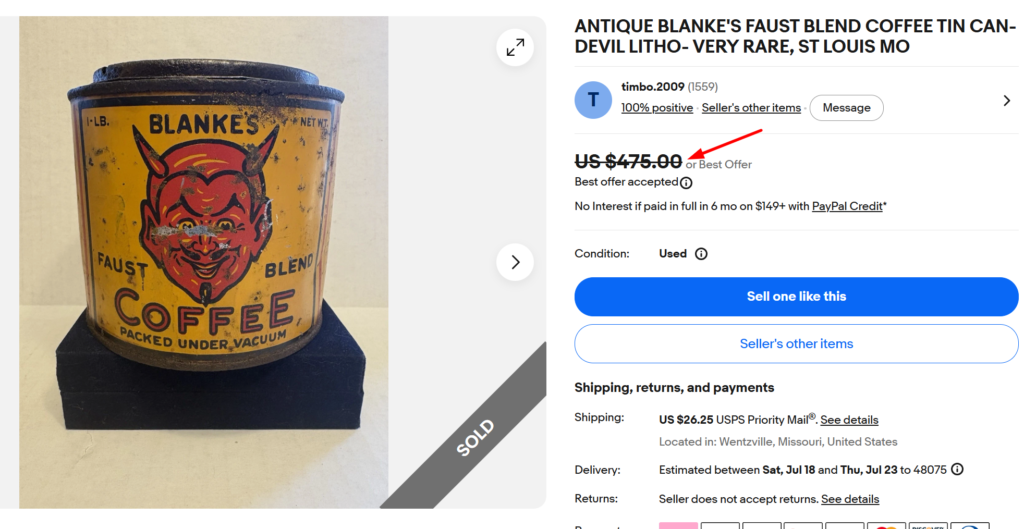
Sold for $475
Blanke’s Faust Blend is a collector’s find. The C.F. This line won the Grand Prize and Gold Medal at the 1904 St. Louis World’s Fair. That award pushed the brand into national recognition almost overnight.
You can identify this rare tin by the grinning red devil from the legend of Faust, the German character who sold his soul to the devil. The one-pound pry-lid can shows the devil’s head against a bright yellow background, with “Faust Blend Coffee, Packed Under Vacuum” printed below.
- Estimated Value: $200 to $475+
- Production Years: Around 1900 to the 1930s
- What to Check: Red devil head, yellow ground
- Quick Notes: Two-sided devil litho is the premium version
2. Prince Albert Crimp Cut Tobacco Tin
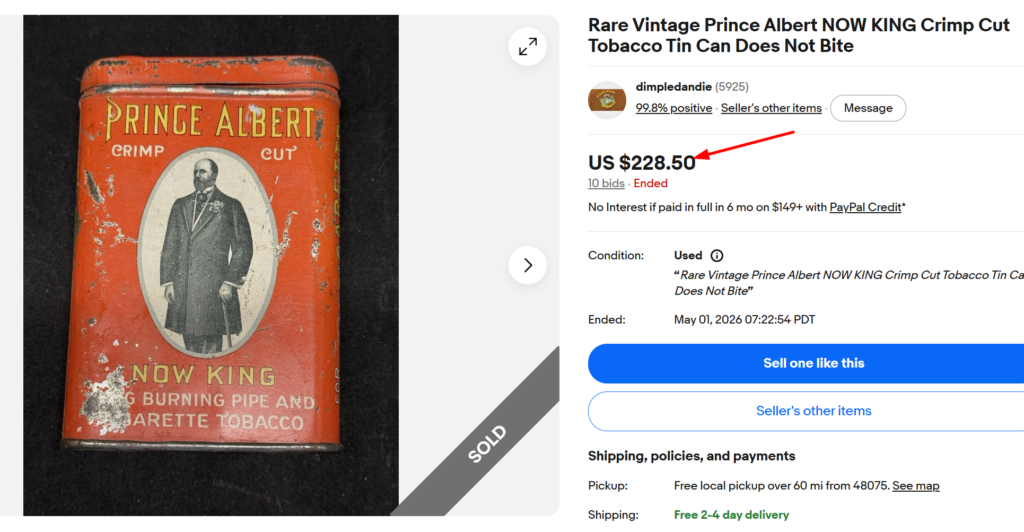
Sold for $228
The Prince Albert red pocket tin is probably the most recognizable tobacco tin in America. You can easily identify this tin by the bright red finish with the Prince Albert portrait.
R.J. Reynolds started producing it in 1907 out of Winston-Salem, and the tin carried a July 30, 1907, patent date along with the famous slogan “Does Not Bite The Tongue.”
Common examples are affordable, but early versions with the hinged lid, sharp graphics, and unopened tobacco inside can sell for hundreds. way up.
- Estimated Value: $15 to $250+
- Production Years: 1907 to 1980s
- What to Check: Red finish, 1907 patent date
3. Hershey Cocoa Tin
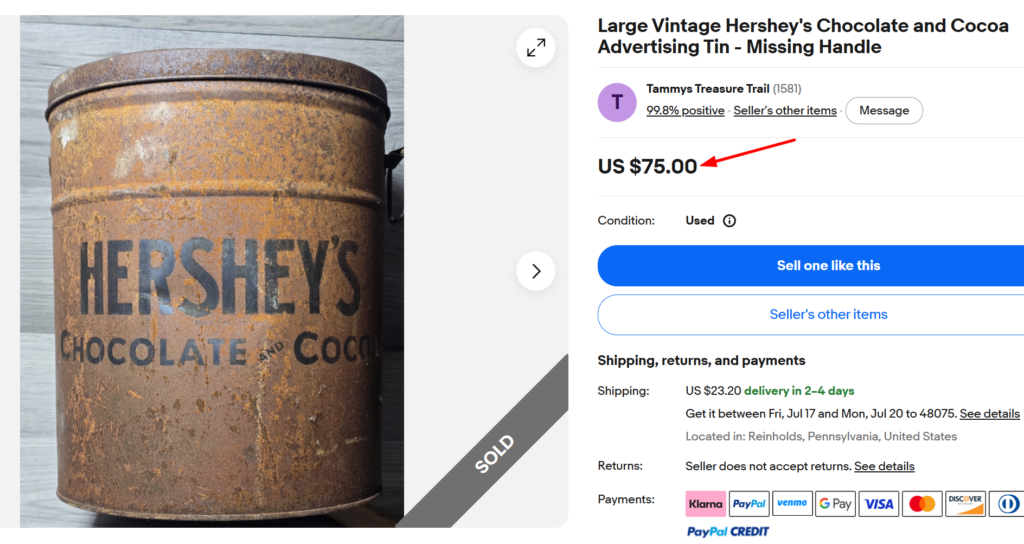
Sold for $75
Hershey started selling cocoa in tin containers in the early 1900s, and the older versions are highly collectible. The classic brown-and-silver design with the Hershey’s script logo is the one most people recognize.
But earlier variants had different lettering, different sizes, and sometimes small illustrations of the Hershey factory. Full, sealed tins in great condition are rare to find and always outsell empty ones.
- Estimated Value: $25 to $150
- Production Years: 1900s to 1970s
- What to Check: Brown and silver finish, script logo
- Quick Notes: Pre-1940 versions are rare and valuable.
4. Chase & Sanborn Coffee Tin
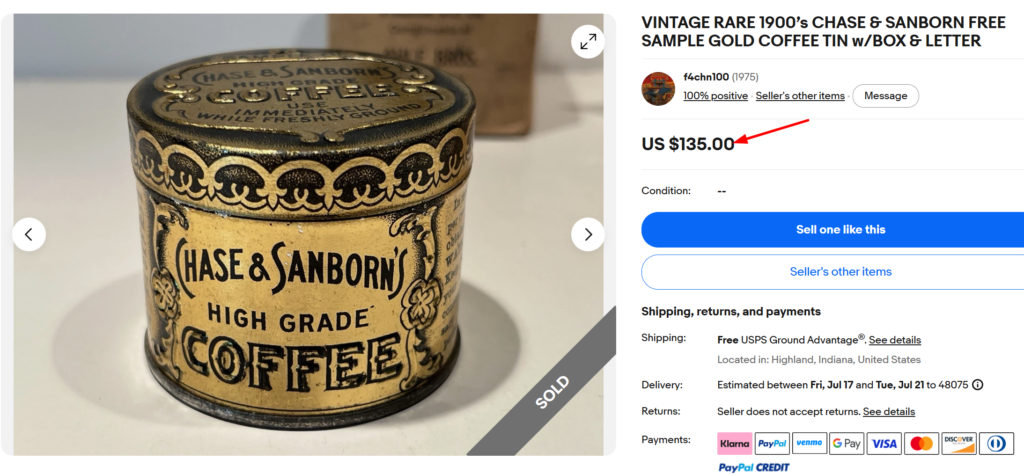
Sold for $135
Chase & Sanborn was one of the first American brands to sell pre-roasted coffee in sealed tins. And this was a big deal back in 1878. The vintage coffee tins from this brand usually feature deep red or gold graphics with a coat-of-arms-style logo.
Sizes range from small one-pound tins to larger three-pound restaurant sizes. Early versions from the 1900s to 1930s sell for the highest prices, especially the ones with the paper labels still attached under a wax coating.
- Estimated Value: $30 to $200
- Production Years: 1878 to the 1970s
- What to Check: Red and gold graphics, coat of arms
5. Chesterfield Cigarette Tin
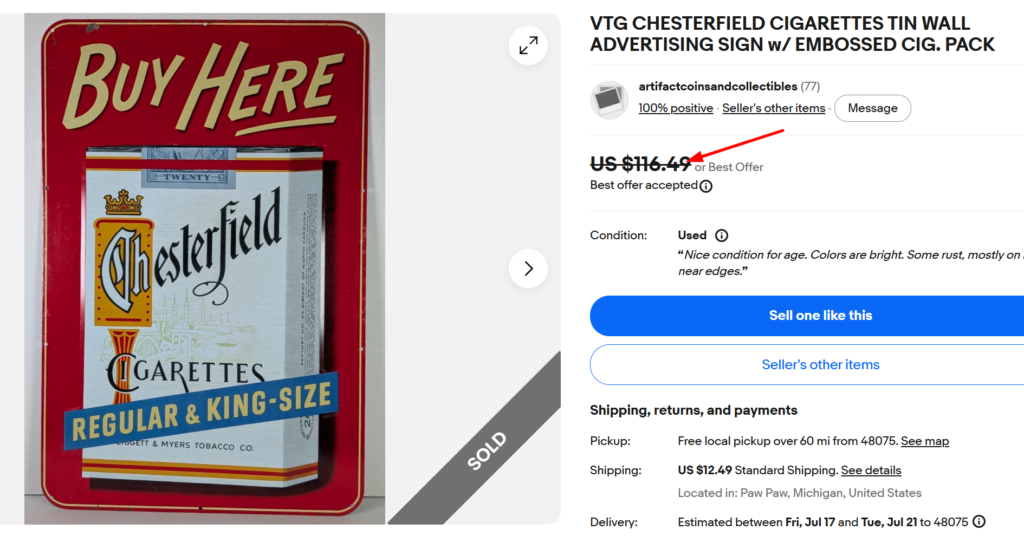
Sold for $115
Chesterfield tins were made by Liggett & Myers starting in the early 1900s and are collected for their clean Art Deco graphics and gold detailing. You can easily spot these tins by the signature red band with white lettering.
Most examples held 50 or 100 cigarettes and came in flat rectangular shapes with hinged lids.
Full or unopened tins from before World War II are the most valuable. Later Chesterfield tins from the 1950s and 1960s are much more common.
- Estimated Value: $30 to $175
- Production Years: 1912 to the 1960s
- What to Check: Red band, hinged flat lid
6. Jolly Time Popcorn Tin
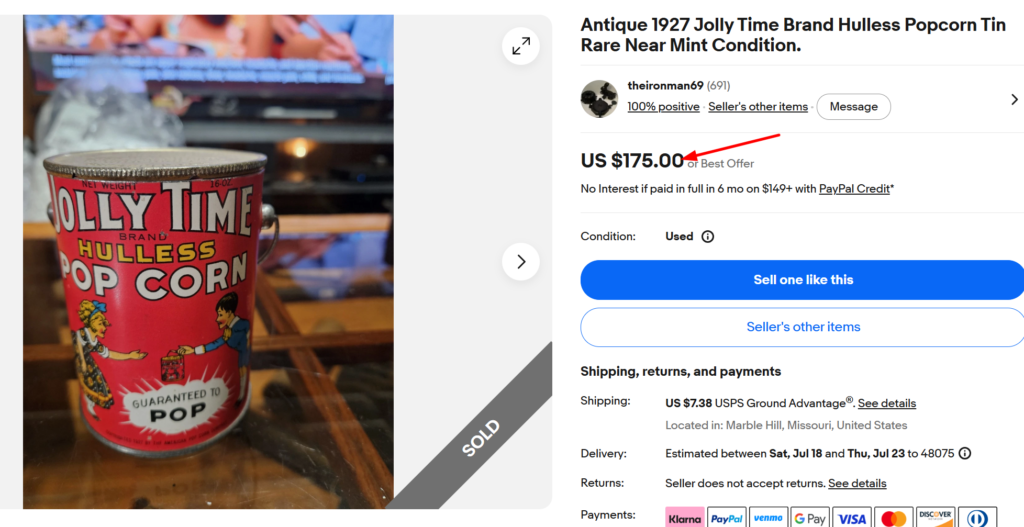
Sold for $175
Popcorn tins cover everything from tiny sample tins to giant three-gallon holiday containers. Jolly Time launched its tins in 1914, featuring cheerful graphics of families gathered around popping corn.
Holiday and Christmas editions with festive art tins are collectors’ favorites. So do early sample tins that were mailed as promotional items.
- Estimated Value: $25 to $200
- Production Years: 1914 to the 1980s
- What to Check: Family scenes, brand mascot
7. Maxwell House Coffee Can
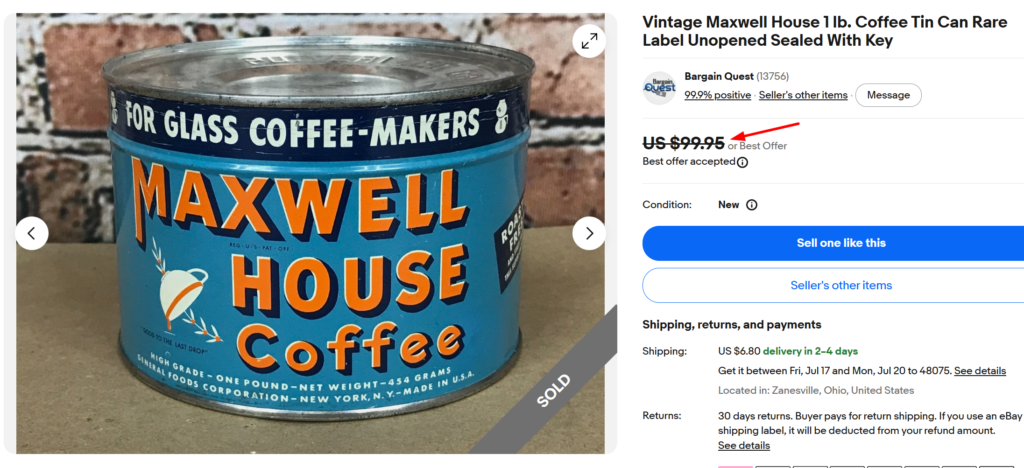
Sold for $100
The classic blue Maxwell House coffee tin is easily recognizable by its vibrant blue background. The brand started using tin containers in the late 1800s, and the “Good to the Last Drop” slogan appeared regularly on packaging by the 1920s.
Earlier tins with the drop imagery are more sought after than the plainer post-1970 versions.
You’ll find these cans from one pound up to three pounds; there were even sample tins for grocery promotions, both types are more valuable than standard ones.
- Estimated Value: $20 to $125
- Production Years: 1890s to 1980s
- What to Check: Deep blue finish, drop logo
8. Fillery’s Toffee Tin
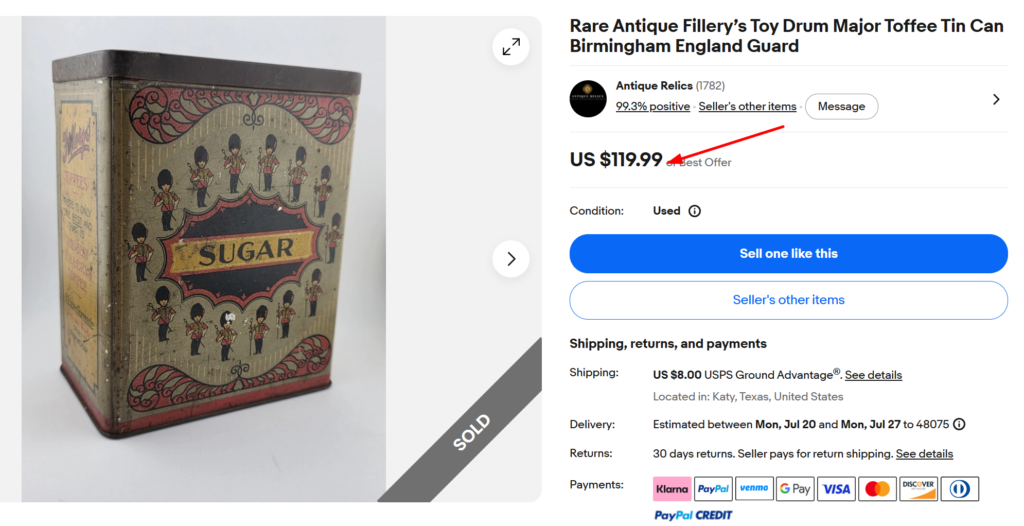
Sold for $120
Fillery’s was an English candy brand that manufactured toffee tins from the early 1900s until the 1950s. The tins are known for their elaborate lithographic designs featuring hunts, flowers, and Victorian-style pictures.
The tins are usually either rectangular or oval-shaped and feature lids that can be reopened to use the tin as a sewing or jewelry box. English toffee tins from Fillery’s, Thorne’s, and Sharp’s are highly popular in Britain and America alike due to their decorative lithographic art.
- Estimated Value: $35 to $200
- Production Years: 1900s to 1960s
- What to Check: Ornate litho, hinged reusable lid
9. Thorne’s Premier Toffee Tin
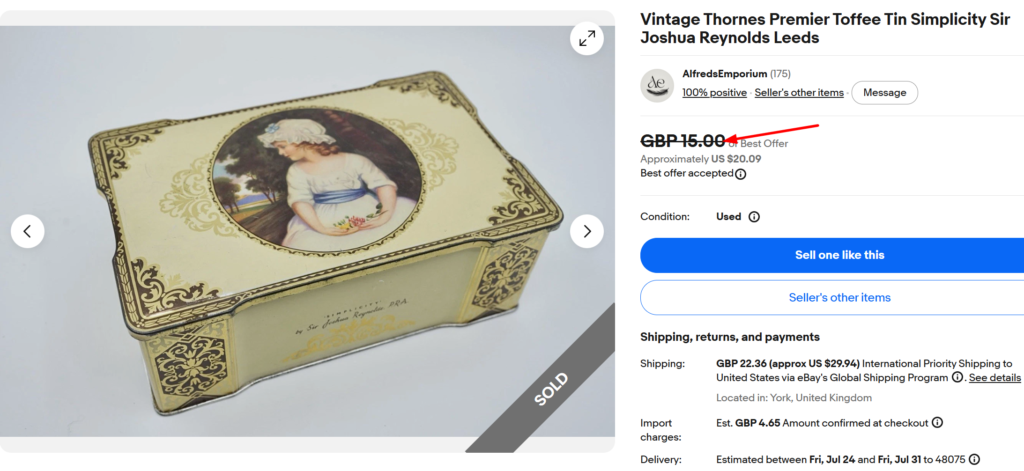
Sold for $20
Thorne’s made some of the most decorative toffee tins of the Edwardian era. The Premier line was known for elaborate designs featuring royal imagery, landscapes, and elaborate borders.
These tins were often given as gifts and saved as keepsakes, which is why they are common. But the ones in mint condition, with no lid dents and clear graphics, still sell well.
- Estimated Value: $15 to $175
- Production Years: 1900s to 1950s
- What to Check: Ornate borders, royal imagery
- Quick Notes: Edwardian-era tins outsell later runs
10. Ballonoff / Cheinco Housewares Tin
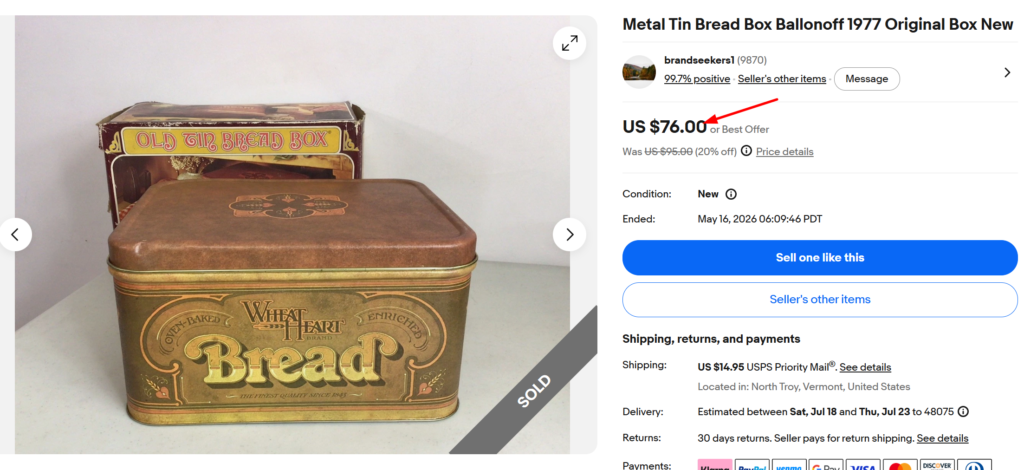
Sold for $76
Ballonoff and Cheinco were mid-century American tin makers from Ohio. They made decorated household tins from the 1950s through the 1970s.
Most examples are storage tins, canister sets, and cookie tins with mid-century floral or graphic patterns. The tins usually carry a small stamped mark on the base.
Complete matching canister sets in bright colors are worth the most; single tins with unusual patterns or bold graphics also do well individually.
- Estimated Value: $15 to $95
- Production Years: 1950s to 1970s
- What to Check: Base stamp, canister set match
11. Vintage Crayola Collector’s Tin
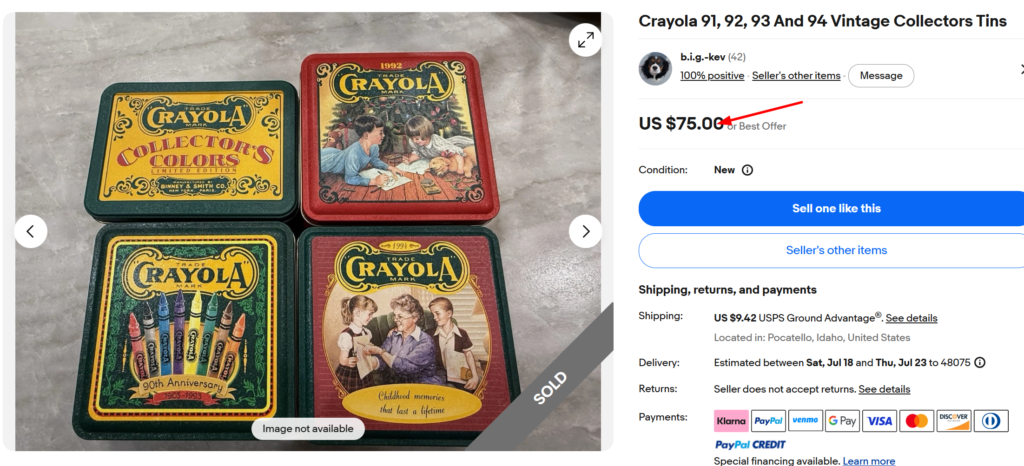
Sold for $75 (set of 4 )
The 1991 Crayola Collector’s Colors tin is a modern collectible, but still valuable. Binney & Smith released it as a limited edition after retiring eight classic crayon colors in 1990, including Raw Umber, Maize, Lemon Yellow, and Blue Gray.
The tin held 72 crayons total, combining a standard 64-count box with a special 8-color retired set. Sealed, unopened tins are the ones that sell for real money.
- Estimated Value: $20 to $75
- Production Years: 1991 only
- What to Check: Sealed retired colors box
12. Calumet Baking Powder Tin
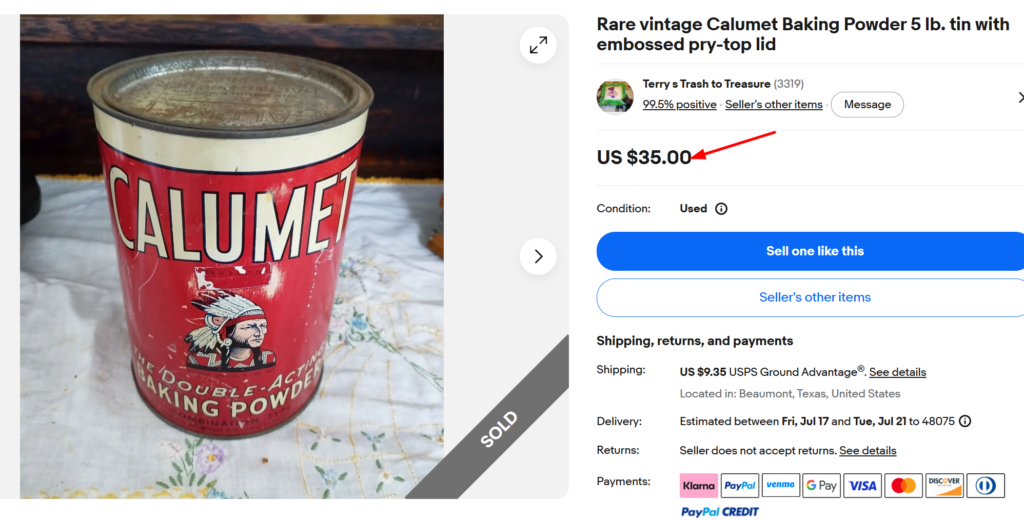
Sold for $35
The Calumet baking powder tin with the Native American chief in profile is one of the most graphically iconic tins from the early 1900s. The controversial imagery is why these tins are rare and highly desirable.
General Foods produced it after buying the Calumet brand, and the red background with the yellow lettering makes it pop on a shelf.
Sizes went from small five-ounce tins up to industrial ten-pound versions; large and sample-size examples are the rarest.
- Estimated Value: $20 to $175
- Production Years: 1889 to the 1970s
- What to Check: Red finish, chief profile
13. Luzianne Coffee & Chicory Tin
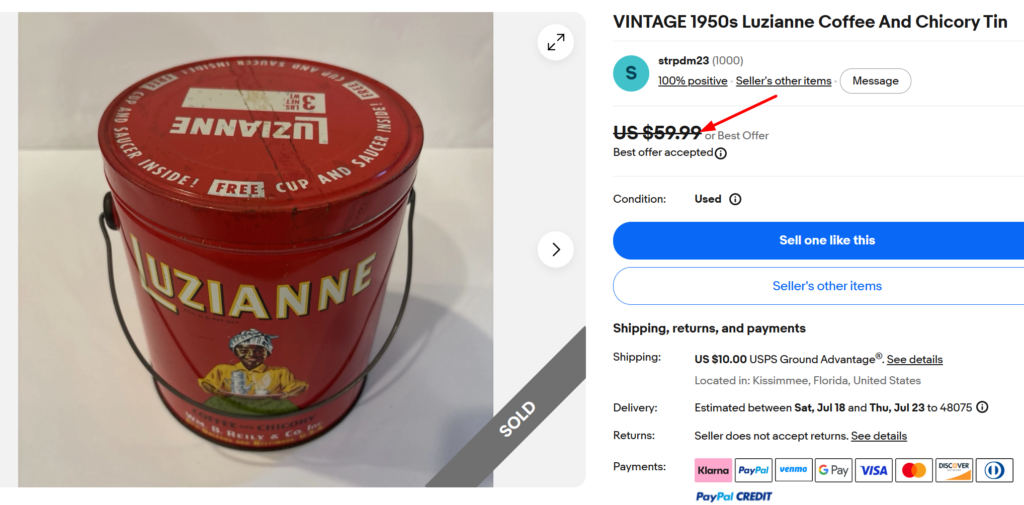
Sold for $60
Luzianne is a New Orleans brand, and its coffee and chicory tin has one of the most recognizable graphics in the category. The tin usually shows a smiling Black woman in traditional dress against a bright yellow or orange background.
The design is dated and reflects imagery from its era, but the tin remains a serious collector’s piece for early advertising graphics. Early Reily & Co. versions with sharp lithography are worth collecting.
- Estimated Value: $40 to $250
- Production Years: 1900s to 1960s
- What to Check: Yellow background, figural graphic
How to Identify Vintage Tins: Age, Maker, and Origin
Identification is where a lot of sellers leave money on the table. So let’s slow down and go through the actual steps I use before pricing a tin.
Reading the Bottom
Check the base on the tin first. The bottom or base often carries the maker’s name, city, country of origin, and sometimes a patent number or design registration number.
American tins from the early 1900s often say “Continental Can Company” or “American Can Company” in tiny print around the seam. British tins may have a “Regd. Design” number, like the “951942” you see on 1971 Daher pieces made in England.
Dating by Lithography Style
Tin lithography has come a long way since then.
- The earliest tin lithographs between the 1880s and 1910s used stone transfer techniques that were softer in color palette.
- The 1920s brought about offset printing, which was sharper in outline and had vivid ink.
- The post-1950s tins mostly display commercial-quality artwork.
Paper labels wrapped around a plain tin usually mean it’s cheaper and later, though there are exceptions with luxury brands.
Spotting Reproductions
Reproductions are quite common, but you can spot them.
A real vintage tin usually has slight imperfections in the print registration, a heavier feel from thicker metal, and hand-soldered seams on very old examples.
Repros feel lighter, have suspiciously perfect graphics, and often use modern paint that scratches off cleanly. If the “vintage” tin still smells like fresh paint, walk away.
Collector’s Tip: Weight tells you almost as much as the markings. Pre-1950 tins usually feel noticeably heavier than modern ones because the metal was thicker.
Vintage tins are often overlooked at estate sales, thrift stores, and even in your own kitchen. But certain types and brands can be really worth a small fortune. So, make sure to check yours before donating.