
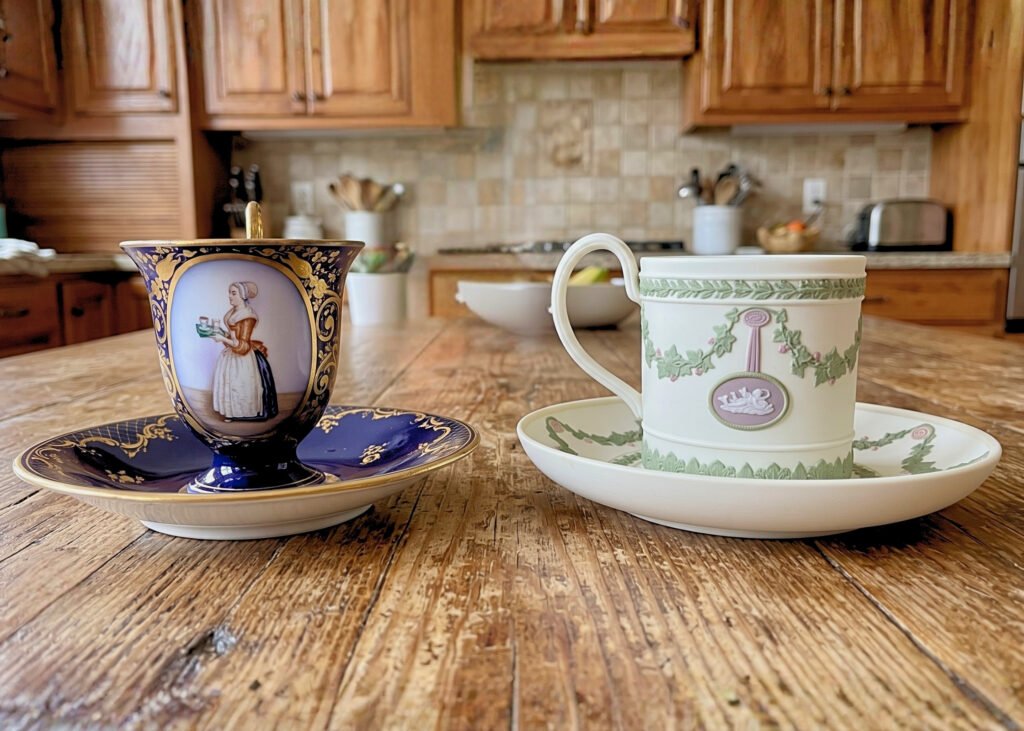
The Victorian period ranges from 1837 to 1901, and tea cups during this period had designs distinct from the designs of cups made earlier or later.
Cups made before 1830, for example, had a bowl-like design without a handle, but Victorian tea cups were taller, with designs that included handles, molding, painted flowers, and gold trimmings.
Most cups were made of bone china, discovered by Josiah Spode, but made by several makers like Wedgwood, Minton, and Coalport, as well as French makers like Haviland and Sèvres and German makers like Meissen and Dresden.
Identifying Genuine Antique Victorian Tea Cups
The first step to authenticate is to pick up the teacup, because weight and transparency will give you most of the clues. The bone china will have very little weight in your hand, and it will glow slightly under the lamp.
Then turn the saucer over but not the cup, because the Victorian-era manufacturers would stamp the bottom of the saucer, not the cup. A crown, a griffin, crossed swords, and an anchor all stand for various manufacturers.
Dating Tip: One quick way to date these cups: cups that have “England” written at their base are from 1891 or later due to the McKinley Tariff Act, while “Made in England” means 1921 or later.
The next step is to check the handle and foot rim. A Victorian handle will curve, twist, or feature a thumb rest. The foot ring will have handmade tooling marks, not a machined look.
Slide your finger along the bottom edge. It will have little bumps and be slightly rough.
Lastly, check the design print. Transfer prints will be absolutely identical; hand-painted designs will have inconsistencies and variations.
Gold leaf is another clue. The gold leaf used during the Victorian era was very thick and tends to wear off in spots, particularly near the edge and the handle, while modern copies are smooth gold.
Most Valuable Victorian-Era Tea Cups Worth Collecting Now
Here’s the list of the most valuable and collectible antique Victorian tea cup designs from the era’s top makers. Learn their key designs and current values to spot them yourself.
1. Minton pâte-sur-pâte Teacup & Saucer
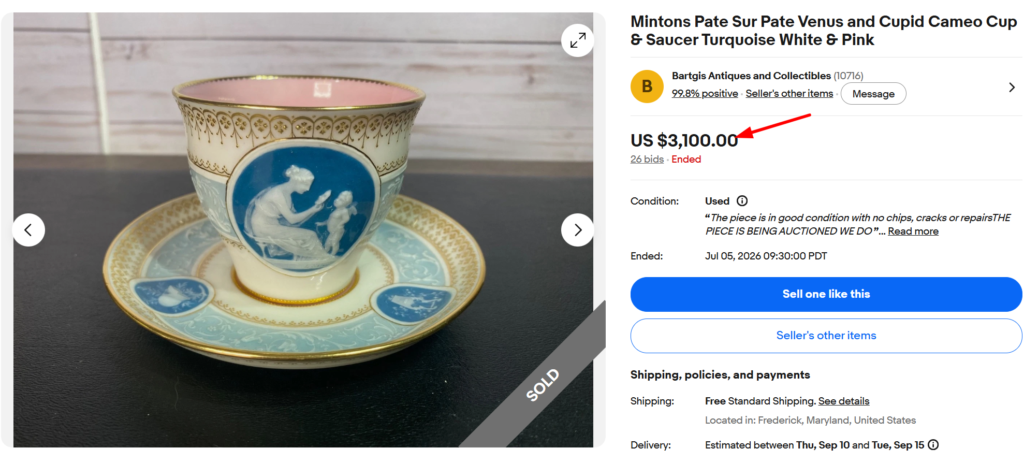
Sold for $3,100 (single pair)
Pâte-sur-pâte was a French method whereby the artist constructed a white cameo layer by layer using a liquid clay slip over a colored background.
The technique was introduced to Minton by Marc-Louis Solon from Sèvres in 1870, and it became the pride of the Minton factory. This example of the cup on a turquoise ground with a cameo of Venus and Cupid is the signature design.
- Estimated Value: $1,500 to $4,000 per cup and saucer
- Production Years: 1870 to about 1904 (Solon era at Minton)
- What to Check: White slip cameo, colored ground, signed L. Solon.
2. Haviland Limoges Hand-Painted Rose Trio
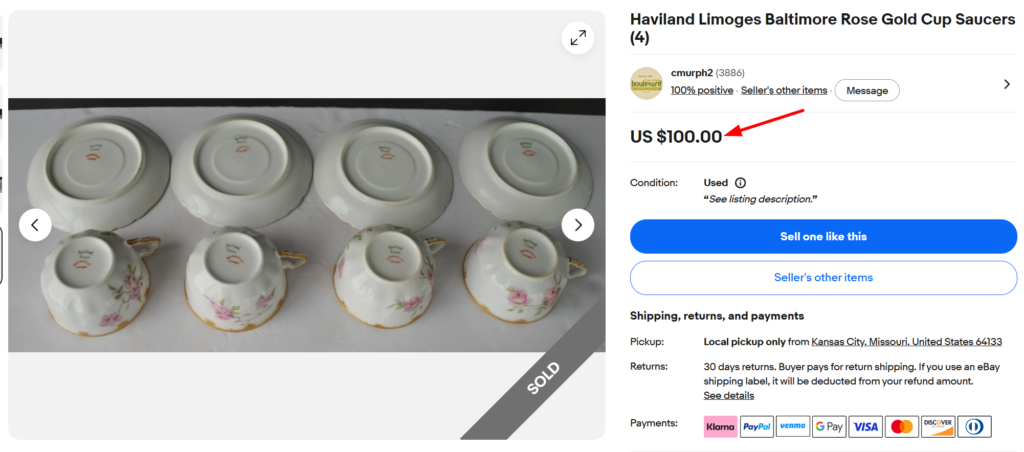
Sold for $100 (set of 4)
Haviland from France became synonymous with hand-painted flowered porcelain soon after it started. The traditional Victorian design has either pink or rose flowers with gold borders, all of which are decorated on the signature white porcelain.
The 1876 – 1889 period pieces marked H & Co L (in green) represent the desirable collectible category. The rare Schleiger pattern numbers also drive prices.
- Estimated Value: $30 to $250 per cup and saucer
- Production Years: 1876 to 1931 (Victorian sweet spot 1876 to 1889)
- What to Check: Green H & Co L mark, hand-painted roses, gold trim
3. Aynsley Bone China Cabinet Cup
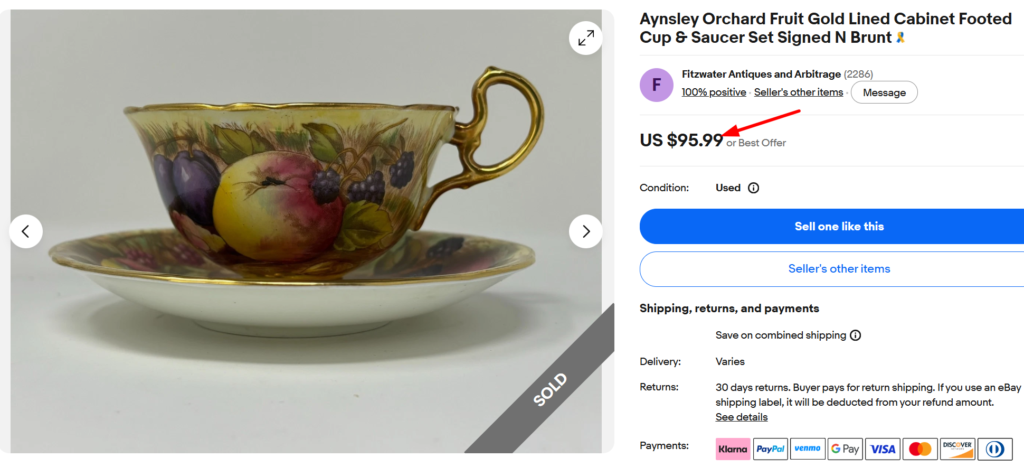
Sold for $95 (single)
Established in 1775, Aynsley made some of the best bone china of the late Victorian period in Stoke-on-Trent. Cabinet cups, designed to be displayed rather than used, feature the finest hand-painting, including fruit or floral panels enclosed by cobalt borders and rich gilding.
Signed examples (like J. A. Bailey) of cabinet cups painted by individual artists command a premium. Unsigned yet highly painted examples also sell well, but transfer-printed examples are low-tier.
- Estimated Value: $60 to $400 (signed, hand-painted higher)
- Production Years: Late Victorian, roughly 1875 to 1901
- What to Check: Aynsley mark, cobalt panels, artist signature
4. Meissen Blue Onion Cup & Saucer
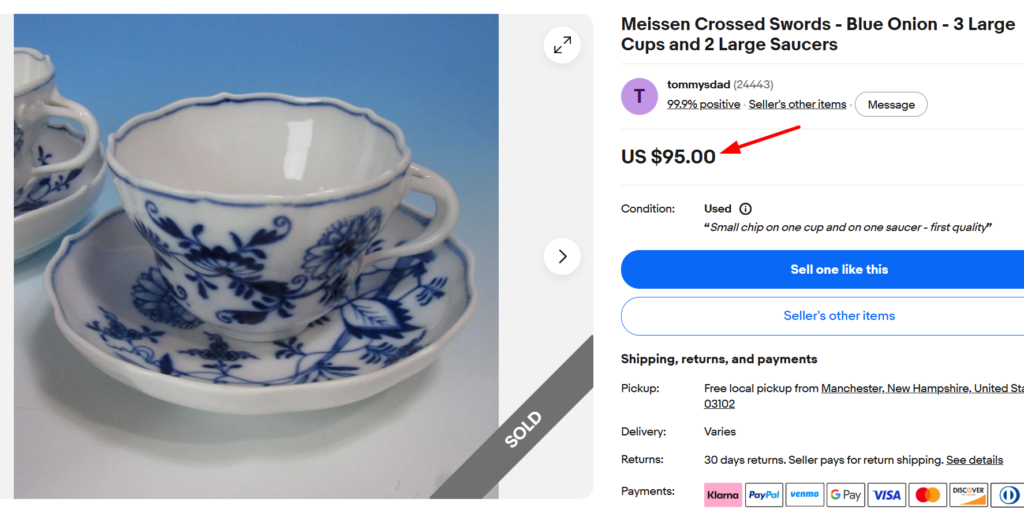
Sold for $95 (set of 3)
Since 1710, Meissen has remained the most prestigious porcelain company in Germany, and the crossed swords trademark that appears underneath the glazing is probably the most valuable indicator on any base.
The Blue Onion design has been around for a century before Victorian collectors began collecting it, but 19th-century Meissen porcelain is highly sought after today.
- Estimated Value: $90 to $600 per cup and saucer
- Production Years: Blue Onion (continuous production since 1739)
- What to Check: Blue crossed swords mark, cobalt underglaze pattern.
5. Coalport Hand-Painted Named-View Cups (c. 1860–1890)
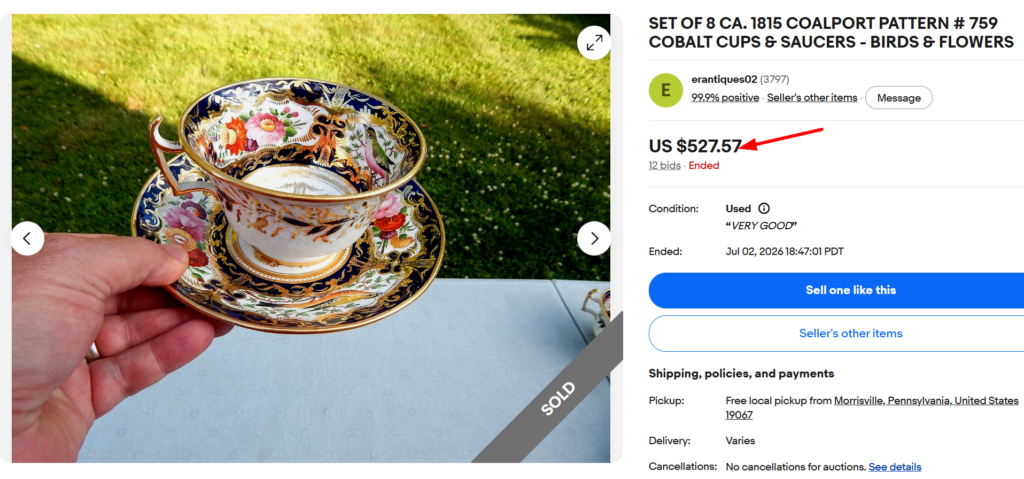
Sold for $530 (set of 8 with saucers)
Coalport, operating in Shropshire from 1795, made some of the most sought-after Victorian trios (teacup, saucer, and side plate). Coalport’s hand-painted flowers on light blue backgrounds and elaborate gilding are among the most collectible English Victorian porcelain pieces.
The logo changed considerably during the course of the century. So watch out for the Coalport crown with “England,” added after 1891.
- Estimated Value: $120 to $500 per trio
- Production Years: Victorian output 1837 to 1901
- What to Check: Coalport crown mark, hand-painted panels, gilt work
- Value Notes: Complete trios are worth more.
6. Minton Majolica Tea Cup and Saucer
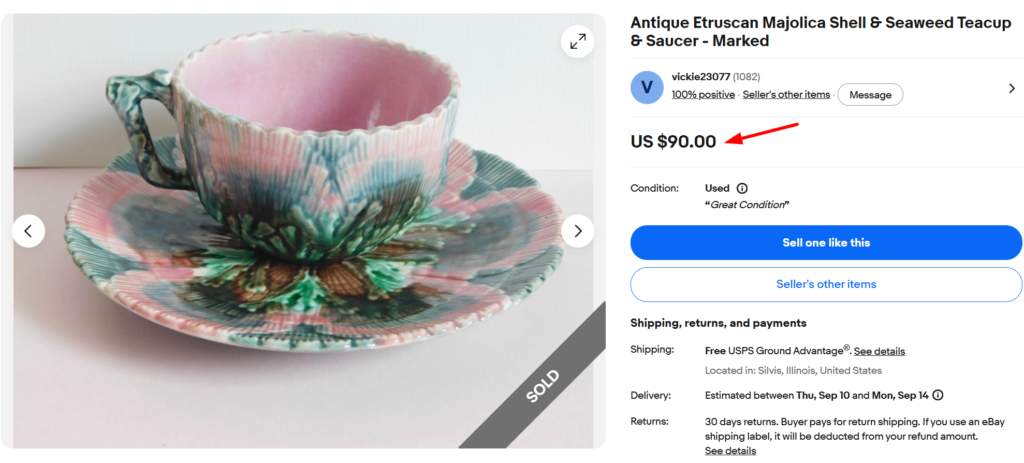
Sold for $90 (single pair)
Minton’s majolica range, introduced at the Great Exhibition of 1851, added colorful glazes and molded decoration to Victorian tea ware. A Minton majolica cup decorated with lily pads, flowers, and leaves in green, ochre, and cream is typical Minton majolica.
The MINTON factory mark together with a date mark will show exactly when it was made.
- Estimated Value: $150 to $500 per cup and saucer
- Production Years: 1851 to about 1900 for majolica
- What to Check: Impressed MINTON mark, molded relief, colored glazes
7. Royal Worcester Blush Ivory Cup
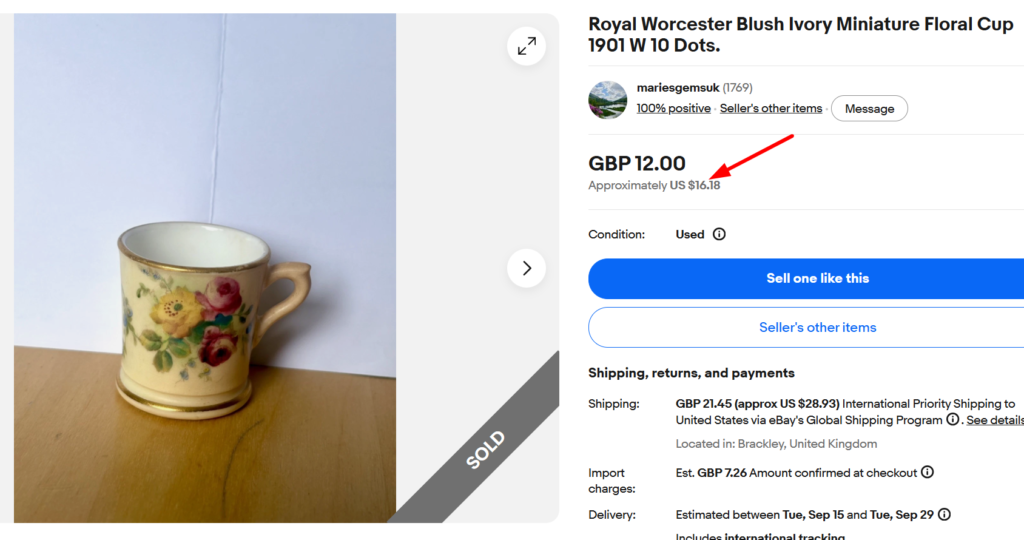
Sold for $16 (old, single)
Blush Ivory was the best-selling Victorian glaze produced by Royal Worcester, created between 1890 and circa 1914. You can easily identify the light peach-to-ivory glaze with hand-painted chrysanthemums, forget-me-nots, and gilt decoration.
Besides, each authentic example bears a purple printed mark with a dating letter. While a teacup and saucer are not expensive, a complete tea service can be worth a lot.
- Estimated Value: $80 to $300 per cup and saucer
- Production Years: 1890 to about 1914
- What to Check: Puce printed mark, date code letter, ivory shading
- Quick Notes: Full sets can hit thousands at auction
8. Wedgwood Jasperware Cabinet Cup
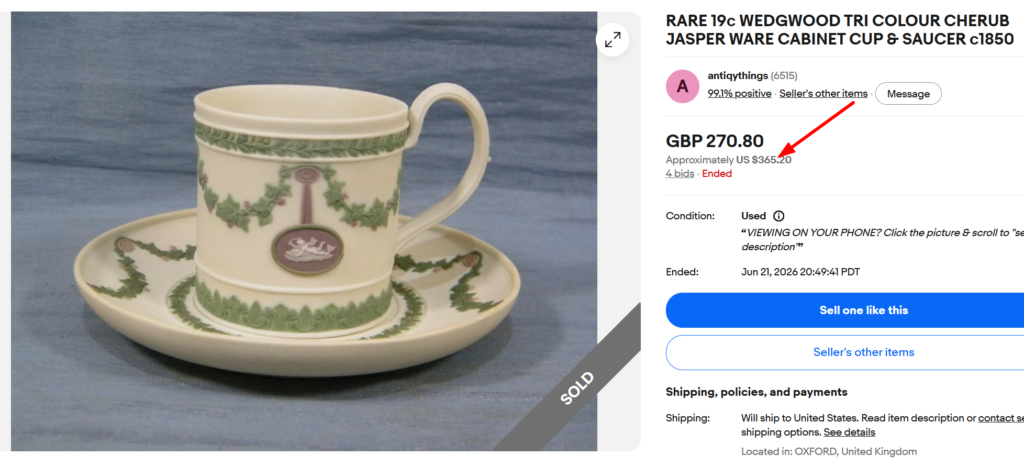
Sold for $365 (single pair)
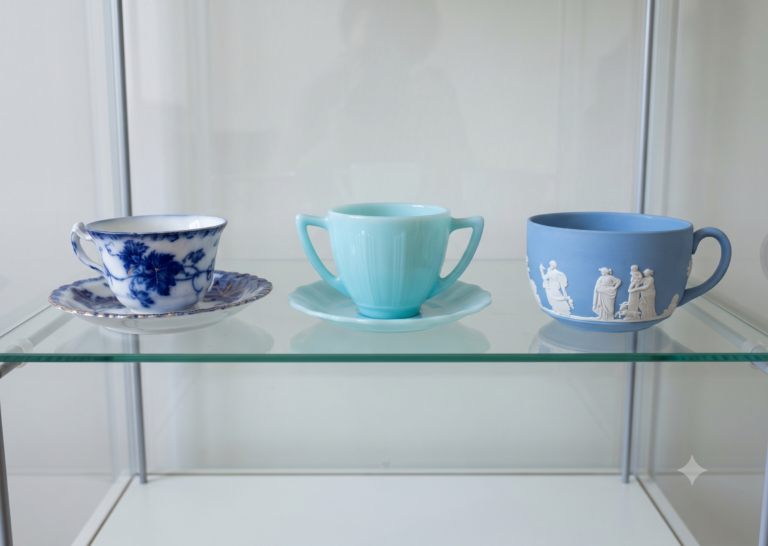
Wedgwood’s Jasperware is the unglazed stoneware that comes with white classical figures in relief form. The color most frequently seen is pale blue, although sometimes sage green, lilac, and even black are used.
Cabinet cups made from Jasperware are not as frequently seen as vases and boxes, making them rare and collectible. The rarest examples are the crimson dip (late 1800s-1920s) and tri-color pieces.
- Estimated Value: $100 to $400 per cup and saucer
- Production Years: Victorian output 1837 to 1901
- What to Check: Impressed WEDGWOOD, matte finish, white cameo relief
- Quick Notes: Crimson, yellow, and tri-color bring premiums
9. Klemm Dresden Portrait Tea Cup & Saucer
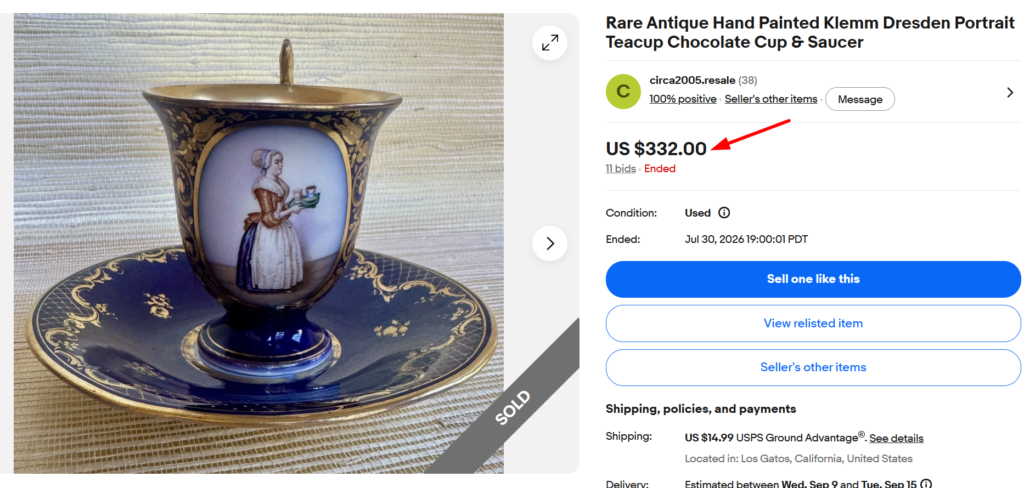
Sold for $332 (single pair)
Richard Klemm was operating a Dresden painting studio since 1869. He was one of four artists who registered the well-known blue crown mark for Dresden in 1883. However, Klemm did not produce his porcelain items. He acquired them in white form and painted them by hand.
Klemm portrait pieces painted on a ground of blue with gilt raised decoration rank at the top. Floral pieces cost significantly less.
- Estimated Value: $200 to $600 per cup and saucer
- Production Years: 1883 to about 1918 (blue crown mark era)
- What to Check: Blue crown over RK Dresden mark, hand-painted portrait
10. Victorian “Mustache” Cup
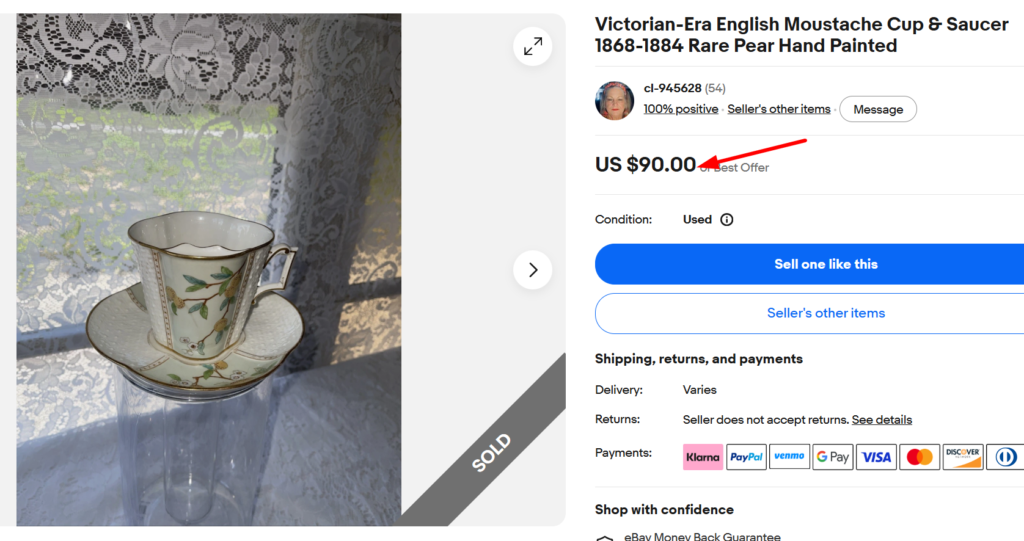
Sold for $90 (single pair)
Mustache cups are a uniquely Victorian design. English potter Harvey Adams patented the internal ledge in the 1870s to keep waxed mustaches safe from hot tea.
Production peaked in the 1890s; English, German, and Austrian companies produced “mustache” cups. Antique mustache cups decorated with footed stands, porcelain flowers, or the phrase “A Present” in gilt letters are worth the most.
- Estimated Value: $40 to $300 per cup and saucer
- Production Years: 1870s to about 1920
- What to Check: Internal ledge with drinking hole, ornate handle
11. Royal Doulton Enameled, Gold Encrusted Cup
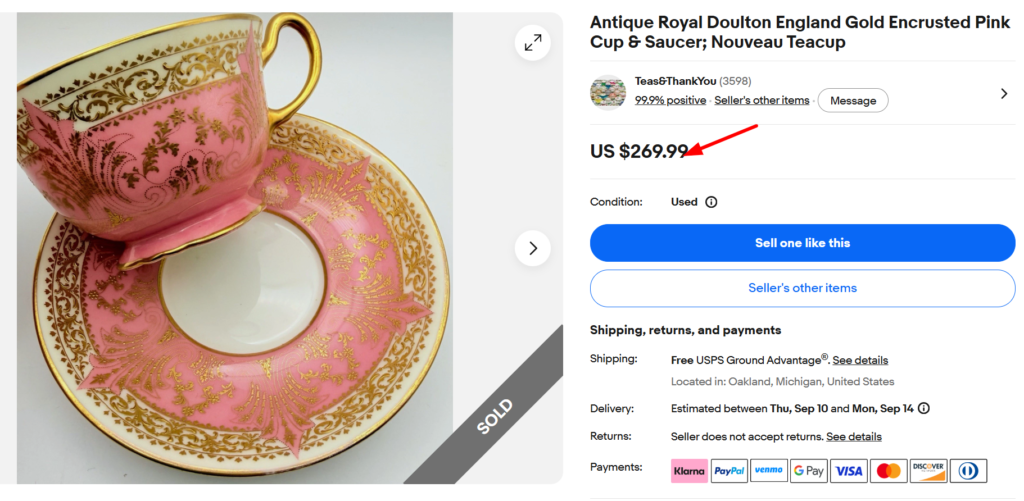
Sold for $270 (single pair)
Doulton Burslem produced among the finest and most complex tea cups in the late 1880s and 1890s. The finest examples are made of enameled floral patterns, raised paste gold work (“jewelling”), or gold encrusting applied to bone china.
The value of well-preserved Royal Doulton teacups from 1890 with intact enamel and gold decoration can sell for up to $700 today.
- Estimated Value: $100 to $700 per cup and saucer
- Production Years: Doulton Burslem, roughly 1882 to 1901
- What to Check: Doulton Burslem mark, raised paste gold work
- Quick Notes: Enamel plus jewelling is the value driver
What Makes an Antique Victorian Tea Cup Valuable
Five key factors influence the value of every antique Victorian tea cup. Knowing these factors and how they impact the value can help you find the sleepers.
- First comes the manufacturer. The winners here are Meissen, Sèvres, early Wedgwood, and named Aynsley painters. Common English manufacturers like Royal Albert (which is more Edwardian than Victorian) come next.
- Next is the condition, which is unforgiving. One hairline crack, chipped edge, or wear of gilding can lower the price by 40 to 80 percent. So, examine the rim, where the handle joins, and the interior of the cup.
- Completeness of a set is more important than most think. A trio costs two to three times more than a single cup, while a complete tea set commands its own premium.
- Pattern appeal makes for the value of collectible patterns like Meissen Blue Onion, Wedgwood Jasperware, and Royal Worcester Blush Ivory over regular floral ones.
- The rarity of form makes up the last factor. Cabinet cups, moustache cups, and demitasse cups are rarer than common tea cups. That slight edge can make an ordinary cup valuable.
Old Victorian tea cups can be highly valuable if they are genuine and come from a notable manufactory. So, if you have very old cups in your or your grandma’s cabinets, check the weight, the backstamps, and the pattern before discarding them.