
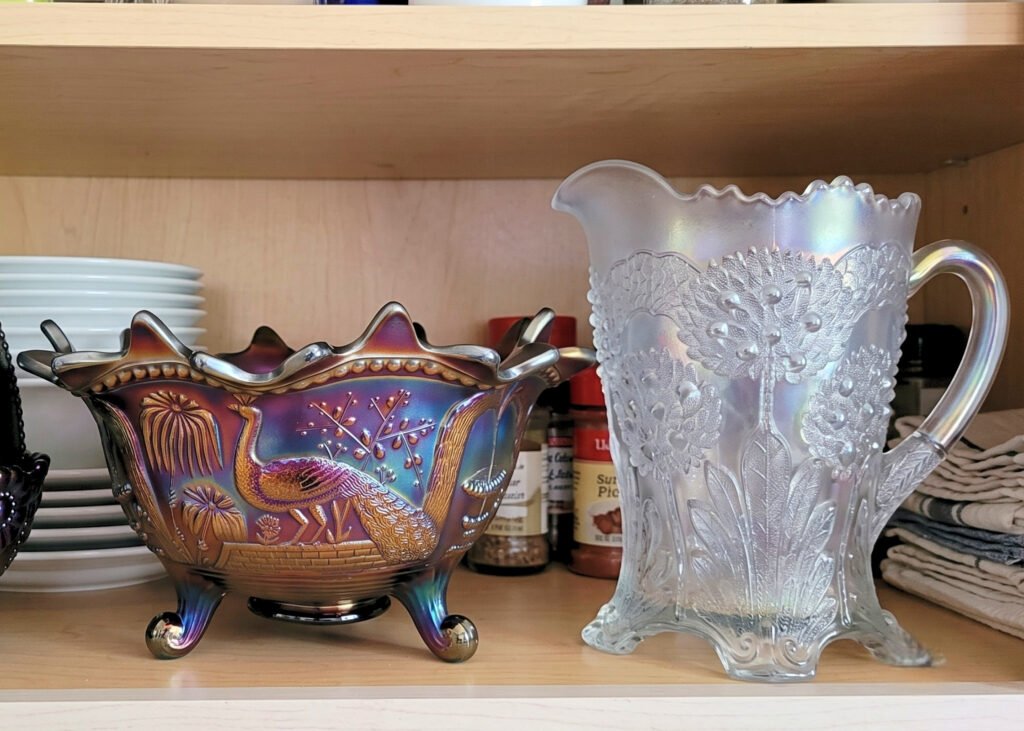
The iridescent layer of the carnival glass is merely a coating. Underneath the coating is the real color of the glass, which makes the difference when it comes to pricing.
Carnival pieces from companies such as Fenton, Northwood, and Dugan were mostly produced in marigold since the glass was inexpensive. Special colors required expensive materials.
For example, the production of red glass required cadmium or selenium, while the ice blue and green were produced in small batches. This is why special carnival glass colors are worth 10 to 50 times more than regular colors.
So that’s what this guide covers: the rare carnival glass colors that collectors actually pay serious money for, with real examples and values.
How to Identify the True Base Color?
You can check the carnival glass’s base color by turning the item upside down and checking the colored glass near the bottom, where the coating is thinner. Look at the glass in natural light to be able to see the true base color of the glass.
Another identification clue is the maker’s mark. For example, a genuine Northwood piece has the N-in-circle mark at the base. Original Fenton items were not usually marked, so you have to rely on patterns.
10 Rarest Carnival Glass Colors With Real Examples & Prices
Below are some of the rarest and most valuable antique carnival glass colors that are still uncommon but more attainable.
1. Black Amethyst (Northwood, Dugan, and Fenton)
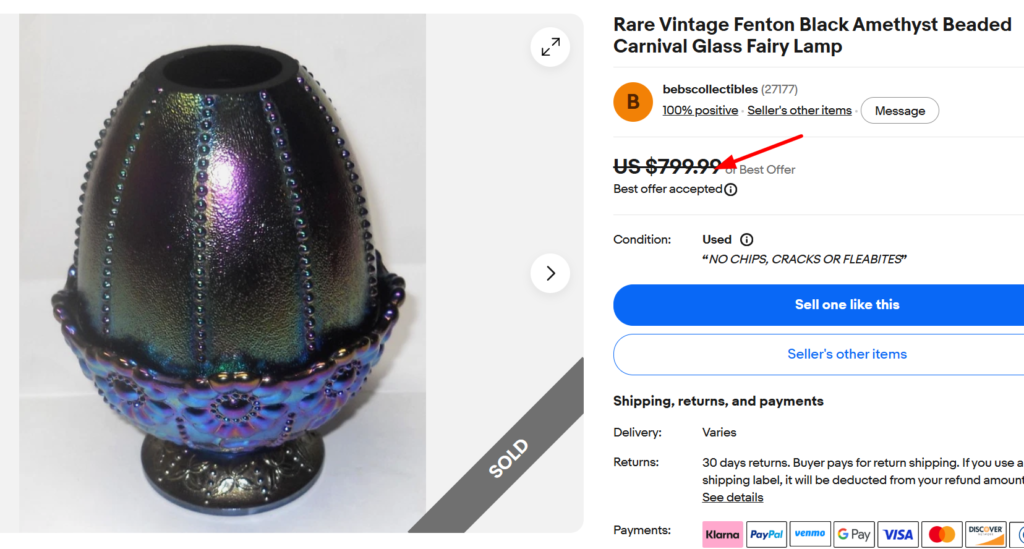
Sold for $800
This is one of the carnival glass colors that gets misidentified. Real black amethyst is black all over when held in your hand.
The only time you will catch a glimpse of its purpleness is when you hold it up against an extremely bright source of light, such as a 200-watt bulb or direct sunlight. It is different from normal dark amethyst because of this.
- Estimated Value: $100 to $1,800+
- Production Years: 1908 to 1920
- What to Check: Almost opaque, faint purple hint
- ID Notes: Most “black amethyst” listings are misidentified.
2. Red (Fenton and Imperial)
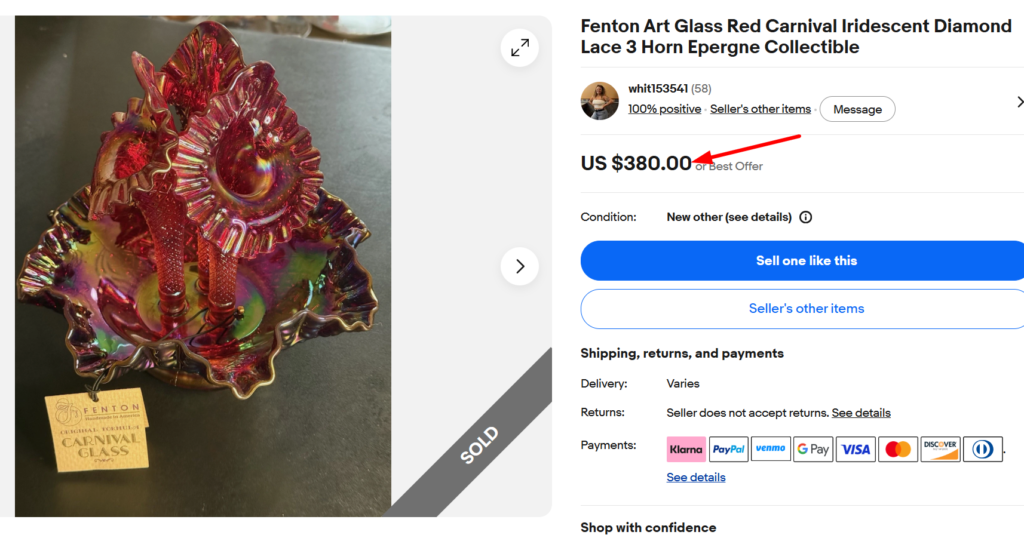
Sold for $380
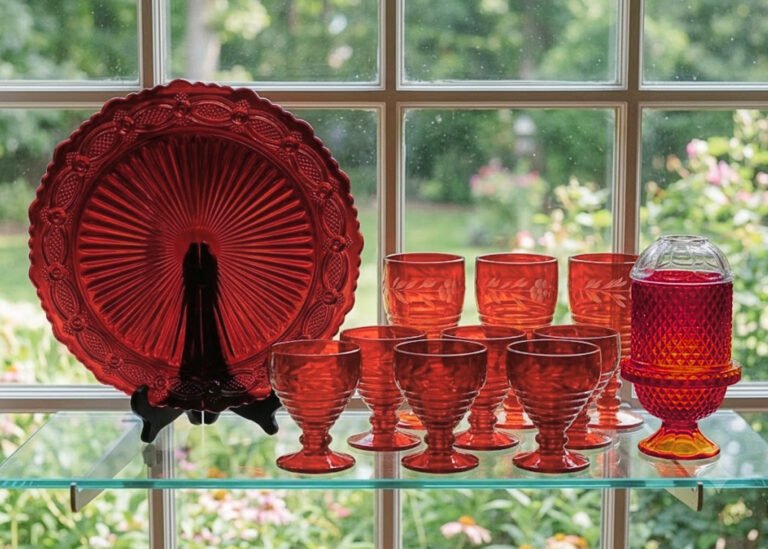
Red carnival glass needed cadmium for its manufacture and was thus the costliest color to make. Red specimens are very rare owing to their limited production period.
The two most recognizable types of red carnival glass are the red Holly bowls by Fenton and the red Grape by Imperial, and these fetch over four figures in auctions.
- Estimated Value: $1,000 to $5,000+
- Production Years: 1907 to 1920 (limited runs)
- What to Check: True red base, not amberina
- Quick Notes: Cadmium-based, very few pieces exist
3. Aqua Opalescent (Northwood)
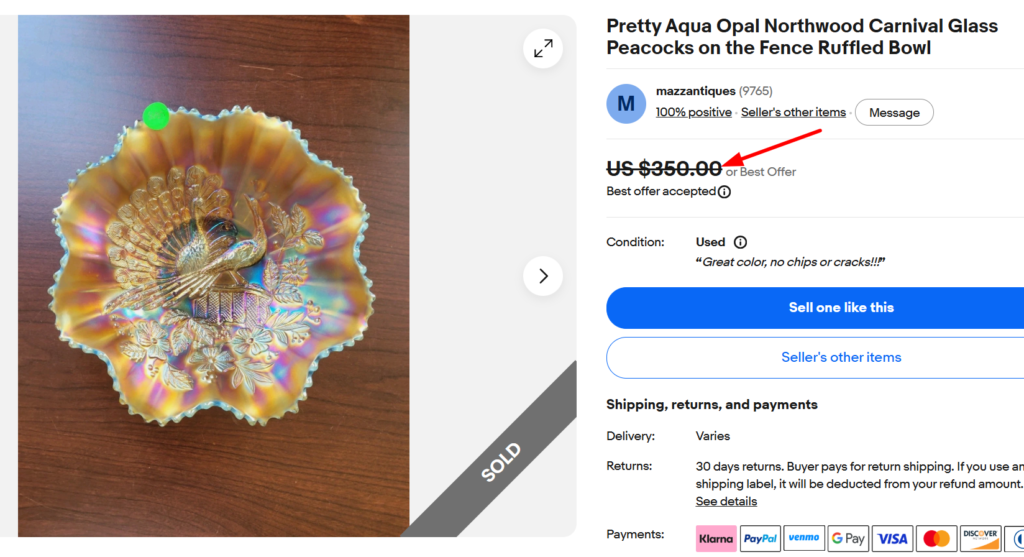
Sold for $350
This color from Northwood shows a pale aqua base with milky opalescent edges. Northwood’s Peacocks on the Fence bowl in aqua opal has sold for over $20,000 at major auctions. Even smaller aqua opal pieces, like berry bowls, bring $300 to $1,500.
- Estimated Value: $150 to $1,500 (rare pieces: $20,000+)
- Production Years: 1908 to 1915
- What to Check: Milky white opal edges present
- Quick Notes: Northwood’s most valuable color overall
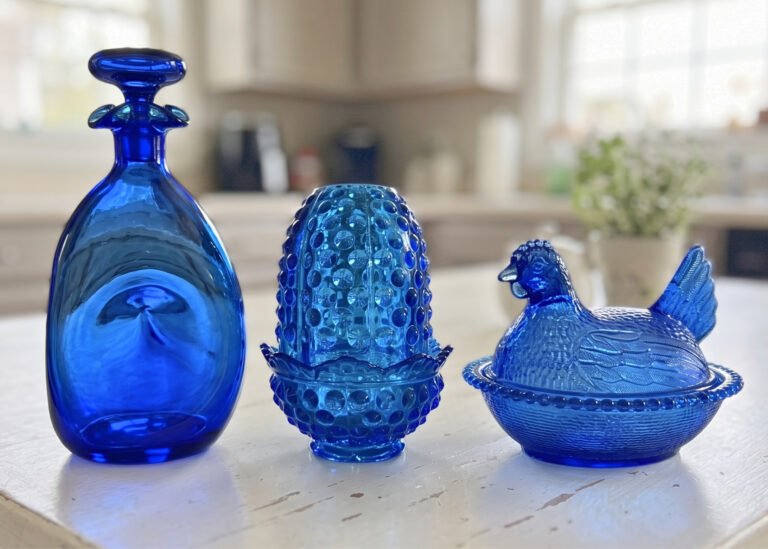
4. Ice Blue (Northwood)
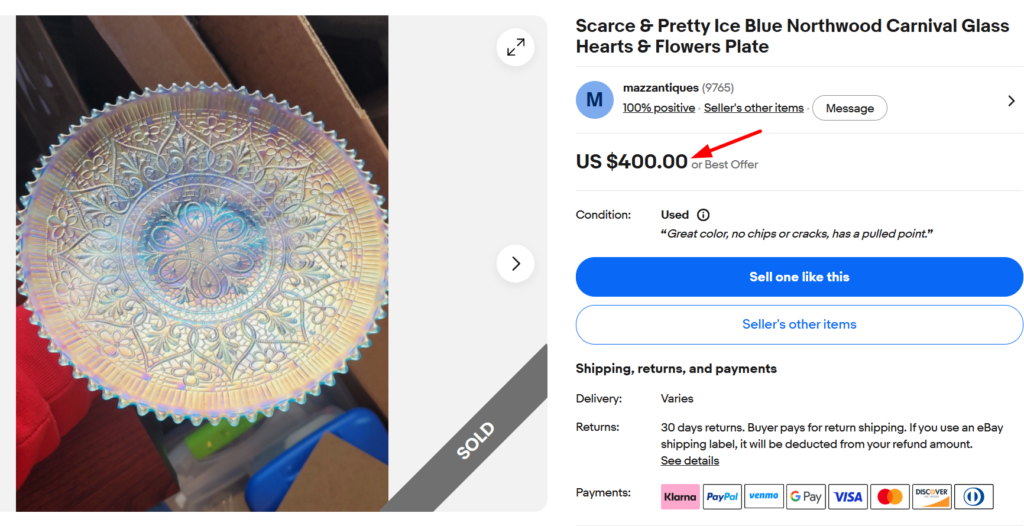
Sold for $400
The color “ice blue” has a light, icy blue color that is entirely distinct from cobalt. Ice blue Good Luck bowls by Northwood were being sold for $150-$200. However, the most sought-after pieces are the funeral vases and Tree Trunk funeral vases, which can sell for tens of thousands of dollars today.
- Estimated Value: $150 to $55,000+
- Production Years: 1908 to 1915
- What to Check: Pale frosty blue, not cobalt
5. Ice Green (Northwood)
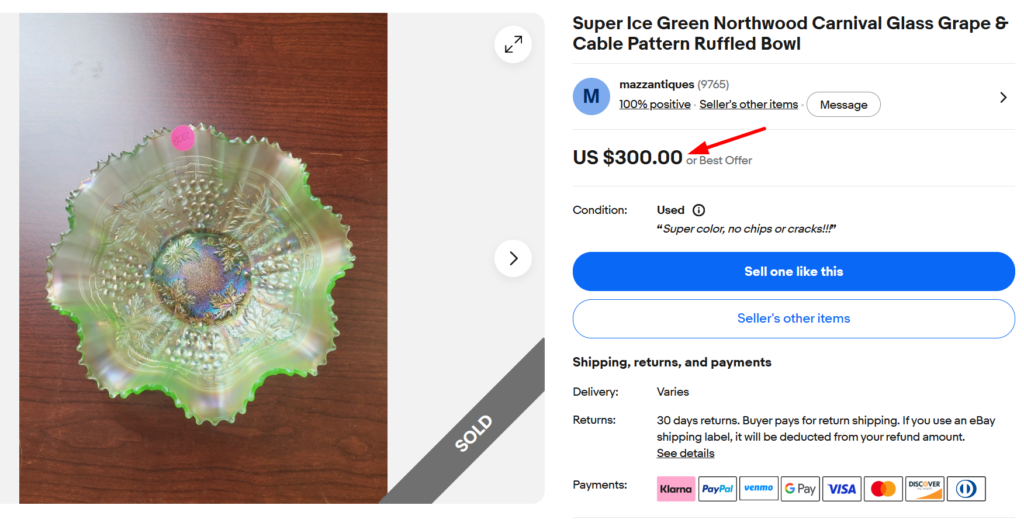
Sold for $300
Ice green is the rare sister of ice blue. There are about four ice green Tree Trunk funeral vases in existence, found in Canada and the USA among private collectors.
While there are also other smaller ice green items such as ruffled bowls and plates, they occur in smaller numbers, making them collectible today.
- Estimated Value: $200 to $20,000+
- Production Years: 1908 to 1915
- What to Check: Pale minty green, very light
- Quick Notes: Fewer known pieces than ice blue
6. Celeste Blue (Fenton)
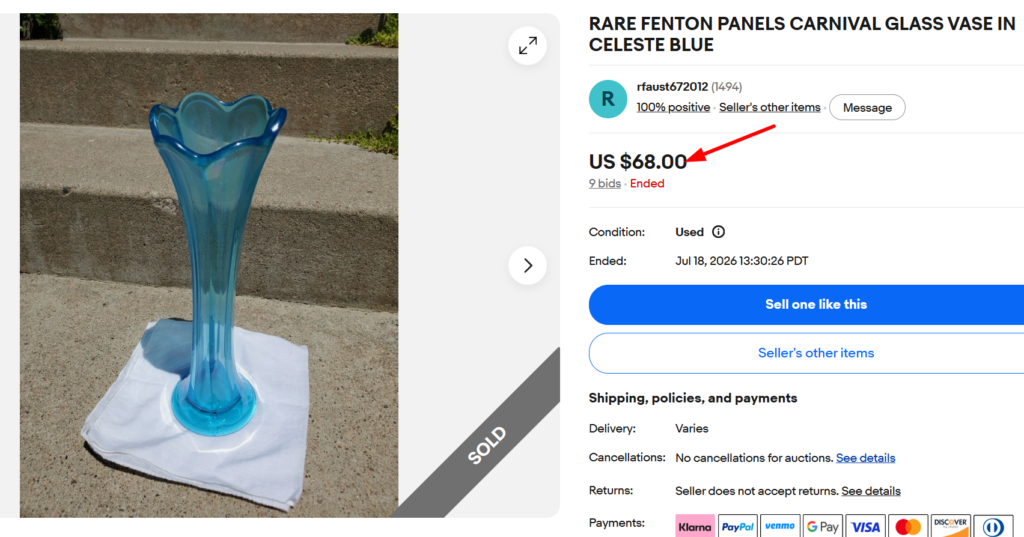
Sold for $70
The celeste blue color is a light pastel blue used by Fenton on a few patterns. The rarest Fenton carnival glass pieces in celeste blue are the Holly plate and Orange Tree bowl. Even simple celeste blue pieces can fetch $50 to $500 or more.
- Estimated Value: $300 to $16,000+
- Production Years: 1910 to 1920
- What to Check: Soft pastel blue, not cobalt
- Value Notes: Holly and Orange Tree patterns are top sellers.
7. White (Fenton and Dugan)
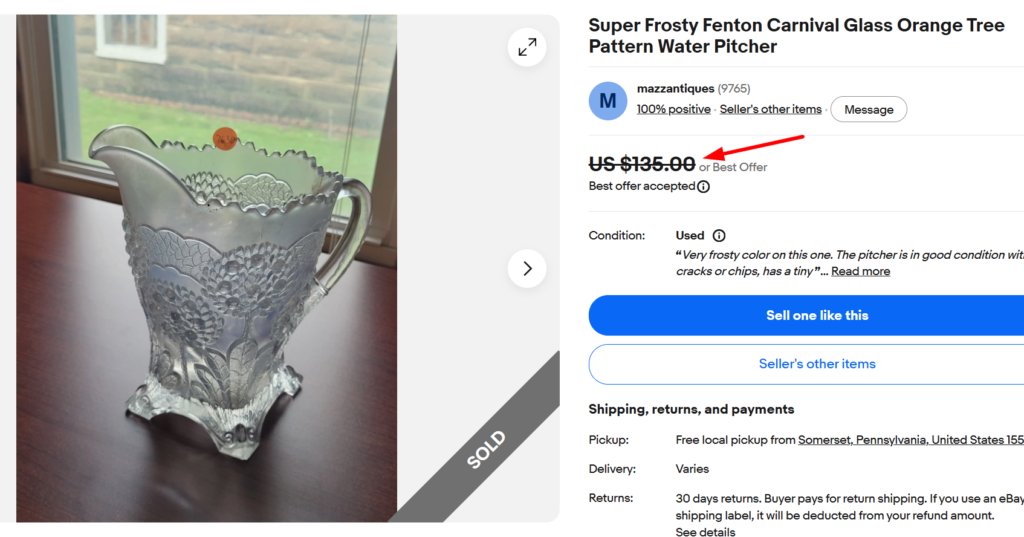
Sold for $135
White carnival glass is rarer than many imagine. You can identify these by the white base underneath the iridescent finish. Both Fenton and Dugan made white carnival glass too, though the latter is even rarer today.
As for value, complete sets of white Fenton pieces bring strong premiums. A set including both the pitcher and the cups by Fenton in white can sell for $1,000+.
- Estimated Value: $100 to $1,200+
- Production Years: 1908 to 1920
- What to Check: White base, not clear with coating
8. Peach Opalescent (Dugan)
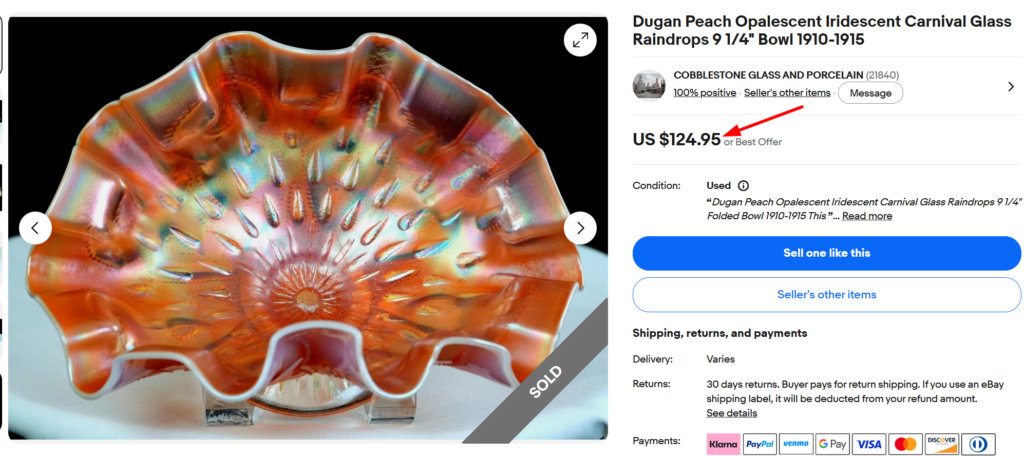
Sold for $125
Dugan produced more peach opalescent carnival glass than any other maker; however, some patterns remain very rare. An orange tree bowl in peach opal from Fenton is thought to be a unique example. The price for a standard bowl or compote made of peach opal varies between $80 and $400.
- Estimated Value: $80 to $400+
- Production Years: 1909 to 1920 (Dugan’s specialty)
- What to Check: Warm peach tint with milky edges
- Quick Notes: Dugan’s signature color; Fenton pieces are rarer.
9. Lavender (Dugan and Northwood)
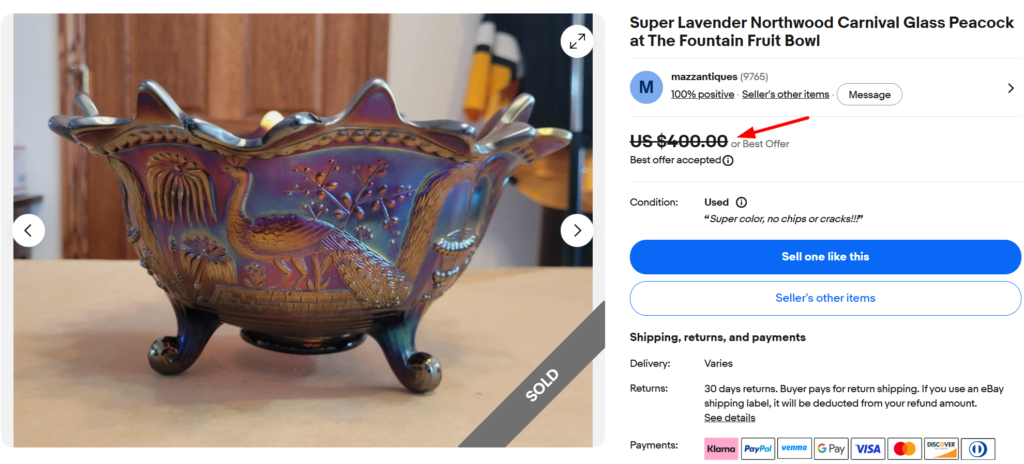
Sold for $400
There is a difference between true lavender and amethyst, and it’s important to know the difference. It is relatively easy to come by amethyst carnival glass; however, it is rare to find an authentic lavender base that is pale and has a hint of pink.
- Estimated Value: $200 to $800+
- Production Years: 1909 to 1915
- What to Check: Lighter than amethyst, pinkish undertone
10. Red Amberina (Fenton)
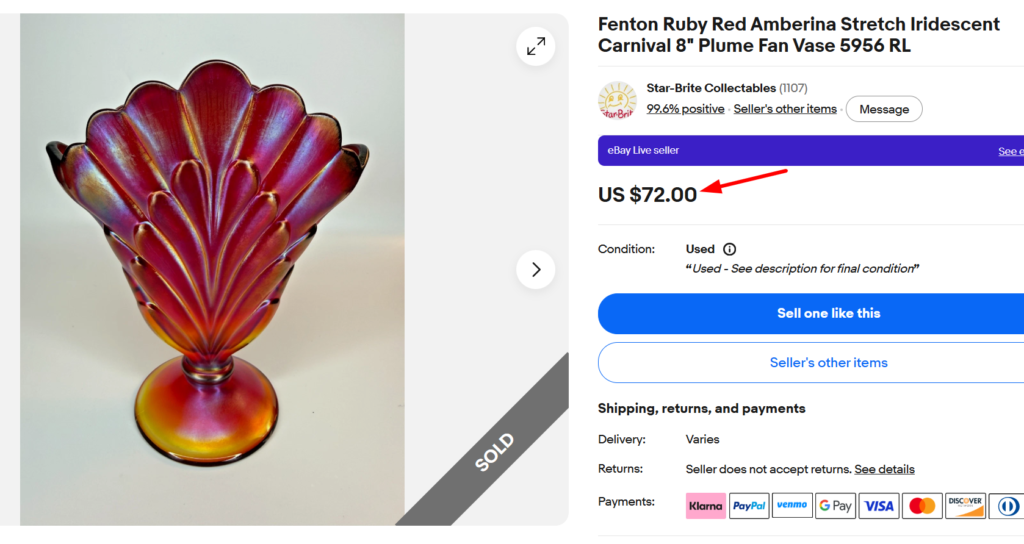
Sold for $72
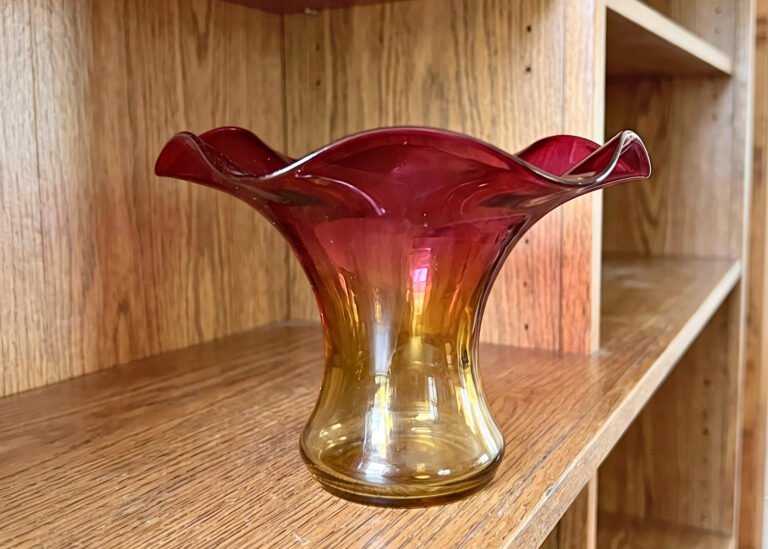
The Amberina color is a color transition that goes from the top of the piece in red to amber at the bottom of the glass. The Fenton Glass Company manufactured some Amberina colored glass in designs such as the Waterlily and Holly patterns.
It’s a transitional shade that’s harder to fake than solid colors; that’s why pieces in good condition with a strong red-to-amber shift are highly collectible.
- Estimated Value: $150 to $1,000+
- Production Years: 1907 to 1920
- What to Check: Clear red-to-amber color gradient
- Quick Facts: Reverse amberina (amber-to-red) also exists
Carnival Glass Color Value Quick Reference
Here is the ranking of the value of carnival glass by its colors.
- Extremely rare colors consist of red, aqua opalescent, and emerald green.
- Rare colors include ice blue, ice green, black amethyst, white, celeste blue, and wisteria.
- Mid-range colors are lavender, peach opal, and amberina.
- Common colors, such as marigold, amber, amethyst, and smoke, occupy the lowest position.
However, even if the color is common, if the pattern is rare, the piece can be highly valuable. So, color is a big factor in evaluating carnival glass value, but not the only one.
It starts off easy. Turn your piece over, match its base color from this list, and see if there are any manufacturer markings. If your base color is not marigold or ordinary amethyst, you may have a rare find.