

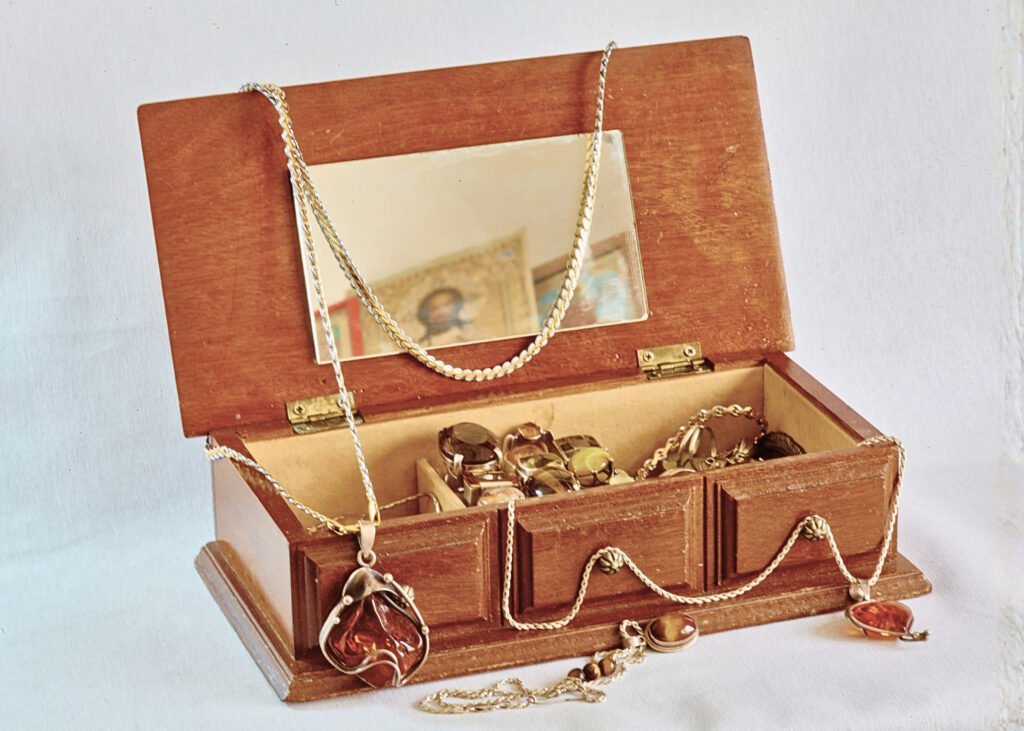
An Art Deco Tiffany & Co. sterling jewelry box was recently listed on eBay at $1,650 and sold via best offer. But most old boxes, whether wood or metal, are constantly put up at garage sales for a dollar or two. And that’s why people think that’s all these boxes are worth.
If you own an old trinket box or see one at a garage sale, it’s good to know about the most collectible designs, easy tips to spot an antique or vintage box, and what drives its value.
10 Collectible Antique & Vintage Jewelry Boxes and Their Values
Here are the most valuable and collectible old jewelry boxes from top makers, their key features, and their real market values, so you can tell if yours is worth anything.
1. Tiffany & Co. Sterling Jewelry Box
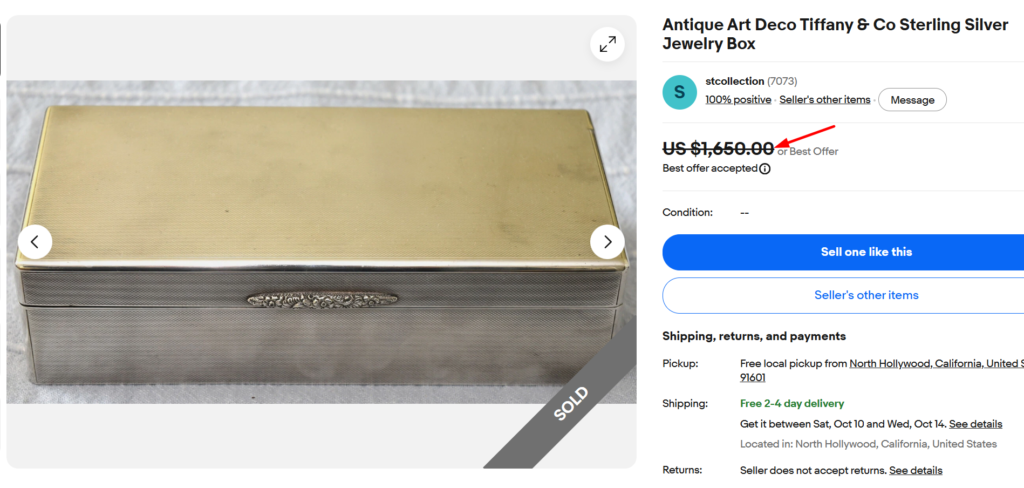
Sterling boxes by Tiffany & Co. have been around for more than a century, ranging from repoussé Victorian caskets to antique trinket boxes and even simple modern ring boxes. The older ones hold the highest value.
Spot the hallmark at the bottom of the box. The stamp “Tiffany & Co. Makers Sterling Silver,” along with the pattern number, helps narrow down the box’s age. Also, a monogram can lower the price for some buyers.
- Estimated Value: $300 to $3,000+
- Production Years: 1850s to present
- What to Check: Maker’s mark, pattern number
2. Jennens & Bettridge Mother of Pearl Papier-Mâché Box
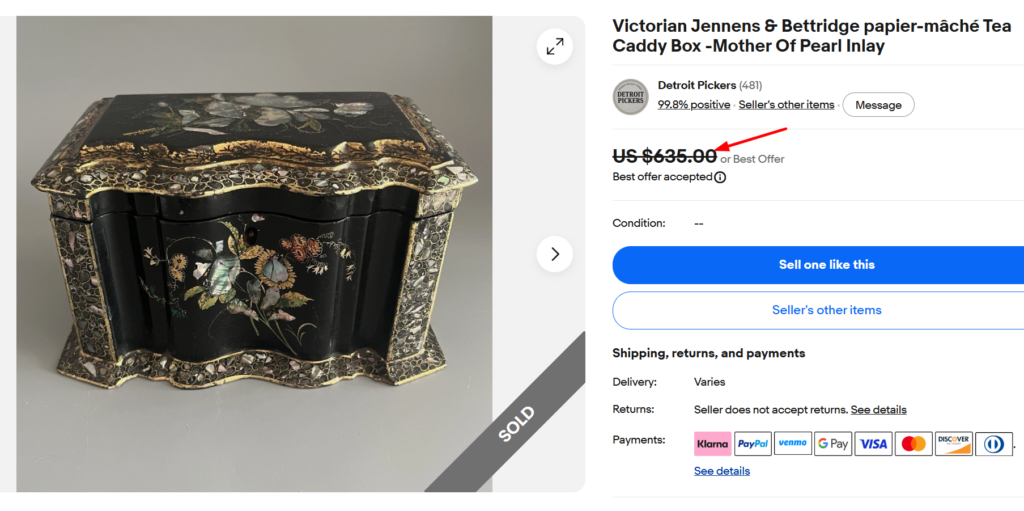
This example is a rare English papier-mâché tea caddy, typical of Jennens & Bettridge; the firm also made boxes in this style. The black japanned (coated with lacquered layers) surface is decorated with hand-painted flowers and gold borders.
The key feature of these boxes is the thin mother-of-pearl pieces inserted into the surface using a process that was patented by Jennens & Bettridge in 1825.
Unsigned boxes usually sell for less, so always check for the “Jennens & Bettridge” mark at the bottom.
- Estimated Value: $200 to $1,500
- Production Years: 1816 to c. 1864–1870
- What to Check: Impressed stamp, pearl inlay
3. Tahan Paris Jewelry Casket
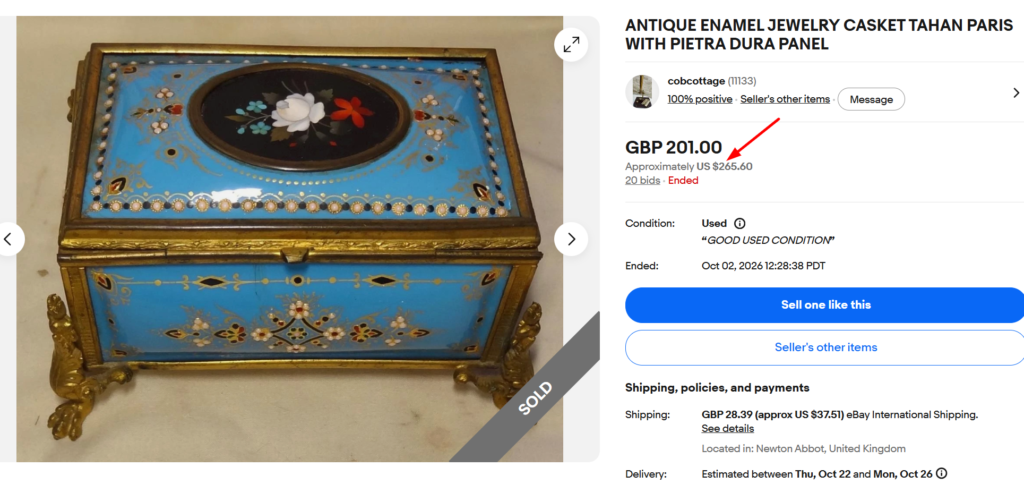
This jewelry box is an Alphonse Tahan creation, a supplier to Napoleon III and his wife, Empress Eugénie. His Paris workshop created wooden jewelry boxes of kingwood, rosewood, bird’s-eye maple, and gilt-bronze caskets.
The casket pictured here is blue enamel in a gilt-metal frame, with a pietra dura (inlaid stone) flower panel on the lid. Check the back of the lock plate for “Tahan” or “Tahan à Paris.”
- Estimated Value: $250 to $5,000
- Production Years: c. 1850s to late 1800s
- What to Check: Tahan stamp on lock
- Quick Notes: Always check for the original key.
4. William Comyns Victorian Sterling Silver Casket
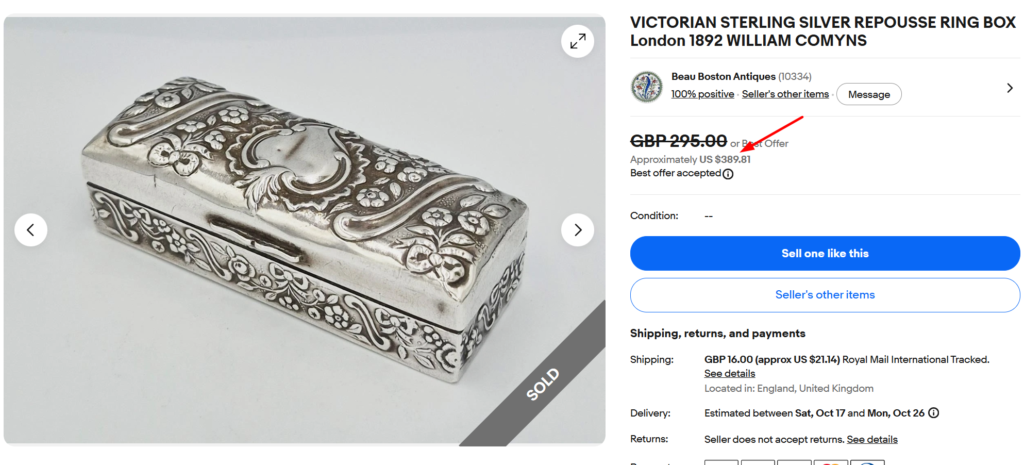
William Comyns started his silverware business in London in the late 1850s, and his embossed sterling caskets took off in the 1890s. A typical example has repoussé work (design hammered from the back) of cherubs, scrolls, and flowers.
Every genuine piece must have English hallmarks, including a date letter that pins down the exact year. Original velvet lining and large size are key value drivers.
The listing describes the piece pictured as a small ring box dated London 1892, which is part of why it sits below the range for full-size caskets.
- Estimated Value: $500 to $4,000
- Production Years: c. 1880s to 1910s
- What to Check: English hallmarks, date letter
5. Reuge Swiss Music Jewelry Box
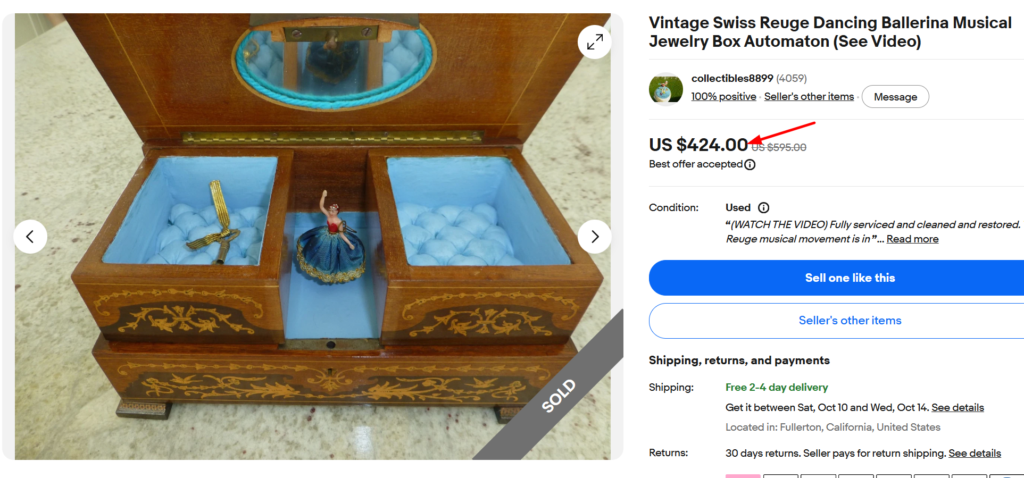
Reuge traces its history to 1865, when Charles Reuge opened his first workshop in Sainte-Croix, Switzerland, making musical pocket watches. Vintage Reuge music boxes are among the most collectible jewelry boxes.
These usually pair a Swiss cylinder movement with a wooden case, often with a marquetry (inlaid wood picture) lid. Valuable examples come with a dancing ballerina or singing bird inside the box.
The value also depends on the movement size. A 72-note or 144-note comb sounds fuller and sells for far more than a basic 18-note box.
- Estimated Value: $150 to $2,000
- Production Years: 1865 to present
- What to Check: Reuge label, note count
6. Erhard & Söhne Art Nouveau Jewelry Box
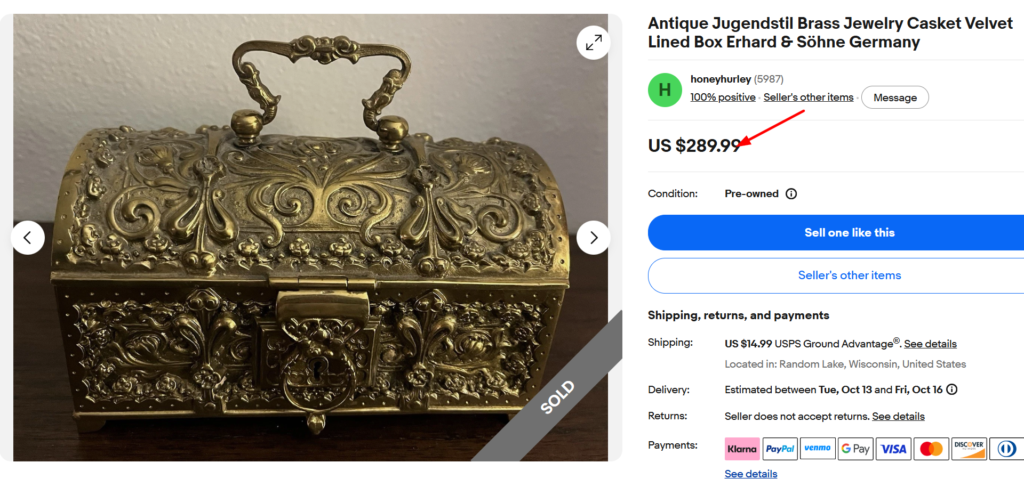
The Erhard & Söhne company has been making metalwork in Schwäbisch Gmünd, Germany, since 1844. The firm made many footed brass and silver-plated jewel caskets from 1900 to 1915.
These typically have flowers, foliage, or female faces. Look for the maker’s stamp on the base, often the firm’s lion emblem; this lion is a trademark, not the English sterling lion passant.
- Estimated Value: $150 to $900
- Production Years: c. 1900 to 1915
- What to Check: Lion mark, footed base
- Quick Notes: Original lining boosts resale value.
7. Meiji Japanese Lacquer Jewelry Box
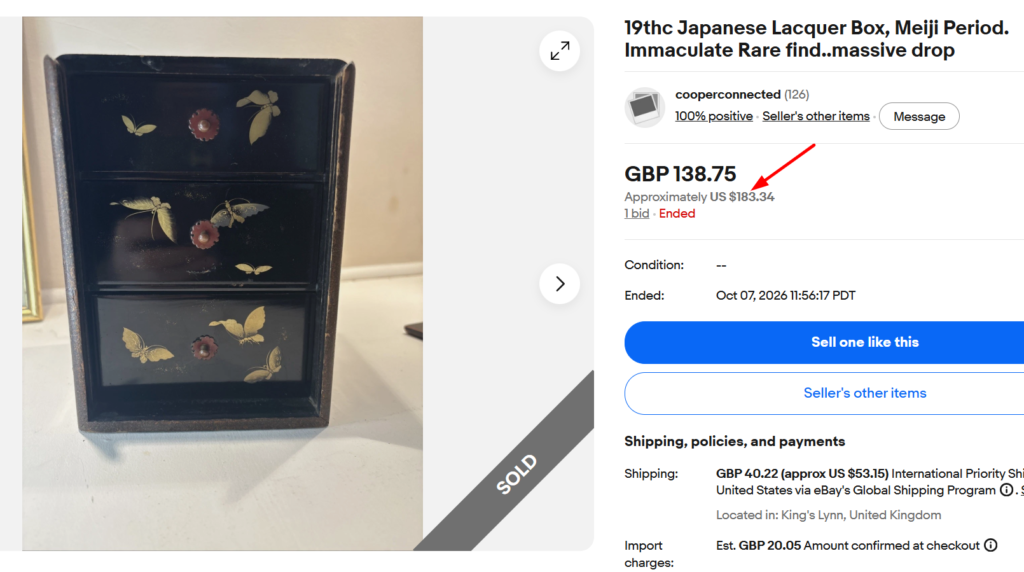
Many of the beautiful lacquer boxes from the Meiji period (1868-1912) were sold to Westerners. Most feature maki-e (literally ‘sprinkled picture’), where gold or silver powder is sprinkled onto wet lacquer to create the design.
Landscapes, birds, or flowers in raised gold or silver on a black lacquer background are the most desirable features.
But be sure not to confuse them with the 1960s music boxes marked “Made in Japan.”
- Estimated Value: $150 to $3,000+
- Production Years: 1868 to 1912
- What to Check: Raised gold maki-e decoration
8. Tunbridge Ware Wood Mosaic Jewelry Box
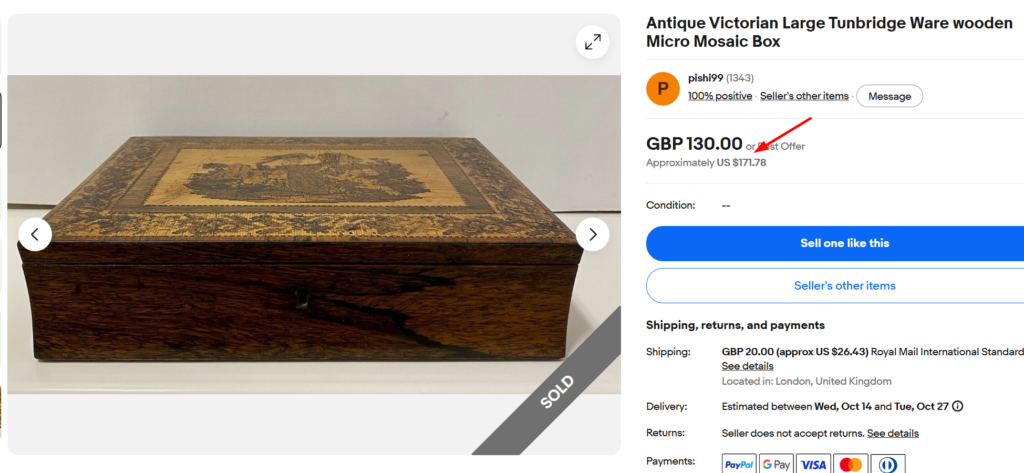
Tunbridge ware is from the area around Tunbridge Wells in Kent, England. The makers would glue rods made out of different colored wood into blocks, and these would be cut into pictures or designs.
Wood mosaic Tunbridge ware was made from about 1830 until the last workshop closed in 1927, and most of the finest pieces date from before 1900. The boxes that were decorated with castles, abbeys, or local landmarks were more valuable than plain ones.
- Estimated Value: $150 to $1,200
- Production Years: c. 1830 to 1920s
- What to Check: Wood mosaic picture lid
9. Jennings Brothers (JB) Antique Jewelry Casket
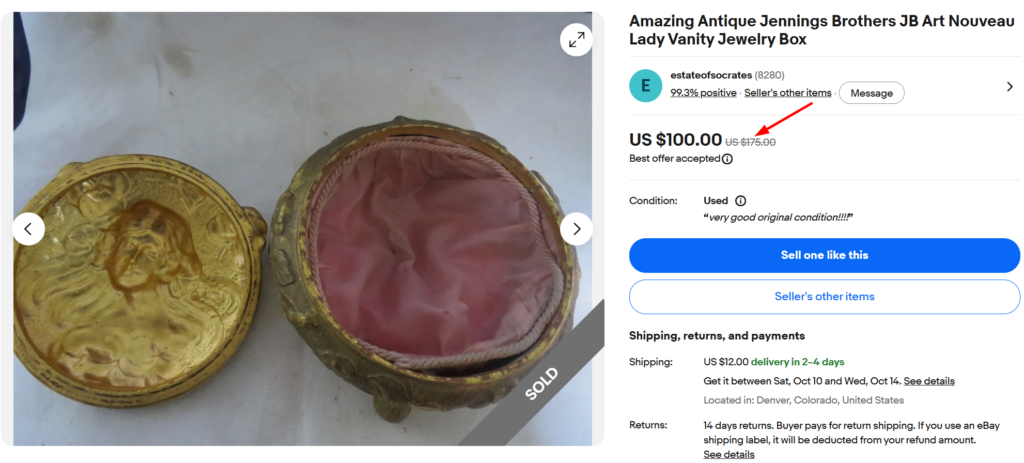
Jennings Brothers is known for their cast metal caskets with gold or silver-tone finishes, often with cherubs, portraits, roses, or grape clusters.
Values stay modest for most of these, but footed figural caskets with intact original gilding sell well above the plain ones.
Later castings exist from original molds. Confirm authenticity with the “JB” mark and model number on the base.
- Estimated Value: $75 to $500
- Production Years: 1891 to 1954
- What to Check: JB mark, model number
10. Wedgwood Jasperware Trinket Box
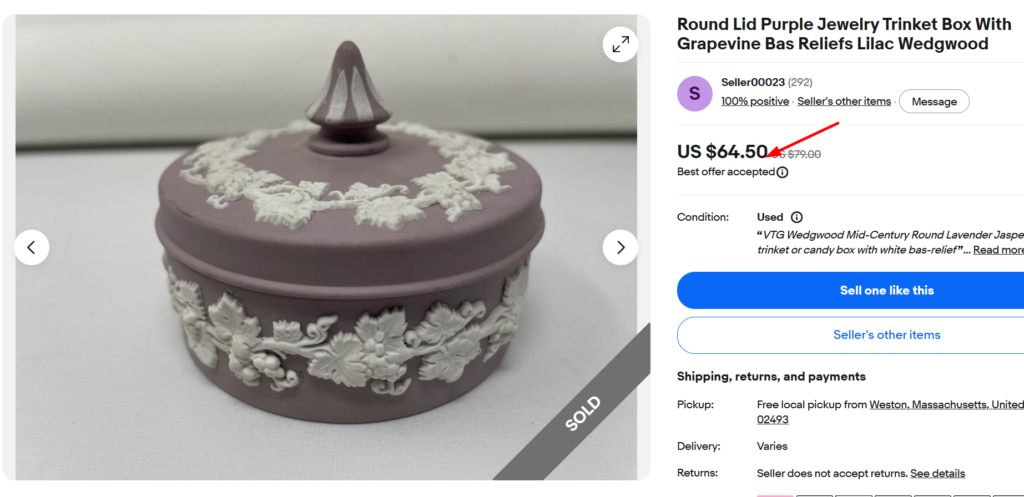
Wedgwood’s jasperware is the matte, unglazed stoneware with raised white decoration that Josiah Wedgwood developed around 1774 to 1775. Trinket boxes in pale blue and sage green turn up often, but lilac pieces like this grapevine box are less common, so they draw more interest.
Values stay modest for small and regular-sized boxes.
Turn it over to confirm authenticity: you should see an impressed WEDGWOOD mark, and boxes made from 1930 onward often carry a two-digit year code.
- Estimated Value: $20 to $150
- Production Years: c. 1775 to present (jasperware)
- What to Check: Impressed Wedgwood mark, year code, color
Identifying an Antique Jewelry Box: 5 Details to See
Identification begins with the box in front of you. Turn the box over, open all drawers and lids, and check every small detail.
Checking for Maker’s Marks and Hallmarks
Check the box inside out. You should see some embossed or incised markings on the base, inside the lid, and beneath the box’s lining. Any maker’s name, sterling mark, or English hallmarks will indicate what you have immediately.
But not all old jewelry boxes have a marking, so a missing mark doesn’t cancel out authenticity. In that case, check other features.
Construction Details
Next, consider how the box is made.
Dovetail joinery, hand-slotted screws, and hardwood construction are all indicators of age. On the other hand, Phillips head screws, staples, and particle board are features of newer boxes regardless of their looks.
Weight and Type of Metal
Pick up the box. Weight is important to identify the metal. Bronze and sterling would feel quite substantial in your hands, whereas spelter (a cheap alloy of zinc) feels lighter than bronze and shows gray metal where the gilding has worn.
Inspect Hinges, Locks and Keys
Original hardware is a clear sign of age. Older boxes usually have small brass hinges, a working lock, and sometimes the original key.
A matching key is a nice bonus, and collectors will pay a little more for one that still turns the lock.
Read the Lining and Style
Finally, open it up. Silk or silk velvet linings and fitted trays point to older boxes, while flocked or synthetic linings suggest newer ones. Style helps too, since whiplash curves suggest Art Nouveau and stepped geometric shapes suggest Art Deco.
Are Old Jewelry Boxes Worth Anything?
Honestly, some are, but most aren’t.
Mass-produced old jewelry boxes from the 1950s to the 1980s, like Mele, Lady Buxton, Godinger, and the musical ballerina boxes, are worth $10 to $60. They’re nice to own, but they rarely make anyone rich.
The real money lies in the age. Antique boxes (100 years or older) and vintage boxes (20 to 99 years old), including signed Victorian silver, French gilt bronze, and Art Nouveau metalwork, are worth the most.
What Makes a Vintage Jewelry Box Valuable?
Two old boxes that look alike can sell for $40 and $400, and these are usually the reasons why:
- Maker – Signed pieces by known firms beat unmarked ones.
- Material – Sterling, gilt bronze, and enamel sell far above plated pot metal.
- Age – Pieces made before 1920 tend to bring the strongest prices.
- Craftsmanship – Hand-painted, inlaid, enameled, or hand-chased work adds value.
- Mechanism – A working Swiss music movement adds a lot.
- Originality – Original lining, key, and finish matter more than shine.
What to Do With Old Jewelry Boxes
Is there still a market for old jewelry boxes? Yes, but only some of them sell well. Before you decide what to do with one, work through these steps:
- Empty it first – Check every drawer, tray, and lining for forgotten pieces. Gold, sterling and signed pieces are often worth more than the box, so see which old costume jewelry is worth money before you give anything away.
- Signed or antique boxes – Search eBay sold listings (not asking prices) for the maker and material. Sterling, enamel, and signed French or English boxes can also go to an auction house that holds silver or decorative arts sales.
- Mass-made boxes – Sell them locally or in a bundle, donate them, or keep using them for watches, hair clips, or craft supplies.
So, before you donate or sell that old jewelry storage box, check it properly. A maker’s mark, a solid feel in the hand, and original fittings are the three signs that will help you spot a $20 box vs. a true antique jewelry box worth money.
Found this guide useful?
Save it for later
Share it with someone
Keep the old finds coming
New guides and finds worth looking for, delivered to your inbox.
Keep exploring
More guides in More Old Finds
 10 finds10 Valuable Old Coke Bottles Worth Money (ID Guide & Price List)
 9 finds9 Old Marbles Worth Money: How to Identify Valuable FindsTop sale $1,475
 5 findsHow to Identify a Valuable Old Camera? With Rare ExamplesTop sale $5,100
 11 findsOld Valentine’s Day Gifts That Are Now Cute CollectiblesTop sale $723