

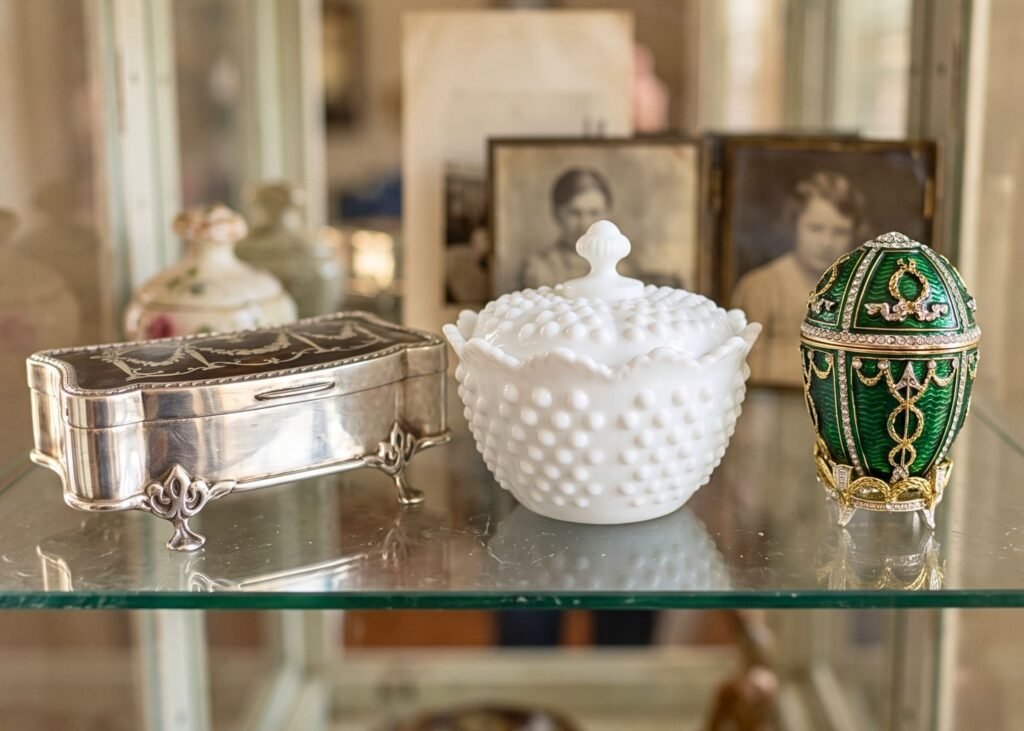
A trinket box is a small lidded box of less than six inches, used for storing rings, earrings, pins, or trinkets on the dresser. The word came into use during the Victorian period, but the item dates back to the snuff and patch boxes of the 18th century.
In the Victorian period (1837-1901), each middle-class house needed a matching box in porcelain, silver, or glass for the vanity, where it often sat beside a sterling vanity brush set. China, porcelain, and glass makers all supplied them.
After World War II, American importers like Lefton and Fitz and Floyd brought in large amounts of hand-painted Japanese porcelain, including trinket boxes, that are now collectible.
If you have a small old trinket box in your grandma’s vanity, this guide will help you identify it, know its worth, and cross-check it against the rarest designs.
Are Vintage Trinket Boxes Valuable?
Some are, and the mark on the base usually tells you which ones. Everyday porcelain and glass boxes tend to sell for under $100, while hand-painted Limoges figurals, Herend, Halcyon Days enamels, and Victorian sterling silver boxes can bring $200 or more.
Among the 12 boxes below, a Fenton milk glass box sold for over $30, an Artoria Limoges Disney box sold for almost $400, while a Victorian sterling heart was listed at $425 and sold via best offer.
5 Factors That Drive the Value of Old Trinket Boxes
Antique and vintage trinket boxes can range from $10 to $1,000, or even more, depending on several factors:
- Maker – A marked Limoges peint main box sells for many times what an unmarked porcelain box brings, even if they look nearly identical.
- Rarity – Retired designs, limited editions, and short production runs push the price up fast.
- Condition – Chips on the rim, hairline cracks, missing lids, or repainted lids kill value.
- Material – Hand-painted porcelain, sterling silver, and antique cloisonné, beat pressed glass or resin.
- Provenance and packaging – Original box, certificate, and paperwork can double the price on collector-grade pieces.
12 Valuable Vintage Trinket Boxes by Maker (With eBay Prices)
The boxes below are some of the most collectible vintage trinket box designs from notable makers, each with its sale.
1. Victorian Sterling Silver Heart Trinket Box
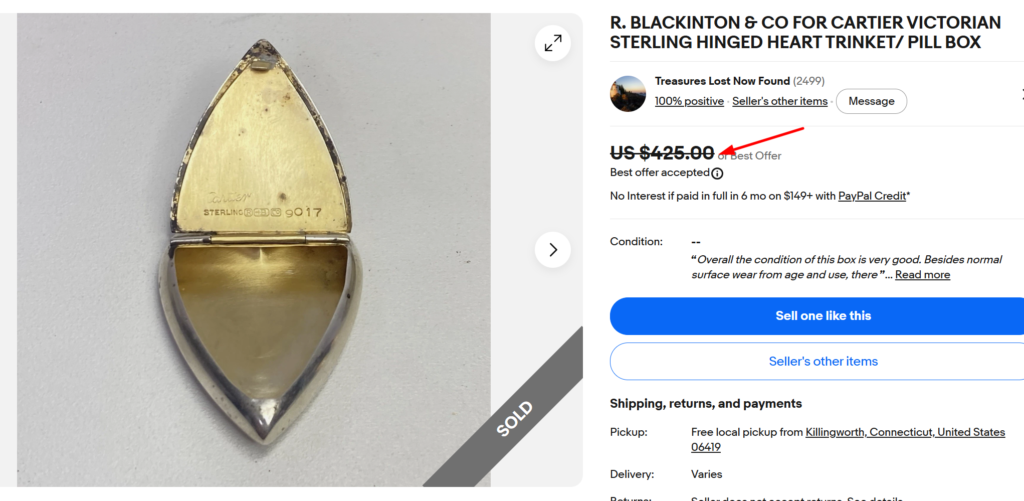
Victorian sterling silver trinket boxes are among the most valuable antique pieces. Heart-shaped ones from around 1890 to 1910 are especially popular with collectors, particularly when marked by William Kerr or Gorham, Canada’s Birks, or a known English silversmith.
The pointed heart shown here is marked Cartier and was listed as made by R. Blackinton & Co.
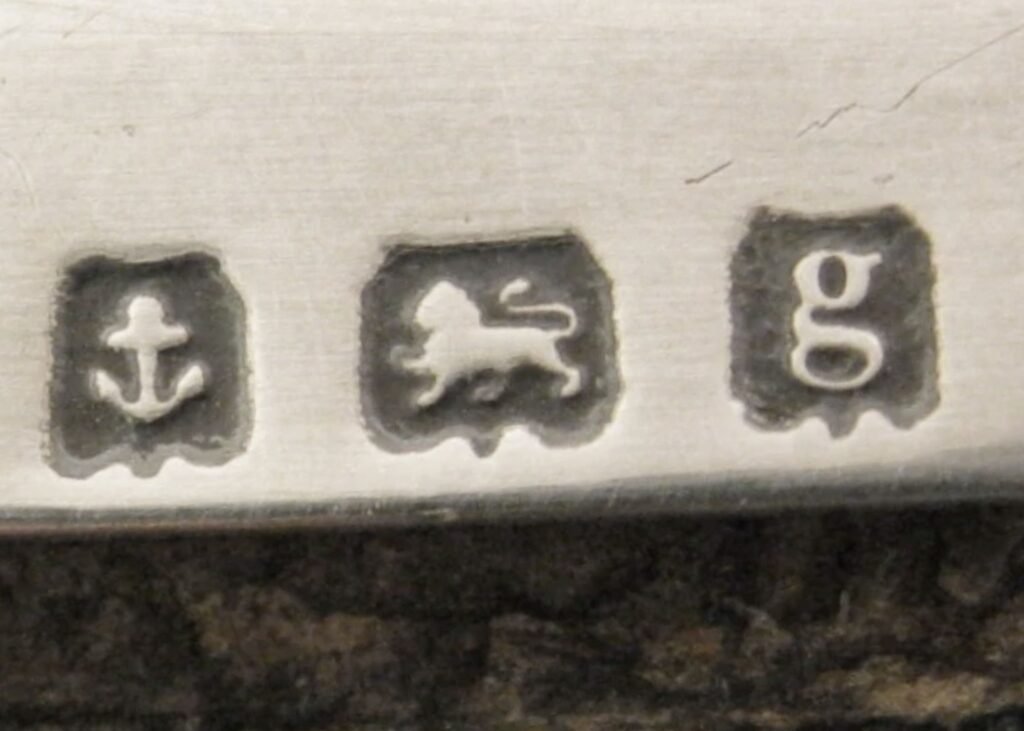
Look for the sterling hallmark (a lion passant for English silver) plus a date letter and maker’s mark on the base. Interior velvet linings and fitted ring holders add real value.
- Estimated Value: $250 to $900+
- Production Years: 1880s to 1910s
- What to Check: Sterling hallmark and maker’s stamp
2. Rochard Limoges Peint Main Figural Box
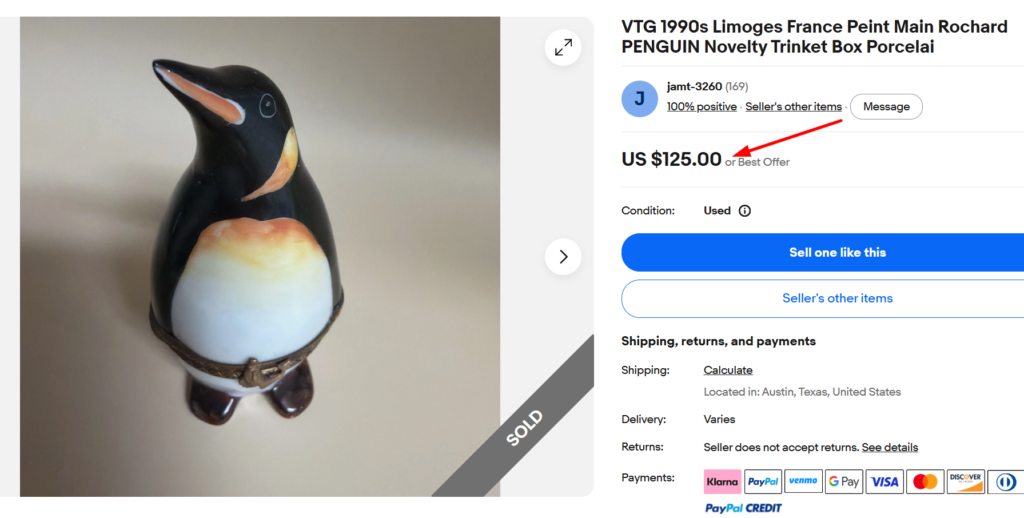
Rochard, an importer that sells boxes hand-painted in Limoges workshops, is one of the best-known names on Limoges boxes, along with Artoria and Chamart.
Their peint main figurals (think golf bags, cactus plants, or animals) are the ones collectors hunt.
The value driver is really the artist. Each piece is signed with the decorator’s initials on the base, and Rochard’s brushwork tends to be tight and detailed, with rich color layering under the glaze.
- Estimated Value: $120 to $450
- Production Years: 1970s to present
- What to Check: Red “Peint Main Limoges France” stamp
- Quick Notes: Signed by decorator, brass clasp closure
3. Artoria Limoges Retired Character Box
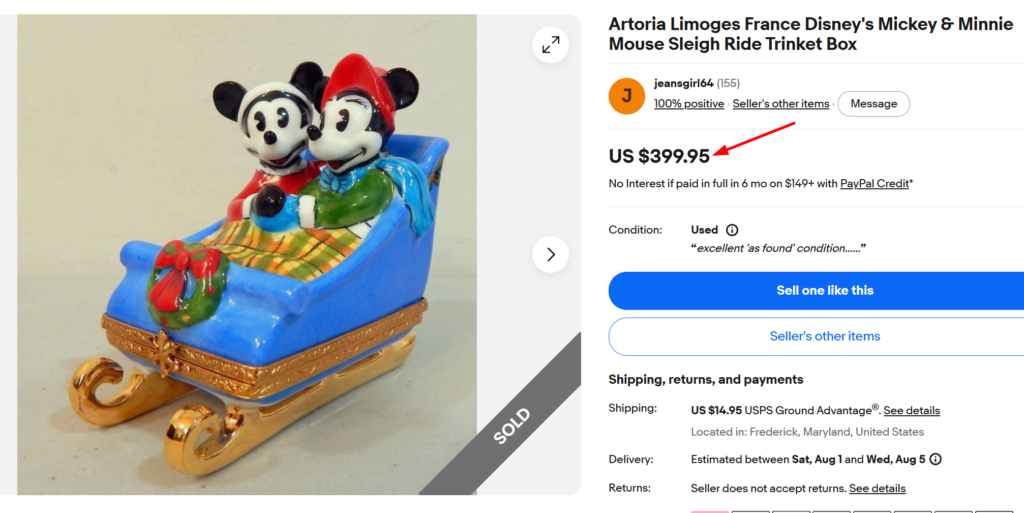
Artoria made Limoges boxes for licensed brands like Disney, Peanuts, and Coca-Cola. Those retired character boxes are now the ones bringing the real money.
Mint character boxes can push well past $200; the Disney sleigh shown here sold for almost $400. The base always reads “Artoria Limoges, Peint Main, Made in France” and sometimes a limited edition number.
- Estimated Value: $80 to $400+
- Production Years: 1980s to early 2000s
- What to Check: Numbered base, artist initials
4. Capodimonte Cherub Trinket Box (Crown N Mark)
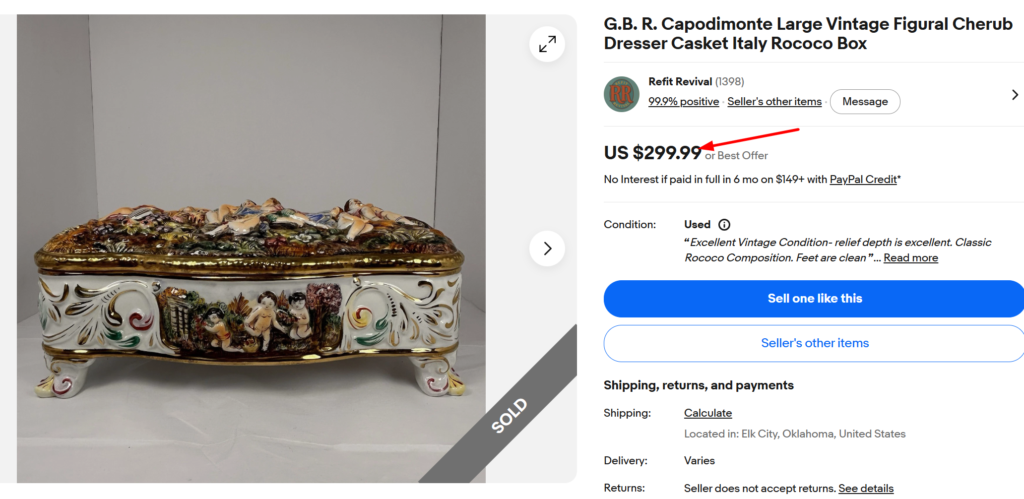
Capodimonte boxes with cherub scenes and gilt trim are the classic Italian collectible. But the crown over N mark was widely copied, so many “Capodimonte” pieces were made by other Italian factories after the royal porcelain factory in Naples closed in the early 1800s.
Better older pieces are slightly translucent porcelain with roses and figures sculpted one by one. Modern replicas are light and have glue marks from the roses that are glued on.
- Estimated Value: $25 to $150 (typical); $300+ (early sculpted)
- Production Years: Late 1800s to present
- What to Check: Blue underglaze N with crown
5. PHB Porcelain Hinged Box (Midwest of Cannon Falls)
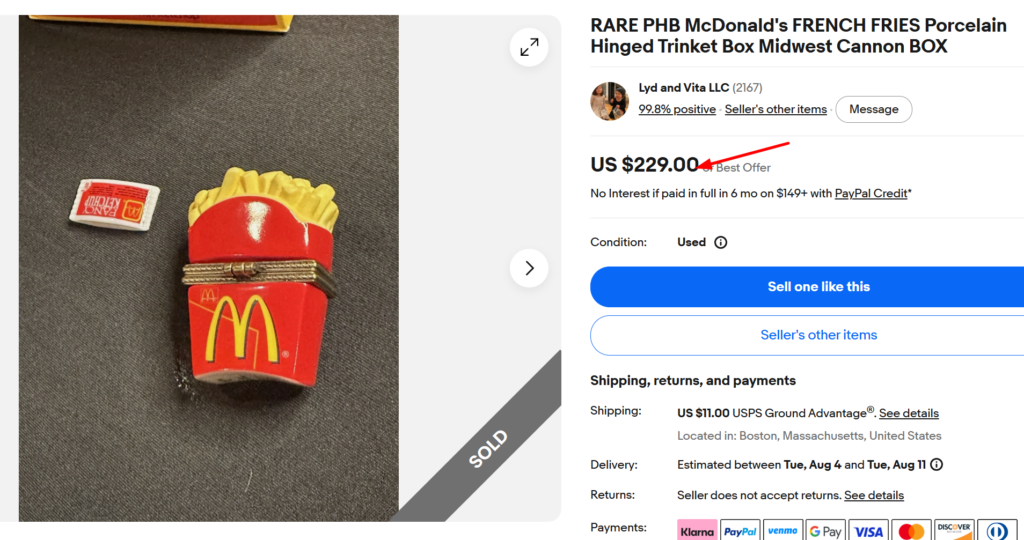
Midwest of Cannon Falls made these porcelain hinged boxes, called PHBs, in the 1990s and early 2000s. The whole line is said to have been retired between 1999 and 2001, which is why they’ve picked up steam with collectors.
Each box was Limoges-style, figural, and came with a tiny matching trinket inside (a mini hat inside a Laurel and Hardy bowler, a bottle opener inside a Coca-Cola cap). Rare designs like Old Spice or licensed characters bring the most.
- Estimated Value: $15 to $85 (common designs); $200+ (rare licensed designs)
- Production Years: 1990s to about 2001 (retired)
- What to Check: Matching tiny trinket inside
- Quick Notes: Complete piece with trinket doubles value
6. Waterford Crystal Lismore Trinket Box
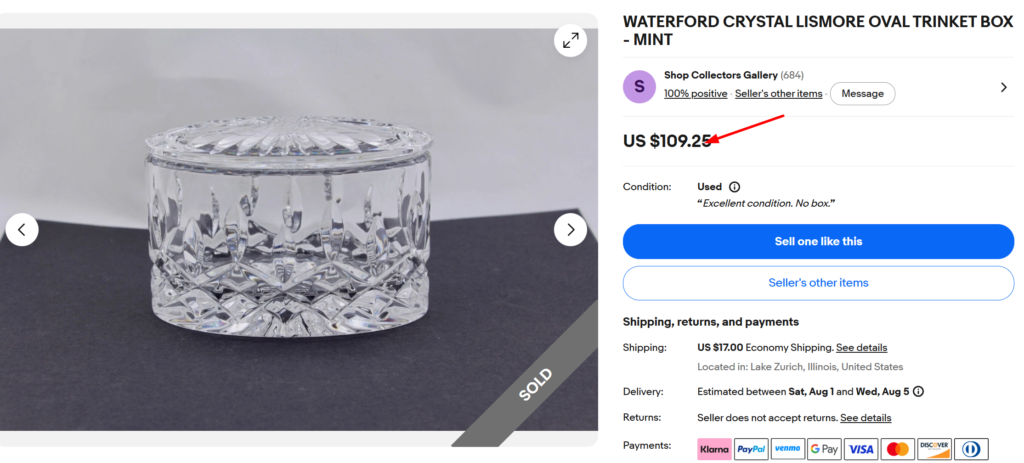
The Lismore pattern is the world’s most famous cut crystal design, created by Miroslav Havel in 1952 at Waterford. It features alternating diamond cuts and tall vertical wedge cuts inspired by the Gothic architecture of Lismore Castle.
On a trinket box, the pattern wraps the sides and the fitted lid. Look for the acid-etched “Waterford” signature on the base.
- Estimated Value: $45 to $180
- Production Years: 1952 to present
- What to Check: Acid-etched Waterford signature
7. Herend Porcelain Fishnet Box
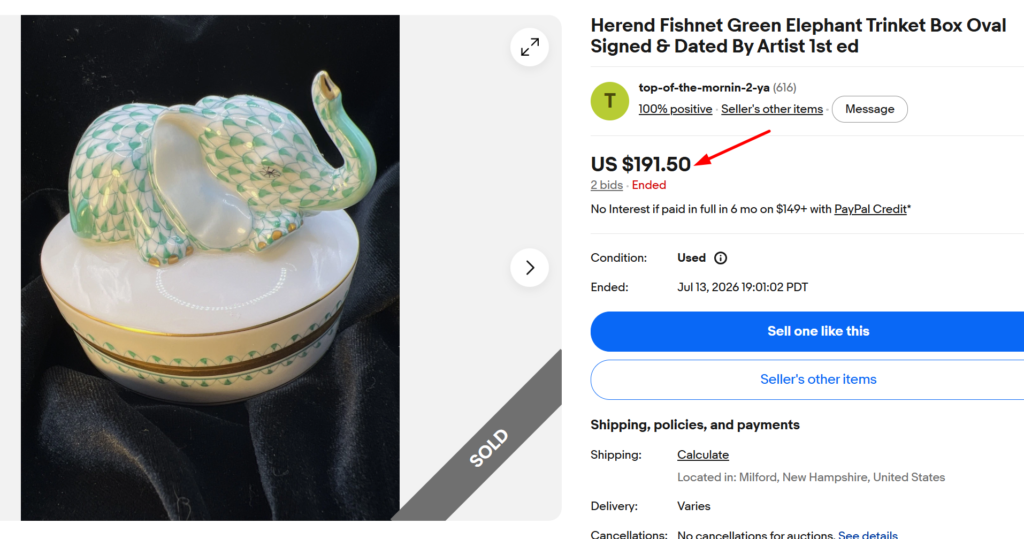
Herend, founded in Hungary in 1826, has been making hand-painted porcelain since 1839. Their signature fishnet pattern is scale-like painted decoration in a grid, and it wraps around small animal-shaped boxes in colors like rust, green, or blue.
Each scale is painted by hand across an uneven surface, which is why the pattern looks like it’s moving. Modern printed fakes look flat and mechanical in comparison.
- Estimated Value: $150 to $600+
- Production Years: 19th century to present
- What to Check: Blue Herend Hungary shield mark
8. Halcyon Days Bilston & Battersea Enamel Box
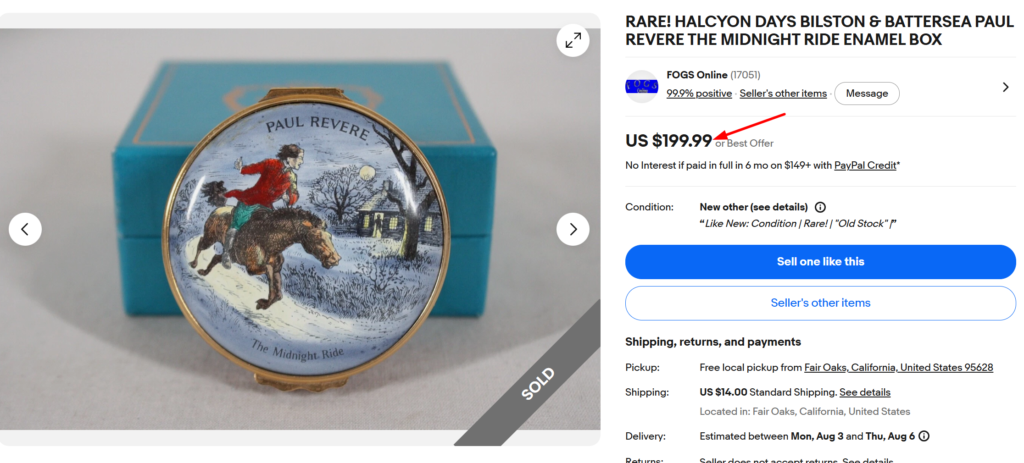
Halcyon Days produced enamel on copper boxes in the classic Bilston and Battersea tradition. The firm opened as a London antiques shop in 1950 and began making its own enamel boxes in 1970, according to Halcyon Days.
Limited editions like royal weddings, cathedrals, and Wimbledon centenaries are the ones to grab, especially with original certificates of authenticity.
Check for the stamp “Halcyon Days” with the year or commemorative theme on the base. Condition matters here more than most, since chips to the enamel drop the value dramatically.
- Estimated Value: $40 to $200 (regular); $200 to $500 (limited editions)
- Production Years: 1970 to present
- What to Check: Halcyon Days Enamels backstamp
9. Faberge-Style Enamel Egg Trinket Box
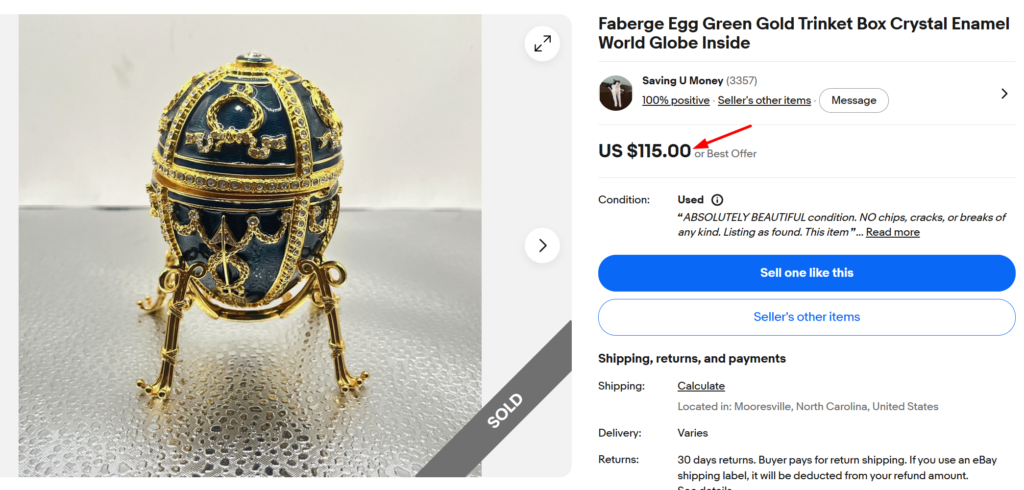
Actual imperial Fabergé eggs live in museums. But Fabergé-style enameled egg boxes made from the 1990s onward by companies like Joan Rivers and various Russian workshops are popular with decorative-egg collectors today.
They’re built from enameled pewter or metal with Swarovski crystal accents, hinged at one end with a magnetic or clasp closure. The base is usually stamped with the maker’s mark and a limited edition number.
- Estimated Value: $25 to $150
- Production Years: 1990s to present
- What to Check: Maker mark and edition number
- Interesting Facts: Never actual Fabergé, always “style”
10. Fitz and Floyd Ceramic Figural Trinket Box
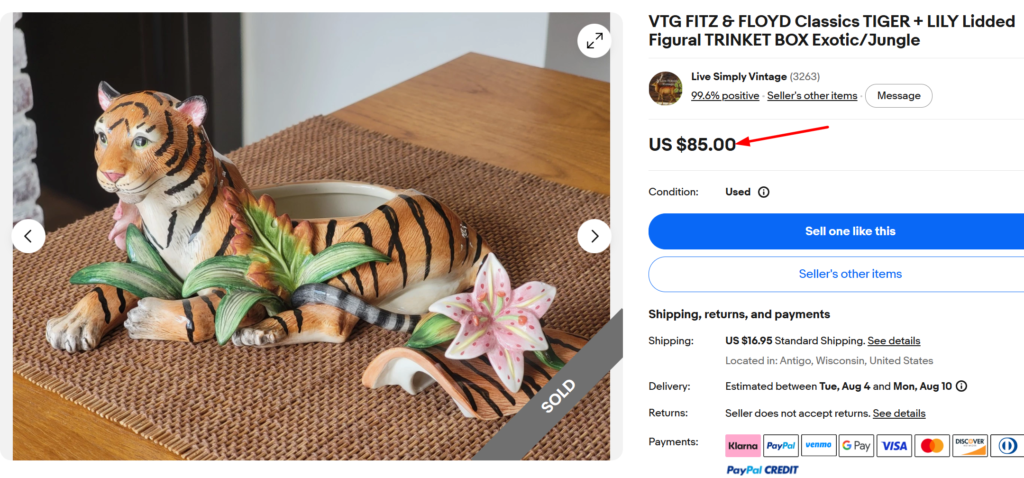
Fitz and Floyd started importing whimsical ceramics from Japan in 1960, and by the 1980s, their figural trinket boxes had become a serious collectible category. Cats, dogs, teapots, cottages, and Christmas designs are the most common.
The base is marked “Fitz and Floyd” with the year, and pieces from discontinued lines like the vintage Christmas or Renaissance series bring the highest prices. Look for original hangtags; most owners threw them away, so one that survives adds appeal.
- Estimated Value: $20 to $95
- Production Years: 1960 to present
- What to Check: Fitz and Floyd base stamp with year
- Quick Notes: Retired Christmas designs bring the most
11. Wedgwood Jasperware Heart-Shaped Box
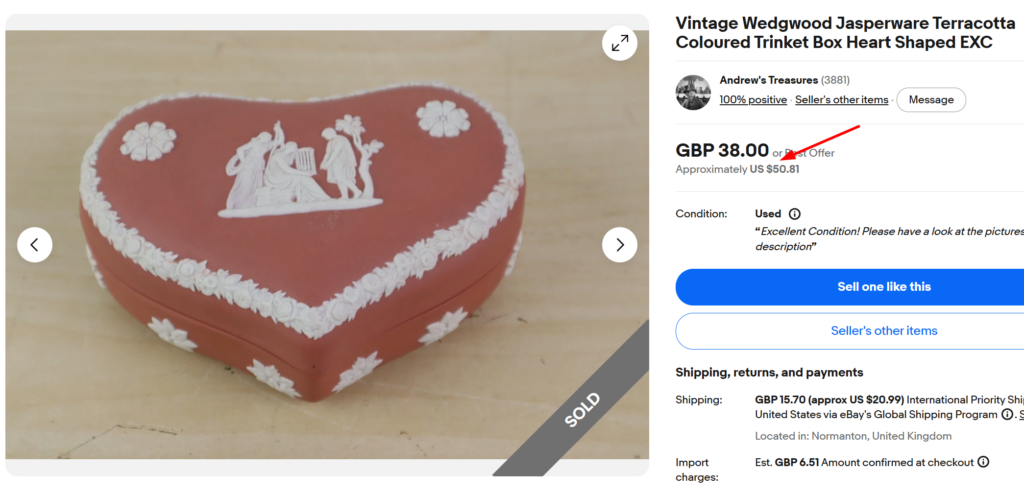
Wedgwood’s jasperware heart is among the most recognized shapes. The classic pale blue matte finish with white raised bas-relief figures (a low-relief sculpting technique) has been made since the late 1700s, but most of what you see today is 20th-century.
The heart shown here is in terracotta, a less common color.
Look at the base for the impressed “WEDGWOOD MADE IN ENGLAND” mark. Colors matter here. Pale blue is the most common, with sage green also easy to find; lilac, yellow, and crimson are scarcer and can bring more.
- Estimated Value: $20 to $85 (blue), $40 to $200+ (rare colors)
- Production Years: Mid-1900s to present (heart shape)
- What to Check: Impressed Wedgwood England mark
- Quick Notes: Crimson and yellow fetch the most
12. Fenton Milk Glass Hobnail Trinket Box
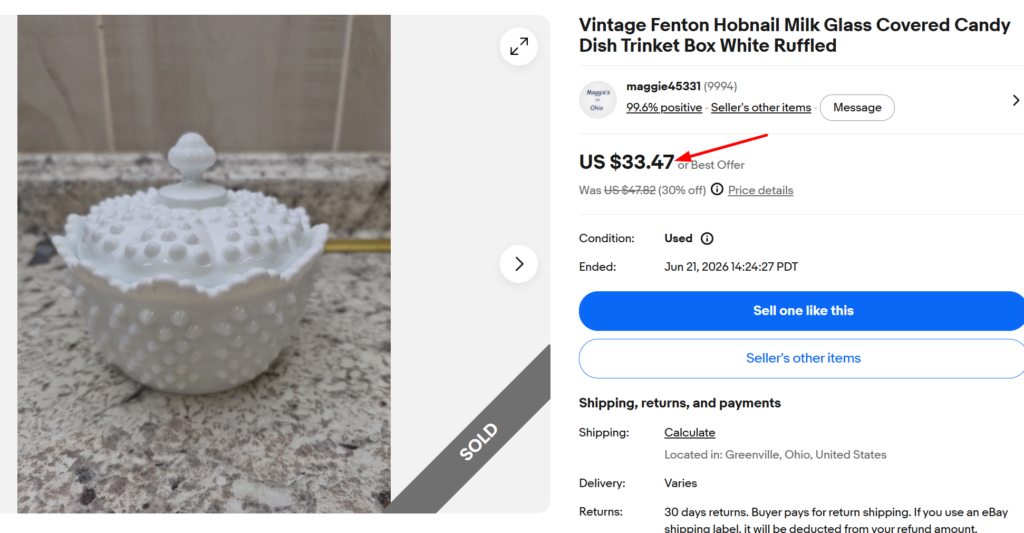
Fenton introduced the hobnail pattern in 1939, and by the early 1950s, milk glass hobnail was one of their best-selling designs. The pattern shows raised, bumpy dots (hobnails) across the surface. On trinket boxes, it usually comes as a footed round shape with a matching lid.
Look for the raised oval Fenton logo on later pieces, or a silver foil sticker. Colored hobnail like cranberry, blue opalescent, or topaz runs much higher than milk white.
- Estimated Value: $20 to $75 (milk); $60 to $180 (cranberry)
- Production Years: 1950 to 2011 (milk glass)
- What to Check: Sharp hobnails, oval Fenton mark
How to Identify an Antique or Vintage Trinket Box: Marks, Material and Style
Before you buy anything or price something you already own, you need to work through the base and the details. Take them in this order.
Step 1: Check the Bottom for Marks
Flip the box over and check the base for marks. Look for an impressed backstamp (a mark pressed into the clay before firing), a painted underglaze mark, or a foil sticker.
- Green vs. red Limoges marks: A green underglaze mark usually indicates the porcelain blank was made in Limoges. A red overglaze mark shows the piece was hand-decorated. Genuine hand-painted pieces read “Peint Main” (French for “hand-painted”) and often carry a decorator or importer name like Rochard, Artoria, Chamart, or Castel.
- Wedgwood: An impressed “WEDGWOOD” stamp with “Made in England” dates the piece to the 20th century. Just “Wedgwood” without “England” is earlier, generally before 1891.
- Capodimonte: A blue underglaze crown over the letter “N” is the classic mark, but the Naples crown and N were widely copied, so many Italian and even German factories used their own version.
- Lefton China: A gold crown stamp with “Lefton China Hand Painted” plus a red foil “Exclu. Japan” sticker points to the 1950s through the early 1970s; our guide to Lefton China marks and stickers narrows it further.
- Made in Occupied Japan: This mark places a piece in the Allied occupation of Japan, 1945 to April 1952 (most pieces carrying it were exported from 1947), a short window that dates it closely.
Step 2: Identify the Material
Run your finger over the surface first, then tap the side gently with a fingernail. That single test tells you more than most people think.
- Porcelain has a clear ring when tapped and feels smooth and cool.
- Bone china is thinner, whiter, and often translucent when held to light.
- Milk glass is opaque white glass, not ceramic. Look for a mold seam.
- Cloisonné is enamel held between thin metal wires soldered to a copper or brass body.
- Enamel on copper feels heavier than porcelain and shows a metal rim.
- Alabaster is a real stone. Cold to the touch, veined, and much heavier than a resin fake.
- Papier-mâché is light, lacquered, and often hand-painted in floral designs.
Step 3: Read the Style Cues
The design easily gives away the box’s manufacturing period. Victorian boxes incorporate flowers, cherubs, and gold scrolls. The Art Nouveau boxes (from around 1890 to 1910) have flowing plants, long-haired females, and dragonflies.
The Art Deco boxes (1920s to 1930s) utilize geometrical designs, steps, chrome, and bold colors. The mid-century boxes from Japan and Italy are more imaginative, featuring animals, flowers, and pastel colors.
Step 4: Antique, Vintage, or Reproduction
Antique means at least 100 years old. Vintage covers roughly 20 to 99 years. Reproductions are the tricky ones, and most modern fakes give themselves away in three spots: the base feels too smooth, the paint looks printed instead of brushed, and the hinge is a cheap stamped metal instead of a proper brass fitting.
If you’ve got a trinket box sitting on your dresser, flip it over tonight and check the base. That single move might turn a five-dollar thrift find into a $200 sale. Or it might just tell you the story of who made it and when, which is honestly half the fun of collecting.
Found this guide useful?
Save it for later
Share it with someone
Keep the old finds coming
New guides and finds worth looking for, delivered to your inbox.
Keep exploring
More guides in More Old Finds
 5 findsHow to Identify a Valuable Old Camera? With Rare ExamplesTop sale $5,100
 11 findsOld Valentine’s Day Gifts That Are Now Cute CollectiblesTop sale $723
 11 finds11 Vintage Halloween Decorations & Collectibles Worth Finding TodayTop sale $658
 12 findsValuable Vintage Stamps: How to Identify Rare Ones Worth MoneyTop sale $1,685