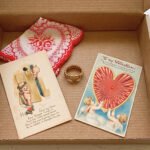

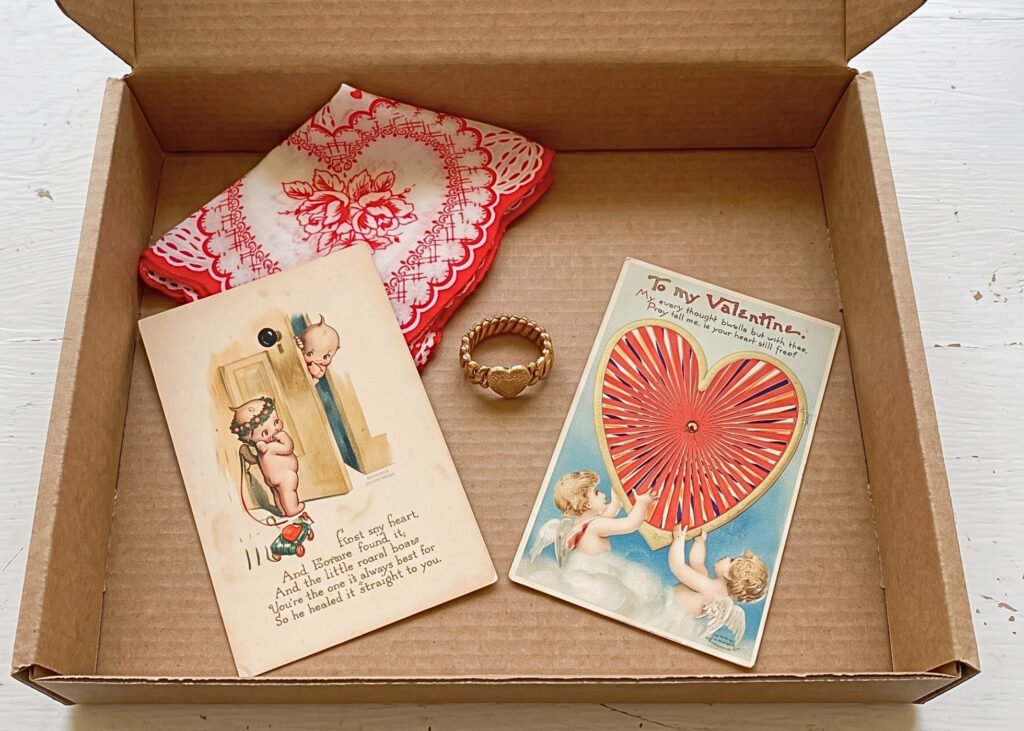
With the return of cottagecore and grandmillennial styles, romantic antiques came back into fashion. So collectors, decorators, and vintage sellers all want the survivors, from paper cards to jewelry, chocolate boxes, chalkware cupids, and shell art.
These items were not designed to survive long. Valentine’s cards were disposed of after February 14th, and chocolate boxes ended up in the trash once emptied. But some people kept them as memories.
The rarity, historical significance, and low survival chance are what make them valuable. Find out which items collectors love the most.
Most Collectible Valentine’s Day Gifts Worth Keeping
1. WWII Sweetheart Jewelry
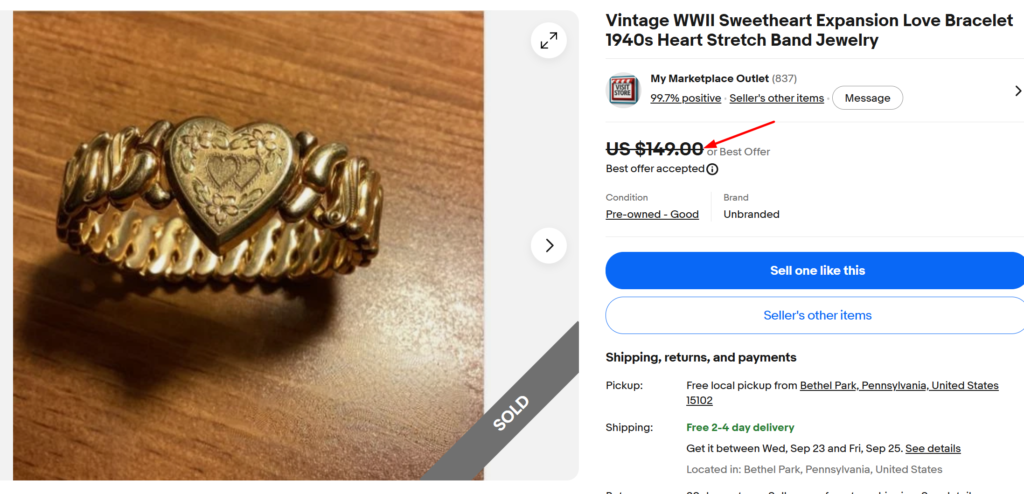
Sold for $150
In World War II, soldiers would send tiny tokens of jewelry back home to their wives, sweethearts, or mothers, including sterling hearts, gold-filled lockets featuring insignias of military branches, and Bakelite jewelry.
Some of the best came from manufacturers like Trifari, Coro, and Boucher. Signs of authentic sweetheart jewelry are a military branch insignia, an inscription of “sweetheart,” or a mother-of-pearl backing.
- Estimated Value: $30 to $500+
- Production Years: 1939 to 1945
- What to Check: Military insignia, sterling stamp
- Value Notes: Rare Bakelite pieces can top $1,000.
2. Victorian Mechanical Valentine Cards
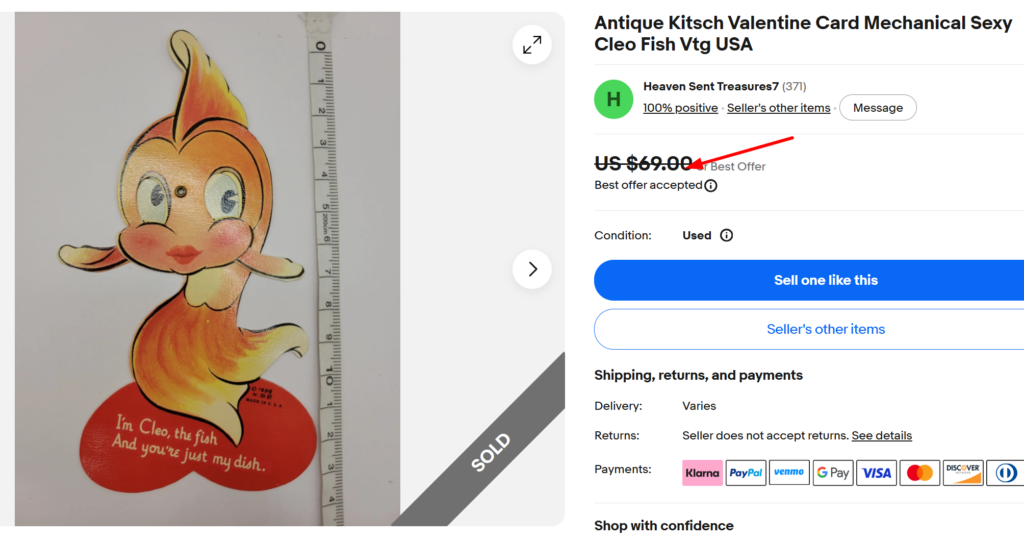
Sold for $70
They are among the most popular items on the list. Dating from about 1860 to 1900, they feature mechanical action such as pull tabs, spring mechanisms, and layered paper pieces that create 3D scenes. The reason behind the value is its mechanical operation.
The key signs to look for are gilded paper lace and a hand-painted center. Signatures by Esther Howland or George Whitney carry more value.
- Estimated Value: $25 to $400+
- Production Years: 1860 to 1900
- What to Check: Working pull-tabs, paper lace, hand painting
- Quick Notes: Howland or Whitney signatures push prices higher
3. German Die-Cut Fold-Out Valentines
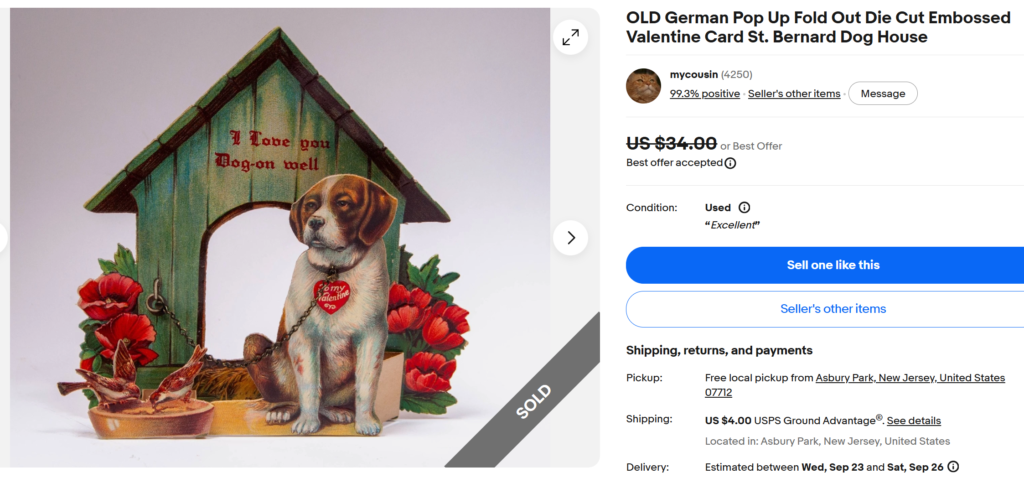
Sold for $35
Before WWI, Germany made the best 3D paper Valentine cards in the world. These flatten when closed and open up into figures like Cupids driving cars, children swinging, and windmills over hearts.
The colors are more vivid and the die-cutting more precise than American valentines. Also, the back reads “Made in Germany.”
Production decreased drastically during each of the two World Wars; hence the rarity and high prices.
- Estimated Value: $20 to $300
- Production Years: 1900 to 1930s
- What to Check: “Made in Germany” stamp, 3D pop-out
4. Ellen Clapsaddle Signed Postcards
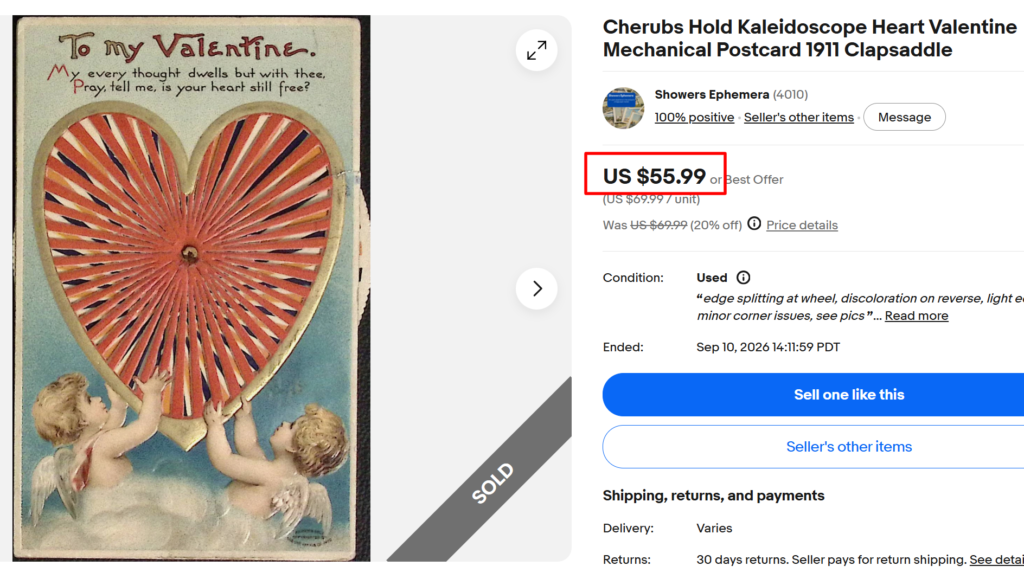
Sold for $55
Ellen Clapsaddle was America’s most prolific postcard illustrator in the early 1900s. Her postcards illustrated chubby-cheeked children and doe-eyed girls and were printed in thousands of Valentine’s postcards by the International Art Publishing Company from 1905 to 1915.
A signature is an important feature that adds value to these. “Clapsaddle ” often appears in the illustration, usually under the dress or in the corner.
- Estimated Value: $10 to $75
- Production Years: 1905 to 1915
- What to Check: “Clapsaddle” signature in artwork
- Quick Notes: Mechanical wheel versions are most valuable.
5. Rose O’Neill Kewpie Valentine Postcards
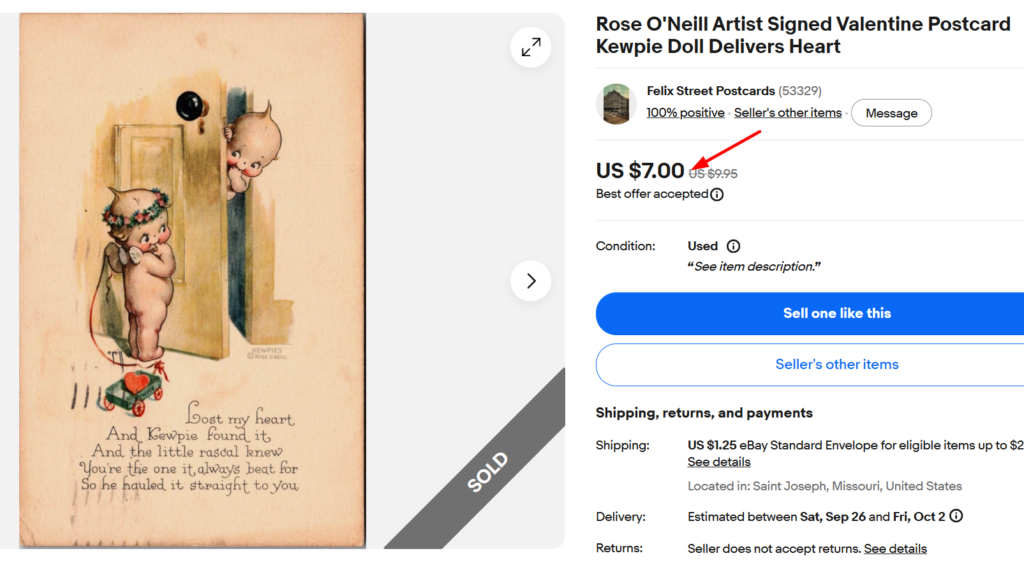
Sold for $10
Rose O’Neill created the Kewpie in 1909, and it was popular on Valentine postcards throughout the 1920s.
The collectible Kewpie valentines that were signed by Rose O’Neill spanned from 1912 through 1928 and were produced by the Gibson Art Company. Rose O’Neill signed her work as “Rose O’Neill” or “Rose Cecil O’Neill.”
- Estimated Value: $5 to $50
- Production Years: 1912 to 1928
- What to Check: “Rose O’Neill” script signature
6. Heart-Shaped Chocolate Boxes
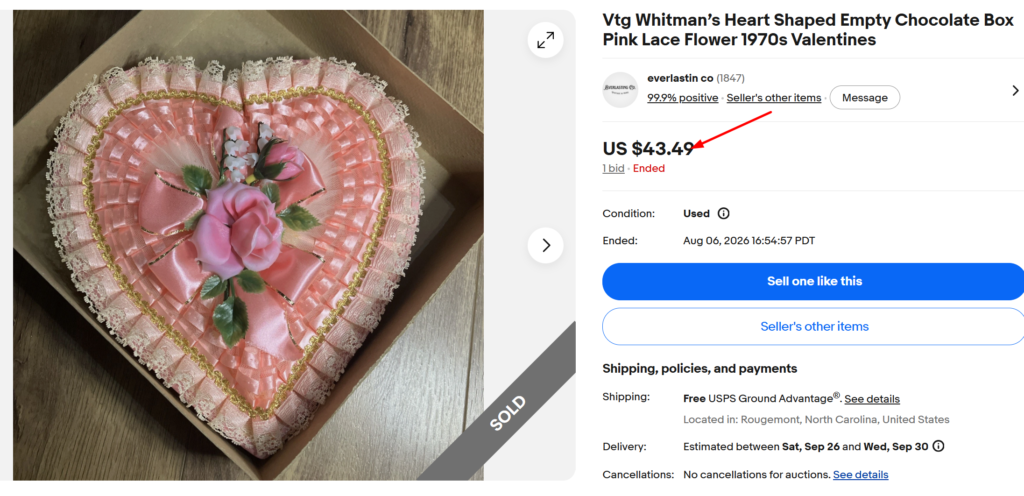
Sold for $45
The heart-shaped candy box was a popular Valentine’s Day present in the 1920s. These boxes were available from manufacturers like Whitman’s, Fanny Farmer, Schrafft’s, and Pangburn’s.
The most sought-after boxes are those of the 1940s and 1950s that came in satin and lace. Even empty boxes can be worth a lot with the original cellophane liner, liner paper, and inner box.
- Estimated Value: $25 to $250
- Production Years: 1920s to 1960s
- What to Check: Original lining paper, satin condition
- Quick Notes: Tin boxes are more valuable.
7. Vinegar Valentines
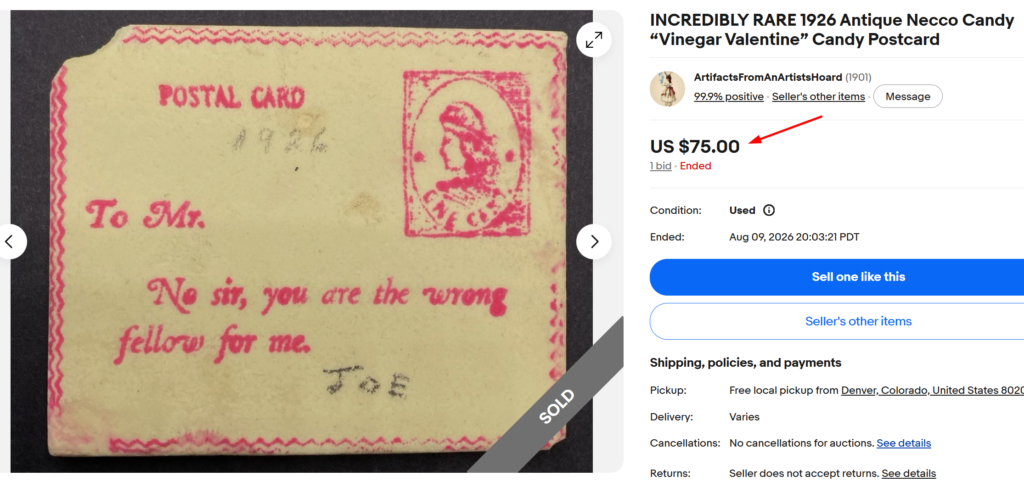
Sold for $75
These are the nasty ones. Between 1840 and 1940, printers produced cheap, nasty cards that would be sent to people you hated anonymously. These cards have bad poems, ugly caricatures, and no love involved.
They are the complete opposite of romantic gifts, and collectors find them interesting because of their shock value. Suffragette-themed ones are especially collectible.
- Estimated Value: $15 to $200
- Production Years: 1840s to 1940s
- What to Check: Insulting caricature, cheap pulp paper
8. Chalkware Cupid and Cherub Figurines
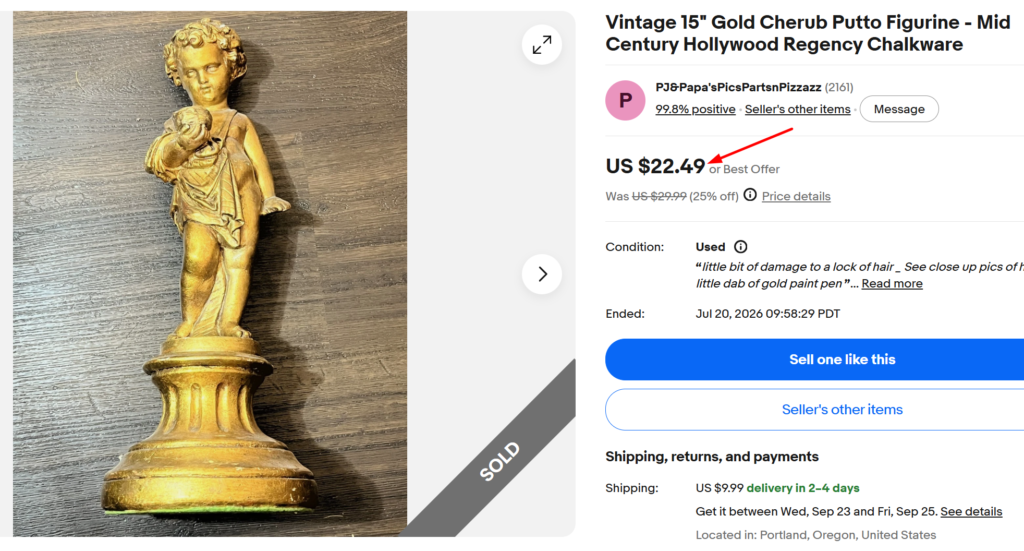
Sold for $22
Chalkware is essentially paint-covered plaster known as “the poor man’s porcelain.” Cupids, Cherubs, and angels carrying hearts were abundant in the marketplace during the years 1930 to 1950.
Gold-gilded pieces by Borghese of Italy represent some of the finest examples, sold through Sears and department stores.
Check the base for a marking. Full front and back painting denotes a 1940s piece, considered highly collectible.
- Estimated Value: $30 to $200
- Production Years: 1930s to 1950s
- What to Check: Borghese mark, glass eyes, full painting
9. Vintage Printed Valentine Handkerchiefs
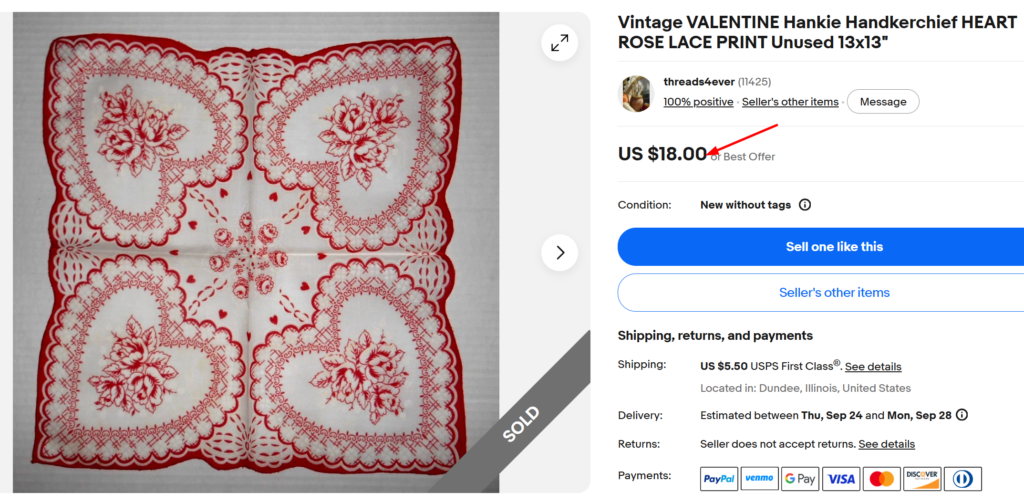
Sold for $20
Printed cotton hankies were a hugely popular Valentine gift from the 1920s through the 1960s. Cheap enough to be a small token, pretty enough to keep. Tammis Keefe, Virginia Zito, and Pat Prichard signed hankies are the most valuable, along with early novelty prints with hearts, cupids, and love poems.
Unused hankies, especially Tammis Keefe ones, with the original paper label still attached bring the highest prices at auction.
- Estimated Value: $10 to $80
- Production Years: 1920s to 1960s
- What to Check: Signed designer corner, original tag
10. Sailor’s Valentines
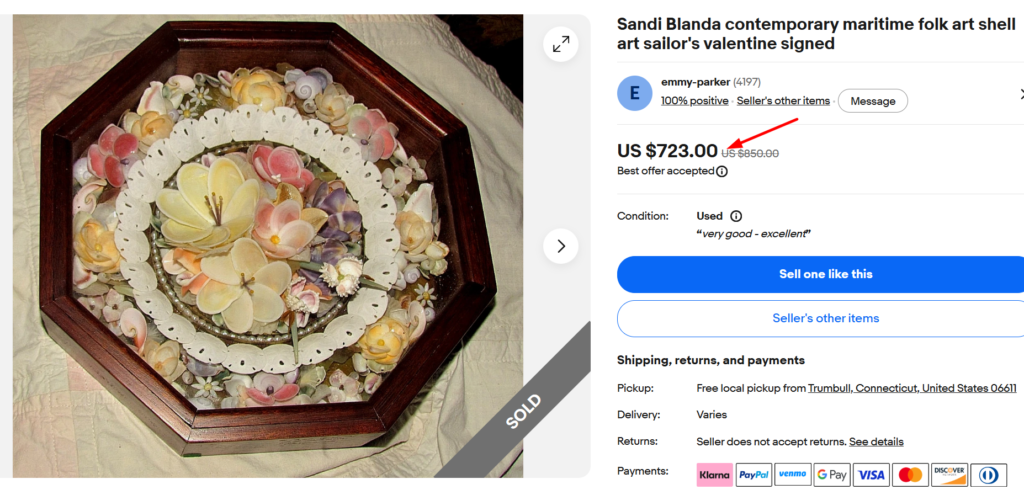
Sold for $800
These are octagonal wood boxes filled with shell mosaics in heart and flower designs and in love phrases made out of teeny-tiny shells. They were purchased by sailors as gifts for their sweethearts in Barbados from 1830 to 1900.
Original specimens in hinged frame format are museum quality. Auction prices have gone from $500 to $6,900 and rarely up to $10,000 or more.
- Estimated Value: $500 to $18,000
- Production Years: 1830 to 1900
- What to Check: Octagonal cedrela frame, glazed front
11. Whitney Made Honeycomb Valentines
George Whitney purchased Esther Howland in 1888 and was the largest Valentine maker in America through the early 1900s. His Valentine factory in Worcester, Massachusetts, produced embossed, die-cut cards often containing a honeycomb of red tissue that unfolded like an accordion.
Check the reverse of the card for a small red “W” inside a heart. This is a Whitney hallmark and will determine value.
- Estimated Value: $25 to $150
- Production Years: 1880s to 1940s
- What to Check: Red “W” heart mark on back
- Quick Notes: Honeycomb must fan open cleanly
How to Spot Valuable Vintage Valentine Gifts?
The value of old Valentine’s Day gifts depends on several things, depending on what category they are.
- Age – items older than 1930 have better value; the Victorian era is ideal
- Company or artist who produced it – Whitney, Howland, Tuck, Clapsaddle, Rose O’Neill
- Any working mechanism – honeycombs, pull tabs, fold-outs
- Envelope or postmark – very valuable on postcards
- Condition – without tears, bright colors, no glue on the reverse side
Vintage valentine items are definitely among those collectibles wherein an average item has some value, while the unique ones can be very valuable indeed. So, check the marks before offering it for sale or giving it away.