
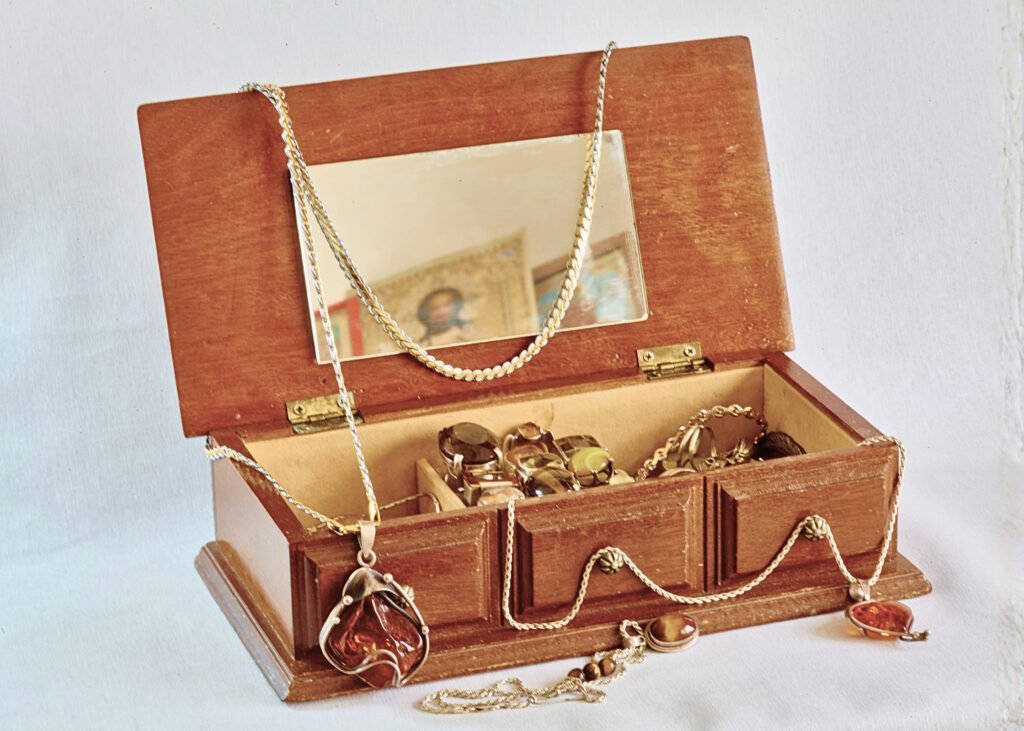
A rare Tiffany & Co. jewelry box recently sold for over $1,500. But most old boxes, whether wood or metal, are constantly put up at garage sales for a dollar or two. And that’s why people think that’s all these boxes are worth.
If you own an old trinket box or see one at a garage sale, it’s good to know about the most collectible designs, easy tips to spot an antique or vintage box, and what drives its value.
10 Most Valuable Antique & Vintage Jewelry Boxes
Let’s take a look at the most valuable and collectible old jewelry boxes from top makers, their key features, and their real market values, so you can tell if yours is worth anything.
1. Tiffany & Co. Sterling Jewelry Box
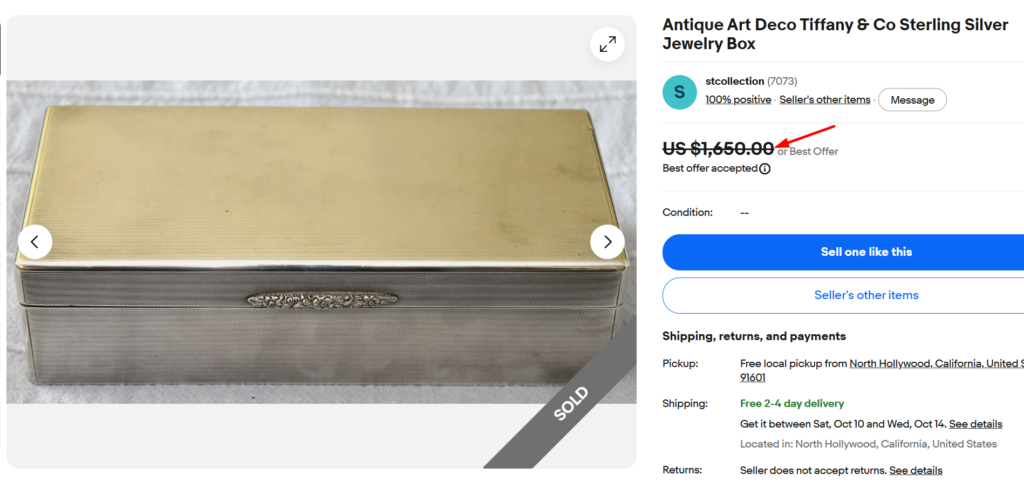
Sold for $1,650
Sterling boxes by Tiffany & Co. have been around for more than a century, ranging from repoussé Victorian caskets to antique trinket boxes and even simple modern ring boxes. The older ones hold the highest value.
Spot the hallmark at the bottom of the box. The stamp “Tiffany & Co. Makers Sterling Silver,” along with the pattern number, gives you the box’s age. Also, monograms don’t lower value.
- Estimated Value: $300 to $3,000+
- Production Years: 1870s to present
- What to Check: Maker’s mark, pattern number
2. Jennens & Bettridge Mother of Pearl Jewelry Box
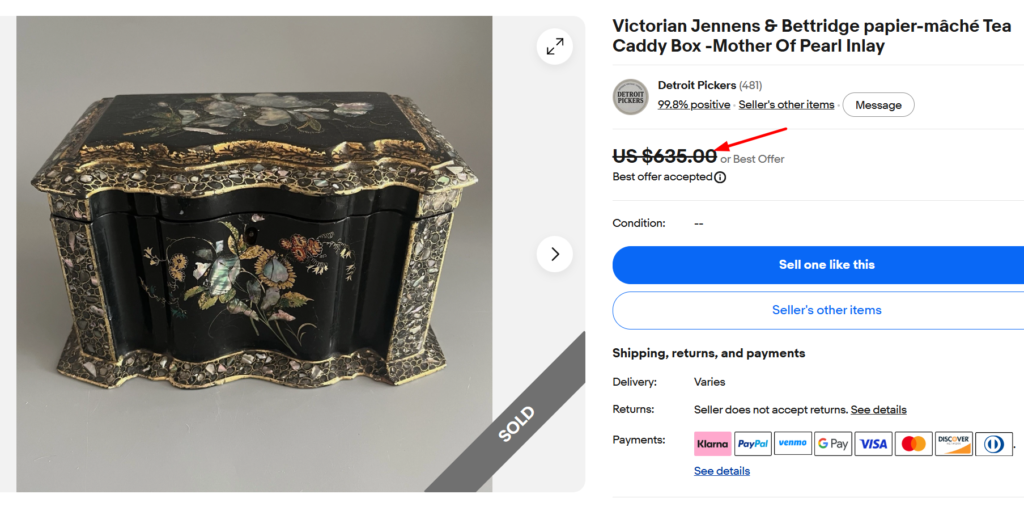
Sold for $635
This example is a rare English papier-mâché box, typical of Jennens & Bettridge. The black japanned (coated with lacquered layers) surface is decorated with hand-painted flowers and gold borders.
The key feature of these boxes is the thin mother-of-pearl pieces inserted into the surface using a process that was patented by Jennens & Bettridge in 1825.
Unsigned boxes are not worth much, so always check for the “Jennens & Bettridge” mark at the bottom.
- Estimated Value: $200 to $1,500
- Production Years: 1816 to 1864
- What to Check: Impressed stamp, pearl inlay
3. Tahan Paris Jewelry Casket
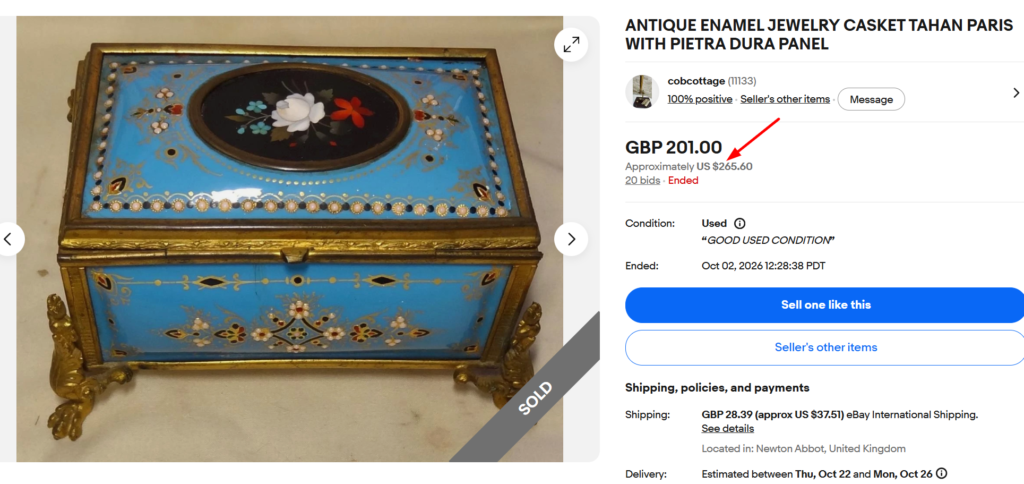
Sold for $265
This jewelry box is an Alphonse Tahan creation, the royal cabinetmaker to Napoleon III and his wife, Empress Eugénie. His Paris workshop created wooden jewelry boxes of kingwood, rosewood, bird’s-eye maple, and gilt-bronze caskets.
Check the back of the lock plate for “Tahan” or “Tahan à Paris.” His son carried on the business from 1880 onward.
- Estimated Value: $800 to $5,000
- Production Years: c. 1850s to late 1800s
- What to Check: Tahan stamp on lock
- Quick Notes: Always check for the original key.
4. William Comyns Victorian Sterling Silver Casket
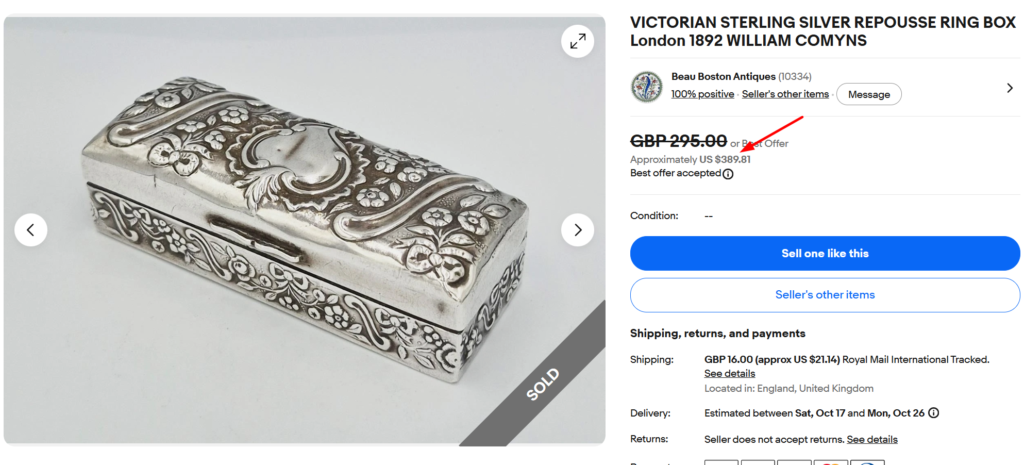
Sold for $390
William Comyns started his silverware business in London in 1848, and his embossed sterling caskets took off in the 1890s. A typical example has repoussé work (design hammered from the back) of cherubs, scrolls, and flowers.
Every genuine piece must have English hallmarks, including a date letter that pins down the exact year. Original velvet lining and large size are key value drivers.
Easy Tip: Weigh the box; light means it’s plated.
- Estimated Value: $500 to $4,000
- Production Years: c. 1880s to 1910s
- What to Check: English hallmarks, date letter
5. Reuge Swiss Music Jewelry Box
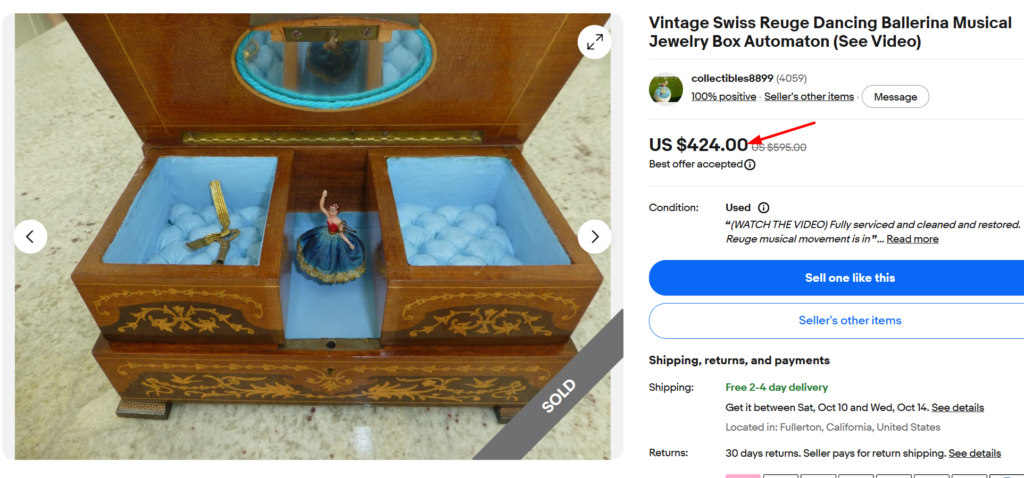
Sold for $424
Vintage Reuge music boxes are among the most collectible jewelry boxes. The jewelry boxes pair a Swiss cylinder movement with a wooden case, often with a marquetry (inlaid wood picture) lid.
Valuable examples come with a dancing ballerina or singing bird inside the box.
The value also depends on the movement size, too. A 72-note or 144-note comb sounds fuller and sells for far more than a basic 18-note box.
- Estimated Value: $150 to $2,000
- Production Years: 1865 to present
- What to Check: Reuge label, note count
6. Erhard & Söhne Art Nouveau Jewelry Box
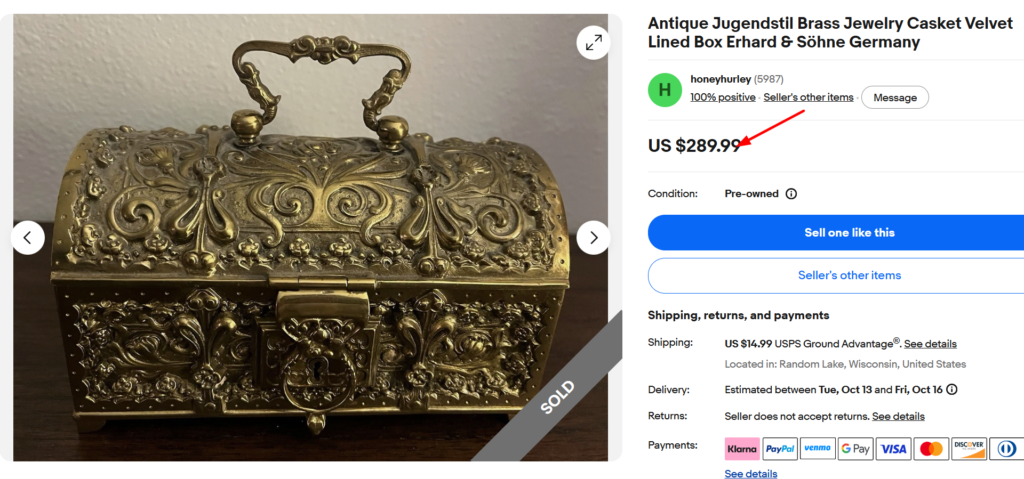
Sold for $289
The Erhard & Söhne company has been making metalwork in Schwäbisch Gmünd, Germany, since 1844. The firm made many footed brass and silver-plated jewel caskets from 1900 to 1915.
These typically have flowers, foliage, or female faces. The lion hallmark on the base confirms the manufacturer.
- Estimated Value: $150 to $900
- Production Years: c. 1900 to 1915
- What to Check: Lion mark, footed base
- Quick Notes: Original lining boosts resale value.
7. Meiji Japanese Lacquer Jewelry Box
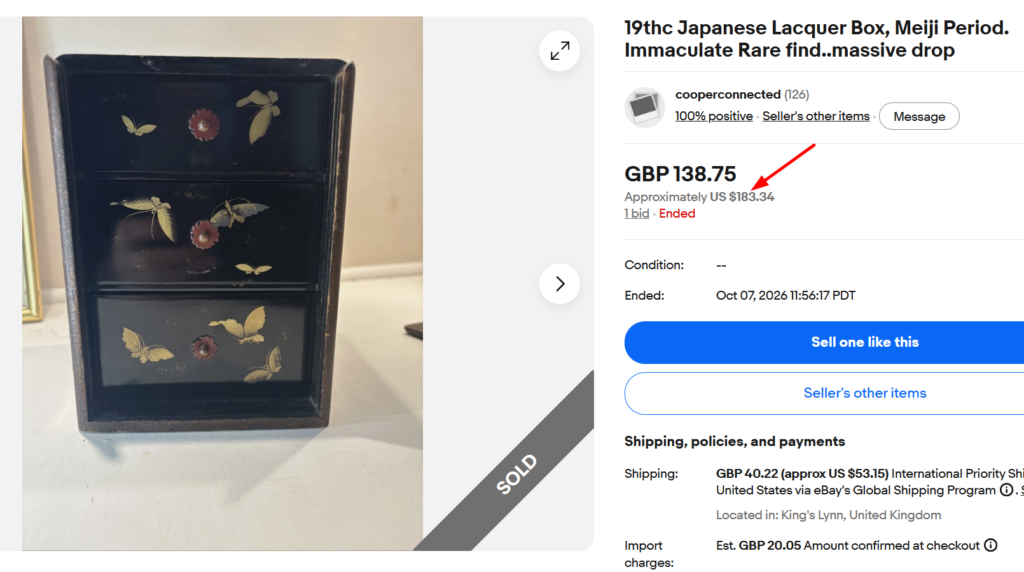
Sold for $185
Many of the beautiful lacquer boxes from the Meiji period (1868-1912) were sold to Westerners. Most feature ‘Maki-e,’ which translates to ‘sprinkling of gold or silver powder onto wet lacquer to create the design.’
Landscapes, birds, or flowers in raised gold or silver on a black lacquer background are the most desirable features.
But be sure not to confuse them with the 1960s music boxes marked “Made in Japan.”
- Estimated Value: $200 to $3,000+
- Production Years: 1868 to 1912
- What to Check: Raised gold maki-e decoration
8. Tunbridge Ware Wood Mosaic Jewelry Box
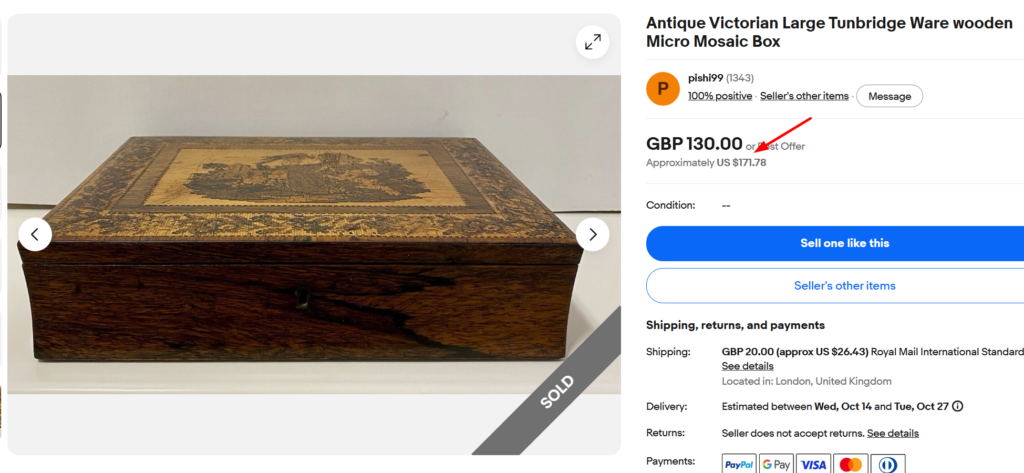
Sold for $171
Tunbridge ware is from the area around Tunbridge Wells in Kent, England. The makers would glue rods made out of different colored wood into blocks, and these would be cut into pictures or designs.
The production period for Tunbridge ware ranged between 1830 and 1900. The boxes that were decorated with castles, abbeys, or Brighton Pavilion were more valuable than those that were not.
- Estimated Value: $150 to $1,200
- Production Years: c. 1830 to 1900
- What to Check: Wood mosaic picture lid
9. Jennings Brothers (JB) Antique Jewelry Casket
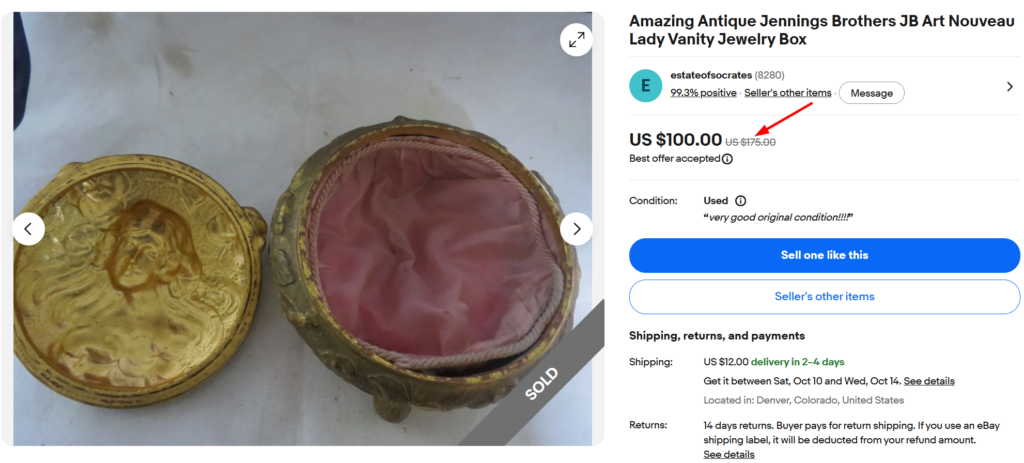
Sold for $100
Jennings Brothers is known for their cast metal caskets with gold or silver-tone finishes, often with cherubs, portraits, roses, or grape clusters.
Values stay modest for most of these, but footed figural caskets with intact original gilding sell well above the plain ones.
Later castings exist from original molds. Confirm authenticity with the “JB” mark and model number on the base.
- Estimated Value: $75 to $500
- Production Years: 1891 to 1954
- What to Check: JB mark, model number
10. Wedgwood Jasperware Trinket Box
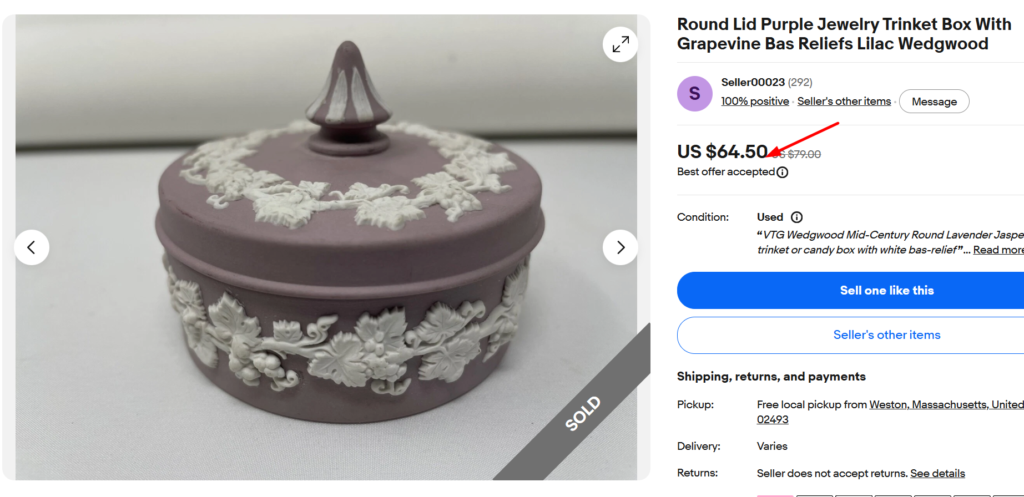
Sold for $64
Identifying an Antique Jewelry Box: 5 Details to See
Identification begins with the box in front of you. Turn the box over, open all drawers and lids, and check every small detail.
Checking for Maker’s Marks and Hallmarks
Check the box inside out. You should see some embossed or incised markings on the base, inside the lid, and beneath the box’s lining. Any maker’s name, sterling mark, or English hallmarks will indicate what you have immediately.
But not all old jewelry boxes have a marking, so a missing mark doesn’t cancel out authenticity. In that case, check other features.
Construction Details
Next, consider how the box is made.
Dovetail joinery, hand-slotted screws, and hardwood construction are all indicators of age. On the other hand, Phillips head screws, staples, and particle board are features of newer boxes regardless of their looks.
Weight and Type of Metal
Pick up the box. Weight is important to identify the metal. Bronze and sterling would feel quite substantial in your hands, whereas spelter (a cheap alloy of zinc) will feel rather light and show gray metal under the gold leaf.
Inspect Hinges, Locks and Keys
Original hardware is a clear sign of age. Older boxes usually have small brass hinges, a working lock, and sometimes the original key.
A matching key is a nice bonus, and collectors will pay a little more for one that still turns the lock.
Read the Lining and Style
Finally, open it up. Silk or silk velvet linings and fitted trays point to older boxes, while flocked or synthetic linings suggest newer ones. Style helps too, since whiplash curves suggest Art Nouveau and stepped geometric shapes suggest Art Deco.
Are Old Jewelry Boxes Worth Anything?
Honestly, some are, but most aren’t.
Mass-produced old jewelry boxes from the 1950s to the 1980s, like Mele, Lady Buxton, Godinger, and the musical ballerina boxes, are worth $10 to $60. They’re nice to own, but they rarely make anyone rich.
The real money lies in the age. Antique boxes (100 years or older) and vintage boxes (20 to 99 years old), including signed Victorian silver, French gilt bronze, and Art Nouveau metalwork, are worth the most.
What Makes a Vintage Jewelry Box Valuable?
Many two old boxes that look alike can sell for $40 and $400, and these are usually the reasons why:
- Maker – Signed pieces by known firms beat unmarked ones.
- Material – Sterling, gilt bronze, and enamel sell far above plated pot metal.
- Age – Pieces made before 1920 bring the strongest prices.
- Craftsmanship – Hand-painted, inlaid, enameled, or hand-chased work adds value.
- Mechanism – A working Swiss music movement adds a lot.
- Originality – Original lining, key, and finish matter more than shine.
Handy Tip: Don’t repaint, refinish, or reline an antique jewelry box before selling it. Collectors want the original surface, and a makeover can easily cut its value in half or more.
So, before you donate or sell that old jewelry storage box, check it properly. A maker’s mark, real weight, and original fittings are the three signs that will help you spot a $20 box vs. a true antique jewelry box worth money.