

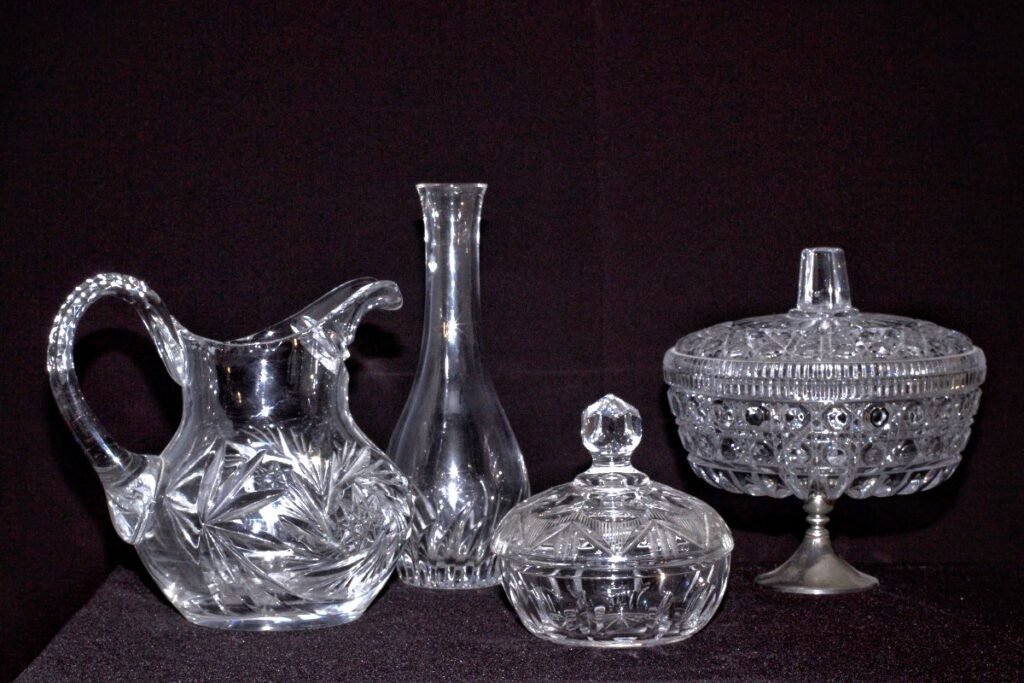
A vintage crystal wine glass and a regular wine glass might look similar at first glance, but they rarely sell for the same money.
Today, most unmarked vintage crystal glassware sells for about $5 to $50 a piece, while signed sets from makers like Baccarat, Waterford, and Saint-Louis can bring hundreds, and the rarest pieces more than a thousand dollars.
The trick is knowing what separates a valuable Baccarat goblet from ordinary glassware. This is an easy guide to telling real crystal from ordinary glass, which details make a piece valuable, and what these finds actually sold for.
A Short History of Crystal Glassware
Crystal glassware, as we know it, began in England during the late 1600s. George Ravenscroft developed lead crystal (also called flint glass) around 1676, creating a material that was clearer, heavier, and more brilliant than standard glass.
This innovation changed the glassmaking industry and established England as a crystal powerhouse for the next two centuries. In Ireland, brothers George and William Penrose founded Waterford in 1783, and its crystal remains among the most sought-after today.
In France, Baccarat turned to crystal in 1816, according to the Moscow Kremlin Museums. René Lalique, already a famous jeweler, moved into glass in the early 1900s and was designing glass perfume bottles by 1909 (one is in the V&A collection).
In the US, hand-cut crystal was already popular in the American Brilliant Period (about 1876 to 1917), and Steuben Glass Works was founded in Corning, New York, in 1903.
Overall, the vintage crystal most people find dates today from the Victorian era through the mid-20th century. While production methods have evolved, vintage pieces from these historical periods remain highly collectible today.
How to Tell Vintage Crystal From Ordinary Glass
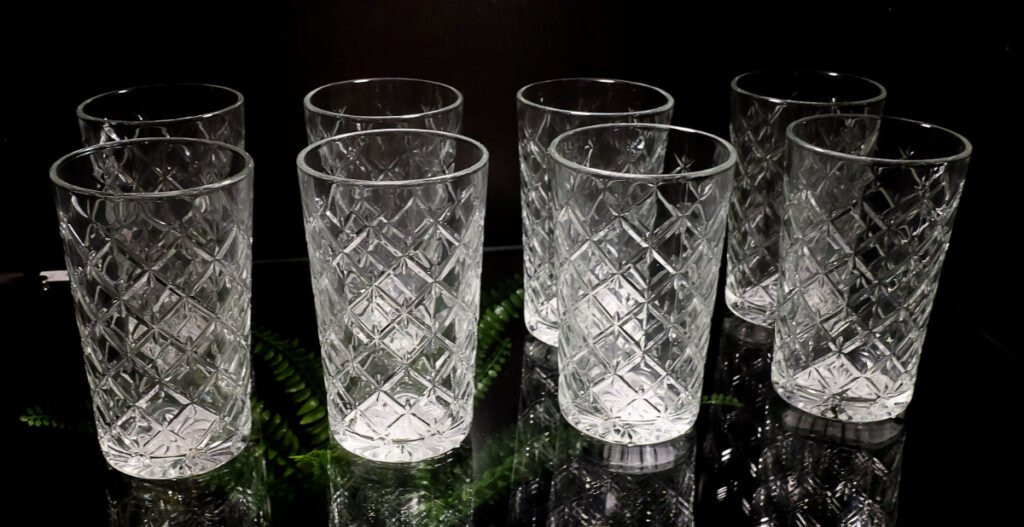
Distinguishing genuine crystal from ordinary glass isn’t that difficult; you just need careful observation and a few simple tests!
Physical Features:
- Weight and Density – Authentic crystal contains lead oxide (at least 24% in lead crystal and 30% in full lead crystal under the EU’s crystal glass rules), which makes it noticeably heavier than regular glass. Newer lead-free crystal uses other minerals instead, so it can feel lighter. Pick up a piece and compare it to a standard drinking glass.
- Clarity and Light Refraction – Crystal shows great clarity with minimal bubbles or imperfections and creates small rainbows (similar to a prism) against natural light. The higher the lead content, the better the clarity and refraction.
- Temperature – Some collectors test crystal glass by holding a piece against their cheek, since crystal is said to feel cooler at first. Treat this as a rough hint only; it is not a reliable test, so check the weight, ring, and marks instead.
The Sound Test:
The ring test is one of the quickest checks you can do.
Gently tap the rim of a crystal piece with your fingernail or flick it lightly with a moistened finger. Authentic crystal produces a clear, resonating musical tone and gradually fades. Regular glass makes a dull clunk with no resonance.
Examining Cuts and Patterns:
Quality crystal has sharp, precise cuts with clean edges that feel crisp to the touch. Plus, the pattern is mostly symmetrical and deeply etched.
Simply, run your fingers across the surface. You should feel distinct ridges and valleys in cut crystal. Pressed glass patterns feel smoother and less defined.
Maker’s Marks:
While this is the most reliable way of identifying, not all vintage crystalware bears marks. But many pieces do!
So, examine the bottom carefully under good lighting. Marks may be etched, stamped, or molded into the glass. Prestigious makers like Waterford, Baccarat, Lalique, and Steuben typically marked their pieces, though marking practices varied by era and manufacturer.
How to Tell If Vintage Crystal Is Valuable
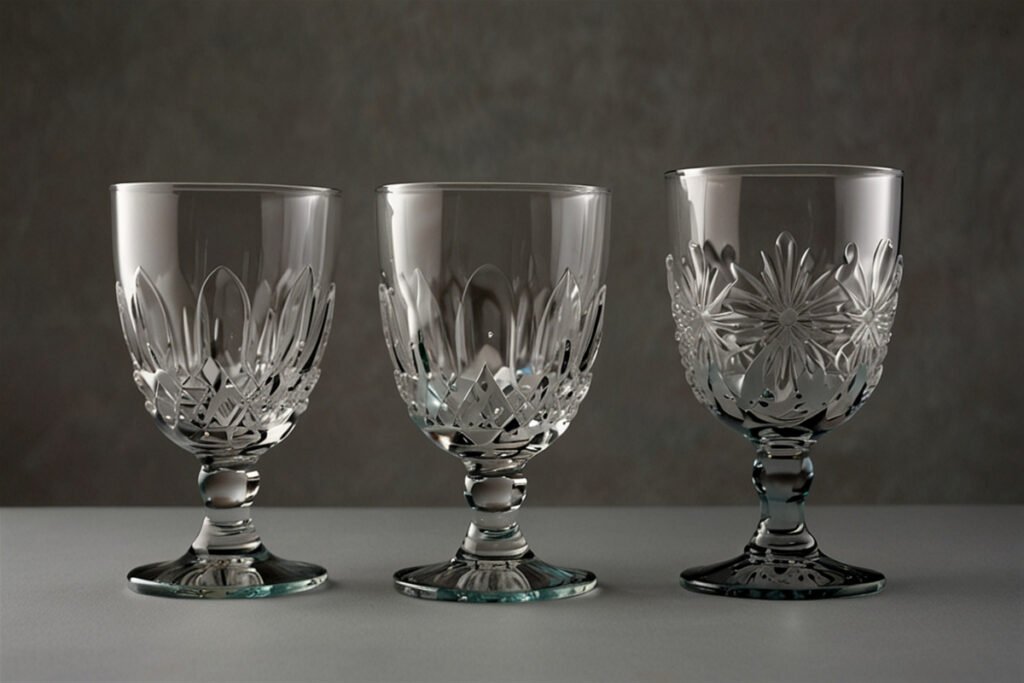
In short, crystal is worth the most when it carries a top maker’s mark, is cut by hand in a sought-after pattern, comes as a complete set, and has no chips or cloudiness.
To find out why one crystal piece sells for thousands while another sells for $20, you need to examine several key factors, as follows:
- Brand Reputation – It plays a huge role in pricing. Pieces from legendary houses like Baccarat, Waterford, Saint-Louis, Lalique, and Steuben are usually worth the most, for their superior craftsmanship, innovative designs, and unmatched quality.
- Rarity – The rarer a crystal piece, the more valuable it is! Things that indicate rarity are: limited production runs, discontinued patterns, rare color variations, experimental design, or pieces made for specific events or royalty; these items hold more value as they become harder to find.
- Condition – Critical, as collectors want pristine pieces with no damage and brilliant clarity. Chips, cracks, cloudiness, and repairs significantly decrease worth. Even a small rim chip can cut the price sharply.
- Pattern Complexity – Intricate hand-cut patterns that require skilled artisans get more respect than simple designs. Likewise, art glass pieces with unique colors or techniques, like cameo glass, sell for higher prices!
- Completeness: Collectors usually pay more for complete sets they can actually use or display together. So, a full set in a discontinued Waterford pattern will be worth more than the sum of its individual pieces. Single pieces can also be valuable if exceptionally rare!
- Age: Older crystal doesn’t automatically become more valuable. But a mass-produced crystal bowl from 1920 might be worth less than a limited-edition piece from 1980. Also, items from popular periods are more valuable, like
- Art Nouveau (1890-1910)
- Art Deco (1920s-1930s)
- Mid-Century Modern (1950s-1960s)
Rare Vintage Crystal Finds and What They Sold For
Here are six rare pieces from Waterford, Baccarat, Saint-Louis, Lalique, and Steuben, with their actually sold and listed prices.
1. Waterford Crystal Nativity Set
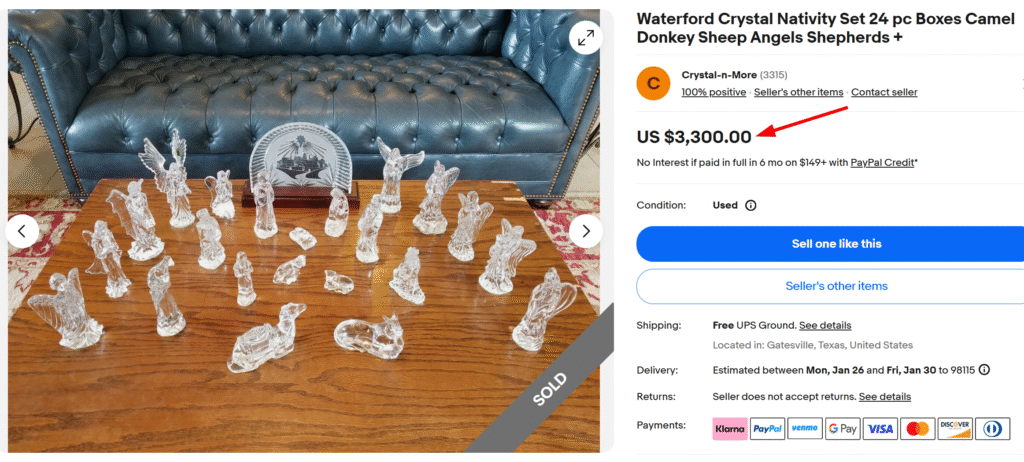
Waterford produced this Christmas nativity collection in the 1990s; collectors date its pieces to about 1994 to 1999. It includes Mary, Joseph, baby Jesus, three wise men, shepherds, angels, animals (camel, donkey, sheep), and the manger backdrop.
These pieces were mostly sold individually, making complete sets hard to find.
2. Baccarat Napoleon III Liquor Cave (Cave à Liqueur)
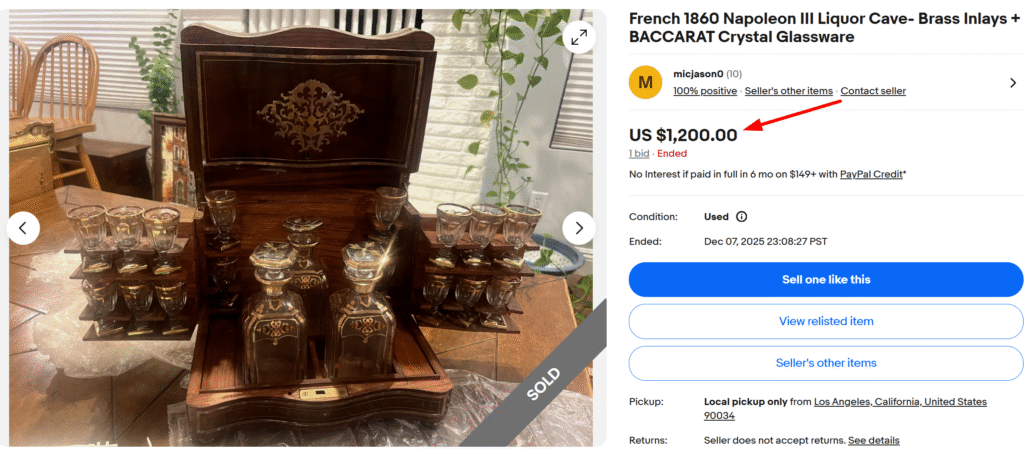
This rare Napoleon III-era antique “cave à liqueur” service set with Baccarat crystal features detailed Boulle-style brasswork and hand-painted gold details. The set includes four crystal decanters and sixteen glasses housed in a decorated ebonized wood box.
3. Saint-Louis Tommy Ruby Red Glasses
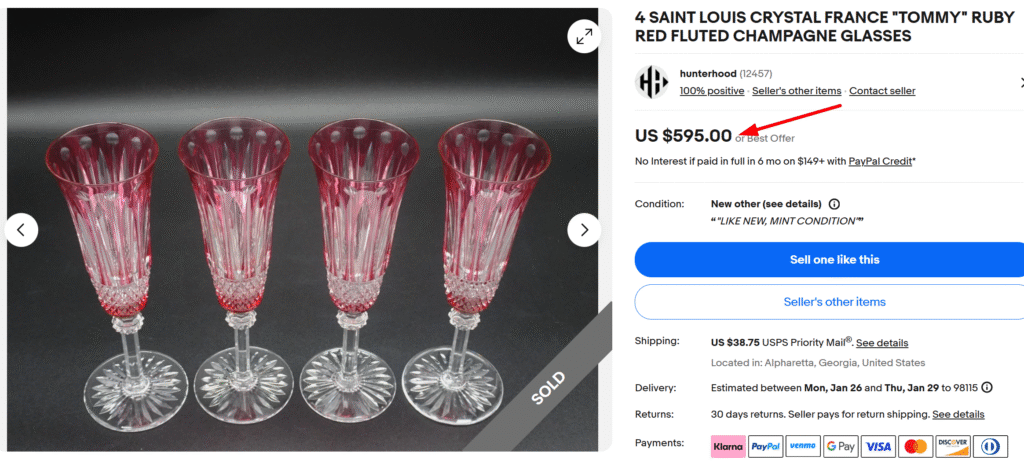
The Tommy pattern was designed in 1928. It gained fame at a 1938 dinner in the Hall of Mirrors at Versailles for King George VI, when each guest’s place was set with 11 Tommy glasses, according to the Vienna auction house Dorotheum.
Ruby red glass has traditionally been colored with a tiny amount of gold, which is one reason red cut crystal costs more than clear. A matching set of four in mint condition is a real find.
4. René Lalique Bacchantes Vase
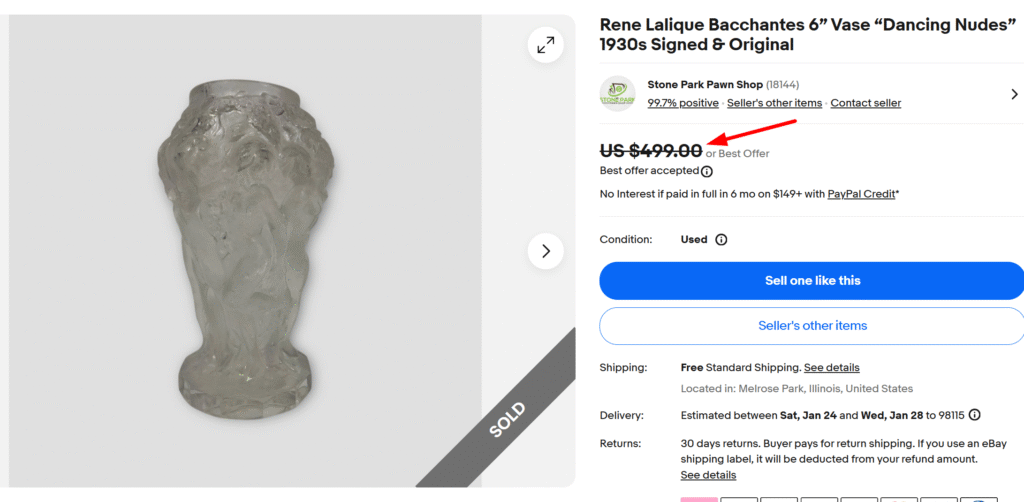
This 6-inch frosted Bacchantes vase features dancing nude female figures in high relief circling the vase, an original 1927 design.
Check size and signature before you assume a piece is from the 1920s or 1930s, though: the Bacchantes vase in the Corning Museum of Glass is about 9.5 inches (24.3 cm) tall, while the one shown here is 6 inches.
5. Baccarat Harcourt Water Goblets
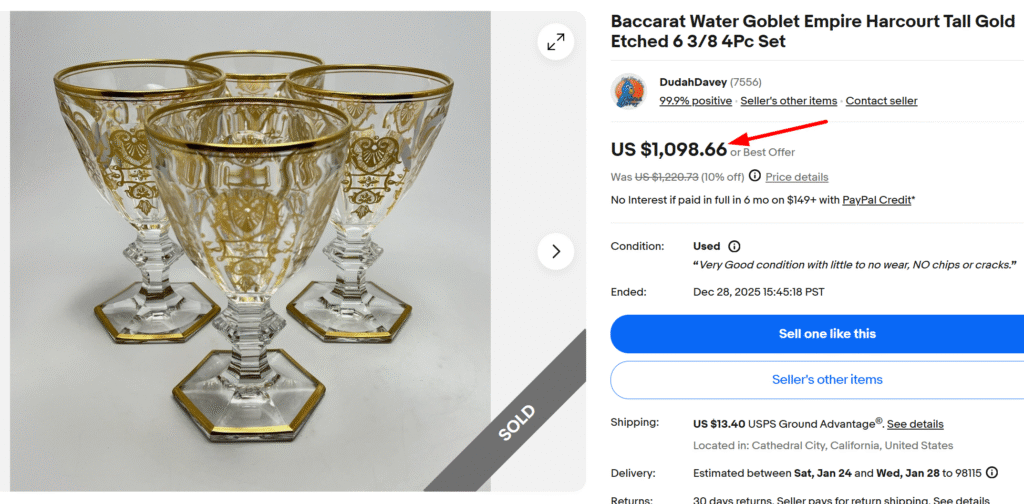
This goblet set features the Empire variation of Baccarat’s classic “Harcourt” pattern, a more luxurious version with gold-gilded decoration on the flat-cut bowl and foot. The Harcourt design is known for its architectural shape, with a hexagonal base and six flat-cut facets.
6. Steuben “Heritage Gazelle” Vase by Sidney Waugh
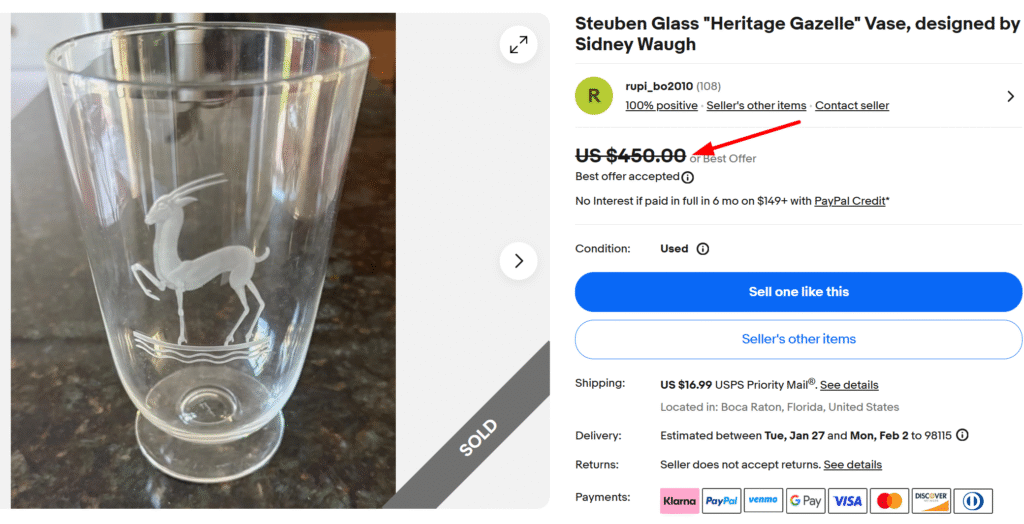
This piece is from the Heritage Series reissue in 1989, based on Sidney Waugh’s original 1935 “Gazelle Bowl” design, Steuben’s first major engraved piece according to Steuben’s own timeline.
This vase features copper-wheel-engraved gazelles on clear crystal. The Heritage Gazelle vases were limited editions released as part of Steuben’s Heritage Series, which the company started in 1978 for its 75th anniversary.
If your piece turns out to be pressed or colored glass rather than crystal, our old glassware identification guides cover the main makers and types.
Found this guide useful?
Save it for later
Share it with someone
Keep the old finds coming
New guides and finds worth looking for, delivered to your inbox.
Keep exploring
More guides in Vintage Glass
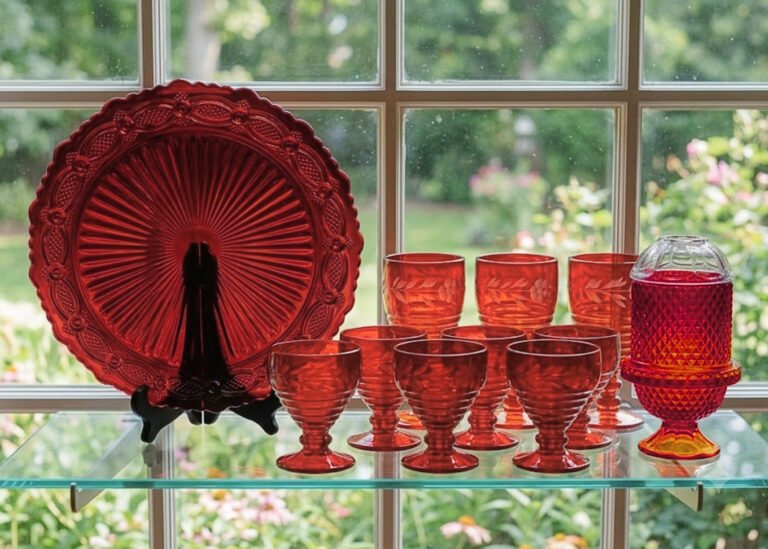 12 findsCollectible Red Glass: 12 Rare Vintage Pieces to Look For TodayTop sale $550
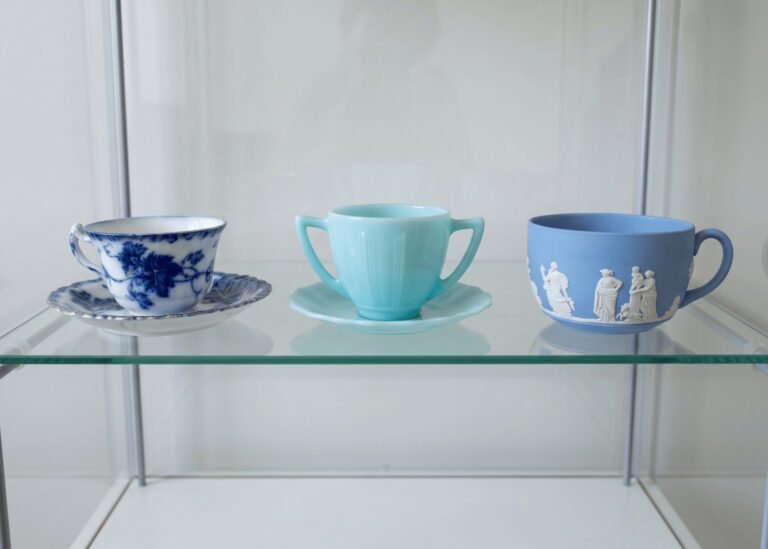 9 finds9 Types of Vintage Tea Cups That Are Highly Collectible TodayTop sale $289
 10 findsRare Antique Carnival Glass Colors: From Ruby Red to Aqua OpalescentTop sale $400
 9 findsAre Vintage Rolling Pins Valuable? Tips to Identify Rare FindsTop sale $460