
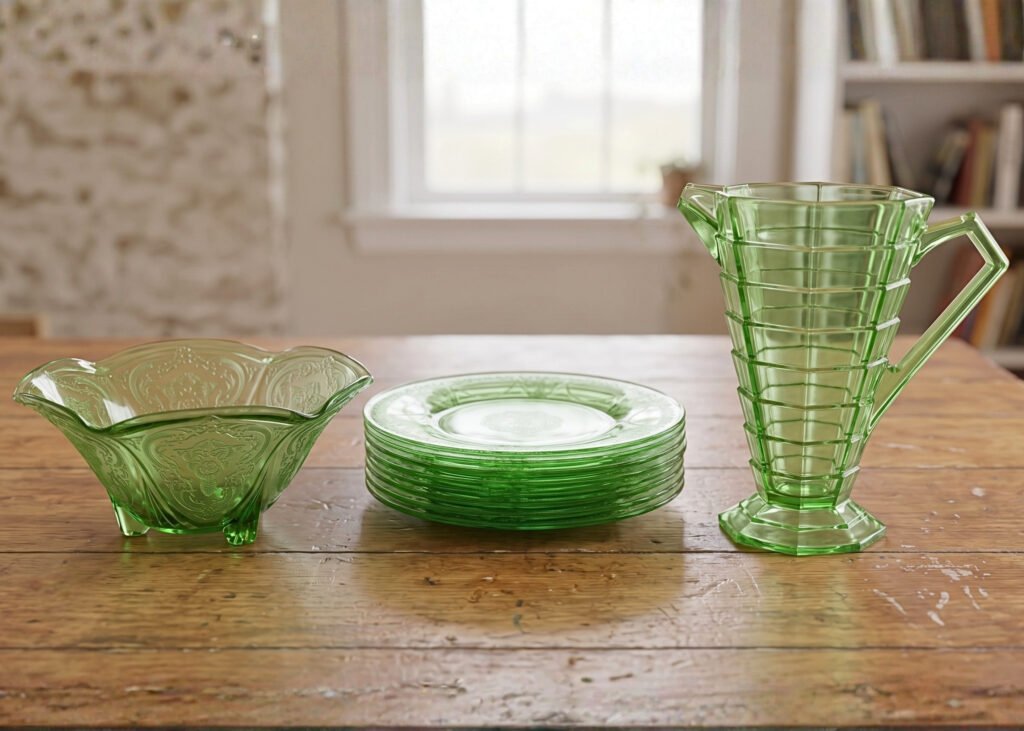
Green depression glass is machine-pressed, mass-produced glassware made in the United States from roughly 1929 through the early 1940s. It was cheap glass for a broke country.
Families got it free inside oatmeal boxes, at gas stations, or at the movies, and green was by far the most common color. The big names to know are Anchor Hocking, Jeannette, Hazel-Atlas, Federal, and Indiana Glass.
Each one had its own patterns and quirks. That is why identification is crucial. Save this guide to learn to spot valuable green depression glass and find collectible pieces.
How to Identify Real Green Depression Glass?
Identification starts with the feel and appearance. So, pick up the piece. It should feel light for its size, with visible mold seams, tiny straw marks, and small bubbles trapped in the glass.
Those flaws are good news. They mean it came out of a 1930s automatic press, not a modern reproduction mold.
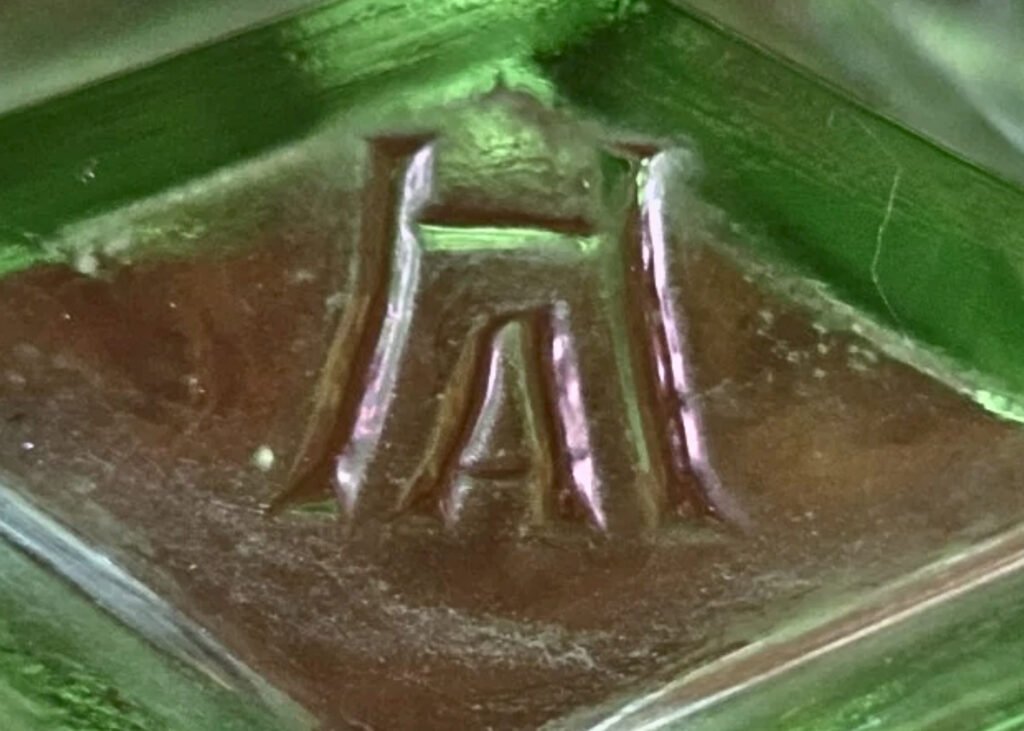
Next, flip it over and look for marks. Some pieces carry a maker’s mark, like the anchor-over-H for Anchor Hocking or the F-in-a-shield for Federal. However, plenty of authentic pieces are unmarked. So do not dismiss a piece just because the base is blank.
Lastly, check the pattern. Use official catalogs from makers to verify the patterns before paying anything.
Is Green Depression Glass Uranium Glass?
Some of it is, and some of it isn’t. The makers of the glass added a little uranium oxide to the batch in the late 1920s and early 1930s to give the glass that iconic yellow-green color.
So a lot of green depression glass from that era does contain uranium, but not every piece does.
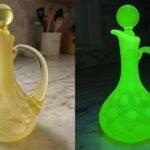
The blacklight test is the fastest way to spot uranium-based green depression glass. If it glows bright yellow-green under UV, you almost certainly have the real thing. Most modern reproductions do not glow.
Concerning safety, the uranium levels are quite small, and according to the Nuclear Regulatory Commission, these items are safe for display and light use. Most collectors keep them on shelves and do not eat on them.
ID Note: Uranium depression glass and vaseline glass overlap, but they are not identical. Vaseline glass is specifically the pale, yellowish-green color, while uranium depression glass covers the broader green range. Both glow under UV.
Collectible Green Depression Glass Patterns & Pieces
Here are the vintage green depression glassware pieces collectors hunt for today. Each one holds collector value thanks to its unique patterns and form.
1. Paden City Cupid Samovar Drink Dispenser
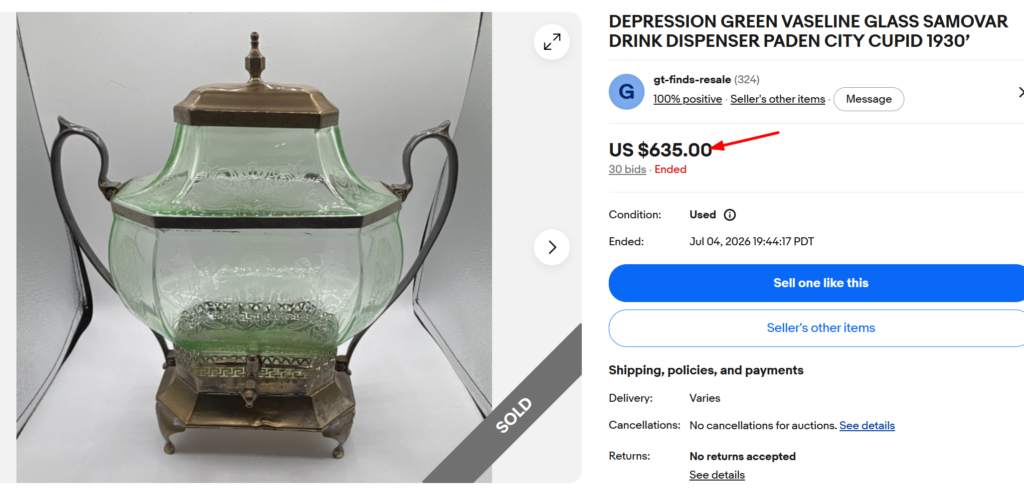
Sold for $635
Paden City’s Cupid pattern is an etched, elegant depression glass line from the 1930s that shows Cupid figures among flowers. Samovars combining the etched green glass body with a silver-plated metal frame are extremely rare and turn up mostly at high-end auctions.
- Estimated Value: $500 to $700
- Production Years: 1930s
- What to Check: Cupid etching, metal frame
2. Cameo (Ballerina) Pitcher by Anchor Hocking
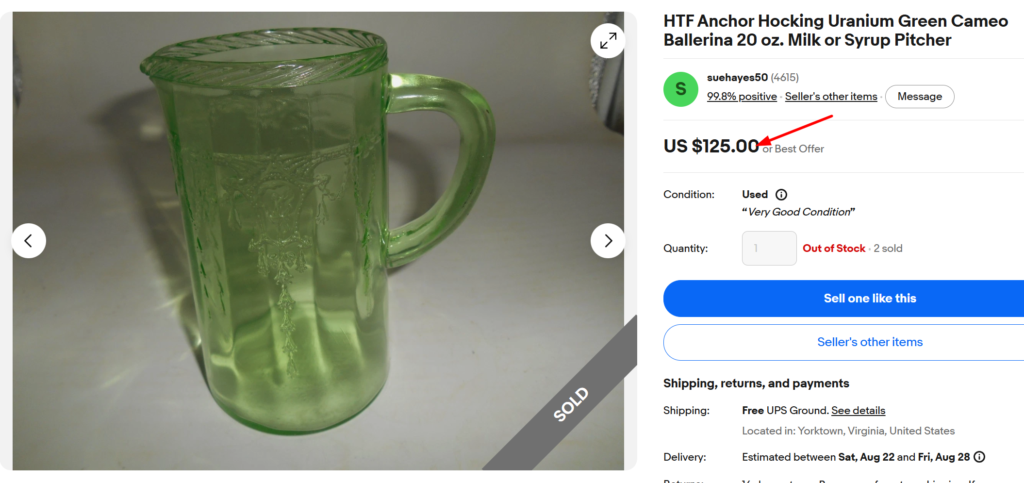
Sold for $125
Cameo is Anchor Hocking’s most famous mold-etched pattern, made from 1930 to 1934. The design shows a tiny dancing girl in a medallion, which is why collectors also call it Ballerina or Dancing Girl.
Green was the primary color for manufacturing the Cameo pattern. So, green items are plentiful, although the tall pitcher is highly collectible.
- Estimated Value: $60 to $150
- Production Years: 1930 to 1934
- What to Check: Ballerina medallion, vertical panels
3. Tea Room Pitcher & Tumblers by Indiana Glass
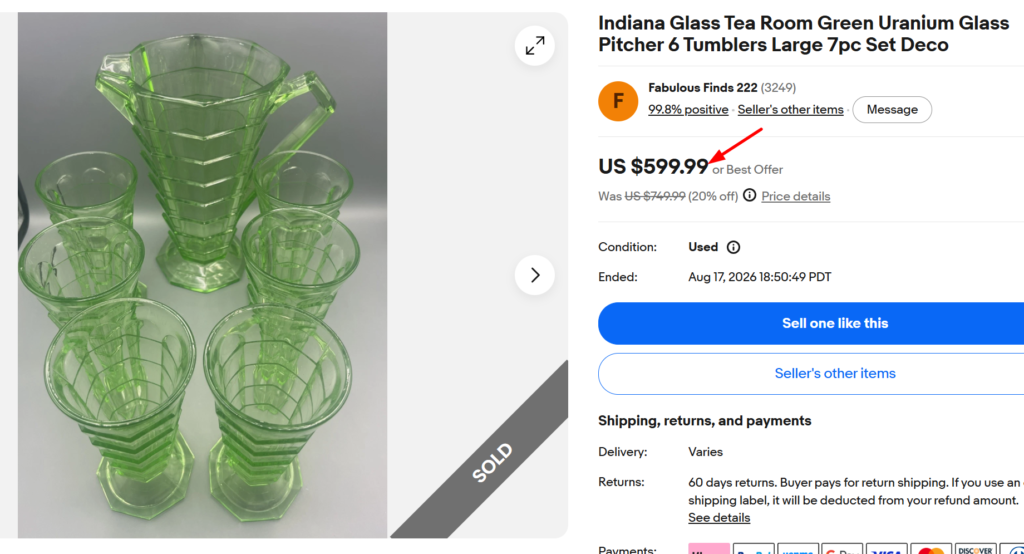
Sold for $600
Tea Room is one of the most stylized Art Deco patterns Indiana Glass ever made, produced from 1926 to 1931. The design uses stacked geometric rings and angular handles.
It was never reproduced, so every piece you find is original. Complete pitcher and tumbler sets in green are highly sought after.
- Estimated Value: $500 to $750 for a full set
- Production Years: 1926 to 1931
- What to Check: Stacked rings, angular handles
4. Green Depression Glass Rolling Pin
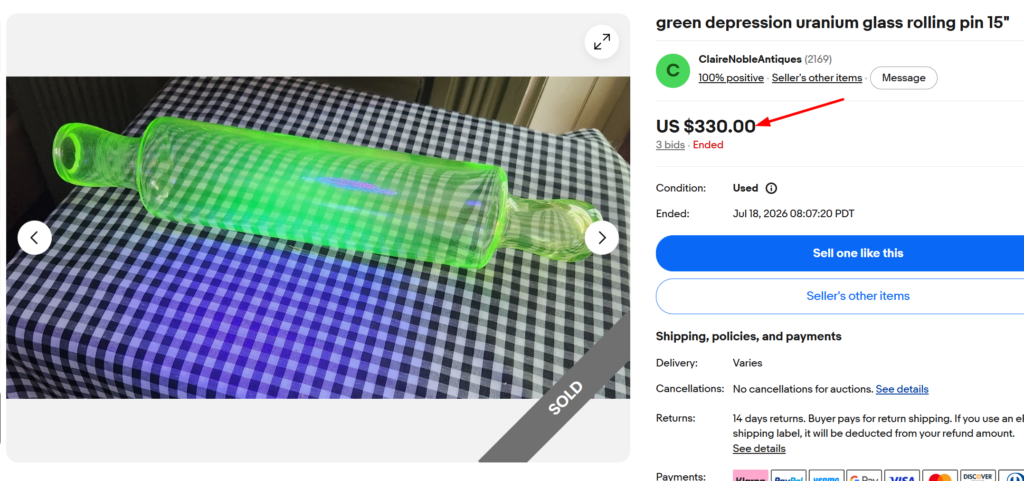
Sold for $330
Green depression glass rolling pins are one of the most theatrical uranium pieces you can own. Under a blacklight, they glow neon green from end to end. Most were made in the 1930s with a screw or cork stopper on one handle so bakers could fill them with cold water.
- Estimated Value: $250 to $400
- Production Years: 1930s
- What to Check: Original stopper, uranium glow
5. Footed Flower Frog by Fostoria
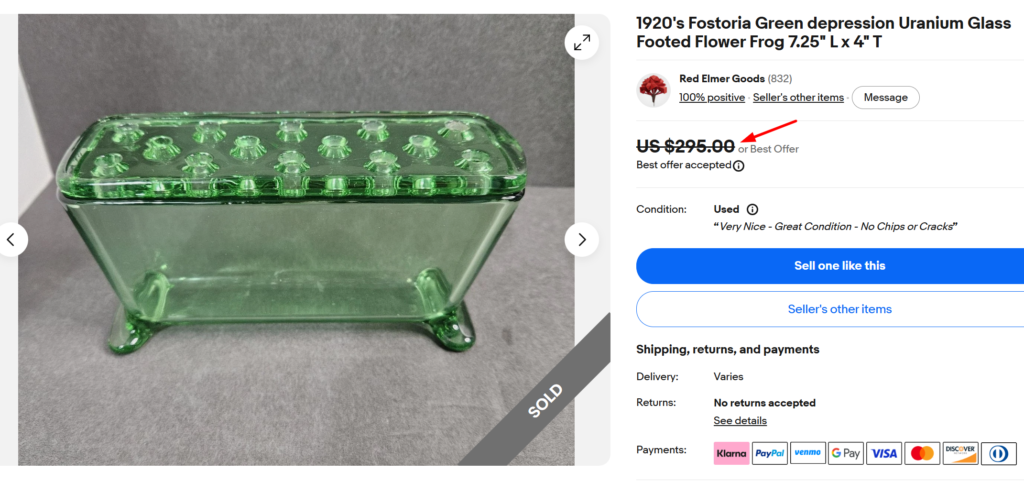
Sold for $295
Fostoria produced footed flower frogs in green uranium glass during the 1920s, and this small rectangular piece with multiple holes was designed to hold flower stems upright in centerpiece arrangements.
The four peg feet are the identifying feature. Plus, chipped feet and cracked pegs are common flaws to inspect closely.
- Estimated Value: $200 to $325
- Production Years: 1920s
- What to Check: Peg feet, stem holes, gives uranium glow
6. Moon and Stars Canisters By L.E. Smith
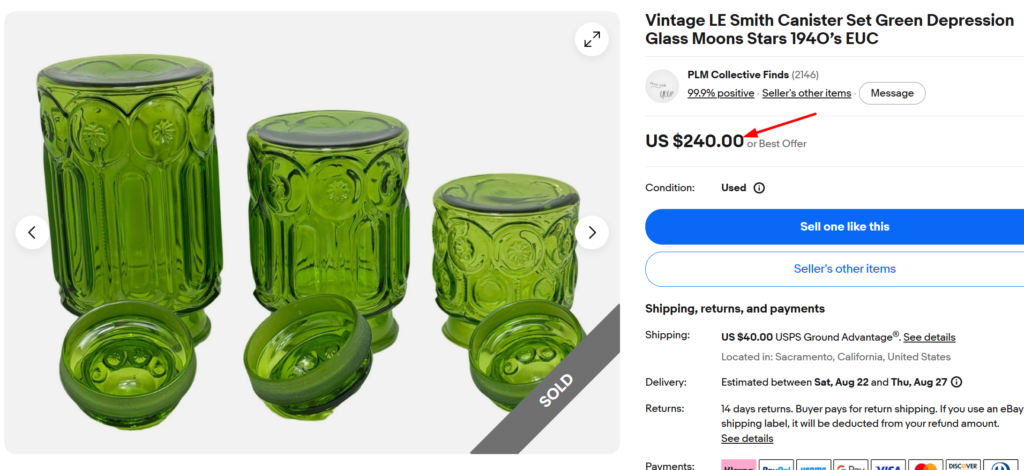
Sold for $240 (set of 3)
L.E. Smith leased the Moon and Stars molds from Weishar’s Island Mold Company starting in the 1960s, and this later depression-style pattern shows large embossed stars inside repeating circles.
Green canister sets with all lids intact are the hardest to find. Most pieces carry a small “S” mark on the base.
- Estimated Value: $150 to $300 full set
- Production Years: 1960s onward
- What to Check: Embossed stars, “S” mark
7. Princess Pattern Cookie Jar by Anchor Hocking
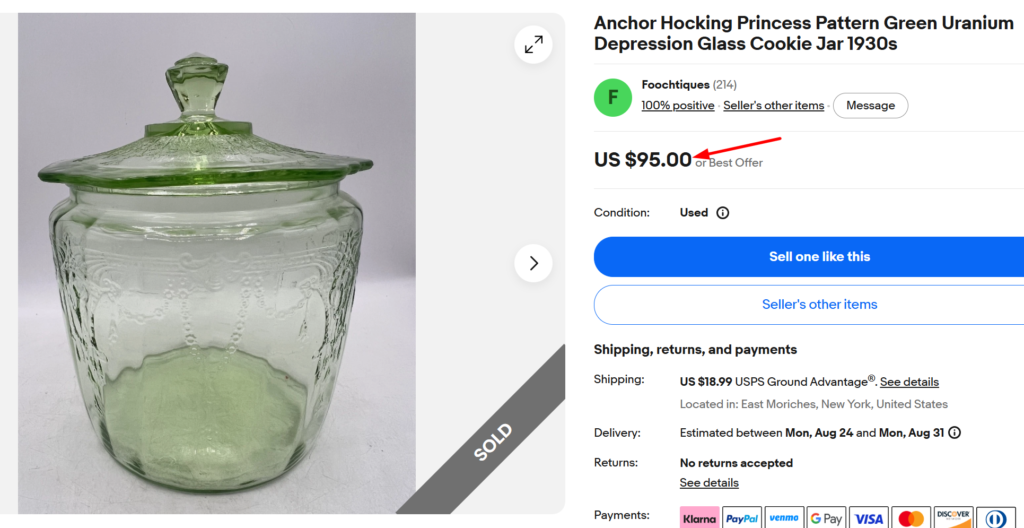
Sold for $95
Princess is another popular Hocking pattern, running from 1931 to 1935. It has scrolling swag designs and pointed square finials on the lids.
Green and pink were the workhorse colors. Blue cookie jars are the holy grail, but green ones are still very collectible, especially when the original lid survives.
- Estimated Value: $50 to $95 with lid
- Production Years: 1931 to 1935
- What to Check: Square finial, swagged pattern
- Value Tips: Blue jars can hit $900
8. Cherry Blossom Serving Bowl by Jeannette
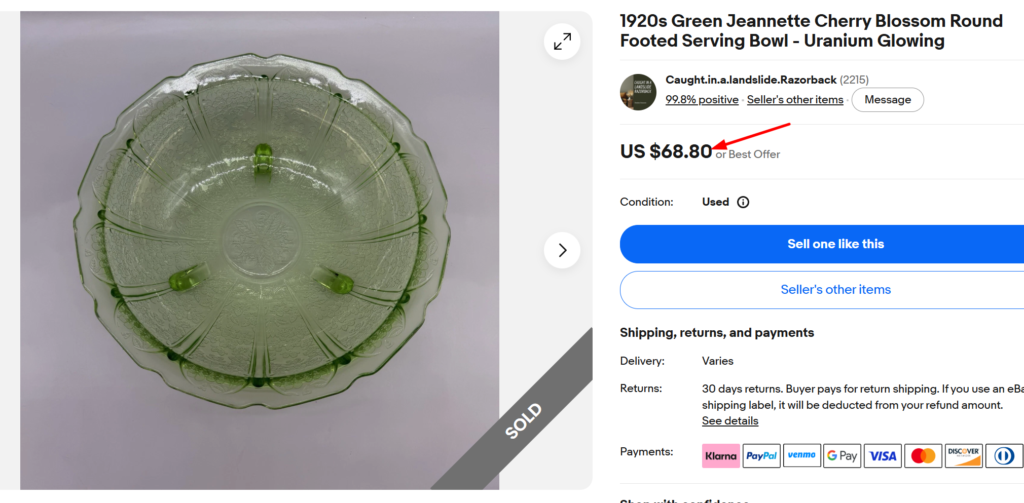
Sold for $70
Jeannette’s Cherry Blossom is arguably the most collected depression glass pattern ever made. Green production ran from 1930 to 1935, then stopped, while pink continued through 1939.
The design features off-center cherry sprays and a scalloped border. Cherry Blossom is also the most reproduced pattern out there, especially shakers, so identify carefully,
- Estimated Value: $40 to $110
- Production Years: 1930 to 1935 (green)
- What to Check: Off-center cherry spray
9. Block Optic Footed Pitcher by Anchor Hocking
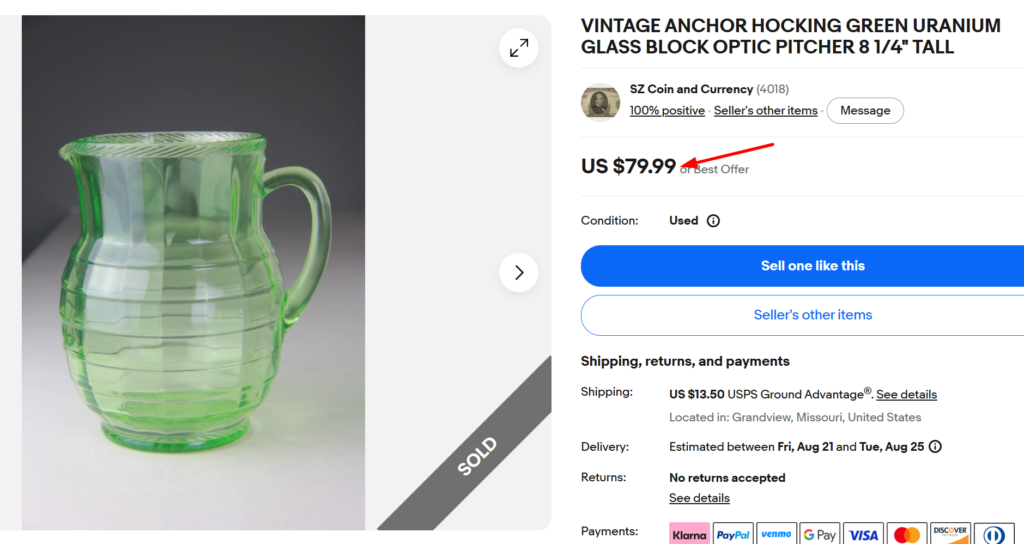
Sold for $80
Block Optic is pure Art Deco geometry. Anchor Hocking produced it from 1929 to 1933 in green, pink, yellow, and clear. Green is the color collectors chase the most.
Plus, it is also uranium glass, so it glows a fantastic yellow-green under UV. The large pitcher (80-ounce) is the trophy piece.
- Estimated Value: $40 to $90
- Production Years: 1929 to 1933
- What to Check: Vertical block panels, glows in UV light
10. Royal Lace Serving Piece by Hazel-Atlas
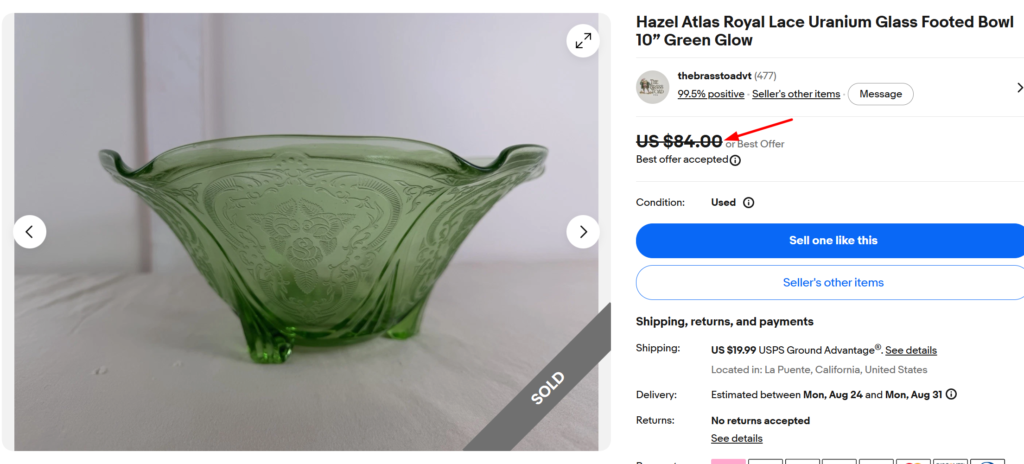
Sold for $85
Royal Lace is among the most elegant Depression glass designs, made by Hazel-Atlas from 1934 to 1941. The design features an elaborate lace pattern border with floral panels.
Green and pink were the earliest colors, but production dropped once cobalt blue took over. That makes green pieces increasingly rare today.
- Estimated Value: $30 to $120
- Production Years: 1934 to 1941
- What to Check: Lace border, scroll panels
11. Georgian Lovebirds Dinner Plate by Federal
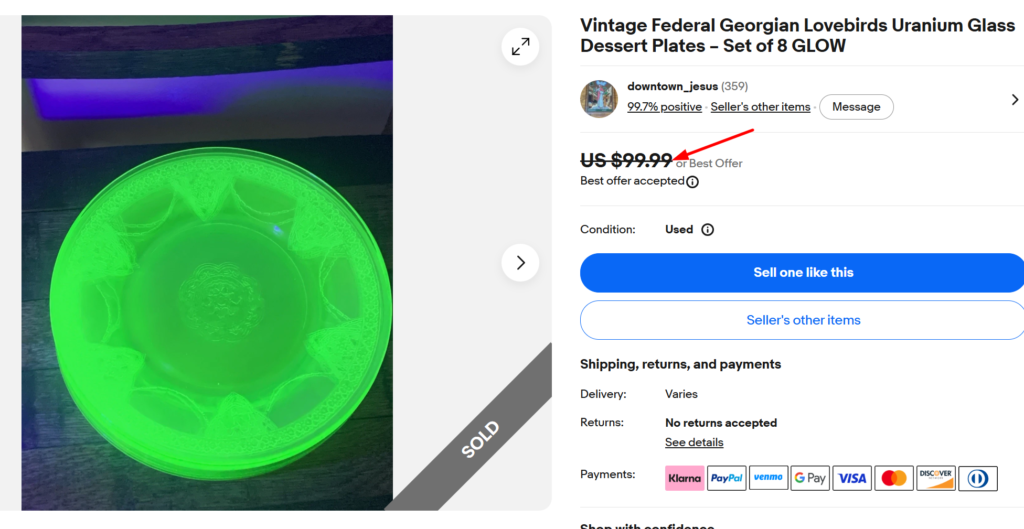
Sold for $100
Federal Glass made Georgian Lovebirds from 1931 to 1936, almost entirely in green. The rim alternates two little birds with baskets of flowers, all tied together by swags.
What makes this pattern special is that it has never been reproduced. So what you see is authentic, and dinner plates are the most collectible pieces.
- Estimated Value: $35 to $65
- Production Years: 1931 to 1936
- What to Check: Birds and basket rim
- Quick Facts: It’s never reproduced.
12. Sylvan (Parrot) Grill Plate by Federal
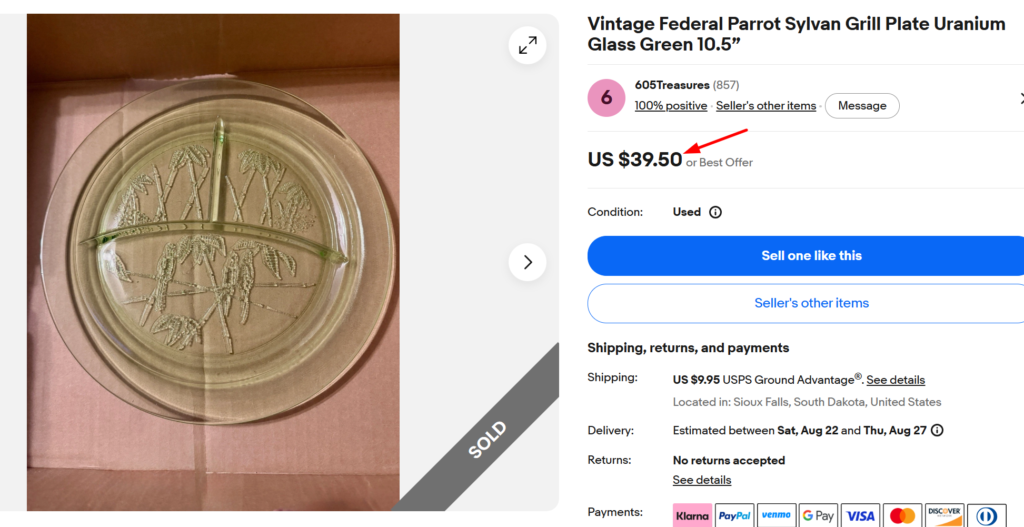
Sold for $40
Parrot, also known as Sylvan, is one of the few patterns that are rare green depression glasses. The pieces were produced by Federal during 1931 and 1932, then discontinued thereafter.
This pattern has parrots on the palm branches. Under black light, the green pieces will give a strong glow. Some complete and rare pieces sell for more than a hundred dollars.
- Estimated Value: $60 to $250
- Production Years: 1931 to 1932
- What to Check: Two parrots, palm trees
13. Hocking Green Reamer (Juicer)
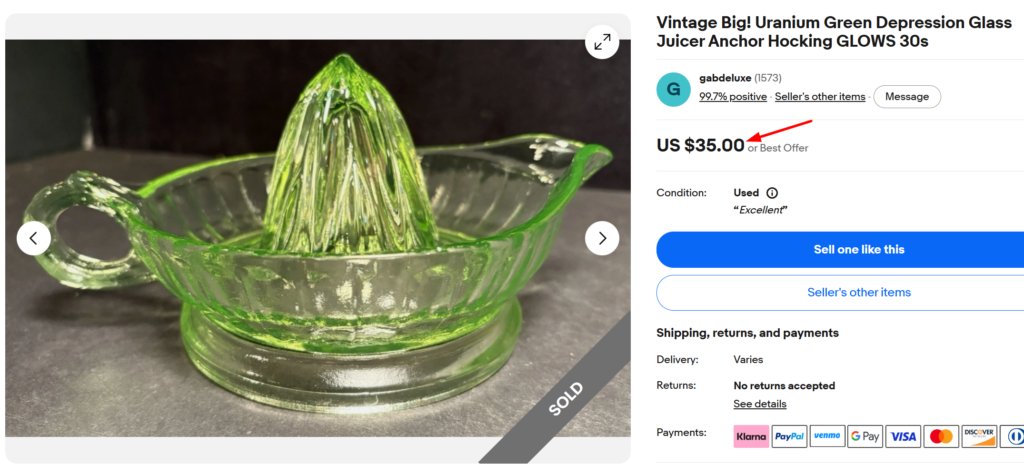
Sold for $35
The Hocking Green depression glass reamer is a kitchen workhorse that survived because people actually used it every morning. It is uranium glass, so it glows beautifully, and the tab-handled version is the one most collectors want. Chips on the pouring spout are common and knock the value down fast.
- Estimated Value: $25 to $75
- Production Years: Early 1930s
- What to Check: Tab handle, cone center, glow
Condition is everything for vintage depression glassware. So check every rim, spout, and finial in bright light before you pay. And when in doubt, cross-check the sold examples to see what the market is actually paying for your piece.