
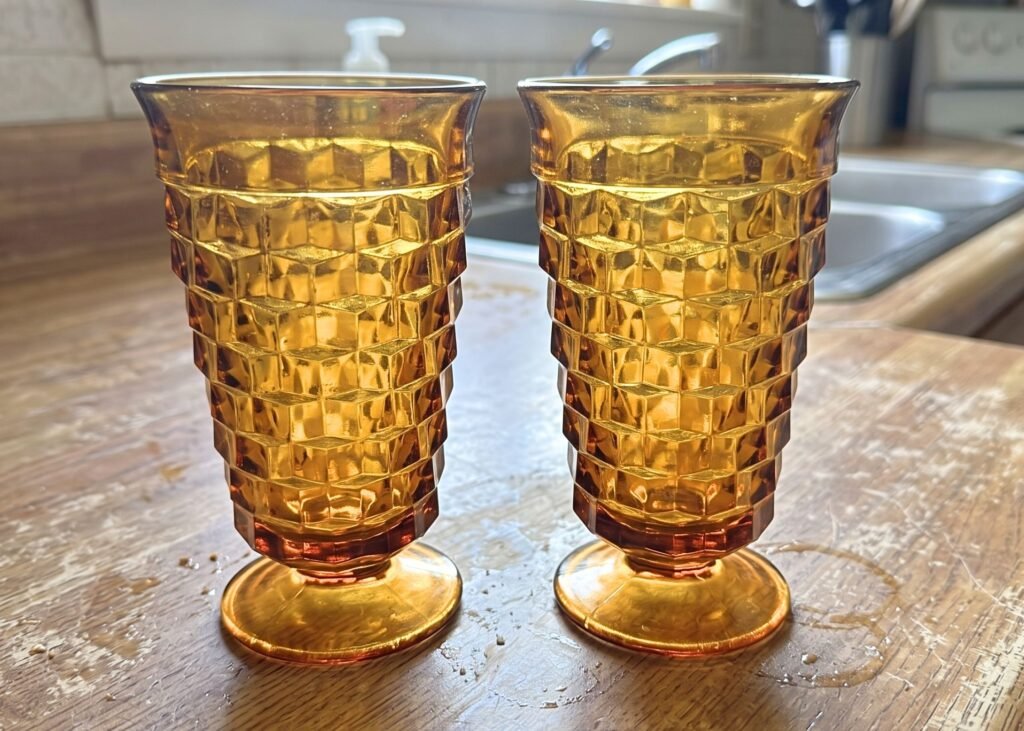
Amber is one of those glass colors that gets overlooked because it looks so ordinary at first. That’s why most amber glass sitting on thrift store shelves is worth a few dollars.
However, some unique pieces have sold for as much as a thousand dollars on eBay and even more in auctions. But spotting that rare piece is tricky.
So, in this guide, I will help you identify valuable vintage amber glassware, value old pieces, and recognize collectible and rare pieces easily.
What Is Amber Glass?
Amber glass gets its warm honey-to-brown color from adding iron, sulfur, and carbon during melting. It has been around since Victorian times, but the pieces most collectors want today come from three windows:
- The Depression era (1920s to 1940s)
- The mid-century boom (1950s to 1970s)
- Victorian bottles from the mid-1800s
Different makers used different amber tones. Some run pale yellow-gold, others lean deep root beer. That color depth, combined with the pattern and maker, is what separates a $10 dish from a $500 one.
Amber vs. Amberina vs. Carnival vs. Depression
Straight amber is a single warm tone with no gradient or shimmer, but amberina shifts from red at one end to amber at the other.
Carnival glass has that oily iridescent shimmer on top of the amber. Depression glass is thinner, mass-produced pressed glass from the 1920s to 1940s.
How to Identify Vintage & Antique Amber Glass? 4 Signs
It is a bit challenging to recognize antique amber glass because the colors of glass from different makers are quite similar. Amber glass from both 1930 and 1975 would also look very much alike. However, if one knows what to look for, it gets a bit easier.
1. Check the Color and Clarity
Older amber glass tends to have subtle variations in tone across a single piece. Hold it up to a window. Depression-era and Victorian pieces often show slight color shifts, tiny bubbles, or a warmer glow.
Modern reproductions look uniform and slightly flat.
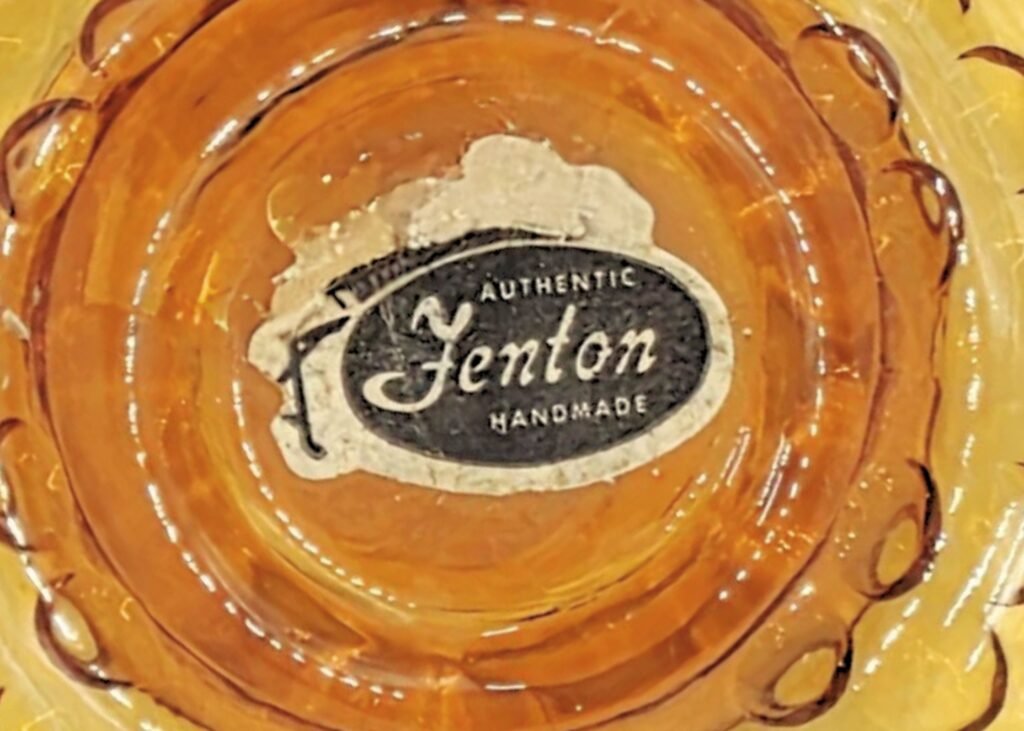
2. Look for Maker’s Marks
The markings of the glass piece will help you trace the maker and the dating window. So, flip the piece and check the marks.
Fenton used an oval logo starting in 1970, and later switched to paper labels. Anchor Hocking marks pieces with an anchor and an H symbol. L.E. Smith uses a simple “S” mark, though many pieces are unmarked. Fostoria has a script F for paper labels. Blenko rarely marked pieces at all, relying on paper stickers that fell off long ago.
3. Study the Pattern
A pattern is often more useful than a mark. Hobnail, Moon and Stars, Sandwich, Coin, and Fairfield each tell you the likely maker and era. Reference books and glass museum sites are your friend here.
4. Feel the Weight and Finish
Pick the piece and check its weight and feel. For instance, the weight of antique glass objects is more compared to modern replicas, and the molded seams are also rougher.
Blenko and other hand-blown glassware have a pontil mark at the bottom, which is a small rough or smooth area where the punty rod has been broken.
12 Rare Amber Glassware Patterns & Pieces to Collect
Here are twelve rare amber glassware pieces that are actively collected today. Each one shows why a certain pattern or maker gets collectors excited, and what to look for if you spot something similar.
1. Daum Crystal Pate de Verre Amber Bengal Tiger Figurine
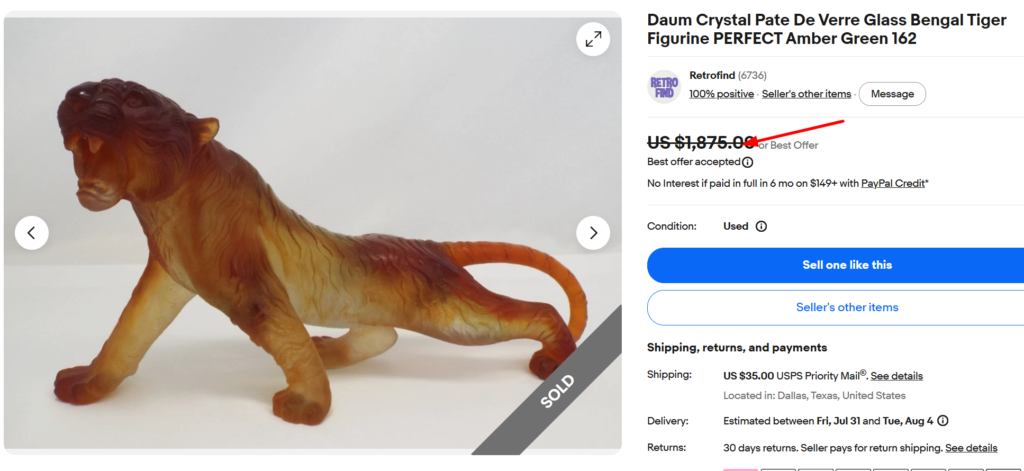
Sold for $1,875
Daum has been producing crystal in France since 1878. Daum’s process of pate de verre uses colored crystals melted together in a mold. The amber Bengal Tiger is a piece from Daum’s animal series and was sold for an extremely high price before becoming a very valuable collectible.
To spot genuine pieces, check for the “Daum France” sign on the base. Original boxes and paperwork can also prove authenticity and add real value.
- Estimated Value: $1,200 to $2,000
- Production Years: Late 20th to early 21st century
- What to Check: Signature on base, no tail chips
2. Amber Glass Bitters Square Bottle
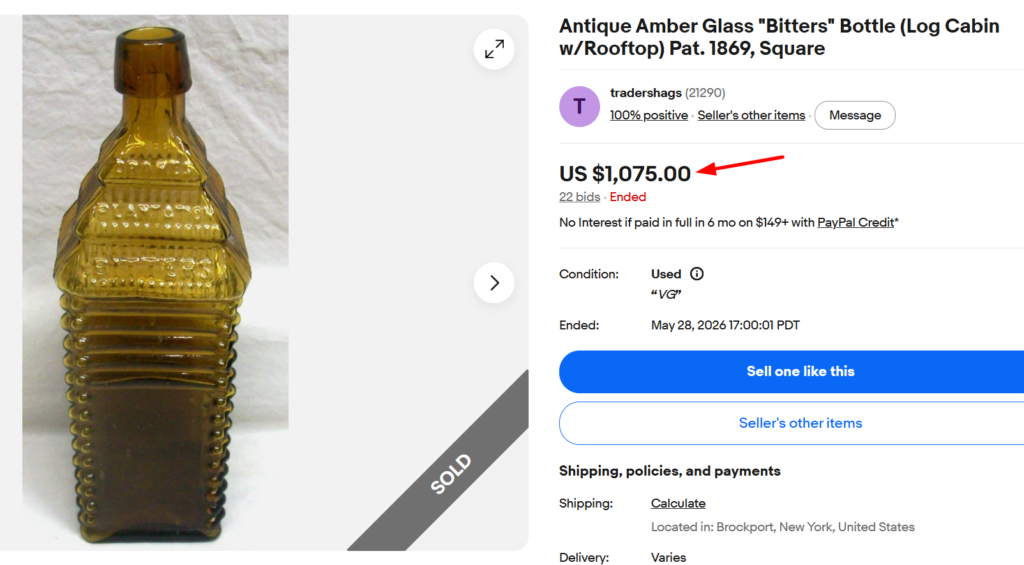
Sold for $1,075
Antique Bitters bottles were made from around 1840 to 1906, and figural log cabin shapes are among the most collectible. The 1869 patent date usually points to a Drake’s Plantation variant or similar cabin form.
Genuine examples have applied lips, crude mold seams, and wavy body glass with tiny bubbles. Common amber bottles are valuable, but rare colors like puce or olive amber can go into the thousands.
- Estimated Value: $500 to $1,500+
- Production Years: 1860s to 1870s
- What to Check: Applied lip, embossed logs, and roof
3. Thomas Webb England Cut Crystal Amber Bowl
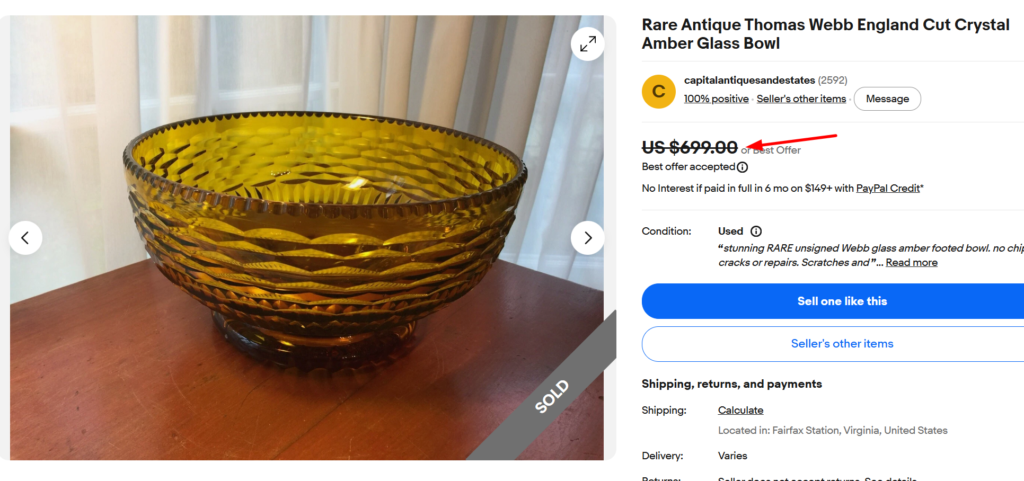
Sold for $700
Thomas Webb & Sons has been one of the great English crystal makers since the 1830s. Amber cut crystal bowls with hobnail or diamond cutting were made during the Victorian era and into the early 20th century.
Signed Webb pieces command a premium, but unsigned examples show up too. You can spot the real ones by the weight, the ring when tapped, and the precision of the cut facets.
- Estimated Value: $400 to $900
- Production Years: Late 1800s to early 1900s
- What to Check: Sharp cut facets, heavy weight
- Quick Facts: Rings like a bell when tapped
4. Quilted Glass Hurricane Lamp
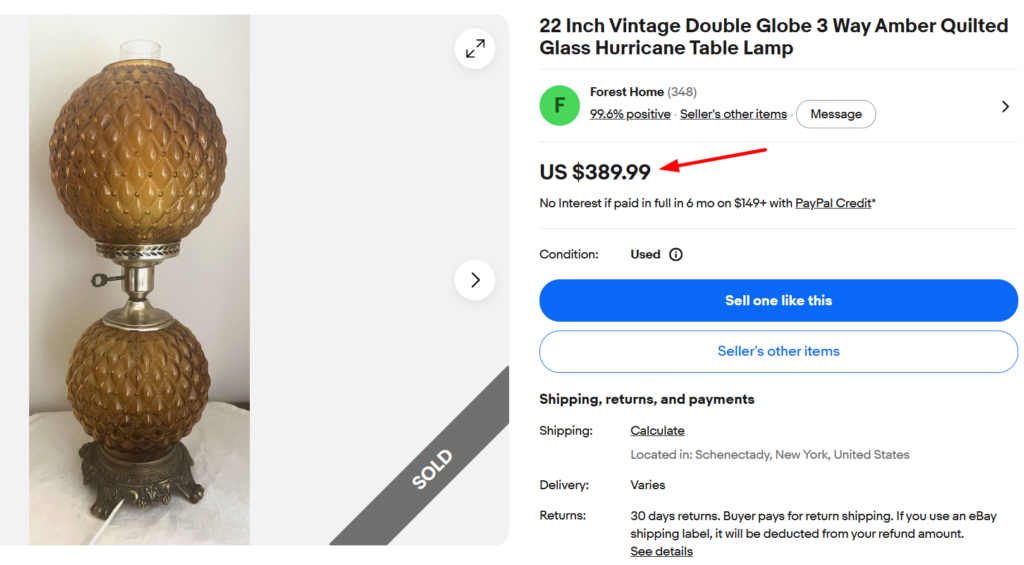
Sold for $390
Globe double hurricane lamps featuring quilted amber glass were sought after during the late 1960s and 1970s. The “quilted” design is that diamond lattice pattern with raised bumps at every intersection point, and the three-way switch further adds to the value.
Complete lamps with both original globes, the metal harp base, and working electrical parts are what you want. Replacement globes are almost impossible to color-match and hurt the value.
- Estimated Value: $250 to $450
- Production Years: Late 1960s to 1970s
- What to Check: Both globes intact, working 3-way switch
- Quick Notes: Mismatched globes kill value fast
5. Fenton Amber Hobnail Fairy Lamp
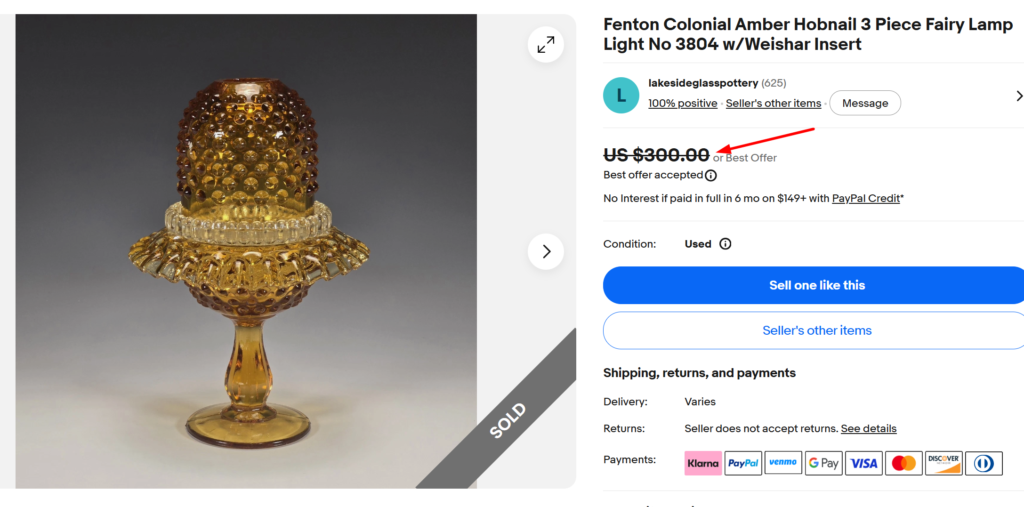
Sold for $300
The Fenton hobnail pattern is that iconic bumpy surface covered in small raised dots. This three-piece fairy lamp is Colonial Amber, a color Fenton produced from 1963 through the early 1980s.
The pedestal base with ruffled edges is harder to find than the two-piece versions, so complete sets pull real money. A Weishar candle insert also adds to the value here.
- Estimated Value: $250 to $400
- Production Years: 1963 to early 1980s
- What to Check: Ruffled base, raised hobnail bumps
- ID Note: Marked pieces with an oval logo (starting in 1970); earlier hobnail pieces are unmarked.
6. Indiana Glass Amber Hen on Nest Candy Dish
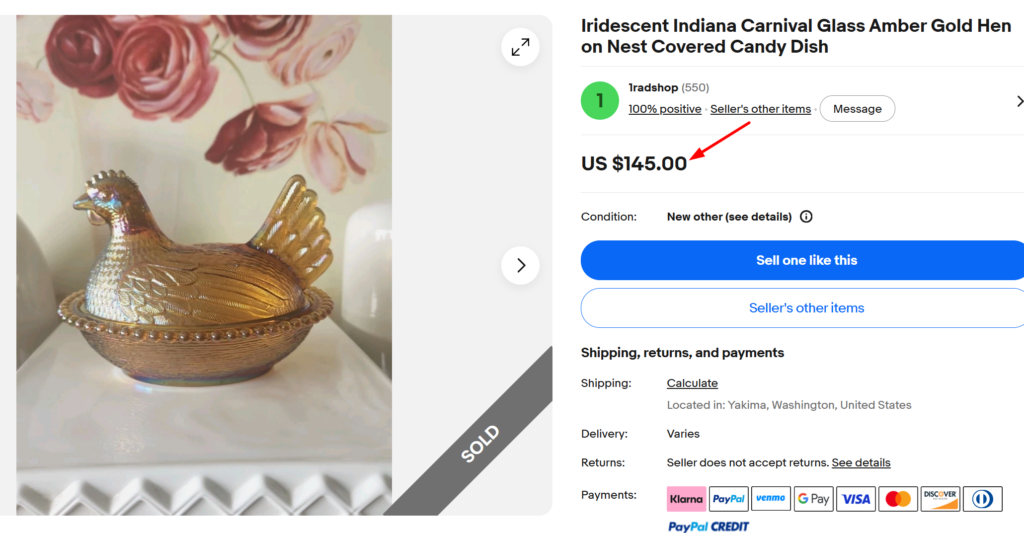
Sold for $145
Indiana Glass produced these hen-on-nest dishes starting around 1965, and amber was one of the earliest colors, alongside emerald green. The hen sits on a woven basket-style base with detailed feather work on the wings and tail.
Indiana pieces have a distinct flat tail, which separates them from Imperial and Westmoreland versions. Chicken candy dishes have become huge with collectors lately.
- Estimated Value: $75 to $200
- Production Years: Mid 1960s onward
- What to Check: Flat tail, woven basket base
- Notes: Most Indiana amber hens are unmarked.
7. Empoli Amber Glass Genie Bottle
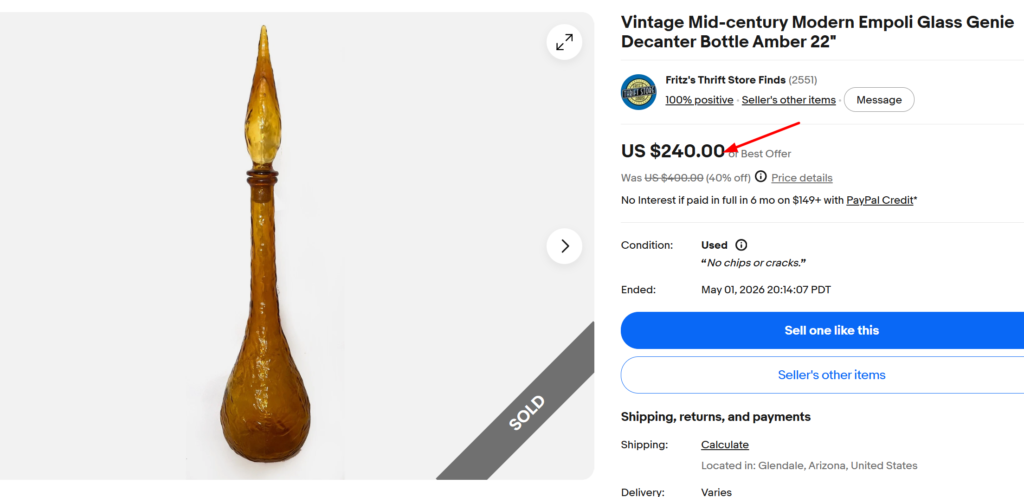
Sold for $240
Empoli genie bottles came out of the Empoli region near Florence, Italy, mostly during the 1960s and 1970s. The tall, tapered body with a flame-shaped stopper is the classic silhouette.
These bottles were sold cheaply back then, sometimes as bubble bath containers, but now good examples, especially tall 22-inch versions, are worth a lot.
Also, some are marked “Made in Italy” in raised lettering on the base, but many are not.
- Estimated Value: $150 to $400
- Production Years: 1960s to 1970s
- What to Check: Flame stopper, raised body texture
- Value Notes: Missing stoppers cut value in half
8. Fostoria Amber Coin Glass Ashtray Jar
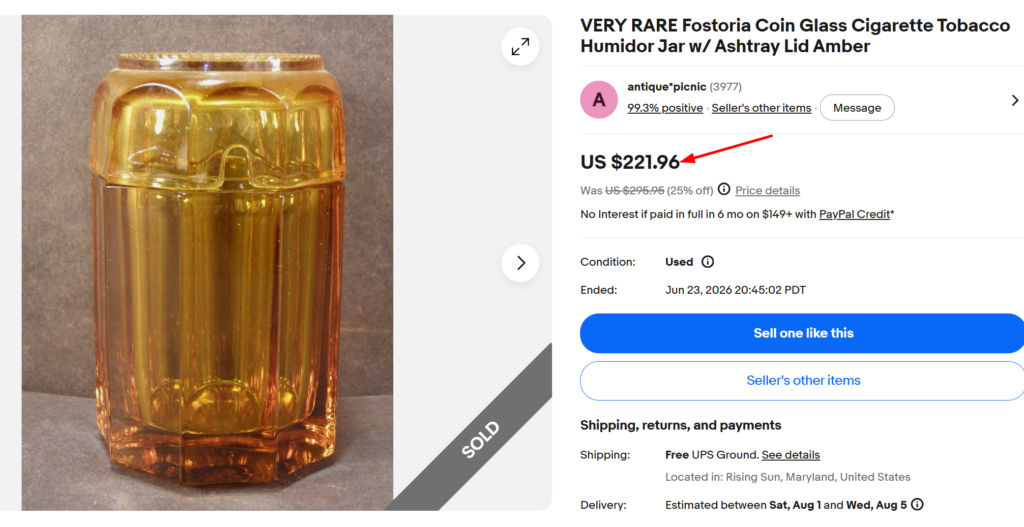
Sold for $220
Fostoria’s Coin pattern features large raised medallions modeled on real American coins, including the 1892 Liberty dollar and Indian Head penny. Amber was one of the original colored versions, added in 1961. The pattern stayed in production until Fostoria closed in 1982.
The cigarette humidor with an ashtray lid is one of the less common Coin forms. Most Coin pieces you’ll see are bowls, compotes, or goblets. So this specific shape is valuable.
- Estimated Value: $150 to $300
- Production Years: 1961 to 1982
- What to Check: Raised coin medallions, frosted coins
9. L.E. Smith Amber Hen on Nest Deviled Egg Plate
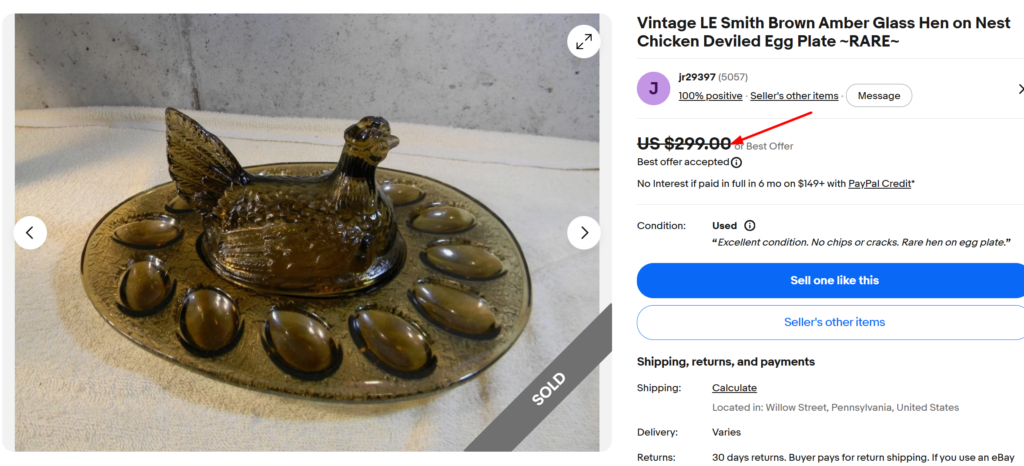
Sold for $300
This one is a rarer form. The hen on the nest sits on a full deviled egg plate with twelve wells around the edge, all cast in a smoky brown-amber tone. L.E. Smith made these on and off from the 1960s through the 1990s, but the combined hen and egg plate design is much less common than standard hen dishes.
Look for smooth pressed detailing on the feathers and no chips on the delicate egg well ridges.
- Estimated Value: $150 to $300
- Production Years: 1960s to 1990s
- What to Check: 12 egg wells, hen lid detailing
- Quick Facts: The brown-amber color is sometimes called root beer amber.
10. L.E. Smith Moon & Stars Amber Canister Set
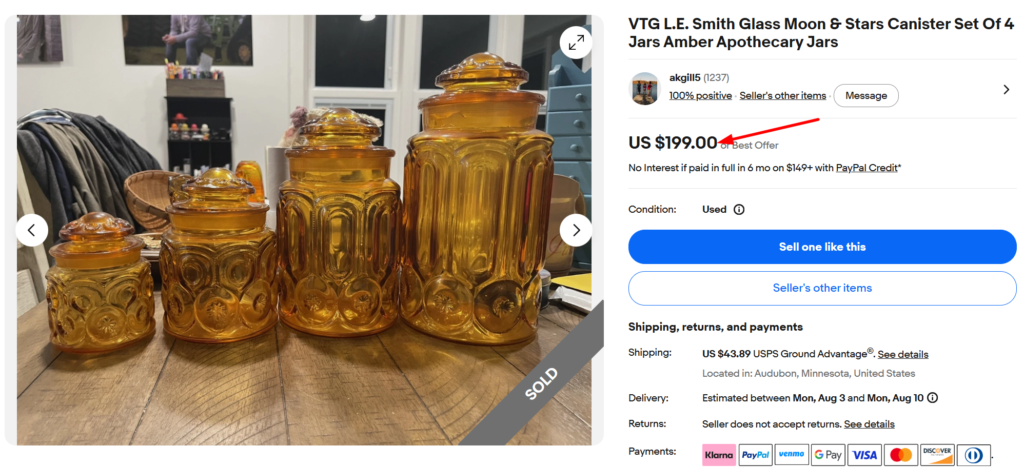
Sold for $200 (set of 4)
Moon and Stars is one of the most recognizable patterns in American pressed glass, with big round moons alternating with small star-cut points. L.E. Smith produced these amber canisters starting in the 1960s, using molds leased from Joseph Weishar’s Island Mold Company.
A complete set of four graduated canisters is harder to find than singles. Also, check for matching lids and consistent color across all four jars.
ID Note: Most L.E. Smith pieces carry a small “S” mark, but many are unmarked.
- Estimated Value: $150 to $250 (full set)
- Production Years: 1960s to 1980s
- What to Check: Alternating moon and star motif
11. Blenko Wayne Husted Amber Decanter
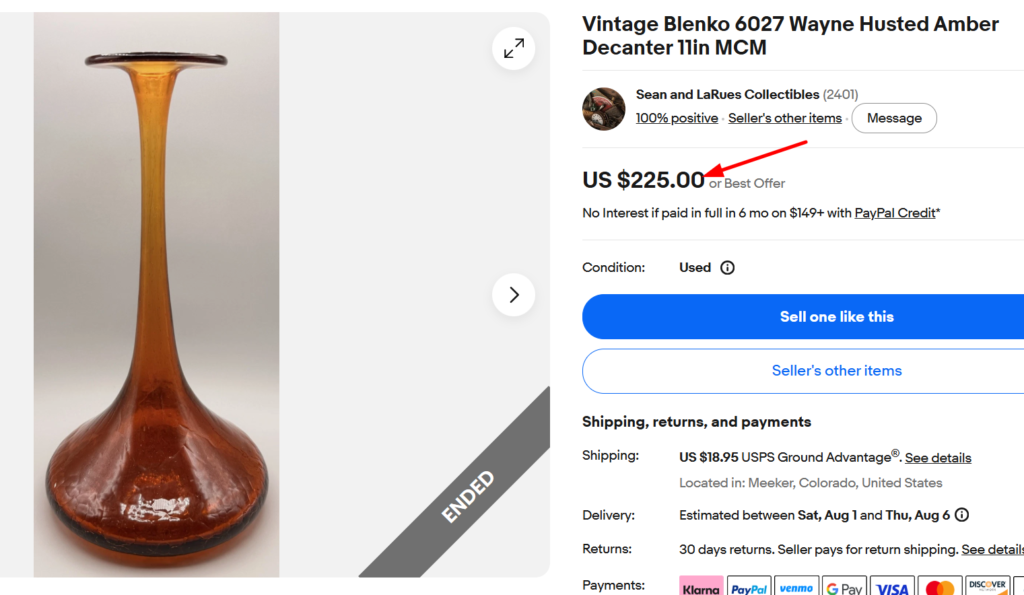
Sold for $225
The Blenko 6027, also called the shot glass decanter, was designed by Wayne Husted in 1960. It has that tall, slim neck and a flared foot, all hand-blown at the Milton, West Virginia works.
It was produced through most of the 1960s, and pieces without the original shot glass stopper still hold value because the form itself is so iconic.
Also, Blenko rarely marked pieces. So, look for the pontil mark on the base and the slight color variation typical of hand-blown work.
- Estimated Value: $200 to $400
- Production Years: 1960 to late 1960s
- What to Check: Pontil mark, flared base, tall neck
12. Indiana Amber Carnival Glass Hen on Nest Dish
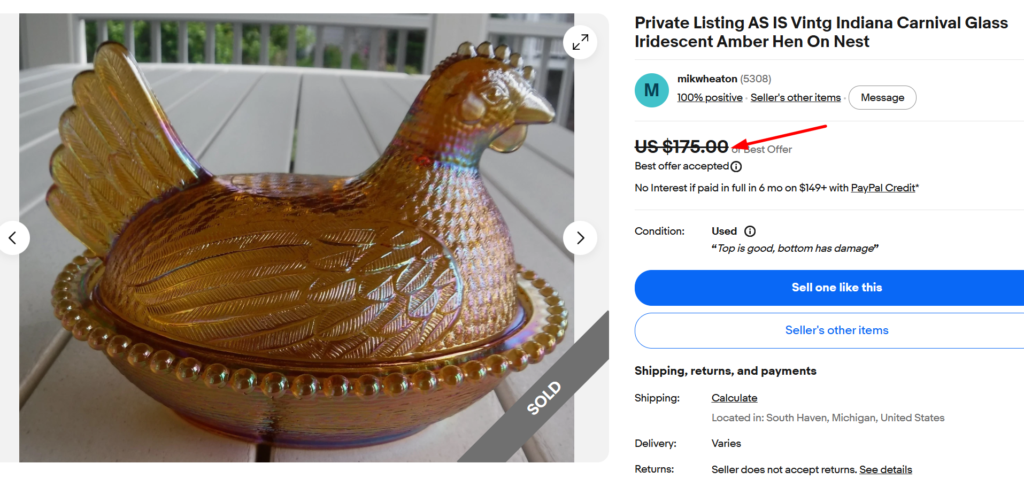
Sold for $175
Carnival glass gets that oily iridescent surface from a metallic salt spray applied while the glass is still hot. Indiana Glass made carnival hen on nest dishes in amber starting in the 1970s, and the gold-amber tone with rainbow flashes is what collectors chase.
Watch for damage on the beaded rim, which is the most fragile part. The iridescence should look consistent all over, not patchy or worn from washing.
- Estimated Value: $100 to $200
- Production Years: 1970s
- What to Check: Iridescent finish, beaded rim
What Makes Amber Glass Valuable?
The value of antique and vintage amber glassware depends on five main things, and they all work together.
- The maker and age – Early pieces from top makers hold higher value. A Fenton fairy lamp is worth more than an unmarked one because collectors trust the brand.
- The pattern & design – An earlier Victorian bitters bottle beats a 1970s reproduction because of scarcity.
- The condition – Chips, cloudy interiors, or missing lids can cut a value in half.
- Rarity – Rarer forms usually pull higher prices, too. Chicken candy dishes, deviled egg plates, canister sets, and fairy lamps are worth a lot.
- Completeness – For pieces that include multiple parts, like Hurricane lamps and fairy lamps, the value lies in completeness. Missing or replacement pieces cut the value.
To know whether your amber glassware is worth money, do a quick check of the maker’s mark, the pattern, and the weight. It will tell you almost everything you need to know before you buy or sell.