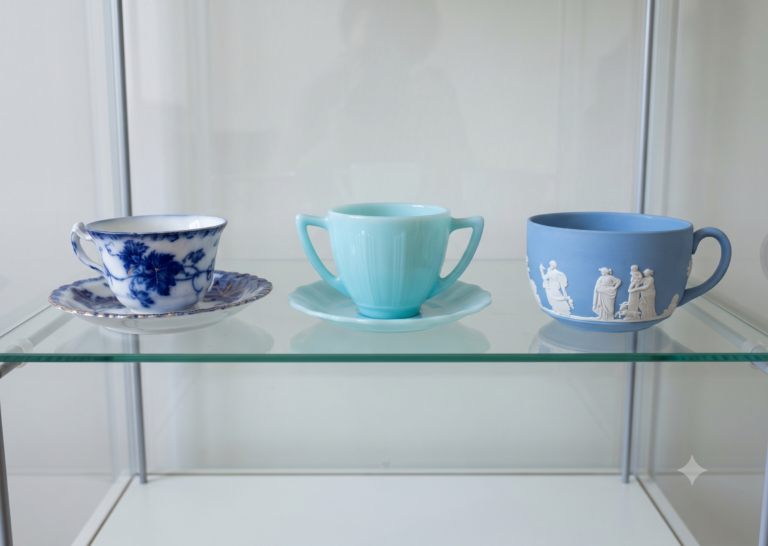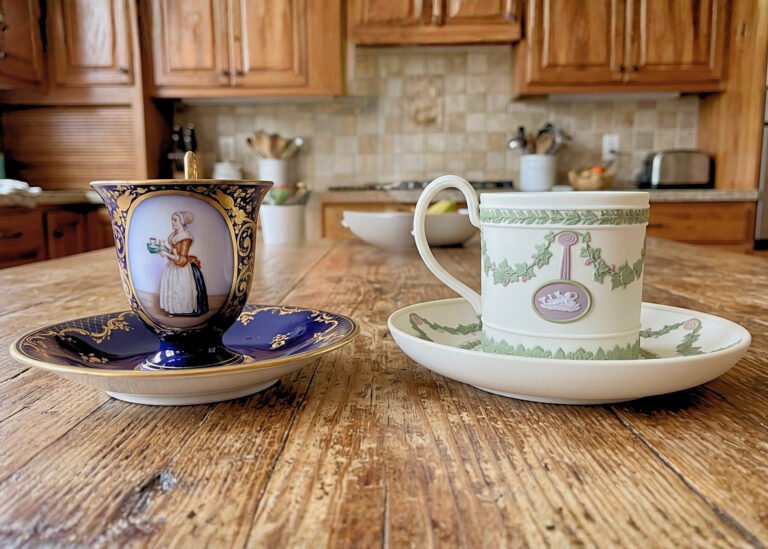

You picked up a blue and white plate at an estate sale, and now you’re wondering if it’s just pretty or actually worth real money. That’s the right question. This category is huge. Some pieces sell for eight dollars. Others cross a thousand.
The value gap comes down to three things. Find out what makes old blue and white dishes valuable, which makers and patterns are most collectible, and what they’re worth today.
History of Blue and White Dishes
Blue and white porcelain began in China in the era of the Ming dynasty in the 14th century, using cobalt for underglazing paintings. This technique was imitated in the Netherlands in the 17th century to create Delftware and in England in the late 1700s.
That’s when the real explosion happened. Josiah Spode figured out reliable blue underglaze transfer printing, and patterns like Willow (introduced around 1780 at the Caughley factory) could be made in huge numbers. Meissen in Germany launched Blue Onion around 1739, and Japanese factories entered the export market in the late 1800s.
So when you’re holding a blue and white dish today, you’re looking at 700 years of overlapping traditions. That’s why identification matters so much.
How to Identify Vintage and Antique Blue and White Dishes
Identification may sound challenging, but you can easily identify an old blue and white dish using these four steps. Turn the piece over, check the mark, study the pattern, then feel the body.
Step 1: Check the Backstamp and Maker’s Mark
The marks on the bottom are your best clues; that’s where dating gets precise. So, pick the piece up and hold the base to good light, and check for these three things:
- The maker’s name (Spode, Wedgwood, Johnson Brothers, Meissen)
- The pattern name (Blue Italian, Willow, Old Britain Castles)
- The country of origin
The last one is crucial. A U.S. tariff law from 1891 forced imported goods to carry English country markings. So “Nippon” places a piece between 1891 and 1921, “Made in Occupied Japan” narrows it to 1947 through 1952, and “Made in England” generally means post-1891.
And if there’s no mark at all? That’s not always bad. Pieces made before 1891 often carry no country stamp, and plenty of early Chinese and English wares were never marked at all.
Step 2: Read the Pattern
The pattern tells you which family your piece belongs to. For example, Willow has the pagoda, an arched bridge with three figures crossing it, doves in flight, and a leaning willow tree. Spode’s Blue Italian shows Italian countryside ruins with an Asian-style floral border.
Others take a closer look. Flow Blue has that soft, watercolor bleed where the cobalt runs into the glaze during firing. So the pattern and the mark together tell you the story, not just one or the other.
Step 3: Feel the Body and Glaze
Feel the weight of the dish; the weight tells you a lot. There are generally three kinds of bodies you’ll come across:
- Hard-paste porcelain (Chinese, Japanese, Meissen) feels dense and rings when you tap it gently.
- Ironstone and earthenware (most English transferware) feel chunky and dull.
- Bone china sits in the middle and shows a soft glow when held up to a lamp.
Next, observe the surface and print. Transfer prints have tiny pin-dots and visible seams where the paper meets the clay. Hand-painted pieces show uneven brushstrokes and small color pooling.
If the design sits perfectly crisp and machine-even with no texture at all, you’re probably looking at a modern reproduction.
Step 4: Check Age Indicators
Authentic antique and vintage dishes often have crazing, the fine web of cracks in the glaze. But not always.
Foot rim wear, a bit of scuffing on the base ring, comes from years of sliding across wooden tables. Look for glaze pooling near the foot, common on older hand-finished pieces.
But be careful with these signs. Some modern reproductions get artificial crazing baked in, and plenty of genuine antique porcelain shows almost none. Use age markers as one clue among several, never the deciding factor.
13 Valuable Blue and White Dishes That Are Highly Collectible
Here are the most valuable blue-white dishes from the top ceramic makers that are selling fast today for impressive prices.
1. Spode Blue Italian Soup Tureen with Ladle
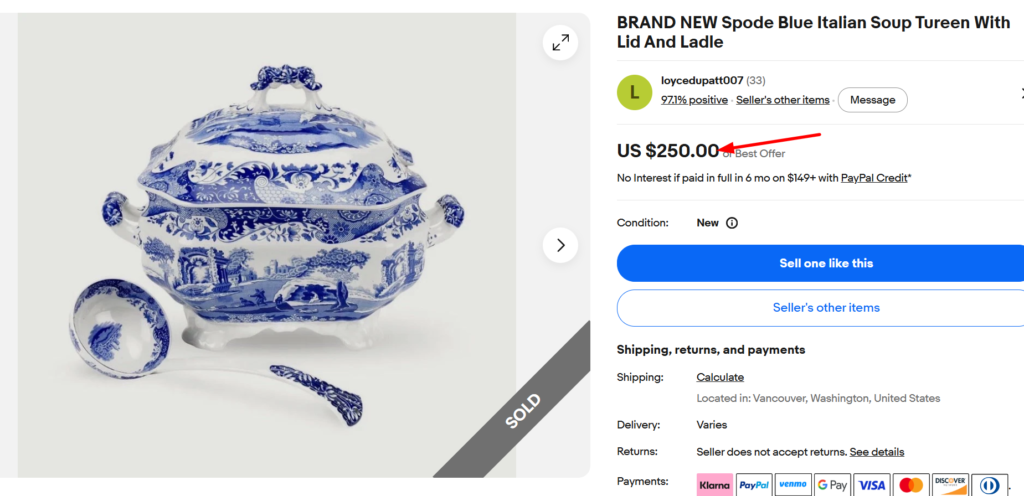
Sold for $250
Spode’s Blue Italian is the pattern that defined English blue transferware for over two centuries. Josiah Spode II launched it around 1816, and it stayed in continuous production until the original factory shut in 2009.
The scene shows an imagined Italian countryside with classical ruins, framed by an Asian-inspired floral border. A tureen with its lid, ladle, and underplate altogether is most desirable.
- Estimated Value: $250 to $700+ (with ladle and underplate)
- Production Years: 1816 to 2009 (original continuous run)
- What to Check: Italian landscape scene, Asian-style border
- Quick Notes: Older Copeland Spode marks outperform post-1970 marks
2. Salt Glazed Blue and White Stoneware Teapot
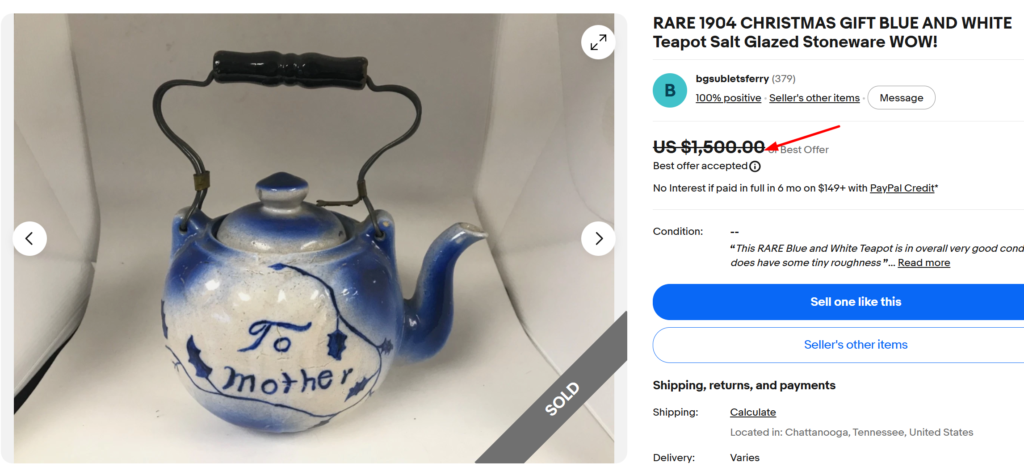
Sold for $1,500
Salt-glazed stoneware gets its pebbly, slightly bumpy surface from salt thrown into the kiln during firing. American potteries turned out huge amounts of it through the late 1800s.
This particular teapot is a “presentation” or gift piece, hand-painted with holly, berries, “To Mother,” and the year 1904, which points to a Christmas gift from that year.
Dated and personalized pieces like this are the most desirable.
- Estimated Value: $500 to $1,500+ (rare, dated pieces)
- Production Years: Late 1800s to early 1900s (peak American production)
- What to Check: Cobalt hand-painted decoration, dated inscription, wire handle
- Quick Notes: Personalized and dated pieces are the rarest.
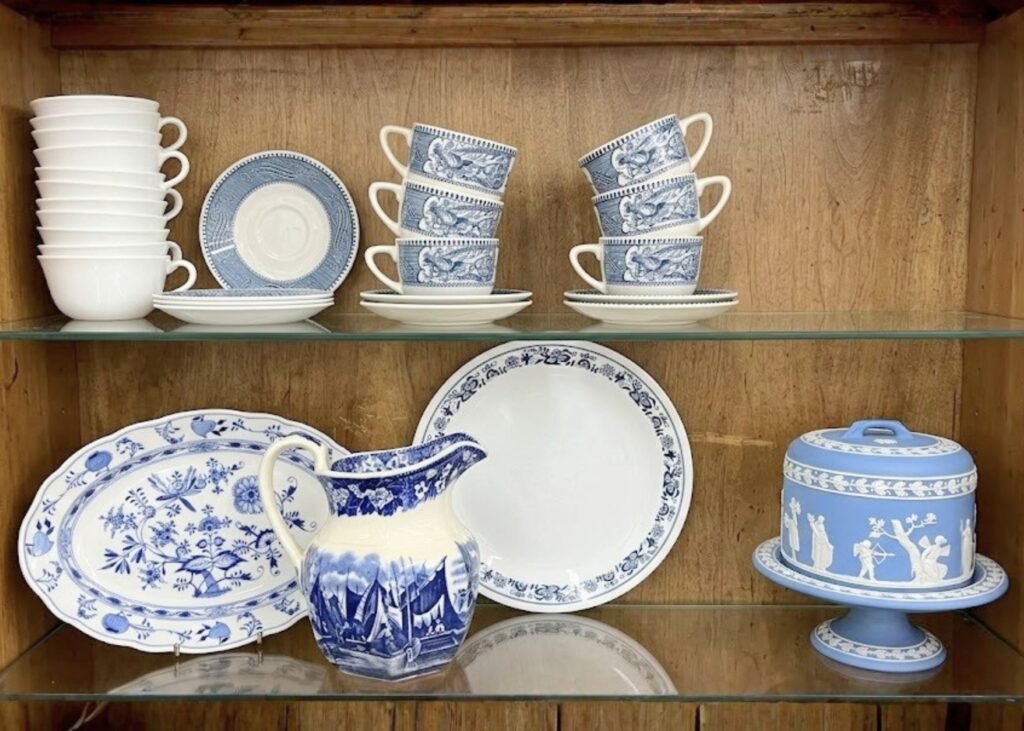
3. Wedgwood Jasperware Cheese Dome & Underplate
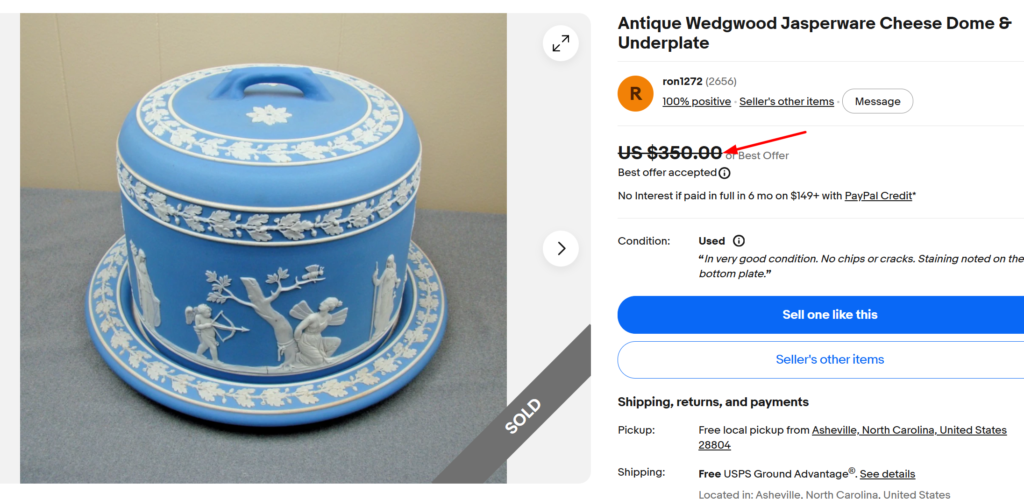
Sold for $350
Wedgwood Jasperware is the unglazed matte stoneware Josiah Wedgwood developed in 1774, and the pale “Wedgwood Blue” background became the brand’s signature look worldwide.
Most designs feature applied white bas-relief classical maidens, cupids, and mythological scenes around the body.
Dark cobalt jasperware domes outsell the lighter blue versions. A matching dome and underplate together is among the most collectible pieces.
- Estimated Value: $200 to $400 (light blue); dark blue versions $600 to $1,200+
- Production Years: Late 19th to early 20th century
- What to Check: Applied white classical figures, acorn, or branch finial
4. Johnson Brothers Old Britain Castles Blue Set
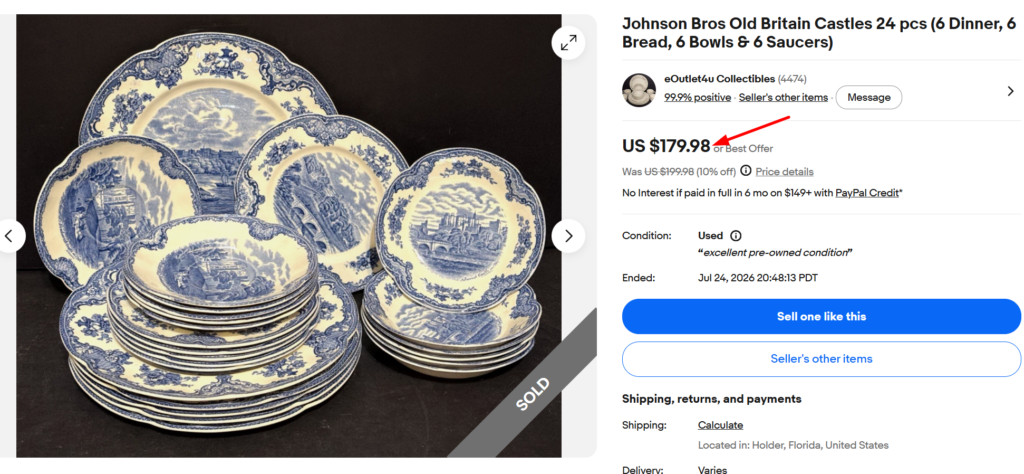
Sold for $180 (set of 24 pieces)
Johnson Brothers first released Old Britain Castles in 1930, and the pattern draws from around 40 different engravings of castles and grand homes across Britain. Each piece shows a different castle scene, with leafy scrollwork tying the whole set together.
The blue version is the most collected today. Pieces made before Johnson Brothers joined the Wedgwood Group in 1968 tend to bring the strongest prices.
- Estimated Value: $250 to $800 for larger sets
- Production Years: 1930 to 2015
- What to Check: Castle scenes, blue transfer, crown mark
5. Corelle Old Town Blue Full Dinner Set
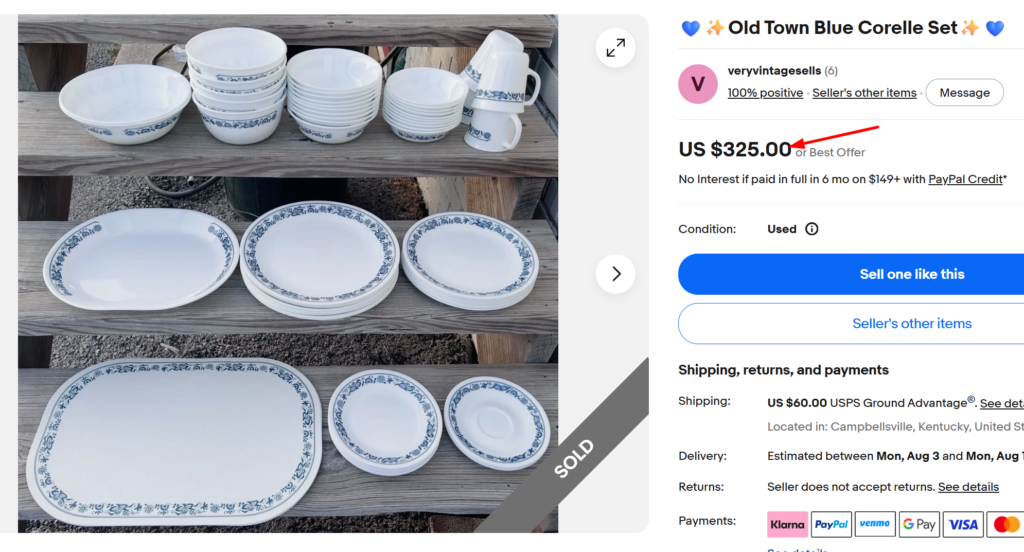
Sold for $325 (set of 60+ pieces)
Old Town Blue is Corelle’s take on the German Blue Onion look, softened for the American market. Artist Cynthia Gerow designed the pattern in 1972, making it the last of the original Livingware releases.
Full vintage sets with the harder-to-find serving pieces, oval platters, and coordinating Pyrex storage bowls are the most valuable.
- Estimated Value: $50 to $200 for complete sets
- Production Years: 1972 to 2005 (original run)
- What to Check: “Corelle Corning USA” mark, blue onion border design
- Quick Notes: Coordinating Pyrex pieces add more value.
6. Staffordshire Blue Willow Transferware Platter
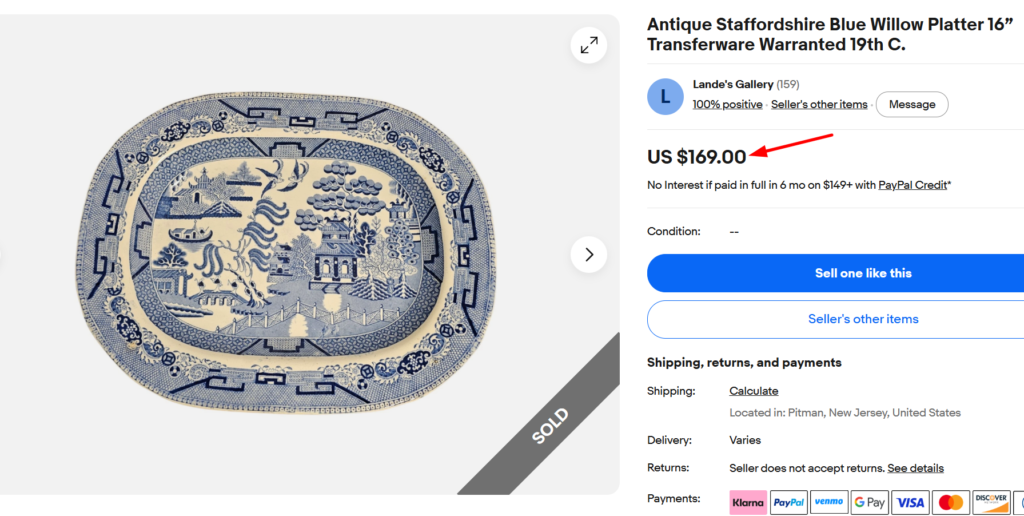
Sold for $170
Blue Willow was born around 1780 through the work of potter Thomas Turner and engraver Thomas Minton at the Caughley factory in Shropshire. Since then, more than 500 factories worldwide have made their own versions, so most pieces you’ll come across are mid-20th-century and worth only a few dollars.
The valuable ones are early English examples by Spode, Minton, or Allerton, all dating to the 19th century.
- Estimated Value: $75 to $600+ for early examples
- Production Years: 1780 onward (thousands of makers)
- What to Check: Pagoda, bridge with three figures, doves, willow tree
7. Currier and Ives Blue Full Dinner Set by Royal China
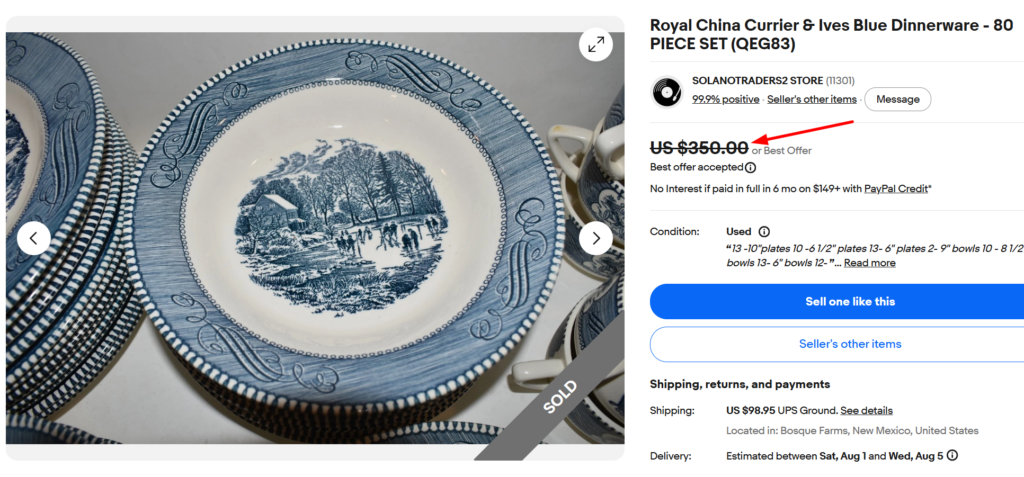
Sold for $350 (set of 80 pieces)
The Royal China Company made Currier and Ives Blue in 1949. It was famously handed out as a grocery store premium through A&P and Winn-Dixie chains, so individual pieces are still easy to find today. That’s exactly why complete sets with the harder serving pieces bring real money.
ID Notes: 27 different scenes exist, so rare pieces are key value drivers.
- Estimated Value: $200 to $500 for complete sets with serving pieces
- Production Years: 1949 to 1986
- What to Check: American winter and country scenes, blue transfer
8. Meissen Blue Onion Serving Platter
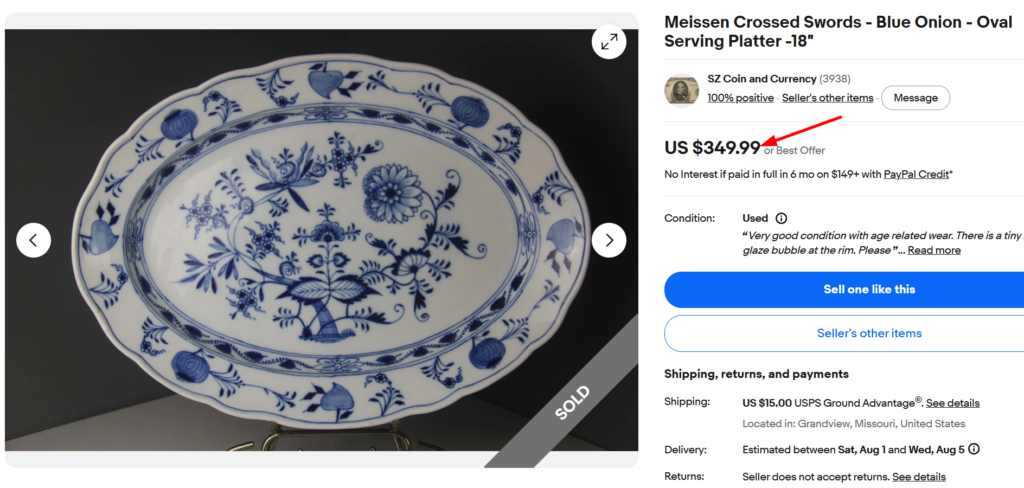
Sold for $350
Johann Höroldt designed Meissen’s Blue Onion, or Zwiebelmuster, around 1739 and modeled it on imported Chinese porcelain. The most interesting part is the name; the border “onions” are actually stylized pomegranates and peaches, and the central flower is either an aster or a peony.
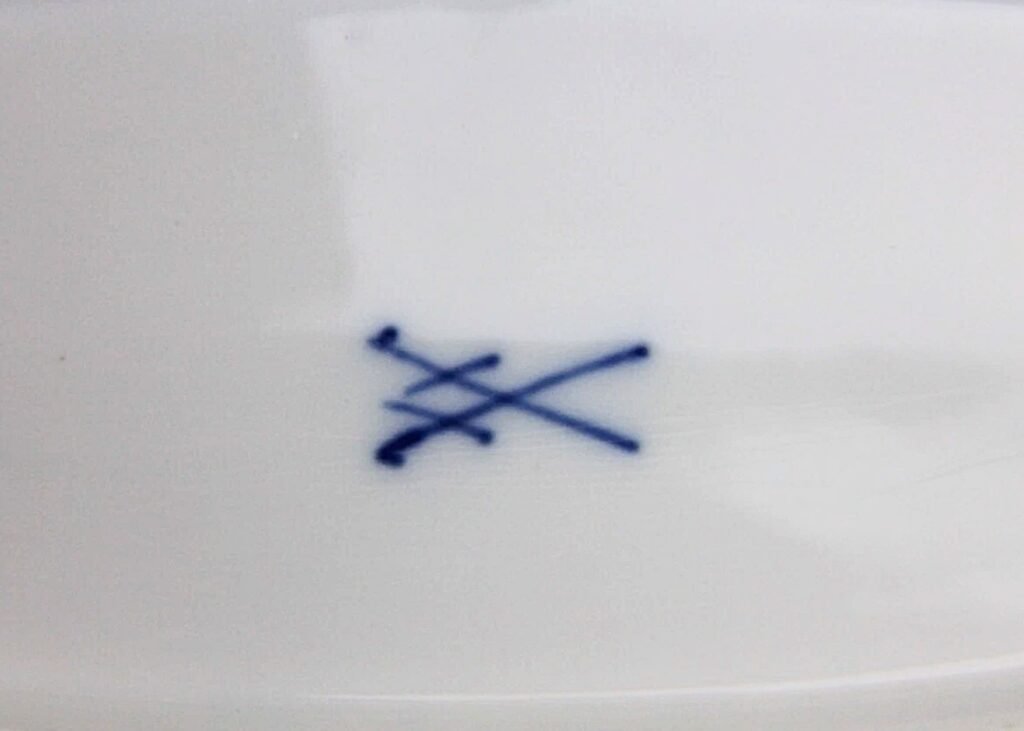
Meissen started tucking their crossed swords mark into the bottom of the bamboo cane in 1888. Serving pieces, hollowware, and pre-1900 marks command the highest prices.
- Estimated Value: $200 to $2,000+ per piece, depending on age and form
- Production Years: 1739 to present (crossed swords mark since 1888)
- What to Check: Crossed swords inside the bamboo cane, cobalt underglaze
9. J. & G. Alcock Flow Blue Scinde Plates
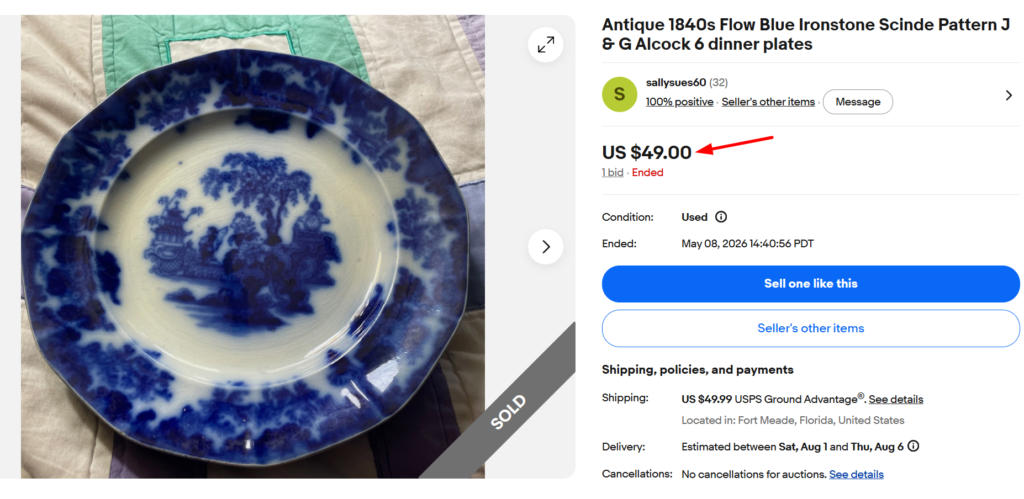
Sold for $50 (set of 6 plates)
Flow Blue is Victorian transferware where cobalt was intentionally made to blur into the glaze during firing, creating that soft ink-in-water look. Staffordshire potters worked out the effect in the mid-1820s.
The Scinde pattern by J. & G. Alcock, released around 1840, is among the most collected Flow Blue designs.
ID Tip: Look for the impressed “STONE J & G ALCOCK” mark on the base along with the printed “SCINDE” cartouche to identify genuine pieces.
- Estimated Value: $100 to $300 for plates; tureens $800 to $1,200
- Production Years: 1839 to 1846
- What to Check: Oriental landscape, deep bleeding cobalt, impressed marks
10. Royal Delft Signed Plates (De Porceleyne Fles)
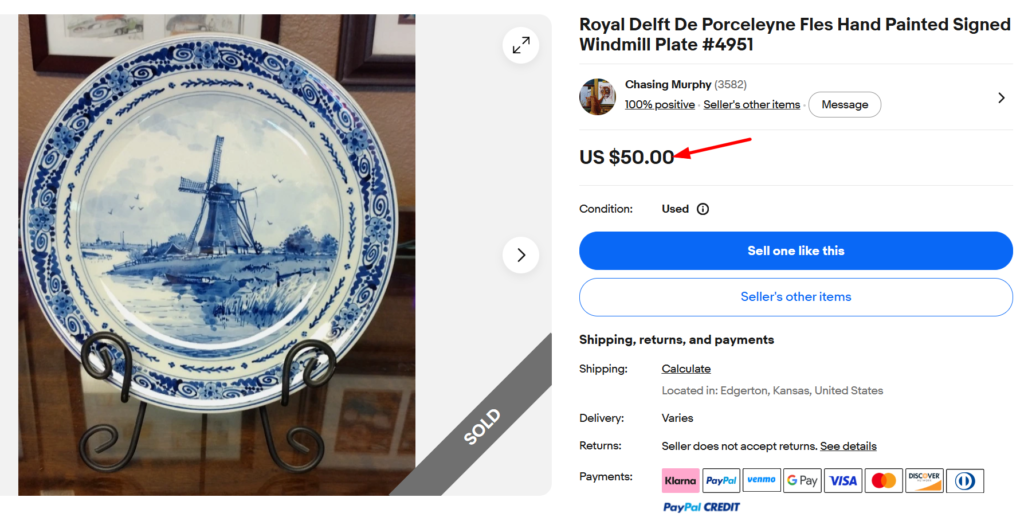
Sold for $50
Royal Delft is the last surviving Delftware factory from the original 17th-century group, and its pieces set the standard for authentic Dutch Delftware. Since 1879, every hand-painted piece has carried the same mark.
A small bottle drawing, the intertwined JT initials for founder Joost Thooft, and the word Delft in a specific script. You’ll also see the painter’s initials on the bottom left and a year code on the bottom right, which lets you trace the production date.
- Estimated Value: $150 to $800+ per piece
- Production Years: 1653 to present (current marking system since 1879)
- What to Check: Bottle mark, JT initials, “Delft,” painter’s initials, year code
11. Wedgwood Ferrara Blue and White Pitcher
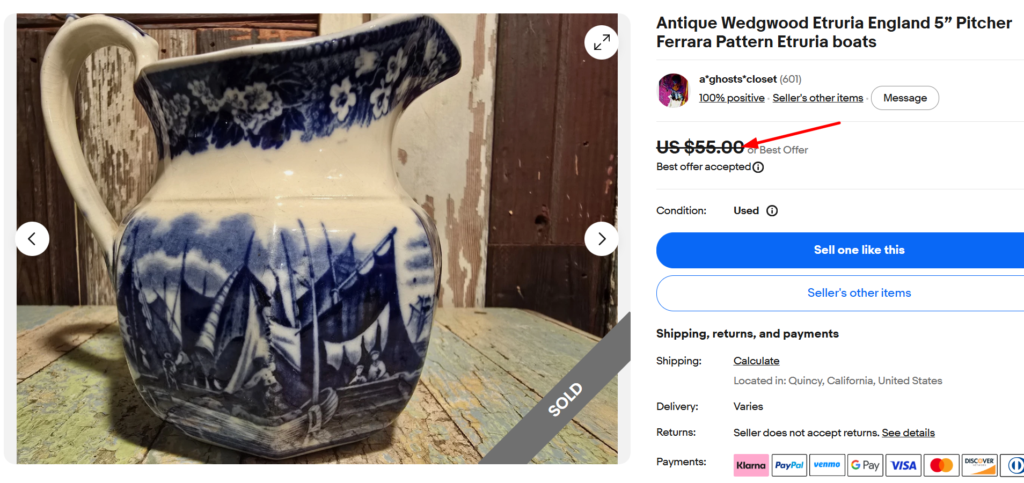
Sold for $55
Wedgwood’s Ferrara pattern shows sailing ships at a busy river port, with the composition reportedly taken from an engraving of Liverpool Docks. The pattern name comes from the Italian city of Ferrara. Wedgwood engraved the design in 1832 and kept producing it into the 1960s. Blue is by far the most collected version. The impressed “Wedgwood Made in England” mark alongside a printed “Ferrara, Wedgwood, Etruria England” backstamp usually points to production around the 1920s.
- Estimated Value: $75 to $500+
- Production Years: Design engraved 1832; produced into the 1960s
- What to Check: Ships in harbor scene, impressed Wedgwood mark
- Quick Notes: Comes in mulberry and red; Blue is the top colorway
12. Chinese Kangxi Blue and White Export Plate
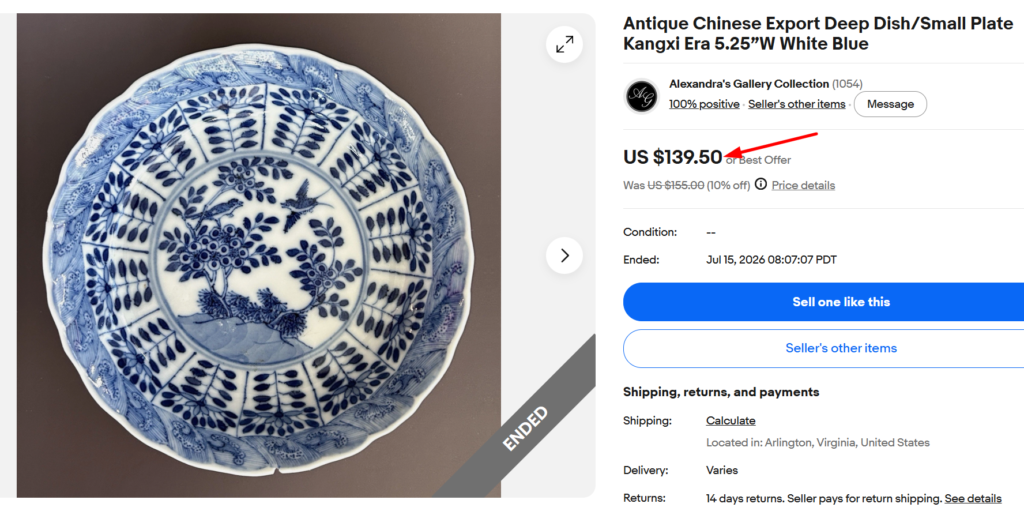
Sold for $140
Chinese porcelain of the Kangxi era is when blue and white collecting becomes more serious. And that is why the Chinese porcelain made during the Kangxi era is marked by apocryphal Ming marks, including the Chenghua six-character mark.
Real Kangxi work shows a specific silvery-blue cobalt tone, distinctive foot rim finishing, and confident brushwork.
- Estimated Value: $300 to $3,000+ for period pieces
- Production Years: Kangxi reign, 1662 to 1722
- What to Check: Foot rim wear, cobalt tone, apocryphal Ming marks
13. Blue Danube Japan Soup Tureen
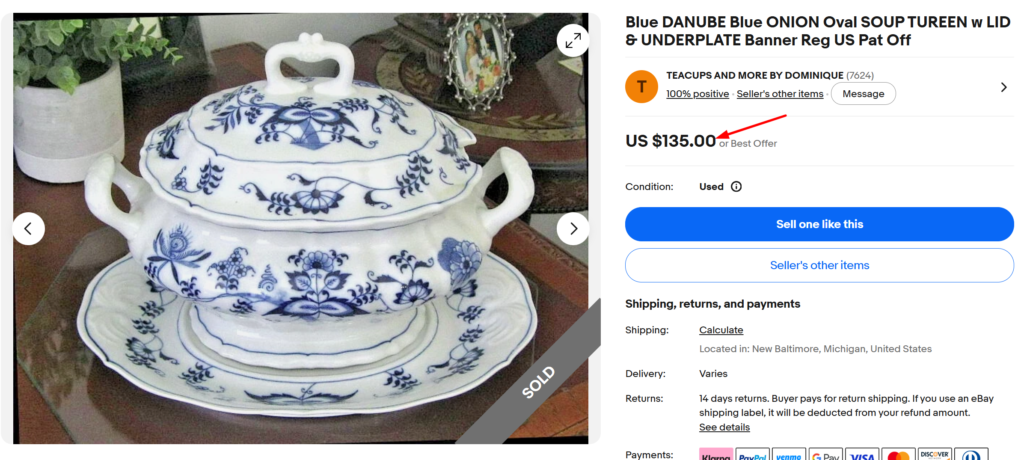
Sold for $135
Blue Danube is a Japanese-made copy of Meissen’s Blue Onion, designed for American importer Lipper & Mann (later Lipper International) in 1951. Same pomegranates, same asters, same blue-on-white palette.
These dishes are worth just a fraction of the Meissen price. The banner-style backstamp was used from 1951 through 1976, followed by a rectangular backstamp from 1977 to 2000.
ID Tip: The design looks a lot like Meissen’s Blue Onion pattern, so check the backstamps.
- Estimated Value: $80 to $250 for tureens; singles $10 to $40
- Production Years: 1951 to 2010
- What to Check: Banner backstamp (early) or rectangular backstamp
What Makes Blue and White Dishes Valuable?
The value of old blue and white dishware doesn’t depend on a single thing; it comes from multiple factors working together. From age to provenance, here’s what determines the value:
- Maker and pattern – A recognized maker like Meissen, Spode, or early Chinese export beats an unmarked piece almost every time. Short-run or discontinued patterns carry an extra premium.
- Form – Hollowware and serving pieces sell for multiples of dinner plates in the same pattern. A soup tureen with its lid can go for five to ten times what a plate does. Fewer of them survived intact.
- Condition – Chips, hairline cracks, and heavy crazing kill value fast. Faded transfers hurt just as much. Original lids, ladles, and matching underplates add real money.
- Completeness – Full dinner sets carry a big premium over singles. Collectors chase intact sets because piecing them together one by one is slow and expensive.
- Provenance – Documented history or original packaging can boost the value . It’s not required for every piece, but it’s a nice bonus.
Blue and white dishes can be really valuable, but you need to check the mark, feel the body, and check the form before you buy or sell anything. That’s how you spot a rare piece sitting on an estate sale with a $20 tag.