
Antique china is one of the most under-identified collectibles sitting in American cupboards today. Most people overlook inherited dinner sets without ever checking the backstamp to know when it was made or who made it. And that’s where the value lies.
This guide covers 15 verified antique china patterns that are widely and actively collected today, via online sales and auctions and at antique stores. You’ll also learn to identify authentic vintage china and what really drives its value.
Identifying Antique China Patterns
The first key to recognizing any pattern of antique china is to identify the back stamp located at the bottom. It will show you the name of the manufacturer, where the item originated from, and even the time period.
Read the Backstamp First
The first three things you should look for are: the maker’s name or logo, the country of origin, and a pattern name or number.
Maker logos like Wedgwood’s Portland Vase, Meissen’s crossed swords, and Royal Doulton’s lion-and-crown are the most reliable clues. Then, pattern numbers (often a “Z” prefix or four-digit code) help identify the design even when there’s no pattern name.
Date Clues From Country-of-Origin Marks
Country marks are the best tools to date an old china dish. Here’s a quick reference that covers most American collector questions:
- Bone China England – usually post-1960s.
- Nippon – Japan, 1891 to 1921. The word was banned in 1921 when US customs ruled it didn’t satisfy English-language labeling.
- Made in Occupied Japan – Japan, 1945 to 1952. Post-war export label.
- Made in Japan – Japan, 1921 to 1941, and 1952 onward.
- England alone – pre-1921 British production.
- Made in England – 1921 onward.
Backstamp Red Flags That Signal Reproduction
While marks are the best identifier of originals, they can also be reproduced or modified. Below are some marks you should be suspicious of:
- Bright white porcelain with no warm cream tone (modern white is too clean)
- Mark printed crisply on top of the glaze, not under it.
- Missing country of origin (US tariff law has required it since 1891)
- “Hand Painted” stamped, but no brushstroke texture under magnification
- Modern font choices like Arial or Helvetica in the mark
Handy Tip: Marks should be made under the glaze on antique pieces, not on top of it. If you can feel the lettering with your fingernail, it’s probably a reproduction.
6 Antique China Pattern Styles Worth Knowing
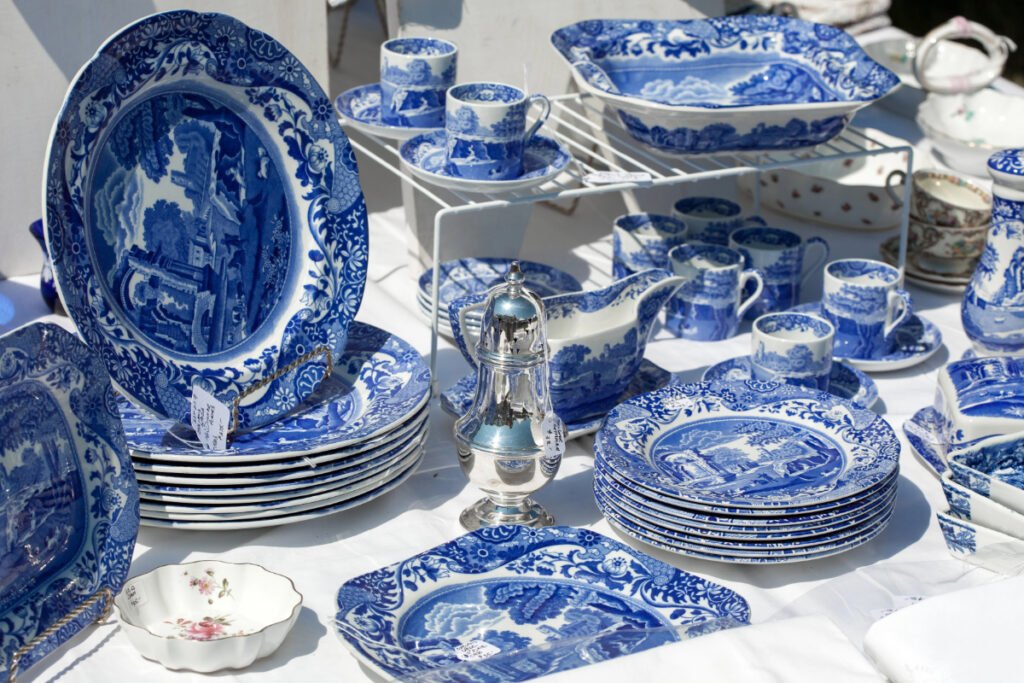
Beyond specific patterns, certain decorative styles cut across multiple makers and pull collector interest on their own. Knowing these categories helps you spot value even when you can’t identify the exact pattern.
- Floral and Rose Patterns – In American antique china, pink and red roses are most common. Royal Albert, Lenox, and Homer Laughlin have all issued rose patterns that continue to be popular. Also, hand-painted bone china sells at least three to five times better than decal-printed earthenware.
- Transferware (Brown, Blue, Multicolor) – Transferware printing involves engraving on copper plates to imprint designs on earthenware prior to its glazing process. The brown variety of transferware, dating between the 1820s and 1860s, is the least common and the most sought-after one.
- Flow Blue – In flow blue transfer ware, the blue pigment of the design was purposely allowed to run by adding excess cobalt oxide. Victorian flow blue, dating from the 1840s through the 1870s, is rarer and more valuable than later versions.
- Chintz China – The Chintz pattern is filled with numerous small floral patterns that create little white space on the object. Three companies that dominated the British chintz china production from 1928 until 1945 are Royal Winton, Crown Ducal, and James Kent.
- Imari and Japonisme – The Imari pattern features blue, iron red, and gold design elements in elaborate decorations inspired by Japanese Export porcelain. Some of the collectible china with the Imari patterns include Royal Crown Derby 1128, Spode’s Imari, and antique Japanese Arita wares.
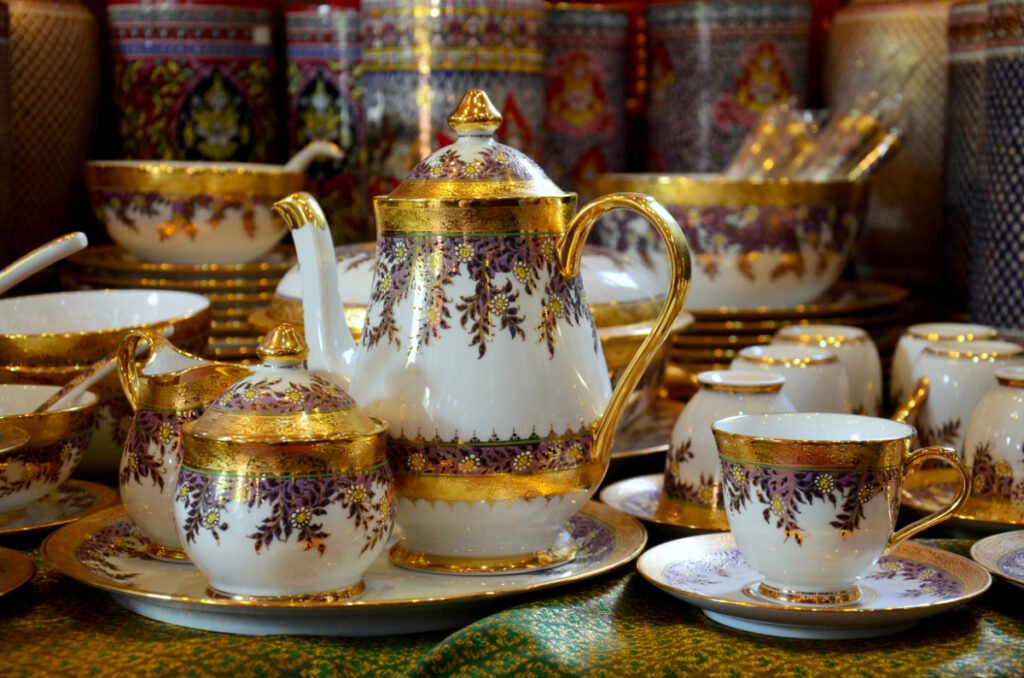
- Gold-Edged and Heavily Gilt Patterns – Pieces with intact 22-karat or 24-karat gold borders sell at a premium because the gold wears off easily. Worn gilding can drop value by 40% or more, so the condition of the gold trim alone often determines the price tier.
15 Rare & Valuable Antique China Patterns
Now that you know the pattern styles, let’s learn about the specific antique and vintage china patterns that consistently sell for stunning prices at online sales and auctions. You’ll find identification features, value factors, and the current worth of each.
1. Herend – Rothschild Bird
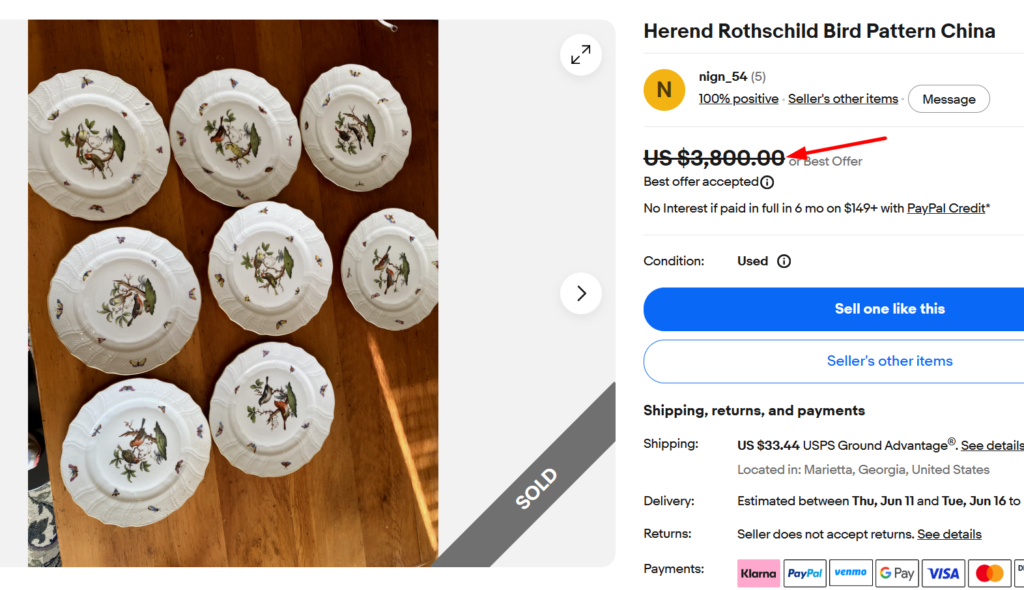
Sold for $3,800 (Set of 30+ pieces)
This historical design was created in 1850 for the Rothschild banking family, and it comes with a story. The baroness supposedly lost her pearl necklace in her Vienna garden, and the gardener later spotted birds playing with it in a tree.
Herend turned that into twelve different bird-pair scenes, each with a tiny gold chain tucked in the branches. Butterflies and small insects fill in the white space.
Look for the colored fish-scale rim versions, royal blue (RO-ETB) and light green (RO-ETV), trade higher than the standard white-rim pieces.
- Estimated Value: $200 to $3,800+ (set of 8 plates)
- Production Years: 1850 to present
- What to Check: Hand-painted bird couples, hidden chain
- Quick Notes: Twelve motifs exist; full sets are worth the most.
2. Royal Copenhagen – Flora Danica
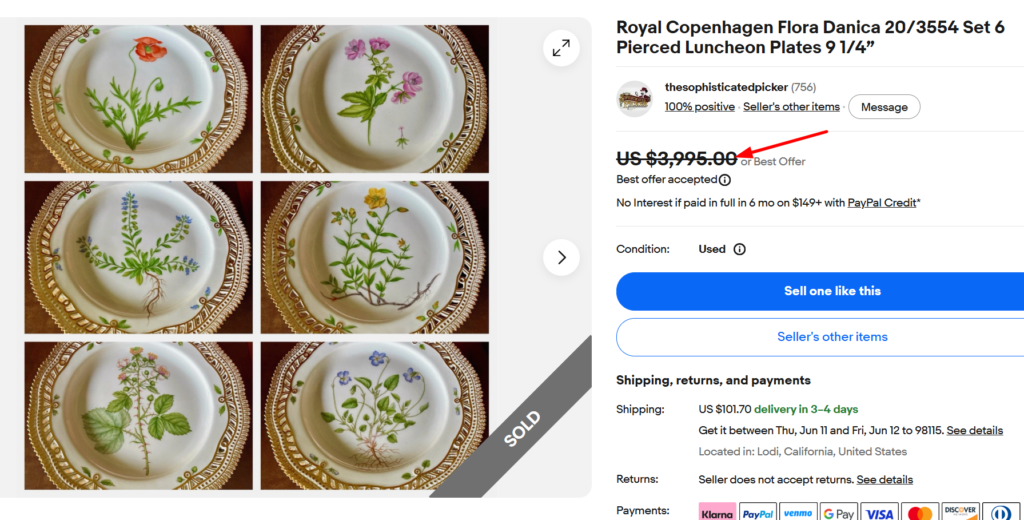
Sold for $4,000 (set of 6 plates)
This is one of the most valuable and collectible china patterns to date. It started as a diplomatic gift in 1790. The Danish king commissioned it for Catherine the Great, though she died before her set arrived.
Every piece of this design copies a real plant from the Flora Danica botanical encyclopedia, and a pierced rim gilt in 24-karat gold. Flip it over, and you’ll find the Latin plant name written by hand, plus the painter’s initials.
- Estimated Value: $400 to $4,000+ per plate
- Production Years: 1790 to present
- What to Check: Botanical illustrations, Latin plant name, pierced gold rim.
- Quick Notes: Painter initials and bar dating mark confirm authenticity.
3. Meissen – Blue Onion (Zwiebelmuster)
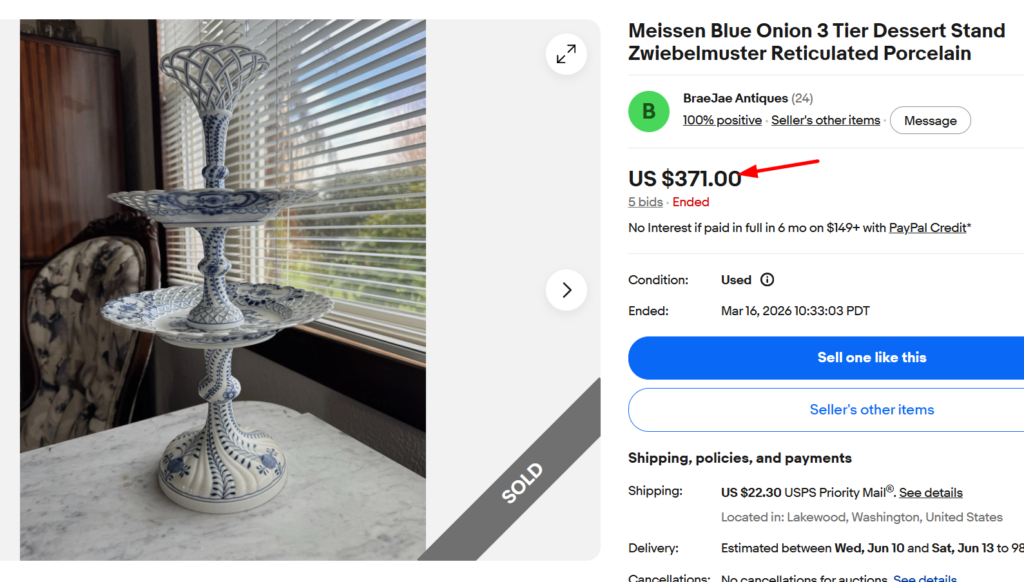
Sold for $370
Blue Onion was introduced by Meissen in the 1730s, but surprisingly, the pattern does not contain any onion shapes. The “bulbs” are either pomegranate fruits or peach fruits, which were copied from the export porcelains made in China.
Since 1888, Meissen hid the crossed swords mark within the bamboo stem on the base to avoid forgeries.
- Estimated Value: $200 to $11,000+
- Production Years: 1730s to present
- What to Check: Crossed swords under glaze
- Quick Notes: Many copies exist; verify the mark carefully
4. Royal Crown Derby – Old Imari 1128
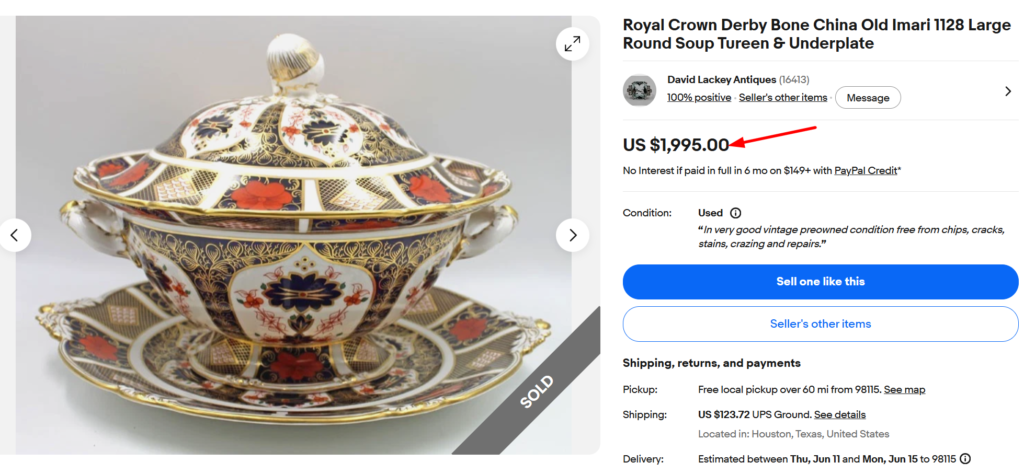
Sold for $2,000
Old Imari 1128 launched in 1775 and remains the most recognizable Imari design in English bone china. The pattern divides each piece into alternating panels of cobalt blue florals and iron red leafy scrolls, all heavily gilded in 22-karat gold.
First-quality pieces carry a crowned printed backstamp, while seconds have the crown scored through with a single line.
- Estimated Value: $80 to $3,500+
- Production Years: 1775 to present
- What to Check: Alternating blue and red panels
- Quick Notes: Scored crown means second quality
5. Wedgwood Fairyland Lustre – Daisy Makeig-Jones
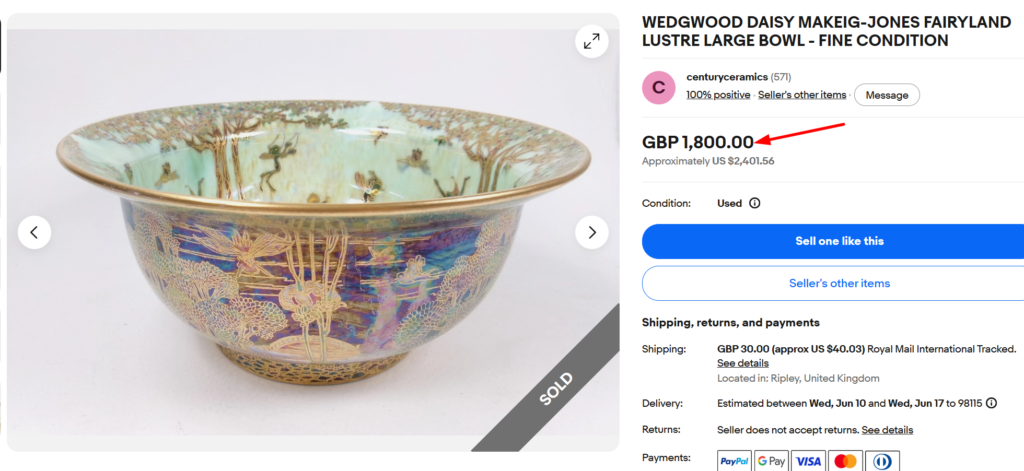
Sold for $2,400
Fairyland Lustre was created by Daisy Makeig-Jones for Wedgwood from 1915 to 1929. It has fairy, elf, dragon, or imaginary landscape depictions in iridescent lustre glazes over blue, black, and orange colored pieces.
The variants of this pattern that command the highest price today include named designs such as Pillar (Z4968) and Castle on the Road (Z5125).
- Estimated Value: $500 – $50,000
- Production Years: 1915 to 1929
- What to Check: “Z” pattern number, Portland Vase mark
- Quick Notes: Lustre depth and gold confirm originals.
6. Noritake – Azalea
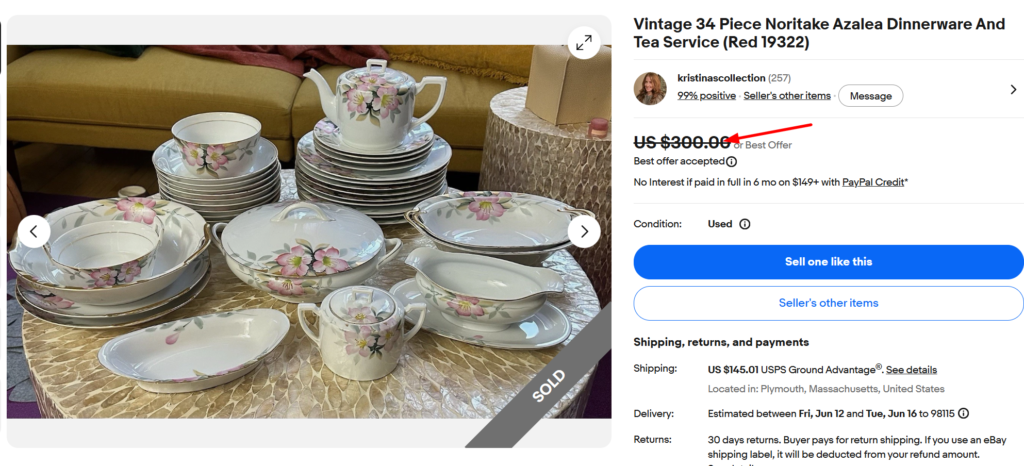
Sold for $300
Azalea is the most collected Noritake pattern in the world. The decoration consists of hand-painted azalea flowers painted in pink on a background of green leaves and edged in gold against an ivory base.
Noritake made Azalea especially for the Larkin Company of Buffalo, New York, which distributed the pieces to mail-order subscribers to promote customer loyalty.
- Estimated Value: $20 to $200+
- Production Years: 1918 to 1941
- What to Check: Pink azaleas, “Hand Painted” mark
- Quick Notes: Rare forms outsell plates 5x
7. Lenox – Autumn
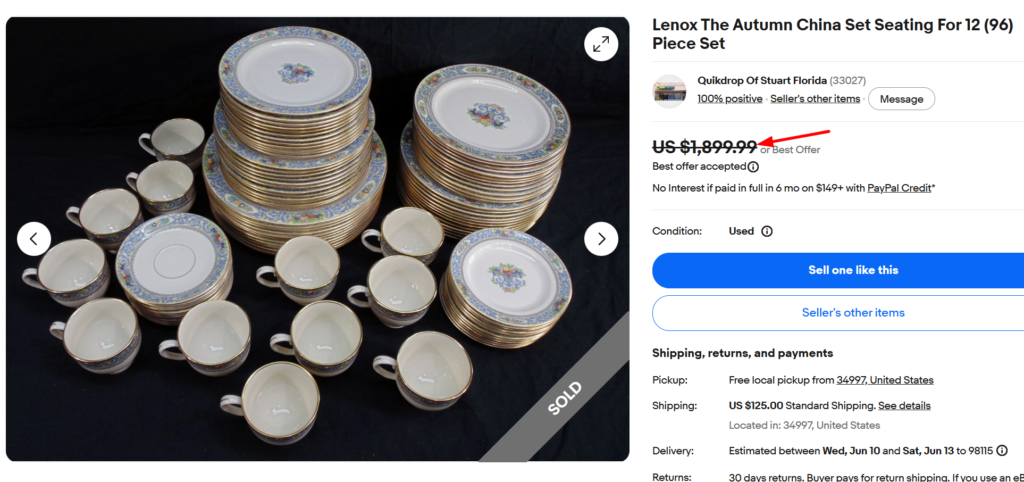
Sold for $1,900 (setting for 12)
Introduced by Lenox in 1918, the Autumn is one of the oldest fine china patterns from America. It consists of multicolor floral and fruit designs on the border of each piece, made using ivory bone china with 24-carat gold and raised enamel decorations.
Earlier Lenox Autumn pieces with the earlier green wreath stamp have better value than the ones with the gold wreath stamp.
- Estimated Value: $40 to $1,400 (full set)
- Production Years: 1918 to present
- What to Check: Green vs gold wreath stamp
- Quick Notes: Early green-stamp pieces are most valuable.
8. Spode – Blue Italian
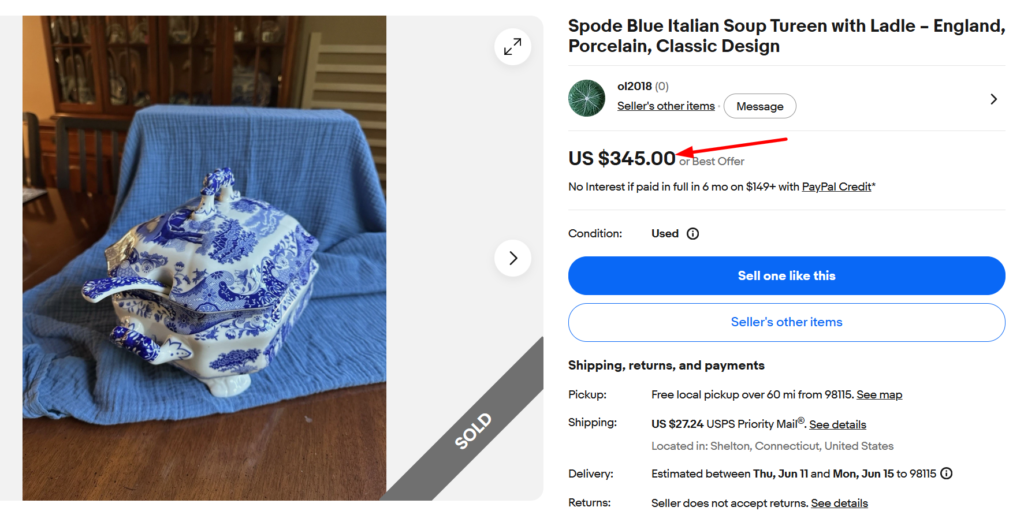
Sold for $345
Josiah Spode II launched Blue Italian in 1816, and it stayed in continuous production until the Spode factory closed in 2009. This is why it’s one of Spode’s longest-running antique china patterns.
The central image is an imaginary Italian countryside set within an Imari-style floral border design, both executed in the underglaze cobalt blue transfer method.
Items decorated with “SPODE” only within an oval-shaped border date from around 1816-1833, and are the rarest and most valuable pieces. Later ones are collectible, too, but have lower value.
- Estimated Value: $25 to $400+
- Production Years: 1816 to 2009
- What to Check: Italianate scene, cobalt transfer
- Quick Notes: “SPODE” alone dates the piece pre-1833.
9. Royal Albert – Old Country Roses
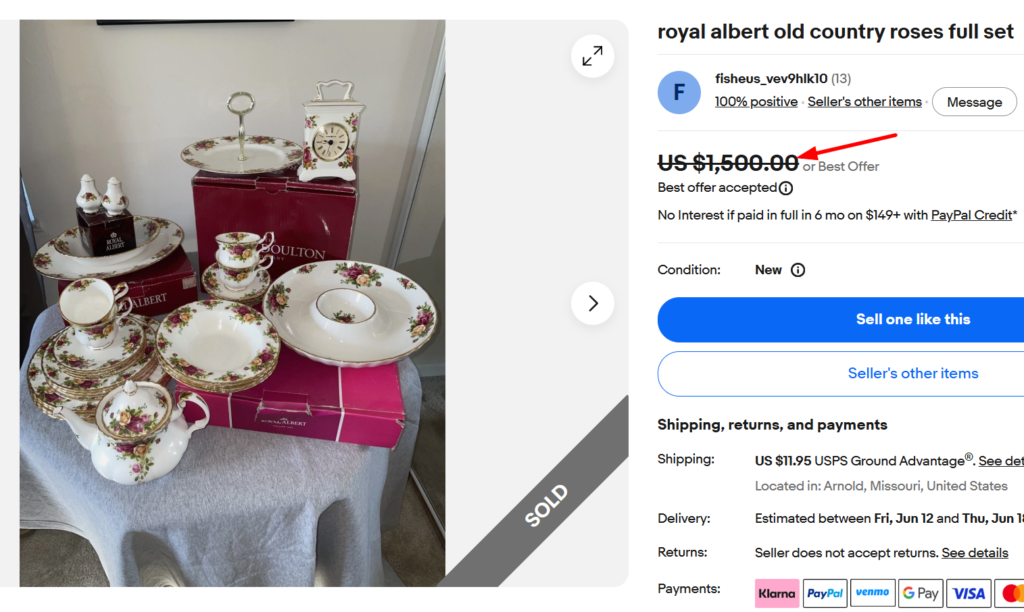
Sold for $1,500
Designed by Harold Holdcroft, Old Country Roses were introduced by Royal Albert in 1962. The pattern was inspired by the King’s Ransom, which dates back to 1921.
You can identify it by the deep red, peach, and blush pink roses on green foliage with 22 karat gold trim on bone china. Over 150 million of these products have been sold since then, but only the first backstamps from 1962-73 are valuable collectors’ items.
- Estimated Value: $50 to $4,500 (large set)
- Production Years: 1962 to present
- What to Check: 1962–1973 original backstamp
- Quick Notes: Post-2002 marks have minimal value
10. Royal Worcester Hand-Painted Fruit
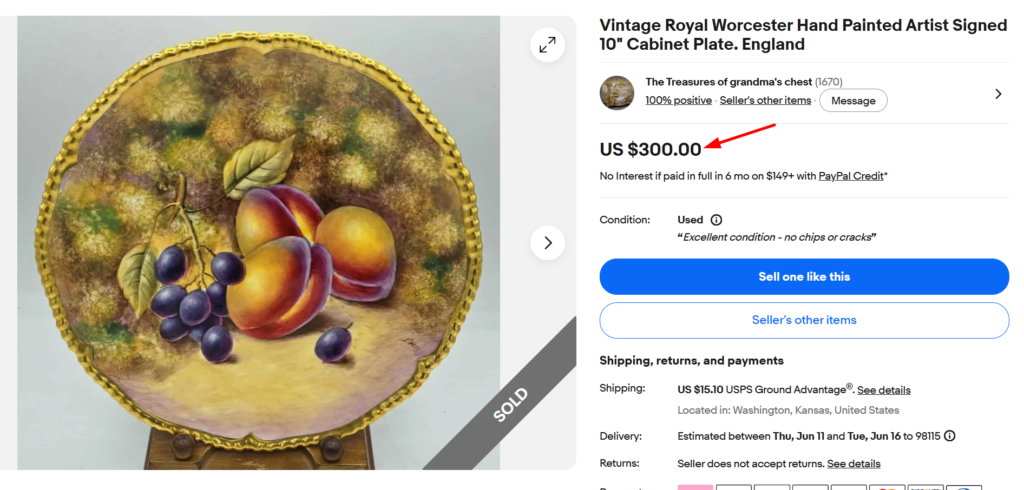
Sold for $300 (Single)
The hand-painted Royal Worcester fruit pieces feature fruits, such as peaches, plums, and grapes. These fruits are painted in a realistic style onto white porcelain with heavy gold borders.
Besides, the pieces also bear signatures from artists including Harry Ayrton, Richard Sebright, and the Stinton family. The value lies in the name signed in front; the names of senior artists, especially full names, increase the value exponentially.
- Estimated Value: $150 to $3,000+
- Production Years: Early 1900s to 1980s
- What to Check: Painter’s signature on front
- Quick Notes: Senior painter names fetch top prices.
11. Wedgwood – Jasperware
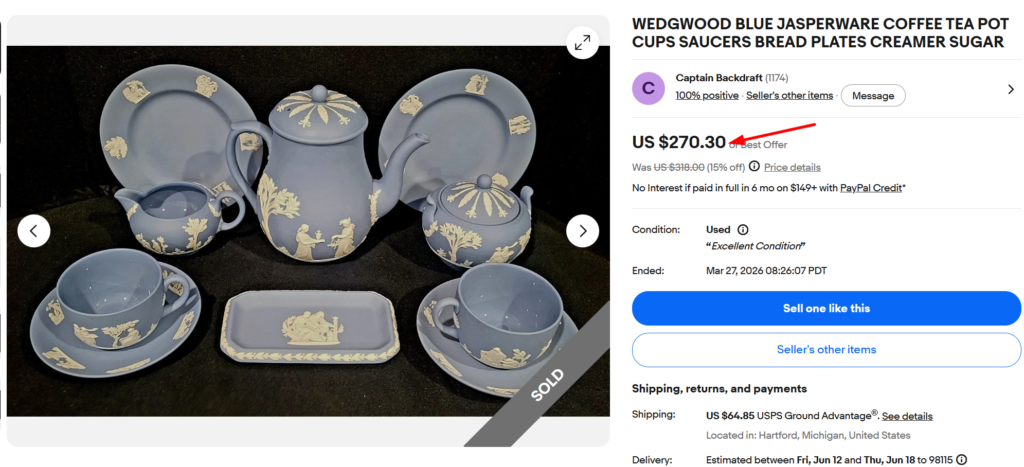
Sold for $270
Jasperware is a unique blue (or green in different shades) ceramic decorated with white classical figures in relief. Josiah Wedgwood perfected jasperware in 1774, with the pale blue version being the brand’s signature look.
Genuine antique Jasperware pieces feel matte and slightly chalky to the touch, not glossy. Also, early pieces carry an impressed “WEDGWOOD” mark with no “Made in England,” which points to pre-1891 production.
- Estimated Value: $50 to $2,000+
- Production Years: 1774 to present
- What to Check: Applied relief, matte chalky blue (or green) surface
- Quick Notes: Painted reliefs are always reproductions
12. Minton Haddon Hall
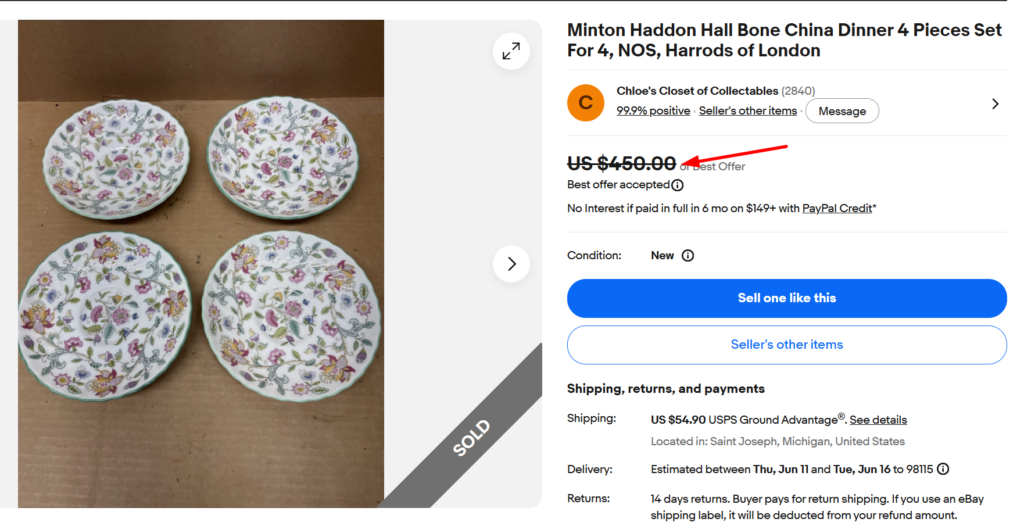
Sold for $450 (set of 4 pieces)
John Wadsworth created the Haddon Hall pattern for Minton in 1948, which went on to become the favorite chintz design from Minton. You can identify it by delicate little pastel-colored flowers scattered on bone china with the gold trim around the edges that had a fluted scallop-like pattern.
The backstamp shows the Minton globe with the pattern name written below in script. Haddon Hall china has moderate value today, with large sets like this fetching $500.
- Estimated Value: $40 to $250+
- Production Years: 1948 to the early 2000s
- What to Check: Scattered florals, fluted scalloped rim
- Quick Notes: Earlier backstamps bring stronger prices
13. Homer Laughlin – Virginia Rose
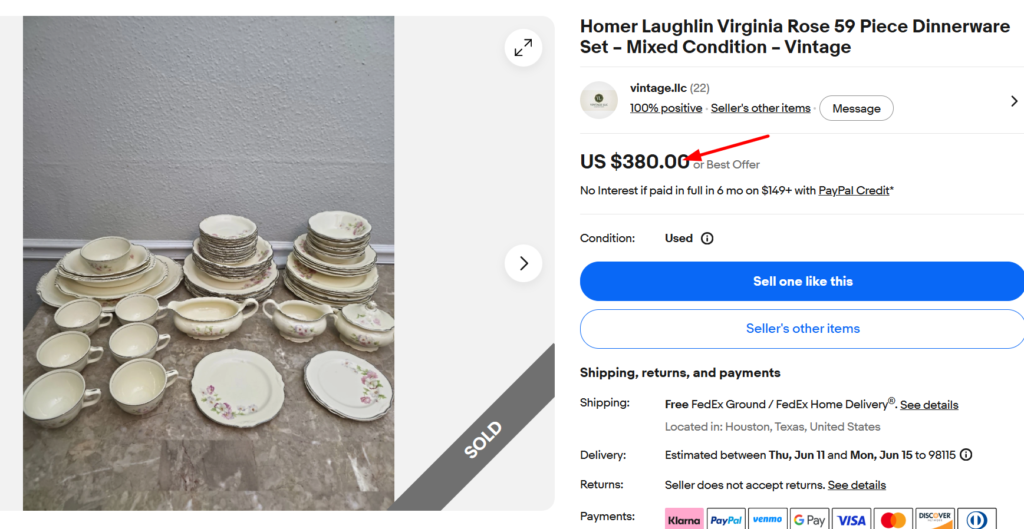
Sold for $380 (set of 59 pieces)
The Virginia Rose is not a design but a shape created by Homer Laughlin in 1929. Over the years, there have been many decals made for this shape.
Among those decals, “Virginia Rose Rose” is the most sought-after one that features pink, red, and yellow roses on creamy ivory with a gold trim.
The base of Homer Laughlin china shows the “HLC” stamp, along with a date code, which will help you trace the exact manufacturing year.
- Estimated Value: $15 to $200+
- Production Years: 1929 to 1970s
- What to Check: Date code under HLC mark
- Quick Notes: Serving pieces worth 3x basic plates
14. Flow Blue Touraine – Stanley Pottery
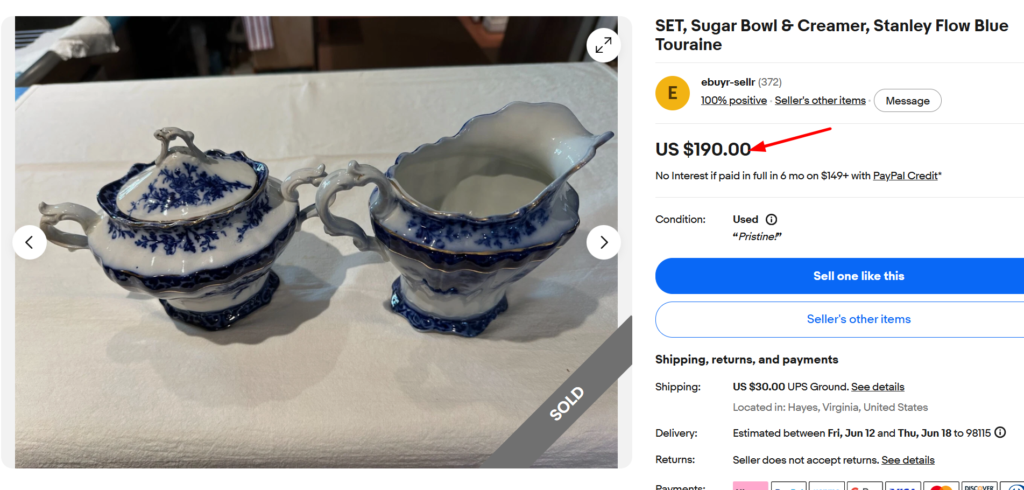
Sold for $190
Touraine is among the best-known Flow Blue patterns, dating back to 1898, produced by both Henry Alcock and Stanley Pottery. It features a highly detailed blue floral border and clusters.
The cobalt blue ink used in the pattern purposefully spreads over the white surface to give it a hazy appearance, unique to ‘flow blue.’
Replicas manufactured since 2001 in China carry the same registration number but without the word “England,” making that particular word your criterion for comparison.
- Estimated Value: $40 to $400+
- Production Years: 1898 to the early 1900s
- What to Check: “England” in mark, reg. no. 329815, flowing blue color
- Quick Notes: No “England” word means a reproduction
15. Royal Doulton – Bunnykins (Early Barbara Vernon)
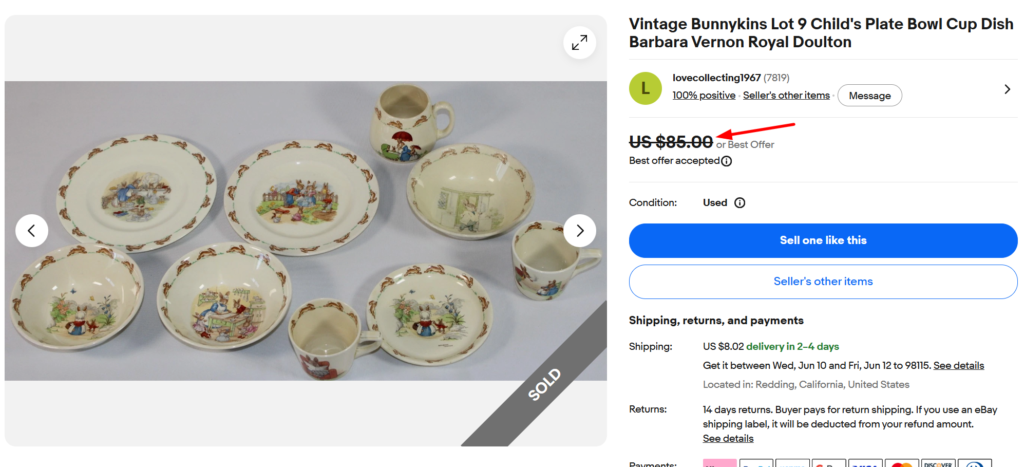
Sold for $85 (set of 9 pieces)
Bunnykins started in 1934 when nun Barbara Vernon drew rabbit scenes for Royal Doulton, her father’s company. The original 1934 to 1939 designs are signed “Barbara Vernon” on the back and show charming family-life rabbit vignettes. Later pieces by Walter Hayward and other artists are common, but Vernon-signed pieces pull serious collector money at auction.
- Estimated Value: $40 to $1,500+
- Production Years: 1934 to present
- What to Check: “Barbara Vernon” signature on back
- Quick Notes: Pre-1939 pieces command the highest prices
What Makes an Antique China Pattern Valuable?
The value of antique china can range from $100 to $5,000 per set, or $5 to $200 per plate. To know if and how valuable a vintage china set or piece is, you must assess these four key factors responsible for valuation:
- Maker Reputation – Royal Crown Derby, Meissen, Wedgwood, and Royal Worcester command premiums even for common pieces. Bavarian and unmarked European china rarely breaks $40 a plate, no matter the design.
- Rarity – An annual pattern made in very small numbers is worth more than a 100-year-old pattern made in large numbers for many decades. It’s all about limited edition prints, color ways that have been discontinued, and shapes that are no longer available. Pre-war pieces of patterns that continued post-war often command a premium over the same design made later.
- Condition – Chips, hairline cracks, and worn gilding can knock value down by 70% or more. A small chip on a $300 plate often drops it to $60. Crazing (fine glaze cracks) is generally acceptable on Victorian pieces but kills the value on twentieth-century china.
- Completeness – Serving pieces sell for three to five times the price of dinner plates in the same pattern. These include vegetable dishes with lids, tureens, gravy boats mounted on bases, and large oval serving trays. Lids are the first thing lost over the decades, so intact ones are always desirable.
To summarize, antique and vintage china can have very different values based on their patterns. The backstamp, the pattern name, the production date, and the condition. These are the four basic details that can help you identify and value your set easily.