
A 1920 Lincoln wheat penny is now over a century old. So, when one finds it in an old jar, a coin roll, or maybe their grandfather’s collection, the first thing they want to know is whether it’s worth anything, or is it just an old cent?
Honestly, most 1920 wheat pennies are common and sell for pocket change. But certain varieties, mint marks, and errors have brought thousands of dollars at auctions. Let’s learn what makes an old 1920 Lincoln cent valuable.
About the 1920 Lincoln Wheat Penny
The 1920 wheat penny is part of the Lincoln cent series that started in 1909, replacing the Indian Head design. Victor D. Brenner sculpted it, and the wheat stalks on the back gave the coin its nickname.
By 1920, the country was fresh out of World War I. The Mint was pushing out huge numbers of pennies to keep up with everyday commerce. Three mints struck them that year, and each one made its own version.
Philadelphia with no mint mark, Denver with a small “D,” and San Francisco with an “S.” That mint mark is the single biggest thing you need to check first.
Identifying a Genuine 1920 Wheat Penny: 3 Checks
Before you can figure out what your 1920 wheat cent is worth, you have to know whether it’s an actual antique coin from the 1920s or a forgery. Here’s what to check first:
Confirming the Date and Design
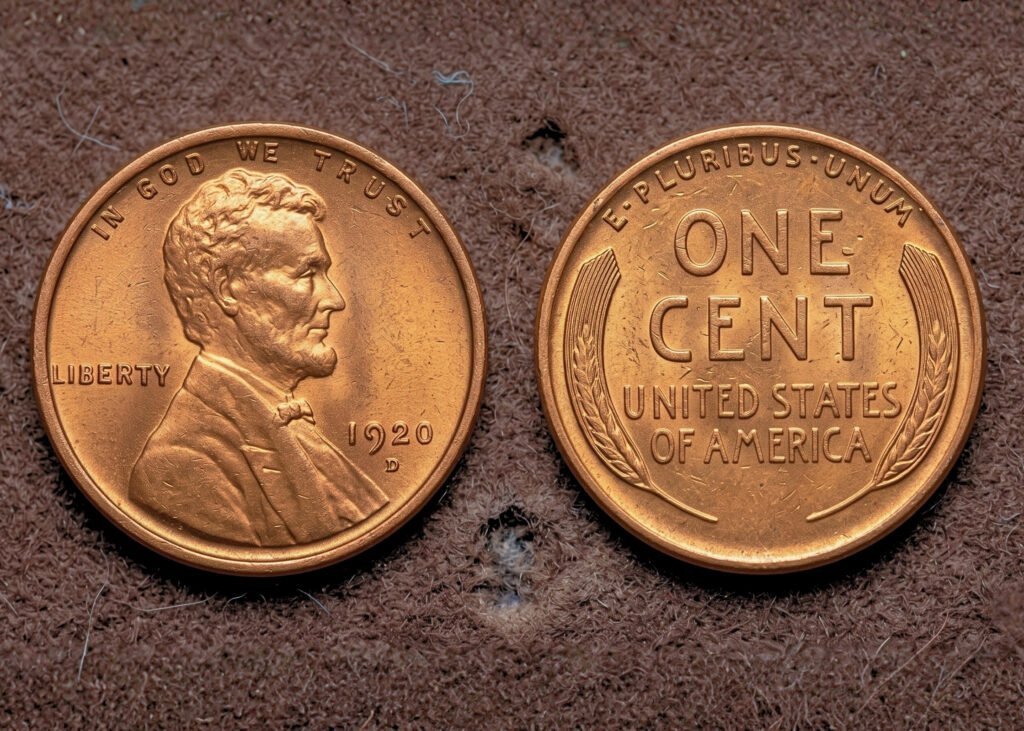
The obverse of a real 1920 Lincoln penny always shows Abraham Lincoln facing right, with “IN GOD WE TRUST” above his head, “LIBERTY” to the left, and the date “1920” to the right. Look at the date carefully; altered coins do exist, especially from 1922.
Turn the coin over. You should see two wheat stalks curving up the sides, framing “ONE CENT” and “UNITED STATES OF AMERICA” on the reverse.
If your coin has the Lincoln Memorial on the back, it’s a 1959 or later cent, not a wheat penny.
Finding the Mint Mark
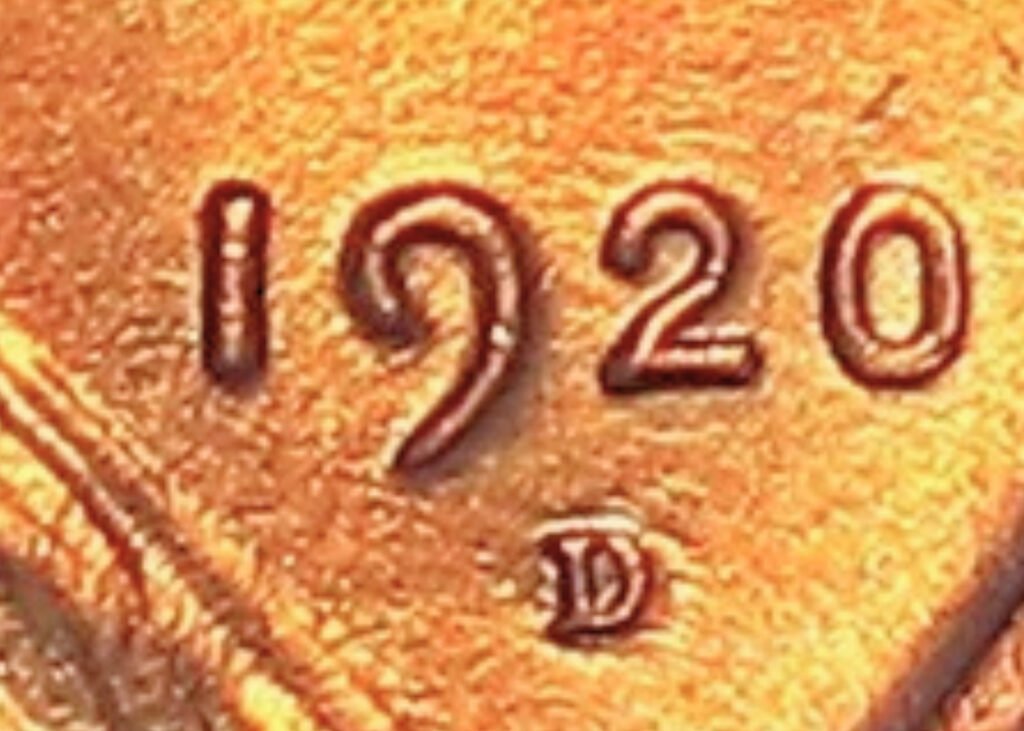
The mint mark sits directly below the date on the obverse. Use a magnifying glass. The letters are tiny and often worn flat. That single stamp changes everything about what your 1920 wheat penny is worth.
If you see a small “D,” it was struck in Denver. An “S” means San Francisco. No mint mark means it came from Philadelphia, which never used a mark on cents back then.
The mint mark matters because different mints made different numbers of pennies, which also impacts the value:
- Philadelphia (no mint mark): 310,165,000 pennies
- Denver (D mint mark): 49,280,000 pennies
- San Francisco (S mint mark): 46,220,000 pennies
Philadelphia made the most 1920 pennies, which is why no mint mark coins are the most common survivors today. Denver and San Francisco struck roughly one-sixth as many each, so those mint marks are scarcer and more valuable coins, based on different factors.
Weight and Composition
A genuine 1920 wheat penny should weigh 3.11 grams. It’s made of 95% copper with a small mix of tin and zinc, so it has that warm reddish-brown color when the surface hasn’t toned over.
If your coin weighs noticeably less or feels wrong, be careful. It might be damaged, cleaned, or worse, a counterfeit. A cheap digital jewelry scale is enough to check.
Quick Fact: No proof 1920 wheat pennies exist. The proof program was suspended from 1917 through 1935. If someone claims to have a proof 1920 cent, walk away.
What Makes a 1920 Wheat Penny Valuable?
Because of its high mintage, not every 1920 wheat penny is a jackpot, and honestly, most aren’t. But a few key factors decide whether one is worth a dime or a small fortune.
- Mint mark and mintage – Philadelphia coins are the most common. Denver and San Francisco issues are scarcer, and the 1920-S is treated as a semi-key date in high grades because it’s tough to find well struck.
- Grade – The Sheldon scale runs from Poor (P-1) up to perfect Mint State (MS-70). Worn coins bring almost nothing. Uncirculated (MS) pieces hold the highest value, rising as the grade moves up.
- Color – For copper cents, graders use three color designations. Red (RD) coins keep most of the original color and shine. Red-Brown (RB) is a mix, and Brown (BN) coins are fully brown-toned. Full Red 1920 pennies are the most valuable.
- Strike quality – San Francisco used tired dies in 1920, so lots of coins came out with weak, mushy details. A sharply struck 1920-S is genuinely uncommon and always brings a premium.
- Errors & varieties – Doubled dies, off-center strikes, and clipped planchets can turn a common coin into something collectors chase.
Rare and Valuable 1920 Wheat Pennies to Look For
While most 1920 pennies are worth nothing, there are some specific coins collectors actively hunt down. Some are rare mint-state examples; others are dramatic mint errors.
1. 1920 (P) Doubled Die Obverse
The doubled die obverse is the crown jewel of 1920 error hunting. The minting die itself is struck twice at slightly different angles, so you get a soft doubling on the date, “LIBERTY,” and Lincoln’s eye area.
Use at least a 5x loupe. The doubling should look raised and shelf-like, not flat. Real DDOs are hard to find, and top examples have crossed the auction block for serious money.
- Estimated Value: $50 to $6,600+
- What to Check: Doubling on date, LIBERTY, eye
- Quick Notes: Confirm raised doubling, not machine strike
2. 1920-S Wheat Penny in Full Red Mint State
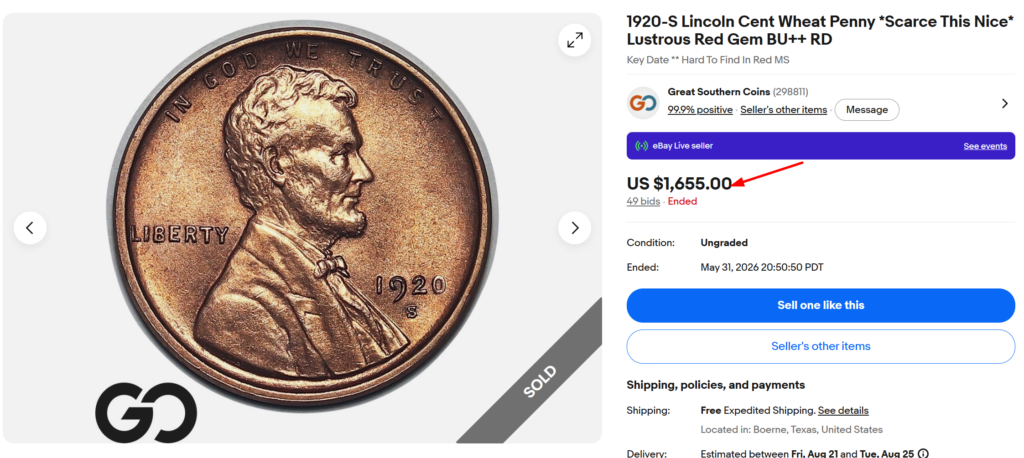
Sold for $1,655
San Francisco struck about 46 million cents in 1920, but nearly all of them came out weakly detailed and toned brown over the decades. So a fully struck, Full Red MS-65 example is genuinely rare.
Only a handful of high-grade Red pieces are known to exist. Because of that scarcity, this is easily one of the most valuable 1920 wheat pennies now.
- Estimated Value: $1,500 to $48,000+
- What to Check: Sharp strike, full red color, “S” mint mark
3. 1920-D Wheat Penny in High Grade Red
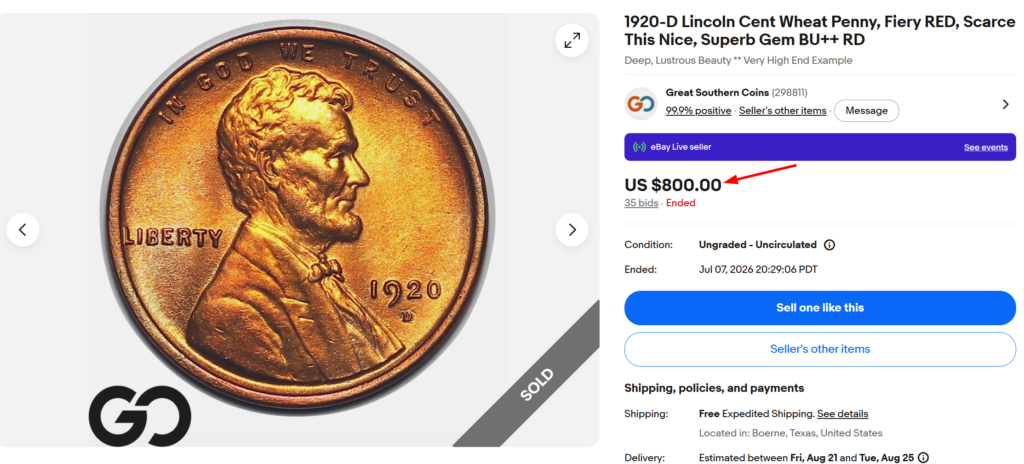
Sold for $800
The Denver mint made just under 50 million 1920 cents. Denver strikes from this era are known for mushy details. Plus, most 1920 pennies saw heavy use out west, so nice examples are tough to find. Look for crisp hair lines above Lincoln’s ear and clean wheat stalks on the back to spot a gem 1920-D in full Red mint state.
- Estimated Value: $200 to $3,000+
- What to Check: Sharp hair detail, “D” below date
4. 1920 Wheat Penny No Mint Mark (MS-66+ Red)
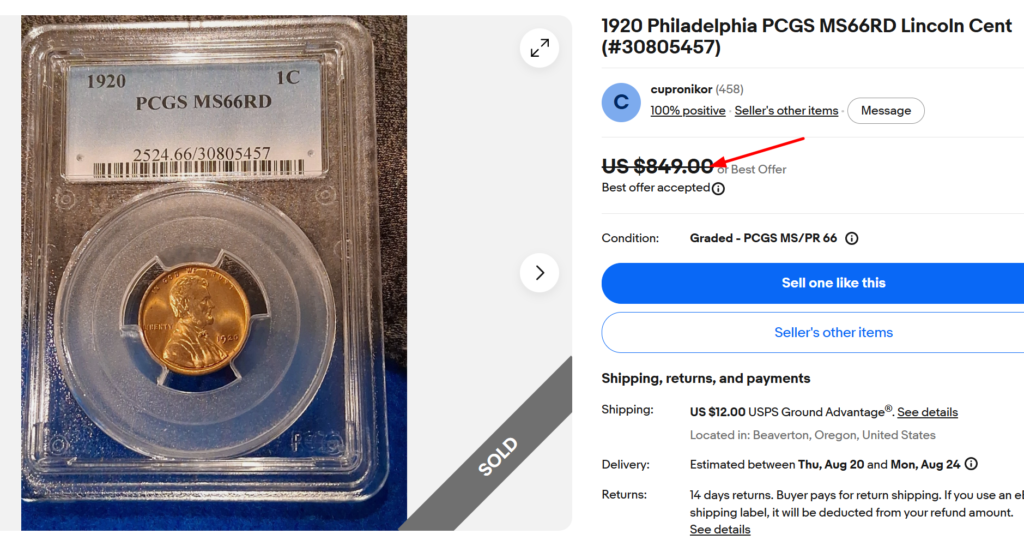
Sold for $850
Philadelphia coins are the most common of the three, and typical survivors are worn and toned. But if it is an MS-66 or 67 or higher Red example, the value climbs faster, because very few coins survived that clean.
The auction record for a no mint mark 1920 wheat penny in top grade is well into five figures. Uncirculated red examples in lower grades still bring solid premiums that surprise most sellers.
- Estimated Value: $100 to $12,000+
- What to Check: No mark below date, full original red
5. 1920 Repunched Mint Mark (RPM)
A repunched mint mark happens when the mint worker stamped the “D” or “S” into the die twice, slightly off from the first hit. You can spot it by a faint shadow of the second letter poking out.
Both 1920-D and 1920-S coins are known for RPM varieties. You’ll need a 10x loupe to spot one. The stronger and clearer the doubling of the mint mark, the higher the value.
- Estimated Value: $15 to $100+
- What to Check: Doubled or shifted mint mark
6. 1920 Off-Center Strike Error
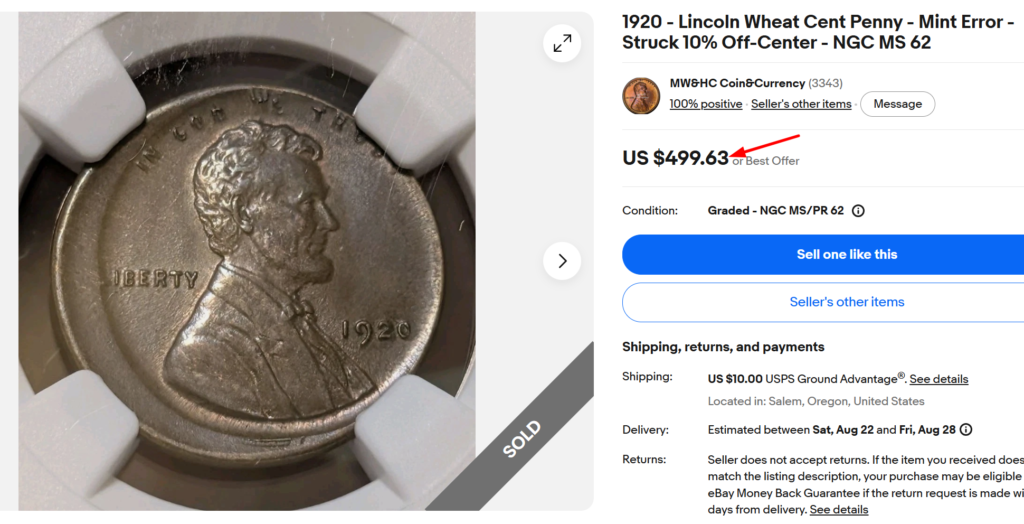
Sold for $500
Off-center errors happen when the blank isn’t lined up between the dies. Part of the design is missing, so one side shows a blank crescent instead of the original design.
The value depends on how off-center the strike is and the visibility of the mint date. Small shifts under 10% are barely worth anything, but dramatic misalignments of 40% or more, especially with the full date visible, can bring hundreds.
- Estimated Value: $25 to $500+
- What to Check: Blank crescent, date must be visible
7. 1920 Clipped Planchet Error
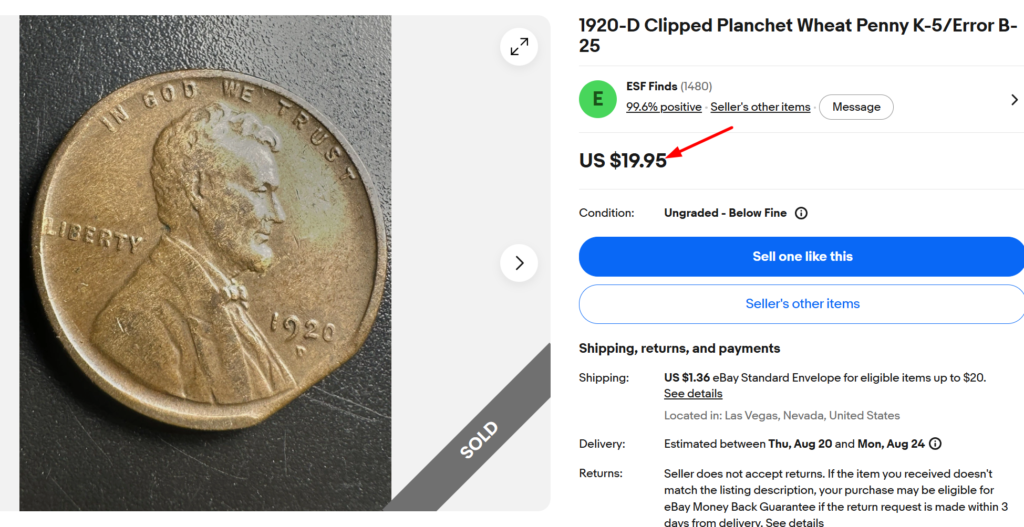
Sold for $20
A clipped planchet has a smooth curved or straight bite taken out of one edge. It happened during blank cutting, when the punch overlapped an already-cut section of the metal strip.
Check for the Blakesley Effect, which is a weakness in the rim directly opposite the clip. That flaw confirms the coin as a real mint error, not something damaged after leaving the mint.
- Estimated Value: $15 to $150
- What to Check: Curved bite, Blakesley Effect opposite
8. 1920 Penny Cud Error
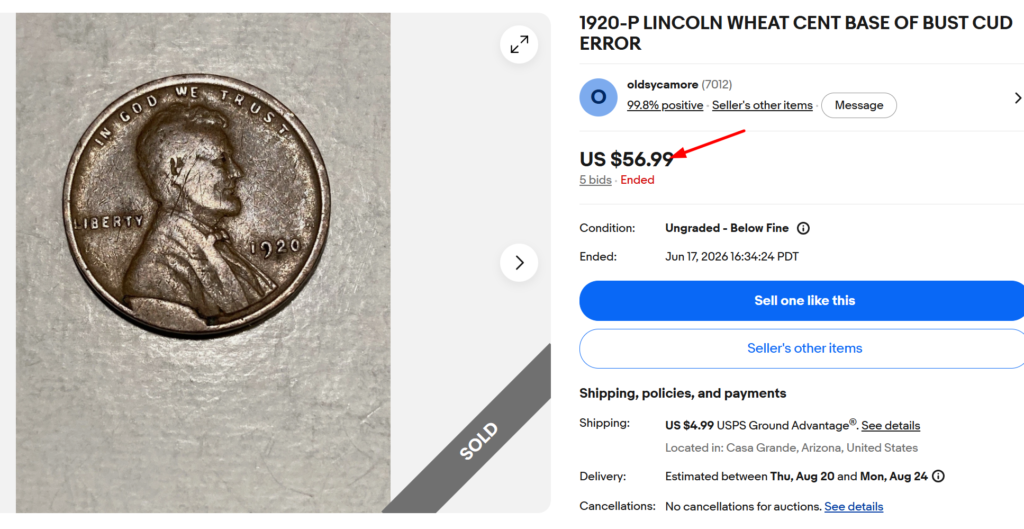
Sold for $56
A cud error occurs when a piece of the die actually breaks off during striking, leaving behind a raised, featureless blob of metal on the finished coin. On this 1920-P example, the cud sits right at the base of Lincoln’s bust and connects to the rim.
That connection to the rim is exactly what separates a true cud from ordinary damage. Cuds always feel raised, not sunken, and the surface stays smooth with no design detail.
Bigger cuds in prominent spots are worth more than small rim cuds, but any genuine one is worth a closer look.
ID Note: The cud must be raised, not sunken damage.
- Estimated Value: $30 to $200+
- What to Check: Raised metal blob touching rim
9. 1920 Lamination Error
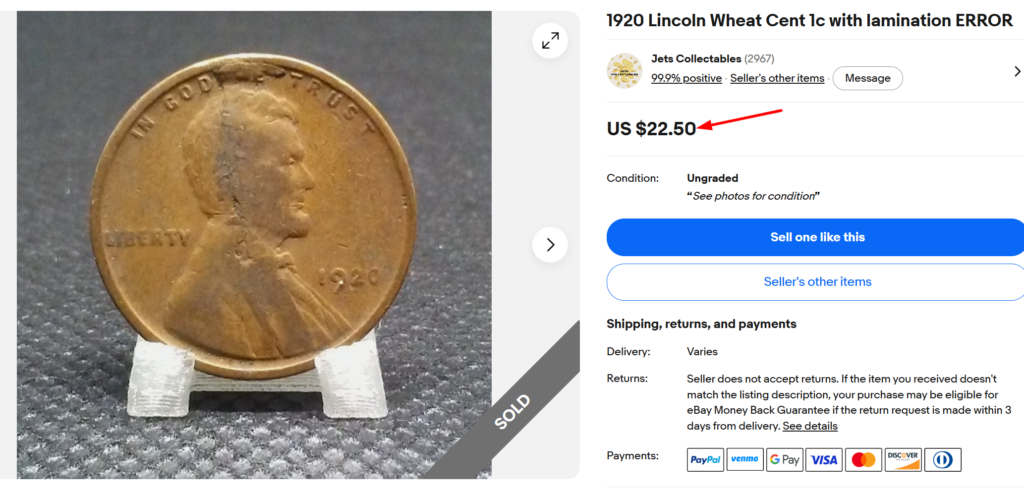
Sold for $22
Lamination errors show up as peeling, flaking, or cracked areas on the coin’s surface. The metal alloy wasn’t mixed evenly at the mint, so thin layers of the planchet later separated from the rest of the coin.
They’re more common on San Francisco cents from this era. Small flaws bring a few dollars, but larger laminations that peel across the design can bring $50 or more from error specialists.
- Estimated Value: $10 to $75
- What to Check: Peeling or flaking metal on surface
- Quick Notes: Bigger the peel, better the value
10. 1920 Penny Struck on Wrong Planchet
Wrong planchet errors are among the rarest 1920 cents you could ever find. These occurred when a foreign or off-denomination blank slipped into the coin press and got struck with Lincoln cent dies.
The color, weight, and diameter are noticeably off on these coins, making them easy to spot; still, professional authentication is a must.
The most documented cases include 1920 cents struck on Cuban one-centavo planchets.
- Estimated Value: $500 to several thousand
- What to Check: Odd weight, wrong color, off diameter
The 1920 wheat penny isn’t a holy grail key date like the 1909-S VDB, but it’s still worth collecting. The rare mint state Reds, sharp San Francisco strikes, and dramatic errors can sell for a lot more than you would expect.