
1955 was a rather recent date for wheat pennies. But there are two features that make it quite unique. First, the San Francisco Mint stopped making cents that year, continuing only in 1968. So, all the 1955-S wheat cents were instantly stored away.
Secondly, the Philadelphia Mint worked with a malfunctioning die, creating the famous 1955 Doubled Die. About 24,000 error cents got into circulation. That’s how the 1955 penny became popular. And in this guide, we’ll find out what it’s really worth today.
How to Identify a Real 1955 Penny? 4 Checks
Most people just look at the year and stop there. But examining the 1955 penny with a 5x to 10x magnifying lens and a small digital scale will help you check the key details that verify authenticity.
Step 1: Finding the Mint Mark
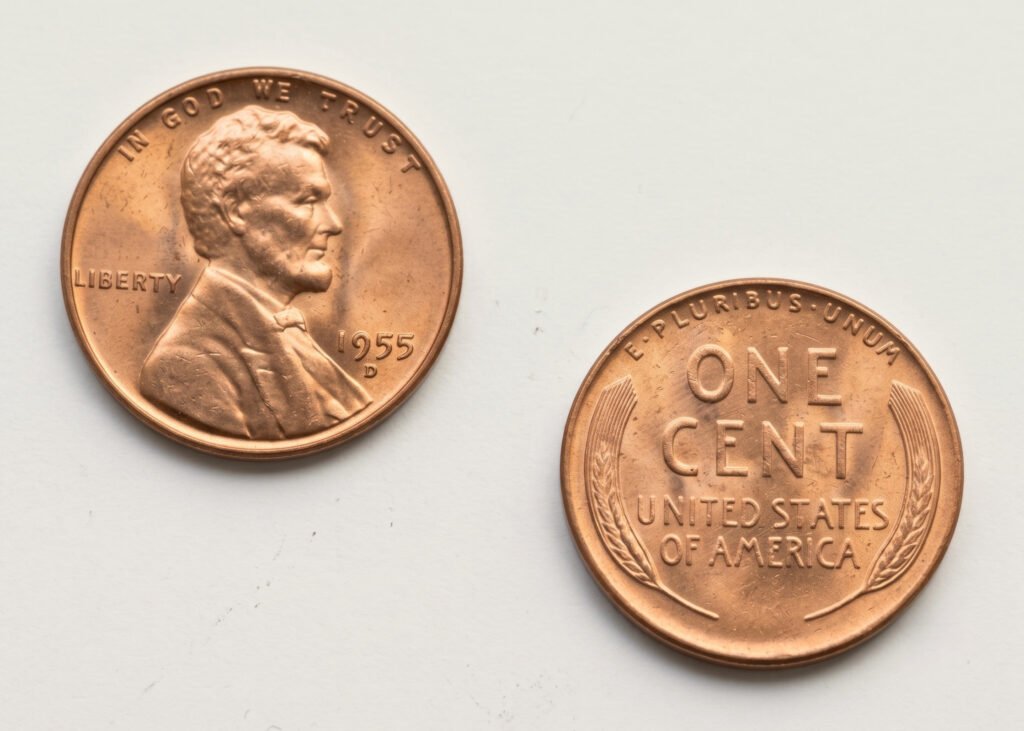
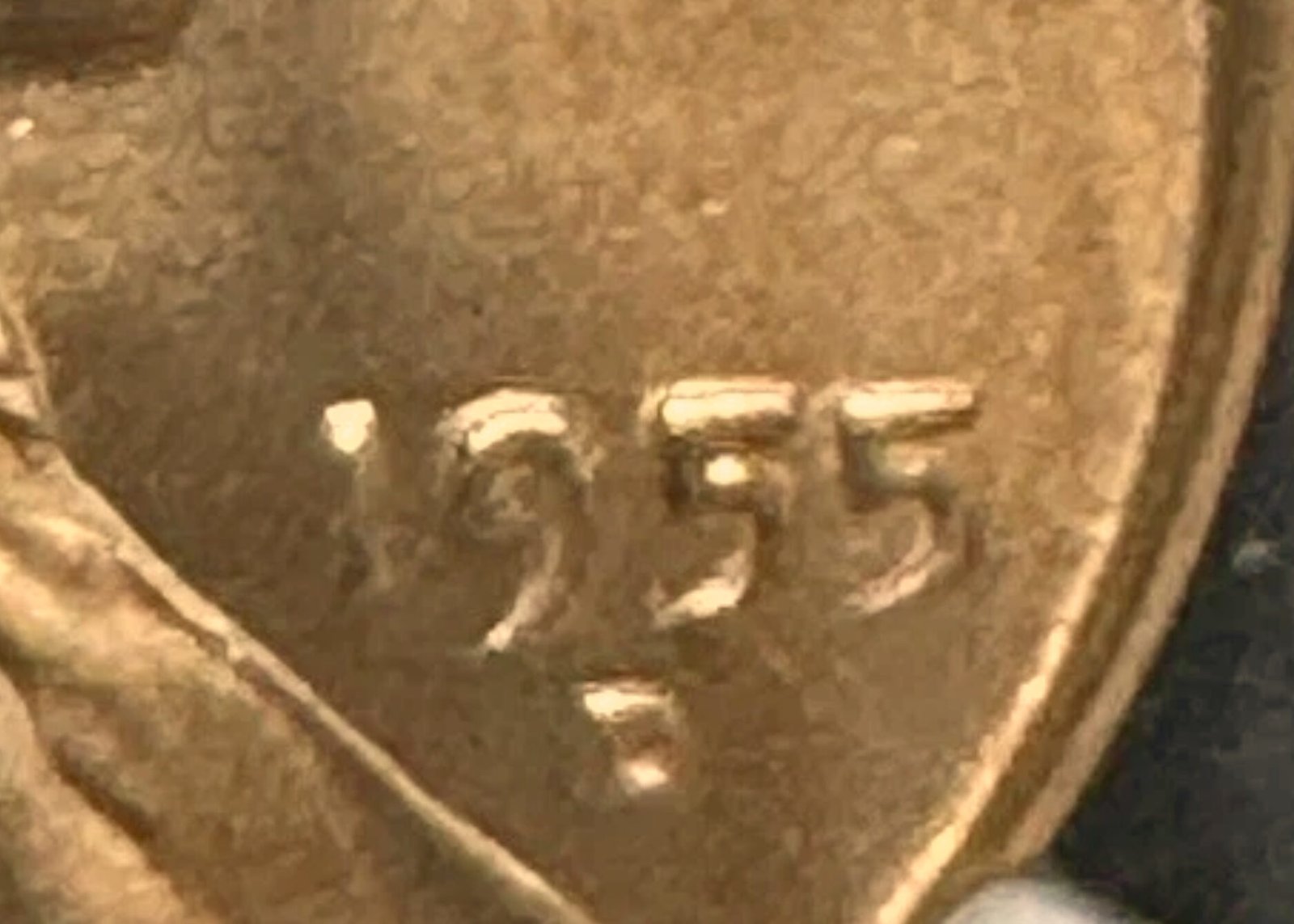
You will find the mint mark right below the date on the coin’s obverse. The letters D, S, and the absence of any letters respectively represent the locations of the Denver, San Francisco, and Philadelphia Mints.
Each mint made different numbers of 1955 cents, which also impacts their value.
- Philadelphia (no mint mark): 330,958,200
- Denver (D): 563,257,500
- San Francisco (S): 44,610,000
Good to Know: If you find a doubled 1955 penny with a D or S mint mark, it’s not a genuine DDO coin. It might be a repunched mint mark type that we will discuss below.
Step 2: Verify the Weight & Composition
A 1955 penny is made of bronze consisting of 95% copper, with tin and zinc making up the remaining 5%. The coin should weigh around 3.11 grams and have a diameter of 19 mm.
A clearly lightweight coin could indicate that it’s either a clipped or thin planchet error.
Also, remember that there were no steel or silver pennies produced in 1955. So, a gray or silver-colored penny is just a plated coin.
Step 4: Judge the Color
Copper cents have a unique orange-red color due to the copper content. The wear on these coins can help you assess the originality as well as the value.
- RD (Red) indicates that at least 95% of its original orange-red color is left.
- RB (Red-Brown) is a combination of colors.
- BN (Brown) is fully toned.
Red coins command a premium above all else. Also, a 1955 penny in any color apart from these three asks for professional authentication.
Step 3: Check for Doubling
Hold your coin up to a bright light and observe the date, LIBERTY, and IN GOD WE TRUST closely. The real doubled die will have two distinct round lines around each letter. You can spot this on most 1955 DDO coins even without a magnifier.
Is a 1955 Penny Worth Anything?
Yes, but only very few 1955 pennies have more value than pocket change. Two 1955 pennies may look almost exactly alike, and still one may be worth only 5 cents, while the other can be worth over $5,000. This huge difference in value comes from five key factors:
- Variety or Error – A doubled die or repunched mint mark is much more valuable than any regular coin of a similar grade.
- Grade – Coins are professionally graded on the Sheldon scale, from 1 to 70. A circulated coin is below 60, while the Mint State range is 60 to 70. Premiums for 1955 cents increase drastically at MS66.
- Color – A fully red coin can sell at several times the cost of a brown one in the same grade.
- Certification: PCGS- or NGC-graded 1955 cents will sell with more confidence. That’s especially true for the doubled die, because it’s heavily counterfeited.
- Surface and Eye Appeal – Scratches, spots, and marks reduce the value rapidly. Even an authentic 1955 DDO is reduced significantly by cleaning.
The Most Valuable 1955 Wheat Pennies to Find Now
Below are the rare 1955 pennies collectors actively chase, from the famous doubled die to mint mark varieties, top-grade red coins, and striking errors.
1955 Doubled Die Obverse (FS-101)
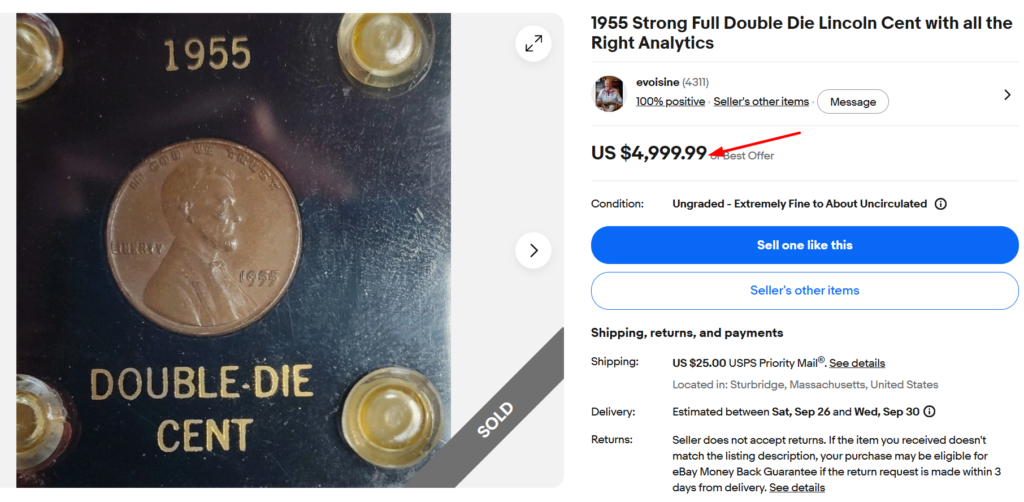
Sold for $5,000
The 1955 DDO is among the most valuable wheat pennies ever released. The doubling here is so bold that you can see the two different sets of numbers on the date. Even the letters in LIBERTY and IN GOD WE TRUST appear to be stacked.
The survivors generally have some wear and fetch four figures, but uncirculated examples are worth far more. The finest examples, which are fully red, are highly prized. One such PCGS MS65+RD fetched a whopping $114,000!
- Estimated Value: $1,300 (circulated) to $114,000 (gem red)
- What to Check: Doubled numbers and letters on the obverse, no mint mark
- Quick Notes: Heavily faked, so always certify it
1955 Doubled Die Obverse (FS-102)
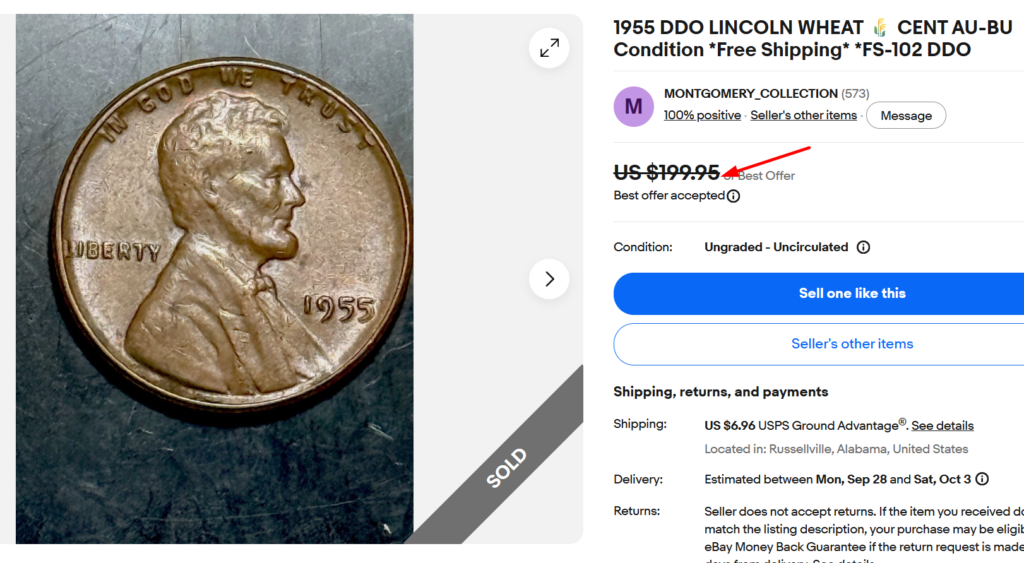
Sold for $200
The FS-102 is another DDO variety, but it’s not as popular as the FS-101. It also features visible doubling in the letters of “IN GOD WE TRUST,” but only light doubling on LIBERTY. There is no evidence of any doubling on the date.
- Estimated Value: $30 to $300 (always certify)
- What to Check: Doubled motto, normal date
- Quick Notes: Early die states are most valuable.
1955 No Mint Mark Penny in Gem Red
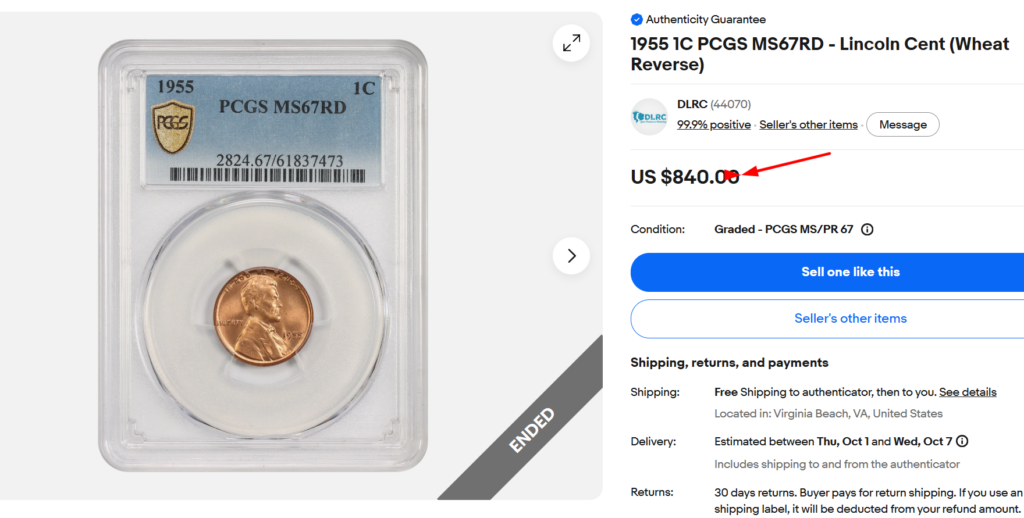
Sold for $840
A coin among the 330 million made is usually common in all grades. But not many examples of standard 1955 Philadelphia cents have survived in pristine condition because people did not collect them the way they collected the 1955-DDO or 1955-S.
Gem Red pieces have become scarce, and the value increases rapidly above MS66. MS67+RD or higher examples can fetch $30,000 in auction.
- Estimated Value: $20 to $36,000+ (MS67 RD or higher)
- What to Check: Full red, clean cheek
- Quick Notes: Philadelphia gems are the scarcest
1955-D Repunched Mint Mark (FS-503)
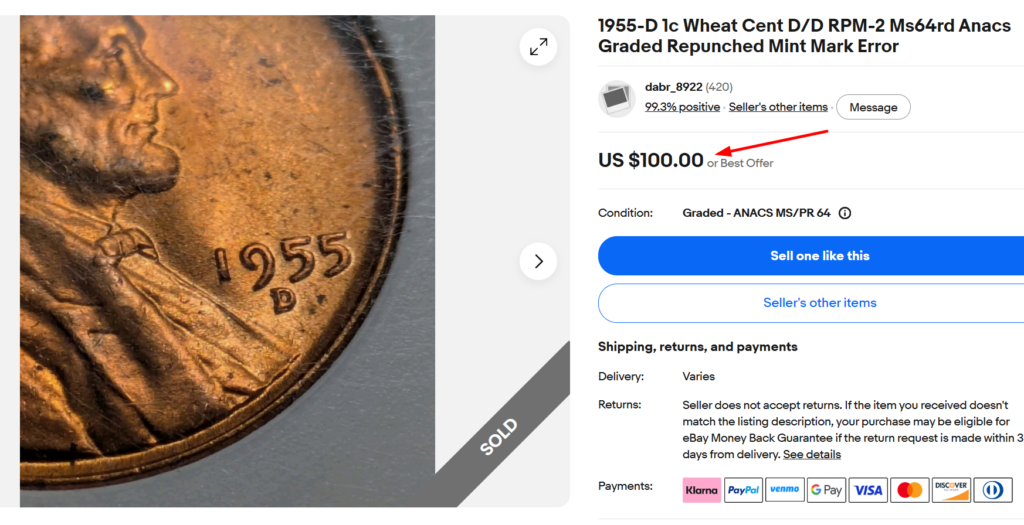
Sold for $100
Denver dies were punched with mint marks by hand, and sometimes they were punched more than once. This die then created a doubled mint mark on the 1955-D pennies.
You can spot this error by the outline of the D letter next to or within the major letter. One of the FS-503 coins falls into this category.
- Estimated Value: $5 to $250
- What to Check: Second D outline visible
- Quick Notes: Several different 1955-D RPM varieties exist.
1955 Proof Penny (Deep and Ultra Cameo)
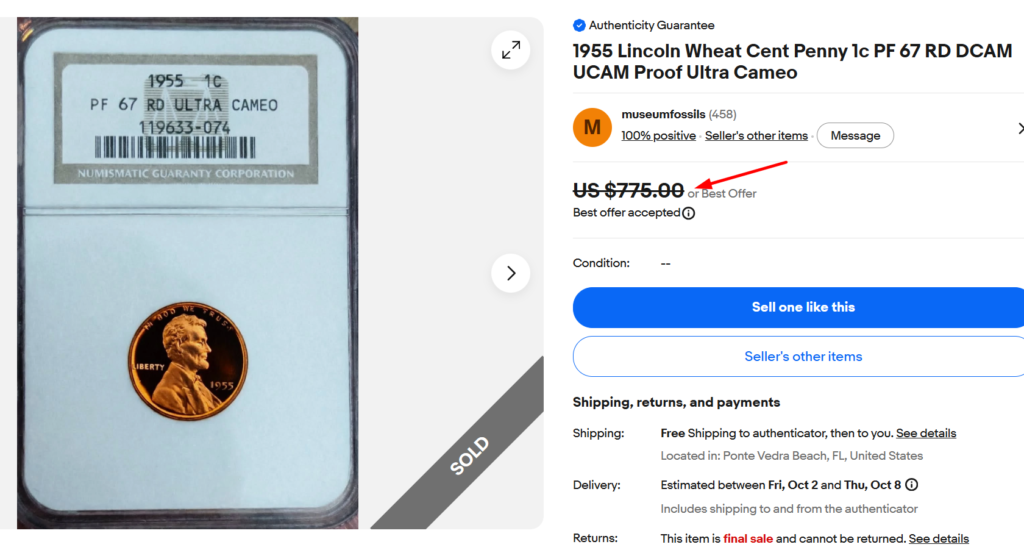
Sold for $775
Philadelphia Mint released 378,200 proof cents in 1955 for the yearly proof sets sold to collectors. You can spot these cents by their mirror-like fields with sharply defined features.
Regular proofs are common, but Cameos, with frosted portraits, command a higher price, while Deep and Ultra Cameos are worth the most in high grades.
- Estimated Value: $10 (Circulated) to $1,000+ (Deep/Ultra Cam in PF68)
- What to Check: Frosted Lincoln, mirror fields
- Quick Notes: Deep or Ultra Cameo coins are the rarest.
1955 Clipped Planchet and Lamination Errors
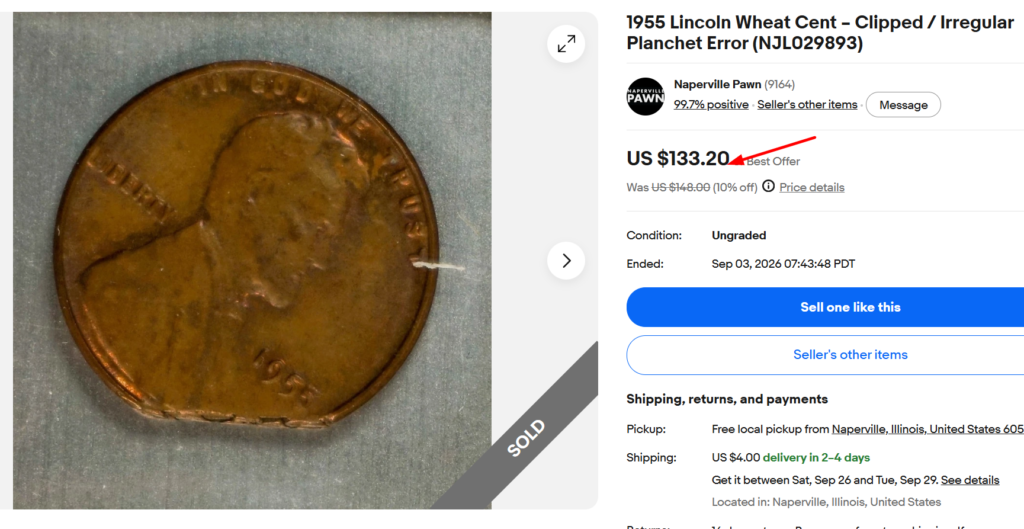
Sold for $133
Planchet errors happen before minting. The clipped planchet is missing a curved bite around the edge of the coin as a result of being punched out from an overlapping strip.
Lamination errors are flaking metal visible on the surface of the coin. These are both affordable errors from 1955 that make good collectibles.
- Estimated Value: $5 to $50
- What to Check: Curved clip, peeling metal
- Quick Notes: Real clips show a weak opposite rim.
1955 Die Cracks and BIE Errors
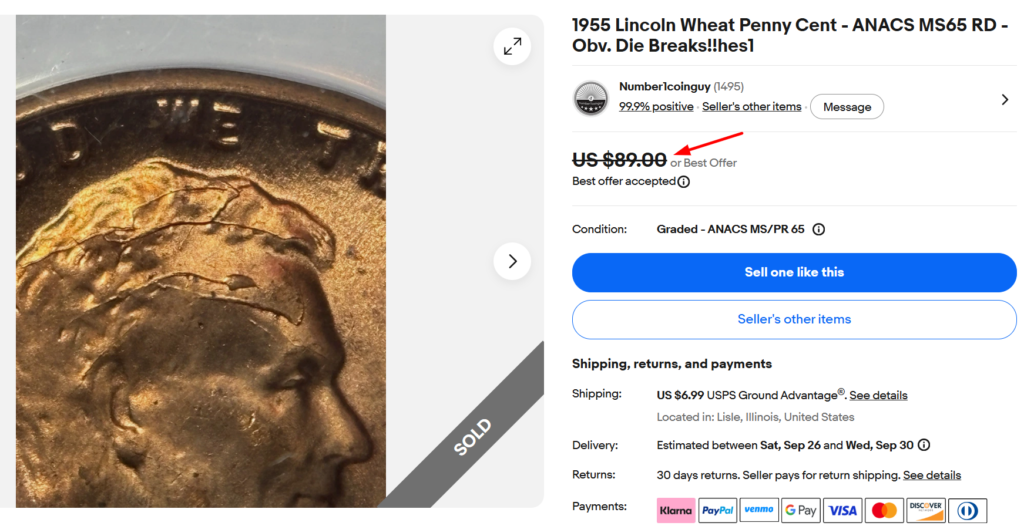
Sold for $90
Heavily worn dies often have cracks in them, which create fine lines (breaks) through raised thin lines on the surface of the coin. BIE error occurs when there is a minor die break that looks like an additional letter I between the B and E of LIBERTY.
The value depends on the coin’s condition as well as the visibility and size of the die break.
- Estimated Value: $3 to $100
- What to Check: Raised lines, extra blobs
- Quick Notes: Bigger breaks are worth more.
Before you donate, sell, or put your old 1955 penny back in the jar, check three things: the condition, the doubling on the date and motto, the mint mark, and the color. Those quick checks can tell you if your cent is worth money.