
One old lamp might go for $20 at an estate sale, whereas another could fetch $5,000 at an auction. The difference is what makes vintage lamps so fascinating to collect, because many look ordinary but can be worth a lot.
This article outlines the basics of identifying lamps, what really determines their value, and some of the most valuable antique lamps around today.
What Counts as a Vintage Lamp vs. an Antique Lamp?
The difference between an antique and a vintage lamp is simple. Antique lamps are 100 years old or older, while vintage lamps are 20 to 99 years old. So, a 1920s Art Deco lamp is antique now, but a 1965 MCM lamp is vintage.
That said, the label matters less than the maker and the market. A signed Handel scenic lamp from 1918 and an unsigned pressed-glass reproduction from 1975 both get called “old lamps” at estate sales. Only one is worth serious money.
How to Identify Vintage Lamps: 7 Things to Check
Identifying an old lamp comes down to reading the following seven physical clues the piece gives you. Here’s the checklist to run through every time.
- Check the marks – The base is where signatures, foundry marks, patent numbers, and mold codes live. A stamped “HANDEL” or a small “P” inside a diamond for Pairpoint changes everything.
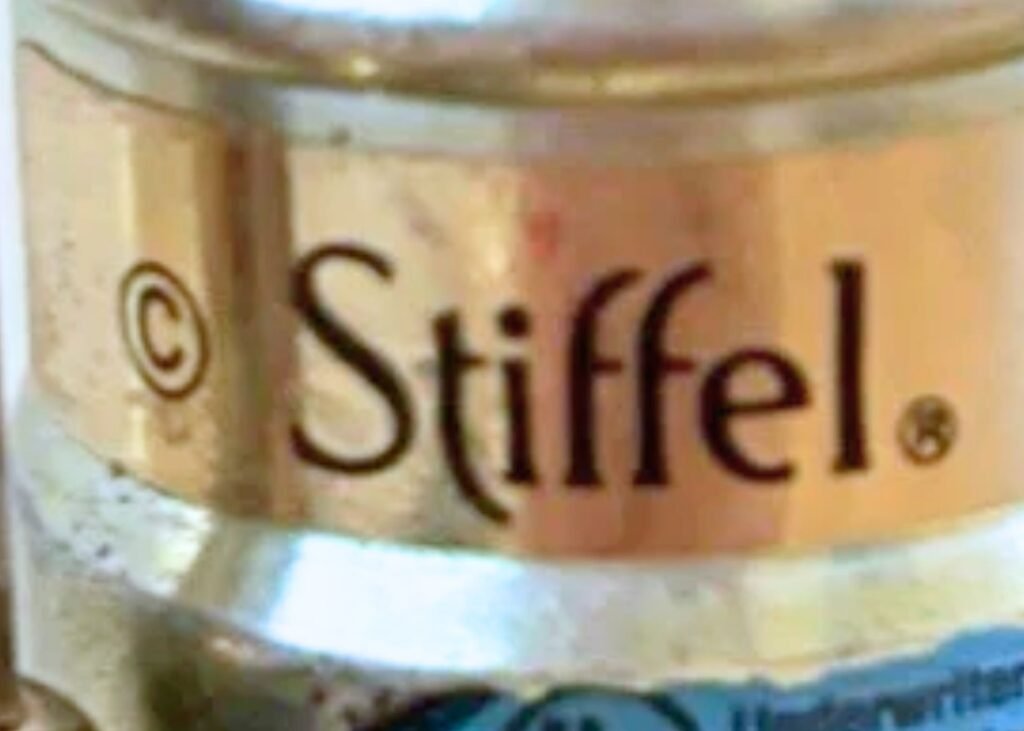
- Hunt for maker’s labels – Foil stickers from Marbro, Stiffel, and Frederick Cooper fall off over time, but any surviving label helps confirm the piece.
- Read the socket – Old Hubbell, Bryant, and Leviton sockets often have date codes or patent stamps. If the socket looks brand new on a supposedly 90-year-old lamp, someone rewired it, which is fine, but note it.
- Check the shade – Leaded stained glass, reverse-painted scenes, slag panels, and hand-painted milk glass all point to specific makers and eras.
- Check the weight – Real brass and bronze feel heavy. Spelter and pot metal reproductions feel light and hollow.
- Look at patina – Real aging is uneven, softer at wear points, darker in recesses. Faux distress is usually too even.
- Study the wear – Genuine age on an antique lamp shows on the base rim, under the harp, and where hands touched the switch daily.
ID Tip: If the shade and base look like they belong to two different lamps, they probably do. Marriages are common in vintage lamps, and they hurt value.
Lamp Styles to Know
The style can tell you a lot about when the lamp was made. Once you can recognize the eras, you’ll spot vintage lamps at flea markets without even flipping them over.
Here are the most popular lamp styles worth knowing:
- Victorian pieces from the 1860s to 1910 lean heavily on brass, cranberry glass, and Gone With the Wind-style globe shades.
- Art Nouveau and early Tiffany-style lamps from the 1890s to 1915 favor leaded glass with dragonflies, wisteria, and floral motifs.
- Art Deco vintage lamps from the 1920s and 1930s bring in chrome, geometric patterns, and figural nudes like the Frankart pieces.
- Mid-century vintage lamps from the 1940s through 1960s went in two directions.
- Hollywood Regency pieces from Marbro leaned dramatic and gilded.
- Mid-century modern style lamps turned to teak, brass, and simple sculptural forms.
- The 1970s brought us the wild stuff: rain lamps, mushroom lamps, swag chains, and glass mushroom lamps in every color you can imagine.
Rare Antique and Vintgae Lamps from Top Makers That Collectors Want
Let’s take a look at the most collectible antique lamp designs from the most prestigious makers, from Tiffany to Handel, and know what they’re worth.
1. Tiffany Studios Dragonfly Table Lamp
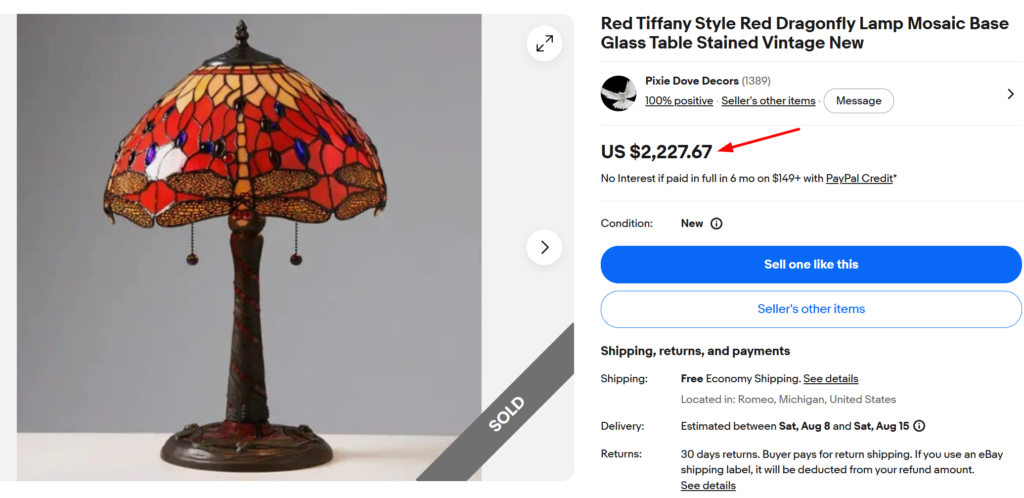
Sold for $2,230
The Dragonfly is one of the most recognizable Tiffany designs. It was first created by Clara Driscoll around 1899. Genuine examples use leaded Favrile glass panels with jeweled dragonfly bodies over the shade rim, and the bronze base is signed “Tiffany Studios New York” with a model number.
Reproductions of Dragonfly lamps are pretty common, so weight, glass depth, and signature placement matter for identification.
- Estimated Value: $8,000 – $500,000+
- Production Years: c. 1899 – 1930
- What to Check: Signed bronze base, leaded Favrile glass, Jeweled dragonflies, irregular hand-soldered lines
2. Handel Reverse-Painted Scenic Lamp
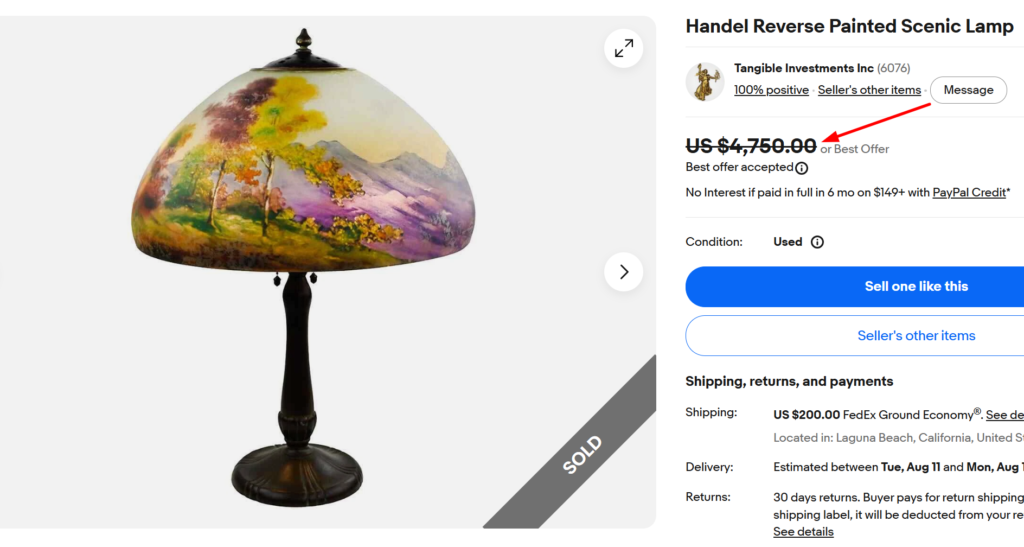
Sold for $4,750
Handel Company made these from about 1902 to 1936, and the reverse-painted scenic shades are what collectors chase. The shade is painted on the inside surface, so the outside stays smooth, giving the scene a soft, glowing depth.
Bases are usually patinated bronze with a Hubbell socket. Landscape scenes with water, trees, and sunsets bring stronger prices than plain floral shades.
ID Note: Look for the “HANDEL” signature at the rim edge along with a four-digit model number, plus the artist’s signature inside the shade.
- Estimated Value: $1,500 – $15,000+
- Production Years: c. 1902 – 1936
- What to Check: Rim signature, Interior painting, model number, artist mark, patinated bronze base
3. Pairpoint Puffy Rose Boudoir Lamp
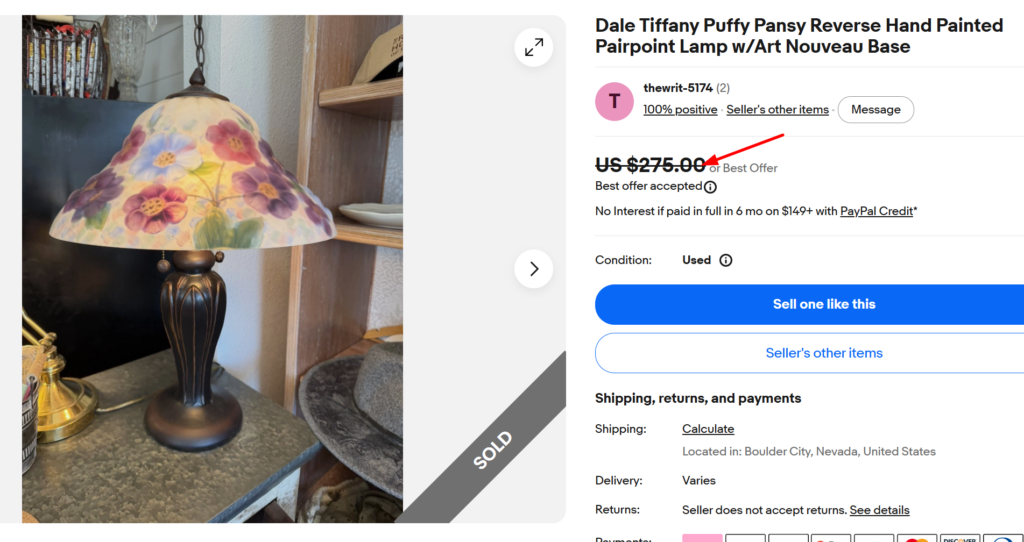
Sold for $275
Pairpoint made these from around 1907 through the 1920s. The “puffy” shade means the glass was blown into a mold so the flowers physically bulge outward. Roses are the classic pattern, but you’ll also find poppies, hydrangeas, and butterflies.
The bases of genuine lamps are marked with a “P” inside a diamond and stamped “Pairpoint Mfg. Co.” along with a model number. The shade also carries a small stamp reading “The Pairpoint Corp.” on the inside rim.
Puffy shades are the top tier. Semi-puffy and flat-painted shades are worth less.
- Estimated Value: $1,000 – $12,000+
- Production Years: c. 1907 – 1929
- What to Check: “P” diamond mark, molded puffy roses
4. Bradley & Hubbard Slag Glass Lamp
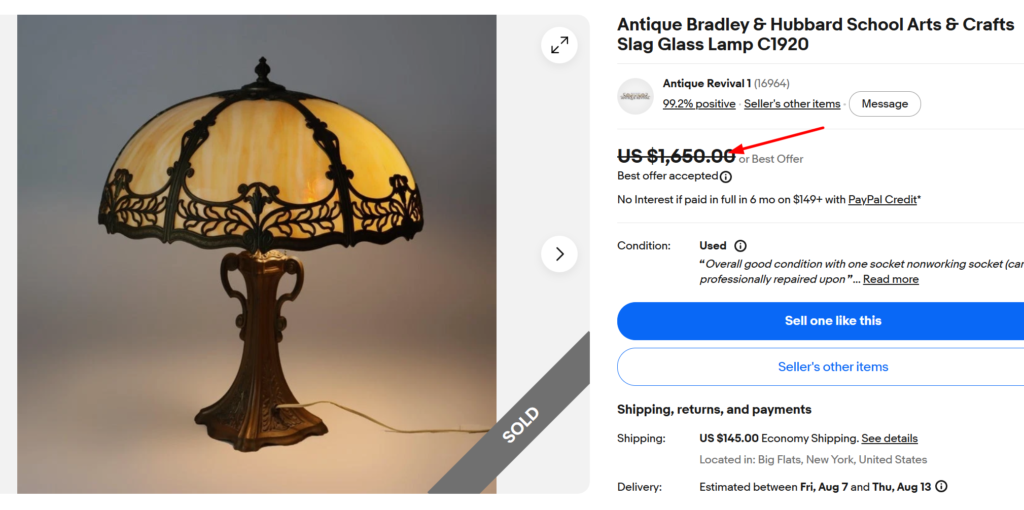
Sold for $1,650
These Arts and Crafts style vintage lamps were made by Bradley & Hubbard from about 1900 through the late 1920s. These feature shades made of caramel, green, or amber slag glass panels held by patinated metal frames with pierced overlay designs.
The metal overlay tells the story here. Prairie School geometric patterns, feather motifs, and scrolled Neoclassical designs each carry their own collector following.
Bases are marked “Bradley & Hubbard Mfg. Co.” often with a patent date like “Pat’d Oct 20 08.” Don’t forget to check these.
- Estimated Value: $500 – $4,500
- Production Years: c. 1875 – 1940
- What to Check: Base foundry mark, patent date
- Value Notes: Slag glass color drives shade value
5. Fenton Gone With the Wind Poppy Lamp
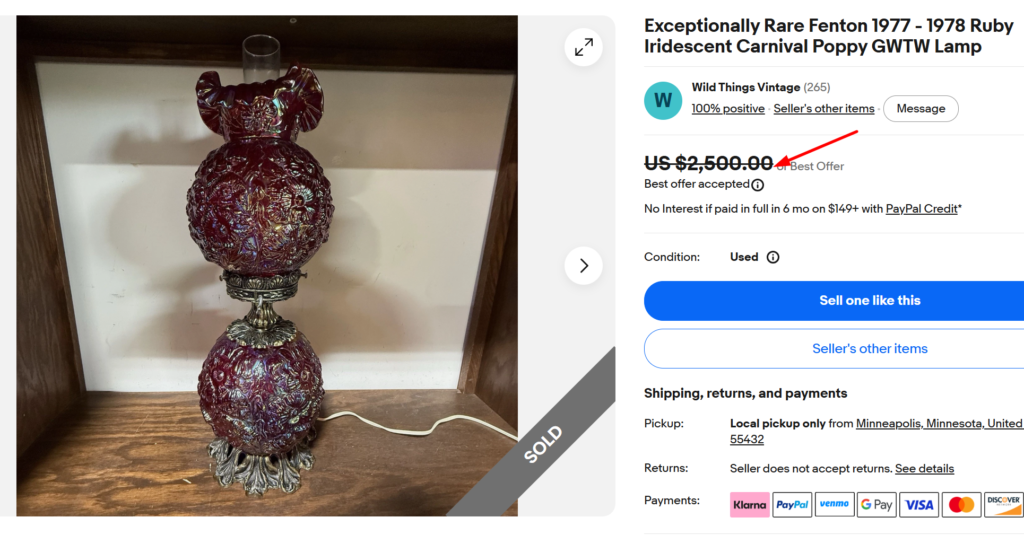
Sold for $2,500
Fenton’s Gone With the Wind lamps, or GWTW as collectors call them, feature the classic double-globe design with a matching top and bottom sphere.
The Poppy pattern is the most collected, and Fenton produced it in blue satin, custard, lime green (with uranium glow), and pink from the 1970s onward.
Most pieces carry the Fenton logo on the bottom globe, though some early or unmarked examples still exist.
- Estimated Value: $150 – $2,000
- Production Years: c. 1970s – 2000s
- What to Check: Fenton logo, double-globe design
- Quick Facts: Uranium versions glow under blacklight
6. Capodimonte Cherub Table Lamp
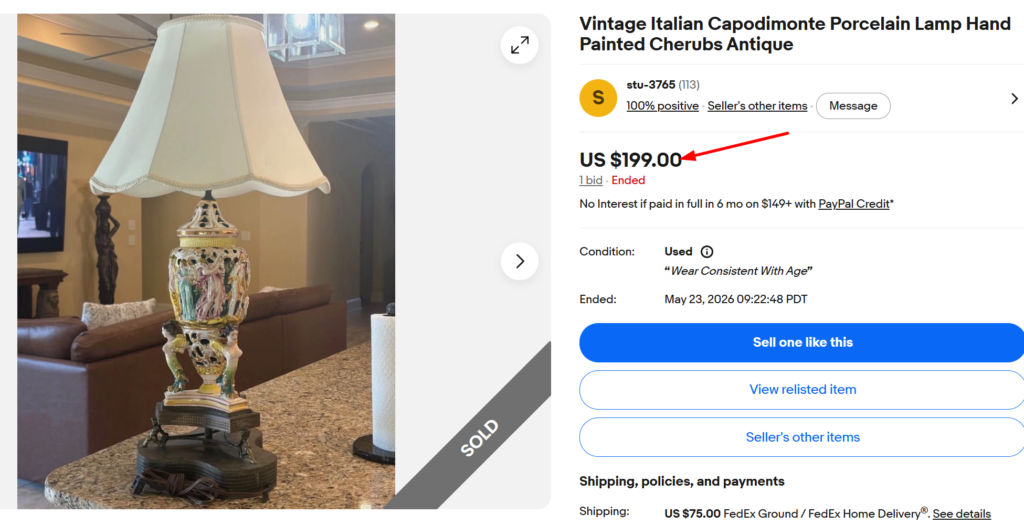
Sold for $200
Capodimonte lamps are Italian porcelain pieces covered in high-relief cherubs, flowers, and figural scenes. The name refers to a style rather than a single factory, so quality varies quite a bit.
Real Neapolitan pieces from Naples factories have crisp mold details and hand-painted faces. Also, look for the crowned “N” mark on the underside, along with “Made in Italy” and sometimes a numeric mold code.
Mid-century pieces from the 1950s through 1970s are the ones you’ll most often see.
- Estimated Value: $200 – $2,000
- Production Years: c. 1950 – 1980
- What to Check: Crowned “N” mark, hand-painted faces
7. Vintage Murano Glass Table Lamp
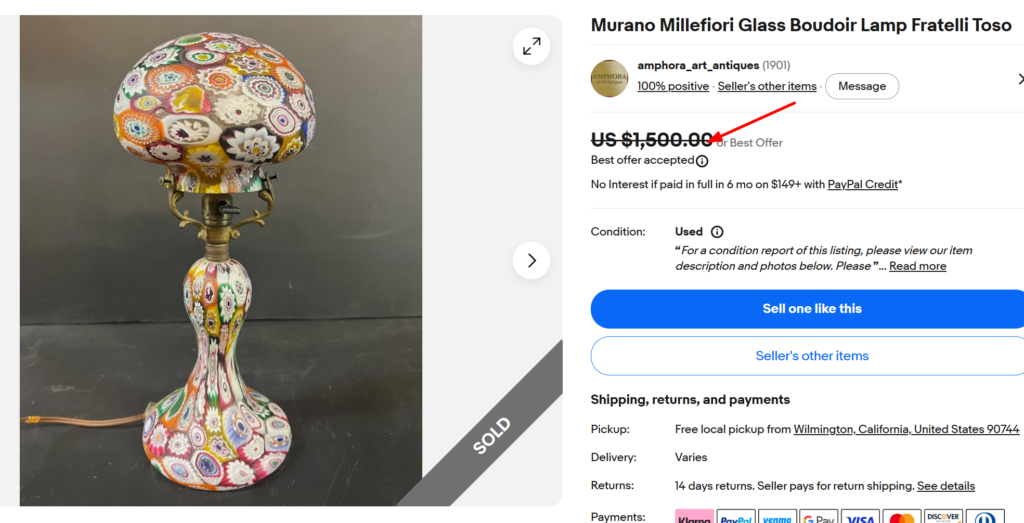
Sold for $1,500
Mid-century Murano lamps from the 1950s and 1960s are some of the most collected vintage lamps out there. Designers like Carlo Nason, Barovier, and Archimede Seguso worked with the Murano glasshouses to create sculptural pieces with hand-blown swirls, controlled bubbles, and gold flecks.
Authentic Murano is heavy, and the pontil mark on the base confirms it was hand-blown. Original foil labels reading “Vetri Murano” or the maker’s name occasionally survive.
Mushroom lamps, teardrop shapes, and pieces attributed to known designers command the strongest prices.
- Estimated Value: $400 – $9,500
- Production Years: c. 1950 – 1980
- What to Check: Pontil mark, weight, foil label
- Quick Notes: Designer attribution multiplies value
8. Marbro Chinoiserie Table Lamp
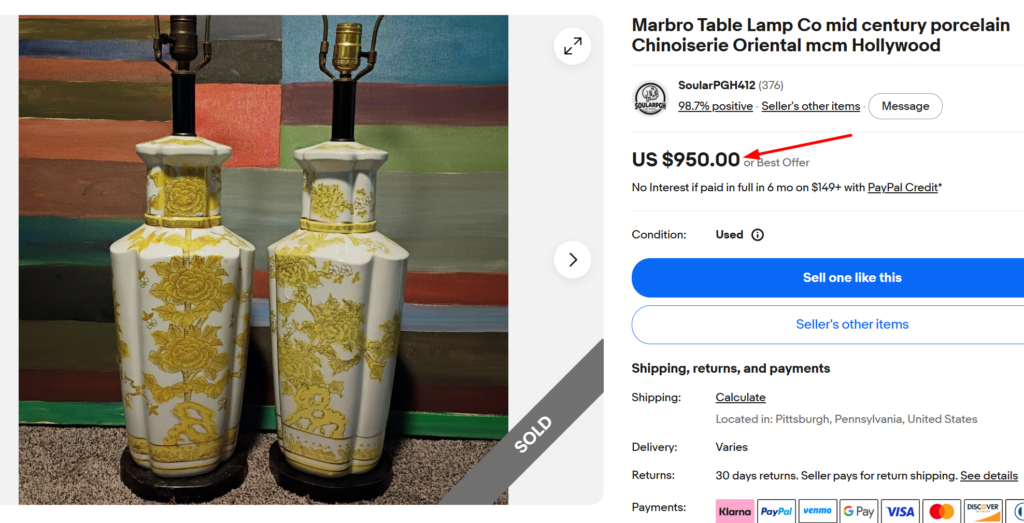
Sold for $950 (pair)
The Marbro Lamp Company made some of the most oversized decorative vintage lamps of the mid-century era. Chinoiserie urn lamps with hand-painted porcelain bodies mounted on gilded wood bases are the classic style.
Pairs with matching label numbers are worth much more than singles, and pieces incorporating Murano glass, Bitossi ceramics, or Italian majolica push values into the thousands.
ID Note: Look for foil labels reading “Marbro Originals” or “Marbro Lamp Co.” on the socket cluster.
- Estimated Value: $500 – $9,500
- Production Years: c. 1950 – 1990
- What to Check: Foil sticker, matching numbers
9. 1970s Greek Goddess Rain Lamp
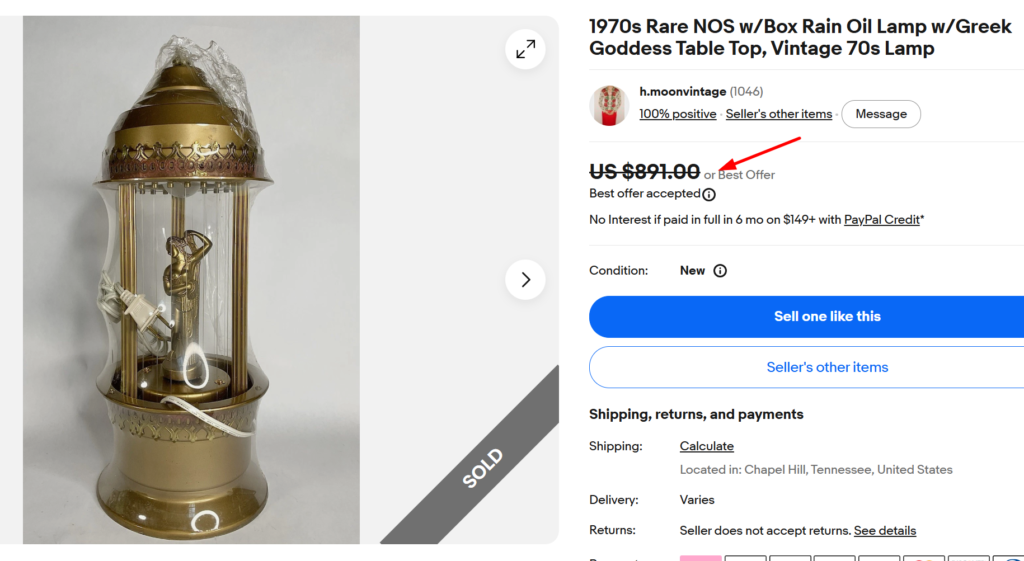
Sold for $890
Rain lamps are one of the most nostalgic 1970s pieces around. Made mostly by Creators Inc. and Johnson Industries, they pump mineral oil over fishing lines around a Greek goddess or nymph figure to create a falling rain effect.
Standard single-goddess models are the most common. Multi-figure versions, wall-clock combinations, and rare themed pieces like “The Kiss” or “Storm Children” climb into serious money.
- Estimated Value: $150 – $2,500
- Production Years: c. 1968 – 1980
- What to Check: Working pump, intact foliage
- Value Notes: Multi-figure themed versions are rare.
10. Art Deco Frankart Nude Figural Lamp
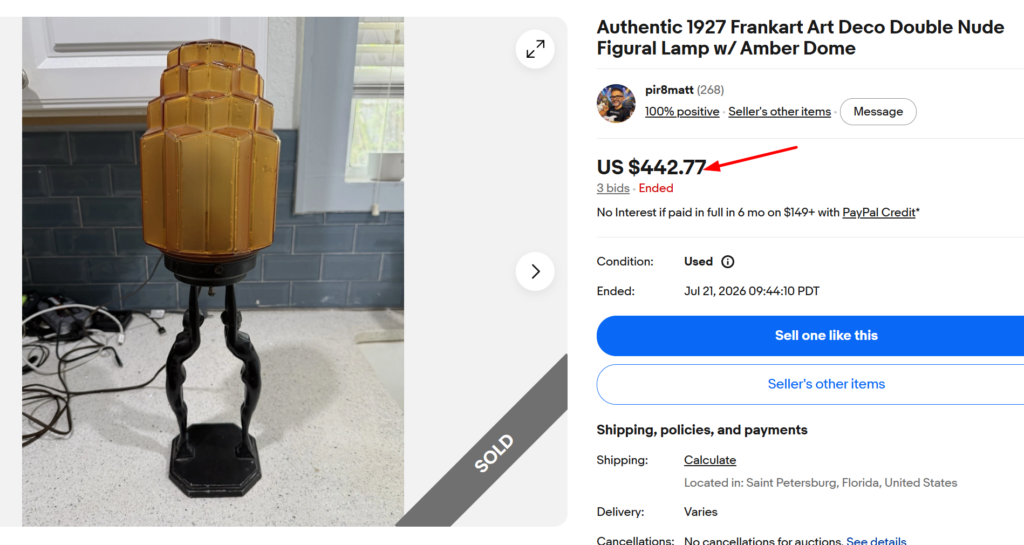
Sold for $442
Frankart Inc. made these figural Art Deco lamps from about 1921 to 1934. Arthur von Frankenberg designed nude female figures in white lead spelter with bronze, gold, or the classic green patina finishes and amber, green, or crackle glass shades.
Twin-nude table lamps, hoop girls, and figures with skyscraper glass shades are the most valuable.
Every genuine lamp is stamped “FRANKART INC.” with a patent number on the base. Repros also exist; they’re made with original molds, so use the patina, paint layering, and shade to confirm authenticity.
- Estimated Value: $400 – $4,500
- Production Years: c. 1921 – 1934
- What to Check: “FRANKART INC.” stamp, patent number
11. Stiffel Brass Hurricane Lamp
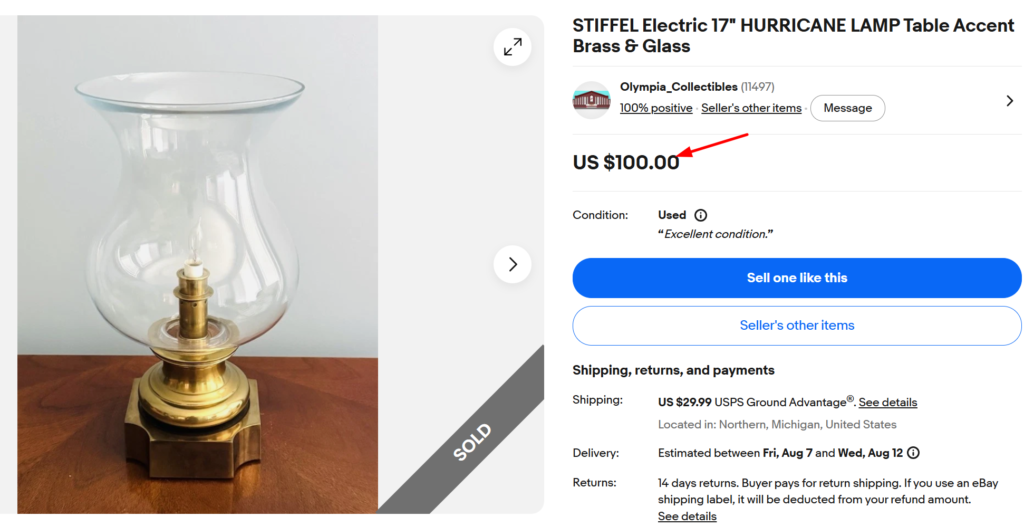
Sold for $100
Stiffel’s solid brass hurricane lamps are the classic mid-century table pieces. The build is heavy, the finish is polished brass, and the push-pull socket switch has a distinct mechanical click that reproductions never quite copy.
Weight is another big tell; genuine Stiffel pieces feel substantial. Original gold foil “Stiffel” labels are also reliable identification signs, but they fall off easily, so absence doesn’t mean fake.
Common brass lamps have modest value, but bouillotte styles and rare finishes are more valuable.
- Estimated Value: $50 – $500
- Production Years: c. 1932 – present
- What to Check: Gold foil label, push-pull switch
How Much Are Vintage Lamps Actually Worth?
The overall value of vintage lamps depends on the five key things, and they always work together.
- The maker matters most because a signed Handel or Tiffany piece plays in a different league than an unsigned lamp of the same era.
- The condition is next. A cracked shade, a replaced socket, or a repainted brass base can cut value in half.
- Rarity is where sleeper finds happen. Uranium glass Fenton lamps, first-edition rain lamps, and one-year Pairpoint patterns all trade for far more than their common cousins.
- Provenance helps if you can prove the piece came from a documented estate or collection.
- Market demand rounds it out, since certain styles rise and fall in collector interest every few years.
Also, if your old lamp looks like it’s worth $500 or more, get a professional appraisal before you sell.