
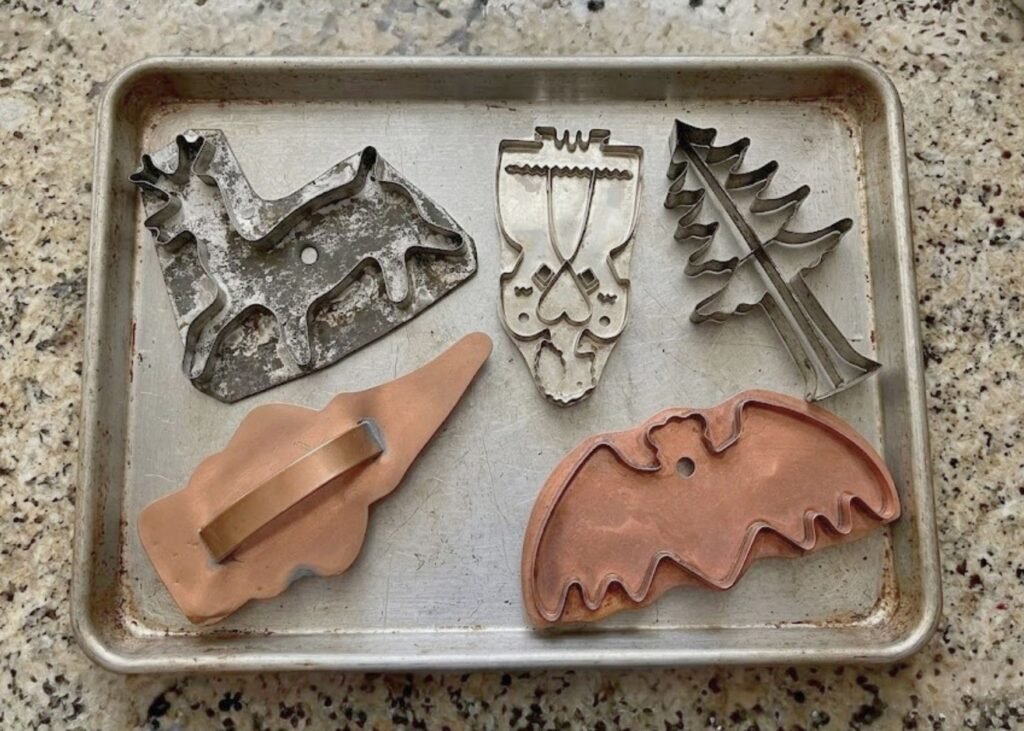
Cookie cutters are among the smallest kitchen collectibles. And that’s one of the reasons they’re mostly undervalued and overlooked. Honestly, most vintage cookie cutters sell for pocket change. A few, if you know what to look for, can be worth up to $500.
This guide shows you what makes an old cookie cutter valuable, how to spot the good ones, and specific rare examples for comparison and finding at flea markets or in your grandmother’s kitchen drawer.
How to Identify Vintage & Antique Cookie Cutters?
Identification of old cookie cutters is something beginners find challenging. Why? Because a lot of what gets sold as “antique” is really just mid-century. You need to know certain hidden details to know what it really is.
Here’s how you can identify vintage cookie cutters by different criteria.
By Era
Age is easiest to narrow down by material and construction. You can use this quick timeline:
- Pre-1900: Handmade tin cutters by tinsmiths. Soldered by hand, no maker marks, uneven edges, often dark patina, and light rust.
- 1900 to 1930: Machine-cut tin with more uniform seams. Some early aluminum starts appearing.
- 1930s to 1940s: Aluminum takes over. Red or green painted wooden handles are common.
- 1950s to 1960s: Red translucent plastic peaks (HRM, Loma, Aunt Chick’s, Tupperware). Aluminum still made alongside.
- 1970s to 1980s: Character licensing explodes. Hallmark, Wilton, Disney, Peanuts, Sesame Street sets are quite common.
By the Materials
The materials help in identification as much as marks do. Besides, not every old cookie cutter is tin; sometimes it’s just modern aluminum made to look like tin. So, identifying the materials matters a lot.
Tin is the oldest type of metal and usually the most expensive. Genuine old tin has a dark gray finish, solder marks on the reverse side or seams, and sometimes signs of wear or even rust. Fresh, shiny “tin” is usually a reproduction.
Copper starts showing up in the late 1800s, but really becomes popular with artisan makers like Michael Bonne in the 1980s. Weight and thickness matter here. Genuine handmade copper feels solid, not tinny.
Aluminum replaced tin from the 1920s onward. It’s light, doesn’t rust, and often carries painted wooden handles.
Plastic dates roughly from 1948 forward. Translucent red is the classic mid-century mark of Aunt Chick’s, HRM, and Loma.
By Construction Clues
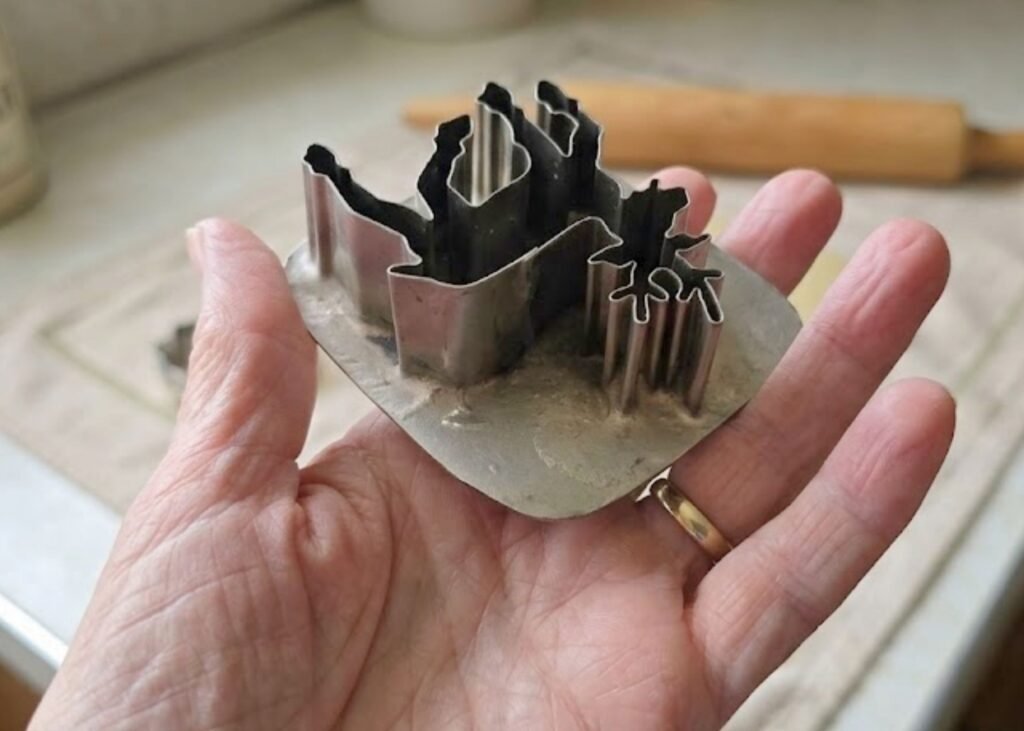
Pay attention to how the cutter is made. Genuine Handmade tin cutters have irregular soldering, slightly uneven cutting edges, and often a small back plate with air release holes.
The plate lets the dough push out. Look for those little holes. They’re a strong sign of a pre-1900 or early 1900s piece.
Machine-made cutters from the 1930s onward have uniform seams, cleaner edges, and often a stamped or painted maker mark. That’s not bad, but it does change the overall value.
By Maker Marks
The maker marks tell you who made the cutter, and also narrow down its date. However, most 19th-century cutters are unmarked, so provenance and construction do the talking. From the 1940s on, marks became more common.
Here are the names that matter the most:
- HRM / Educational Products started making translucent red plastic cutters in the late 1940s in Chicago, and their Christmas sets are the most collected mid-century pieces. Look for a small crown logo with “HRM Made in USA” molded into the back. Earlier pieces may also carry “Pat. Pend.” instead of the crown.
- Aunt Chick’s was invented in 1948 by Nettie McBirney of Tulsa, Oklahoma, an author of the “Aunt Chick” columns. Her patented pebbled interior kept dough from sticking, so cutters’ inside walls feel textured, and handles are marked “Aunt Chick’s.”
- Mirro Aluminum Company’s aluminum bakeware has been popular for decades, including their cookie cutters, cookie presses, and holiday tins. Examples are usually stamped “Mirro” on the strap or handle base. Green and red painted wooden handles are the classic 1930s to 40s Mirro look.
- Hallmark started producing licensed character cookie cutters in the 1970s. Their Peanuts sets, especially the jumbo Snoopy on Doghouse cutter, are quite collectible. Backs are stamped “Hallmark Cards” with a copyright date.
- Wilton is best known today for cake decorating. But their 1977 Sesame Street Cookie Decorating Kit and other character sets from the 70s and 80s are quietly collectible. Plastic cutters are stamped “Wilton” along with the year, which makes dating easy.
- Michael Bonne, popular as “America’s Favorite Coppersmith” by Martha Stewart herself, has hand-formed copper cutters using 1830s tools since the 1980s. Look for the “Michael Bonne Made It” or “MBM” handle stamp. Cutters marked MSL, MBM, or M were made for the Martha Stewart by Mail catalog and carry slightly different styling.
- Tupperware joined the game in the 1970s with plastic gingerbread and Christmas sets. Cutters are molded with “Tupperware” plus a mold number underneath. Complete original sets in their carrying tray are worth the most.
Note: Complete sets with original boxes almost always sell for two to three times what loose pieces bring. Never throw the box away.
11 Rare Vintage & Antique Cookie Cutters Worth Collecting
Below are the vintage cookie cutters that hold the highest value and collector interest today, with their key features and current values.
1. Michael Bonne Handmade Copper Cutters
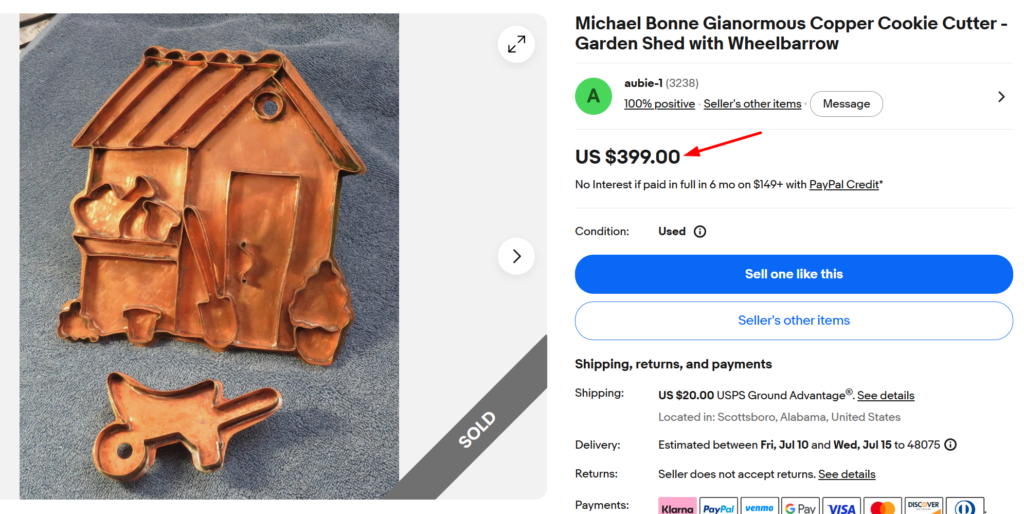
Sold for $400 (pair)
Michael Bonne’s “Gianormous” series is his oversized line, hand-formed from solid copper using tools from the 1830s. This garden shed-with-wheelbarrow piece is one of the more complex sculptural designs from the line.
The scarcity of the Gianormous line, plus the multi-piece composition, is what boosts the value. Original pieces are stamped with the “Michael Bonne Made It” or “MBM” handle mark. Also, watch for signs of amateur copper polishing.
- Estimated Value: $300 to $500
- Production Years: 1990s to 2010s
- What to Check: Stamped handle, solid back plate
2. German Springerle Wooden Double-Sided Mold
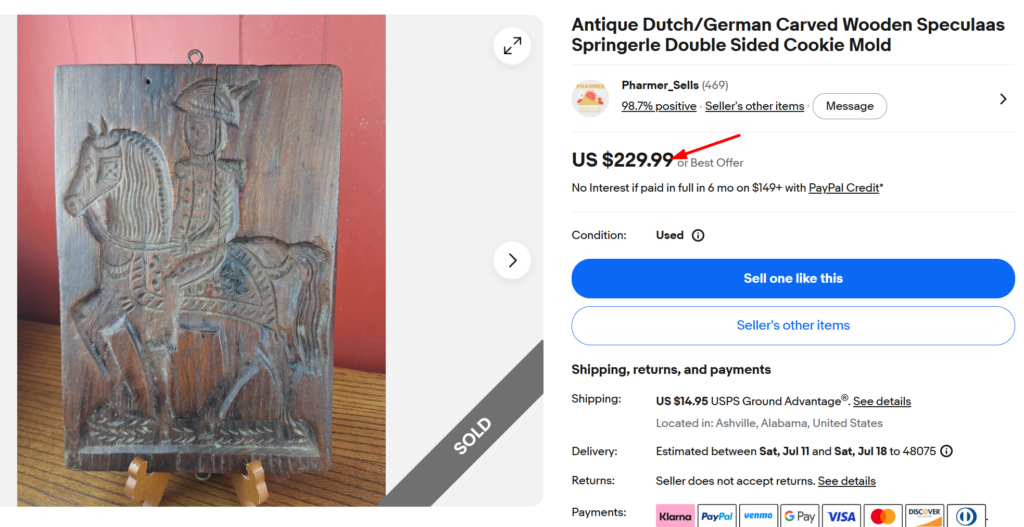
Sold for $230 (single)
This is a rare double-sided carved wooden cookie mold showing a mounted knight on horseback on one side, in the classic Dutch or German speculaas tradition, and a rooster on the other side.
These molds were used to press images into stiff spiced dough, so the cutter is really a picture mold, not a shape cutter. Still, they’re worth a lot, especially larger, double-sided molds with distinct scenes.
Your key age indicators are hand-carved (not routed) detail, split lines in the wood grain, honest surface wear, and often a hanging ring at the top.
- Estimated Value: $180 to $350
- Production Years: 1800s
- What to Check: Double-sided carving, wood cracks
3. Antique Heart in Hand Cookie Cutter
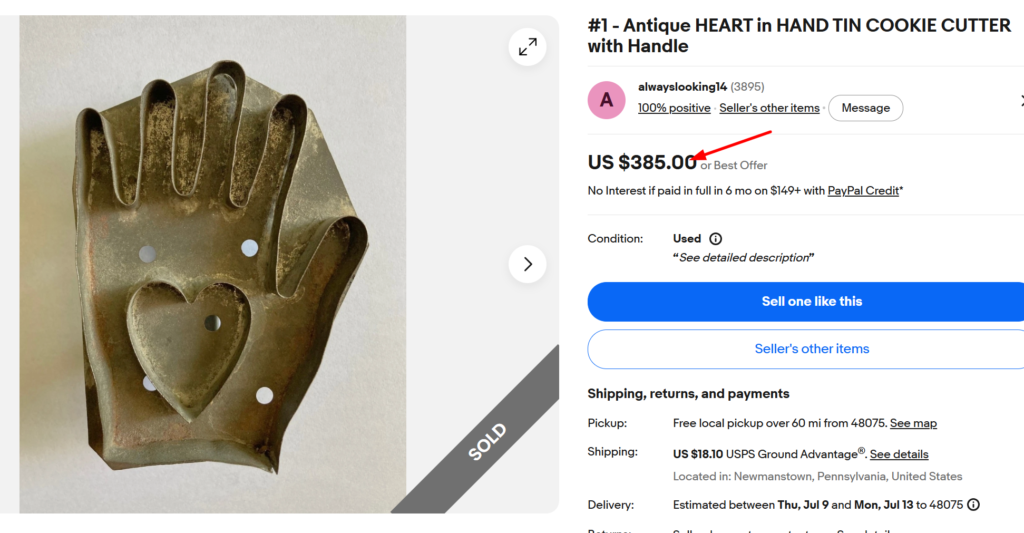
Sold for $385 (single)
The heart-in-hand is one of the most iconic Pennsylvania Dutch folk-art motifs. It symbolizes charity and friendship, and 19th-century tinsmiths made cutters in this shape by hand.
Look for a flatback with visible air holes, a soldered strap handle on the back, dark grey patina, and slightly uneven cutting edges from hand-shaping. Larger examples with intact original handles are the most valuable pieces.
- Estimated Value: $250 to $450
- Production Years: 1850 to 1900
- What to Check: Strap handle, air holes, patina
4. Martha By Mail Snowflake Cookie Cutters
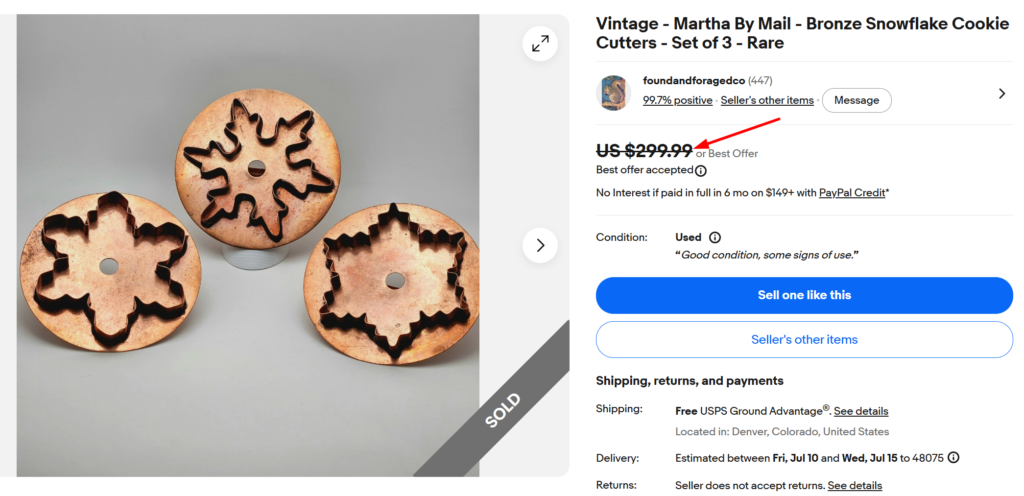
Sold for $300 (set of 3)
This bronze snowflake trio is one of the rarer Martha by Mail sets, since most catalog cutters were copper rather than bronze. Each snowflake has a slightly different point pattern.
The set came originally in a “Snow” branded box with a recipe and decorating booklet. The Martha by Mail catalog was discontinued in 2004, so nothing new is being made; the scarcity drives the value.
- Estimated Value: $250 to $400
- Production Years: Late 1990s to 2004
- What to Check: Bronze finish, distinct snowflakes, original box
5. Aunt Chick’s “Merry Christmas” Set with Box
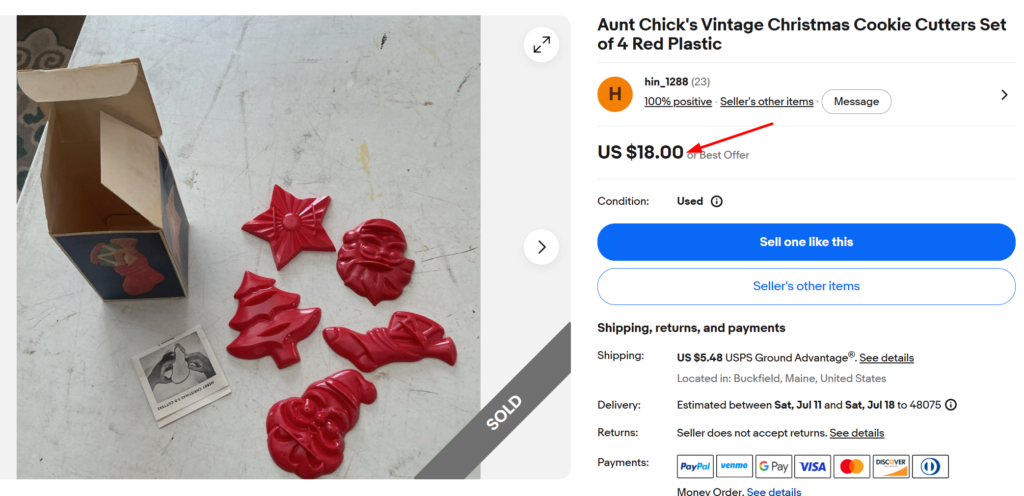
Sold for $18 (with box)
Nettie McBirney’s original 1948 Merry Christmas set had four translucent red plastic cutters. Santa Claus, a Christmas tree, a stocking with toys, and a star. These cutters feature Nettie’s patented pebbled interior, with textured inside walls.
The instruction sheet that came with the box shows a Merry Christmas photo of a hand pressing the tree cutter. Boxed sets like this one, even with light box wear, hold decent value.
- Estimated Value: $18 to $60
- Production Years: 1948 to the late 1950s
- What to Check: Pebbled interior, original box
6. Antique B Cukla Santa Tin Cutter
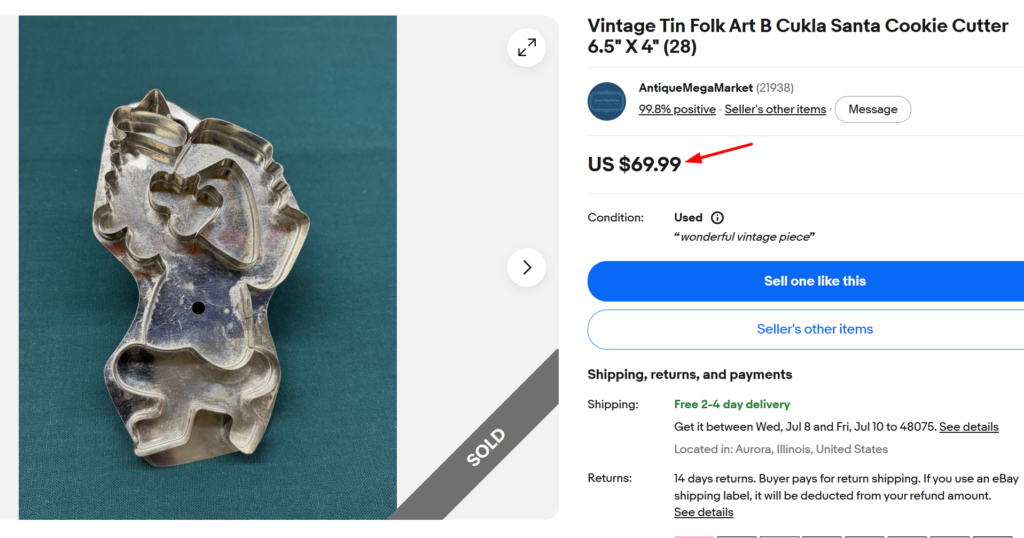
Sold for $70 (single)
Bill and Betsy Cukla have been hand-making tin cutters under the “Hammer Song” name since the early 1980s in Connecticut. This large 6.5-inch Santa is a signed folk-art piece.
Retired designs bring the strongest prices in this maker’s line; condition matters slightly less. Always check the back for the “c. B. Cukla” stamp to spot originals.
- Estimated Value: $50 to $120
- Production Years: 1980s to 2010s
- What to Check: Flatback, “c. B. Cukla” back stamp
7. Belsnickel Tin Cookie Cutter
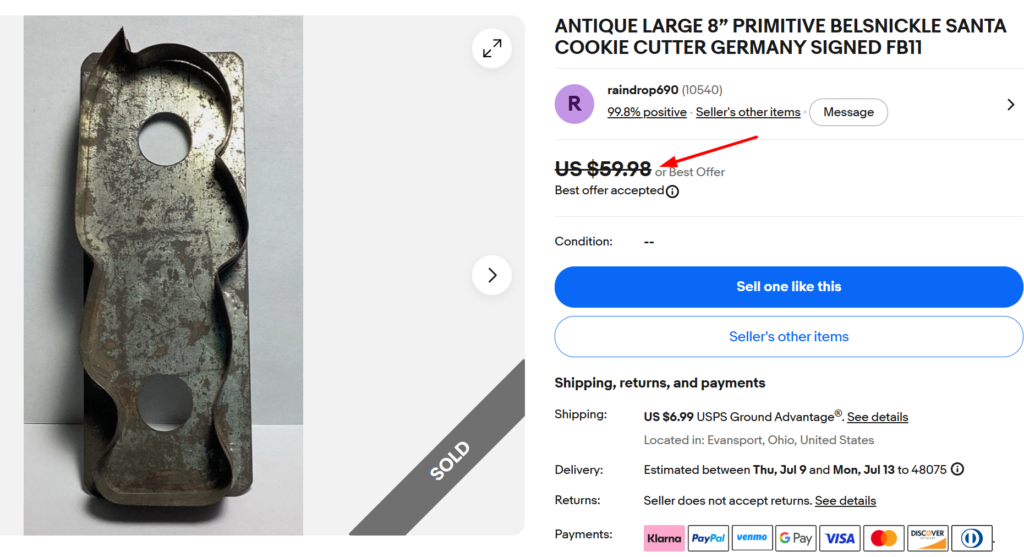
Sold for $60 (single)
Belsnickel was a fur-clad, switch-carrying Christmas figure from Pennsylvania German folk tradition. These cutters are among the most collected antique Christmas pieces.
Original cutters feature tall flatback with air holes punched through the top and body. Signed or stamped examples like this one, marked “Germany” and “FB11,” suggest an early 20th-century German import rather than a purely American tinsmith piece.
Height also matters here; anything over 8 inches is rare and valuable.
- Estimated Value: $50 to $150
- Production Years: Late 1800s to early 1900s
- What to Check: Flatback with punched air holes
8. Hallmark Peanuts Snoopy Cookie Cutters
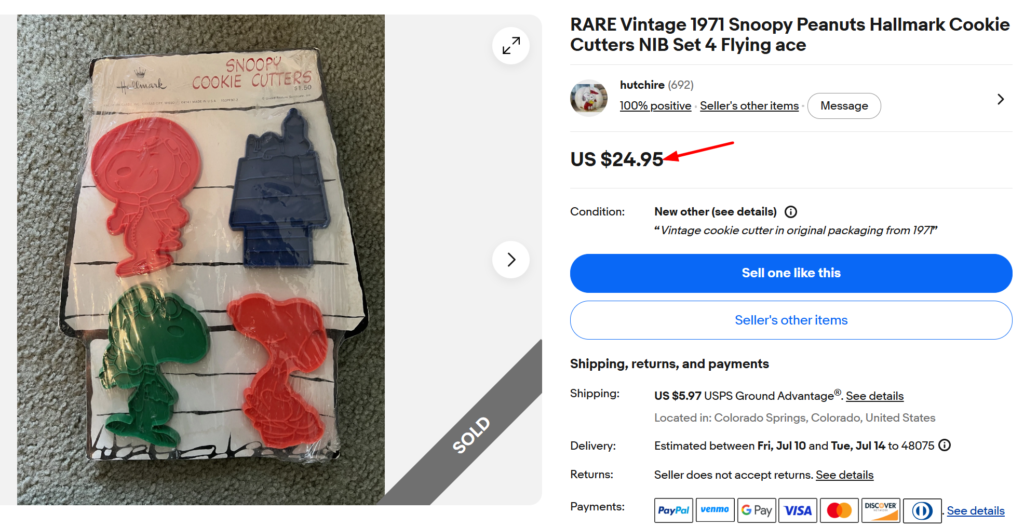
Sold for $25 (pack of 4)
This is a factory-sealed 1971 Hallmark’s Snoppy cutter set, including Snoopy as the Flying Ace, Snoopy on his doghouse, Woodstock, and Charlie Brown. New-in-package examples like this one are more valuable than loose cutters from the same set.
Verify the Hallmark crown logo, the copyright date, and check that the cellophane bubble is intact, for top value.
- Estimated Value: $25 to $75 (sealed NIB)
- Production Years: 1971 to mid-1970s
- What to Check: Sealed card, 1971 date
9. Wilton Sesame Street Cookie Cutters
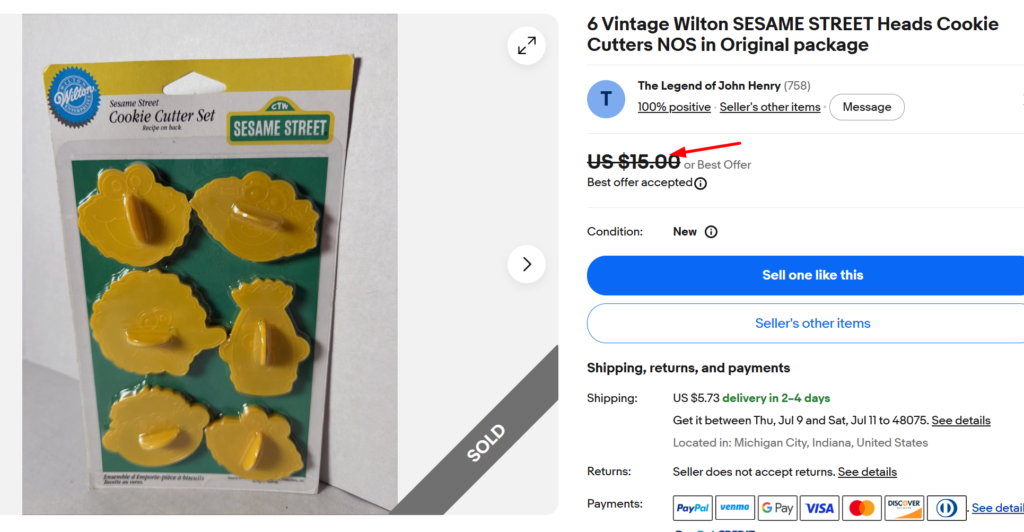
Sold for $15 (pack of 6)
This is a factory-sealed pack of Wilton’s set of six Sesame Street character head cutters in yellow plastic. Big Bird, Bert, Ernie, Cookie Monster, Oscar the Grouch, and Count von Count. All molded in the classic Wilton “yellow” of their late 1970s and 80s character line.
The “Recipe on back” panel on the card is a giveaway that this is a store-hung retail package. Intact original packaging is essential for value here.
- Estimated Value: $15 to $50 (sealed NOS)
- Production Years: Late 1970s to 1980s
- What to Check: Sealed card, 6 characters
10. Tupperware Cookie Cutters
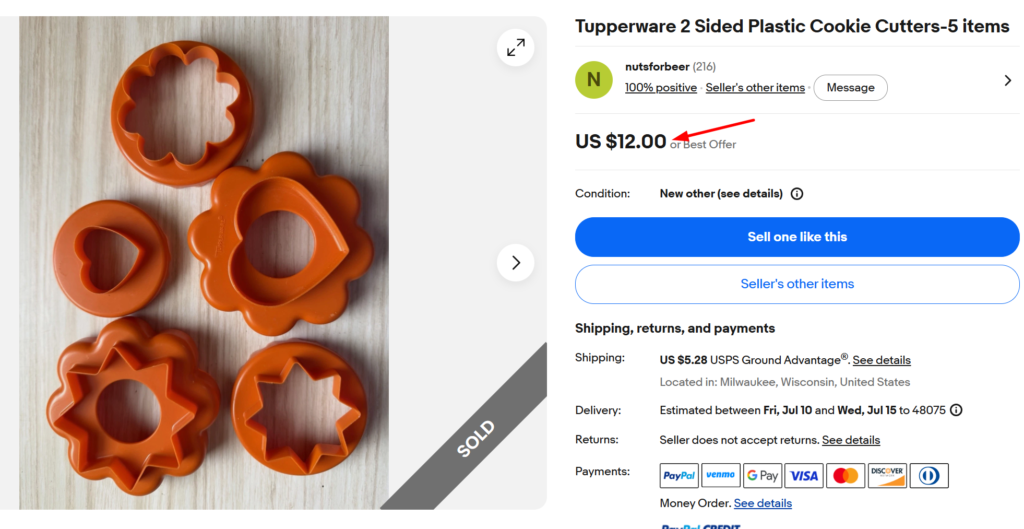
Sold for $12 (set of 5)
Tupperware sold two-sided plastic cutters in orange, brown, and mustard yellow through home party sales in the 1970s and 80s. Each piece has a different shape on each side, so you get twice the cutting shapes in the same tool.
The shapes are common, so check the back or edge for a molded “Tupperware” mark and a small mold number to spot originals.
- Estimated Value: $10 to $30
- Production Years: 1970s to 1980s
- What to Check: Tupperware mark, mold number
11. Mirro Colored Handle Cookie Cutters
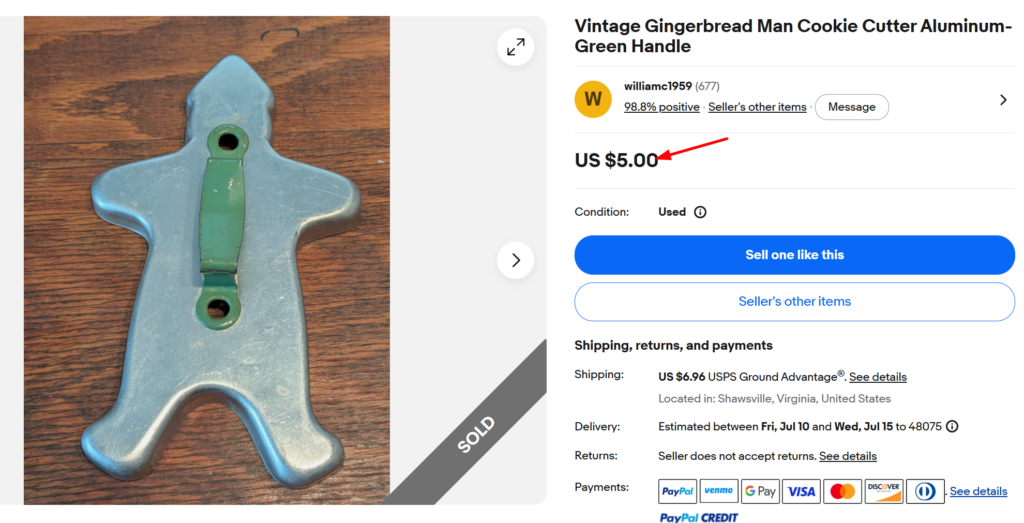
Sold for $5
Green-handled Mirro aluminum cutters from the 1930s to 40s are highly collectible, particularly the gingerbread man. The green-painted strap handle riveted to the aluminum body is a Mirro signature from that era, before they switched to red handles and unpainted aluminum in the 1950s.
Genuine period paint should show uneven wear where fingers gripped the handle. Freshly repainted handles or bright shiny aluminum are signs of touch-ups.
- Estimated Value: $5 to $25
- Production Years: 1930s to 1940s
- What to Check: Green paint wear, riveted strap
What Affects the Value of Vintage Cookie Cutters
As you can see, prices for vintage and antique cookie cutters split into three clear tiers.
Most vintage cutters from the 1950s and 60s still sell in the $5 to $20 range. Better mid-century pieces with wooden handles, complete sets, or original boxes typically bring $30 to $80. And the pre-1900 handmade tin, signed artisan copper, and rare character sets can push $150, $300, or more.
The value depends on the following factors:
- Age. Pre-1900 handmade tin sits at the top. Anything after 1950 is usually in the $5 to $50 range unless the piece is rare or complete.
- Maker. A signed Michael Bonne copper cutter easily outsells an unmarked one of the same size. A boxed Aunt Chick’s set beats loose plastic cutters ten times out of ten.
- Material. Tin and copper generally dominate aluminum and plastic in terms of value. But the condition can change that.
- Rarity of shape. Figural shapes like circus animals, folk art figures, Uncle Sam, Belsnickel, and unusual vehicles bring premiums. Common hearts and stars, less so.
- Completeness. Full sets with the original box, insert, and instructions bring the biggest money. A single loose cutter from a boxed set is worth a fraction.
- Condition. Heavy rust, missing handles, broken plastic, cracks, and repairs all cut value fast. Light patina on tin is fine, but deep rust holes are not.
Vintage cookie cutters are one of the easiest antiques to start collecting, since most pieces are affordable. But knowing which ones are actually genuine and worth the money is a must.