
Any toy show that you visit will have people saying, “I had one of those!” That’s what makes those old toys from the past still attractive to collectors even years after their release.
Let me take you to revisit the 19 most famous old toys that earned their fame over the years, each with a quick backstory and the rare models collectors hunt today.
List of 19 Most Famous Old Toys of All Time
1. Lionel Electric Trains (1900)
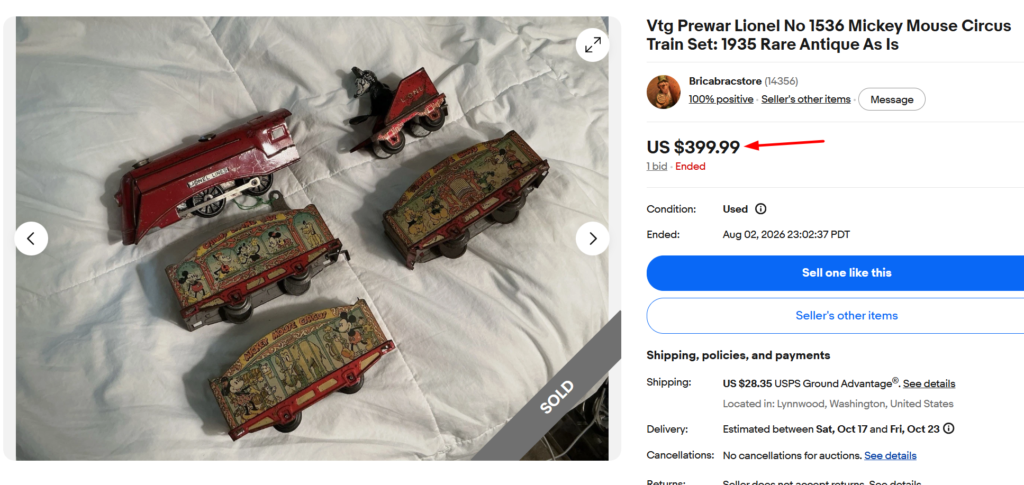
Sold for $400
Joshua Lionel Cowen designed the “Electric Express” toy train in 1900 to use it as a shop display, but buyers wanted the train itself. The era of Lionel is divided by collectors into prewar (before 1945) and post-war (1945-1969). Prewar models with original boxes get the most attention.
Most collectible Lionel Trains:
- 1930s Blue Comet (No. 400E) standard Gauge set
- Prewar State Set (No. 408E) with cars named after U.S. states
- Postwar No. 2332 GG1 set
- 1957 “Girls’ Train” (rare to find)
2. The Teddy Bear (1902)
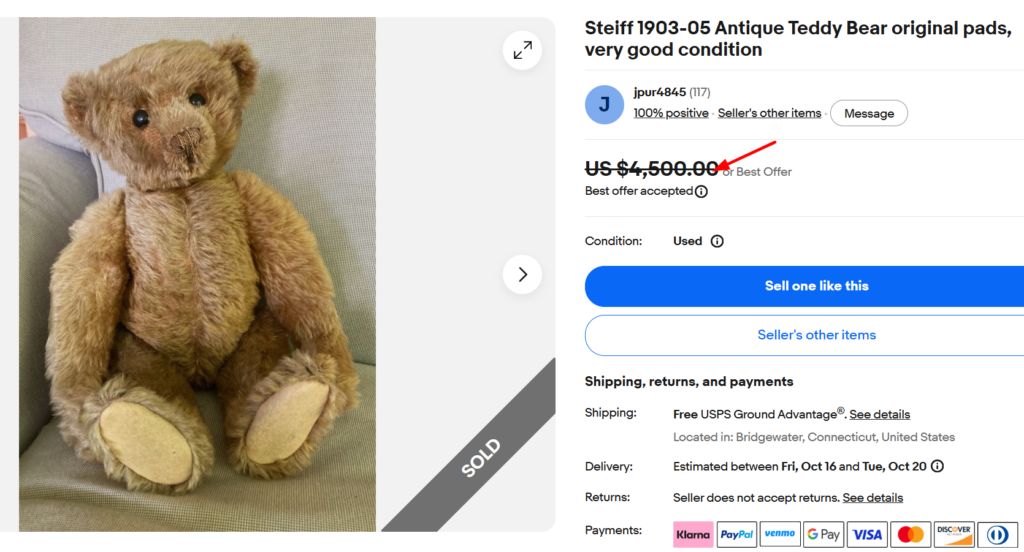
Sold for $4,500
Teddy bears were invented twice, both models in 1902.
The first one was made by Morris Michtom in America, based on a political cartoon showing Theodore Roosevelt out hunting. The second was a jointed mohair bear by Germany’s Richard Steiff.
Steiff’s trademark “button in ear,” introduced in 1904, remains the first thing collectors look for.
Other Collectible Teddy Bears:
- Early Steiff bears with the ear button
- Steiff center-seam bears
- Early Ideal bears with triangle-shaped heads
- Farnell bears (who made the real Winnie-the-Pooh)
3. Radio Flyer Wagon
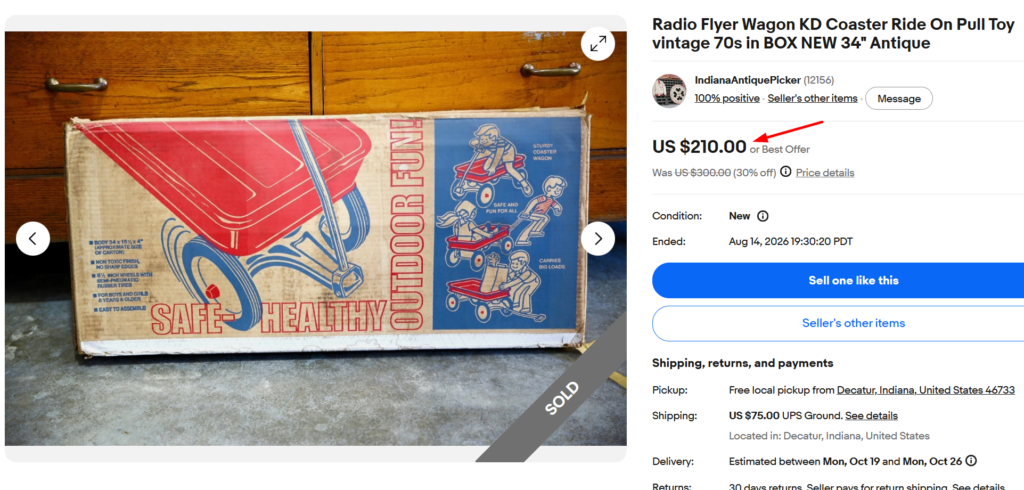
Sold for $210 (in box)
Antonio Pasin, a cabinetmaker, began making wooden wagons in Chicago in 1917. But in the late 1920s, he switched from wood to stamped steel and named his wagons after aircraft and radio.
The collectors seek the Streak-O-Lite wagon of the 1930s that had headlights and prewar wagons with original paint.
4. Lego (1932)
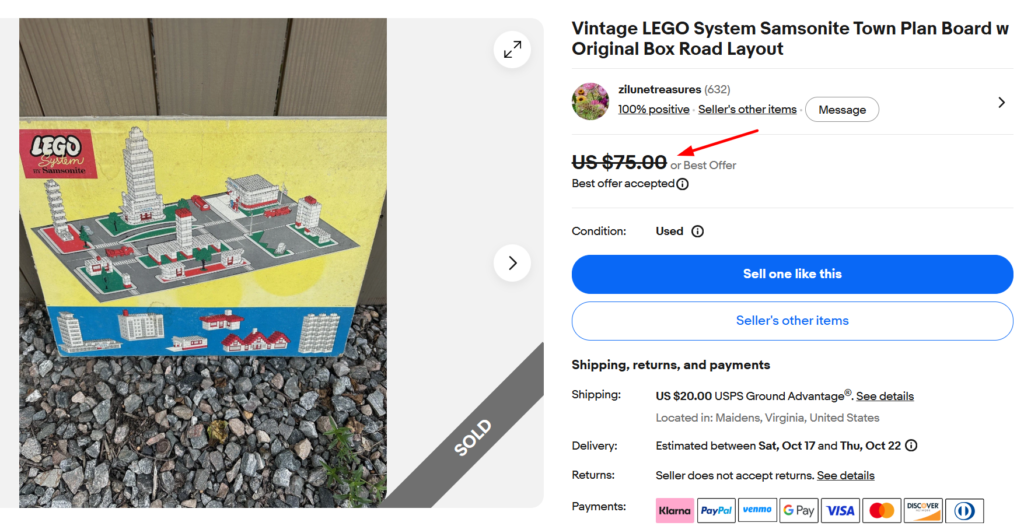
Sold for $75
LEGO started in Denmark in 1932 under Ole Kirk Christiansen. The first toys were wooden toys, named from the Danish phrase “leg godt,” meaning “play well.”
Plastic bricks were introduced in 1949, and today’s popular stud-and-tube brick design came out in 1958. Since then, LEGO’s legacy has continued.
What Vintage LEGO Collectors Seek:
- First plastic Automatic Binding Bricks (1949 to 1953) with hollow bottoms.
- Town Plan sets from the 1950s
- Classic Space sets (1978)
5. Monopoly (1935)
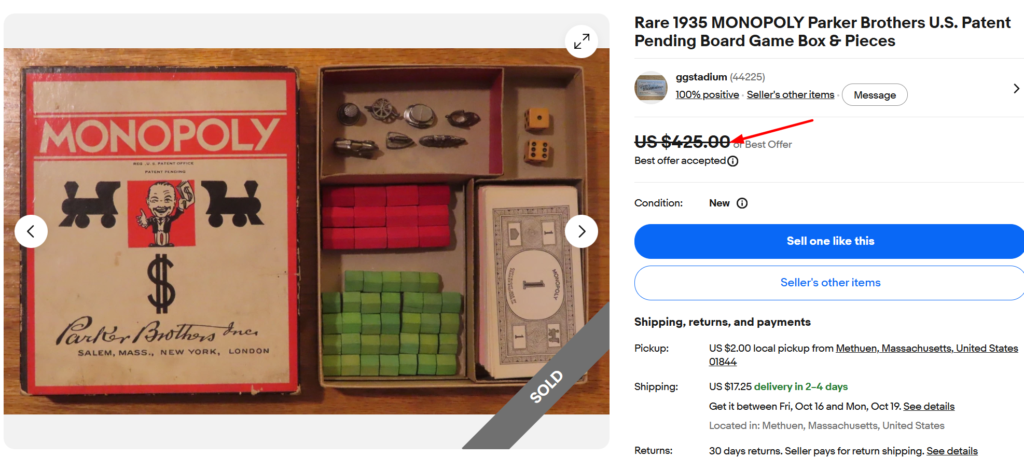
Sold for $425
Monopoly evolved from Lizzie Magie’s 1904 Landlord’s Game. Charles Darrow sold his own game on hand-made oilcloth boards and in white boxes before Parker Brothers acquired the patent in 1935. Early Parker sets with their original tokens and cards are the ones to watch.
6. Slinky (1940s)
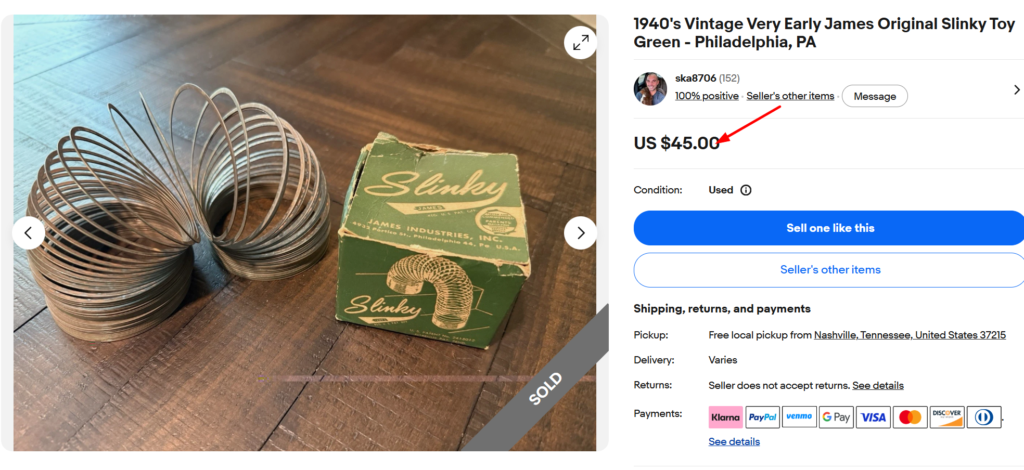
Sold for $45
In 1943, naval engineer Richard James saw a spring falling down and thought of making a toy. That’s how Slinky was made, and it sold out at Gimbels in Philadelphia in November 1945.
Collectors search for the early blue-black Swedish steel Slinkys and the Slinky dog that came in 1952.
7. Tonka Trucks (1947)
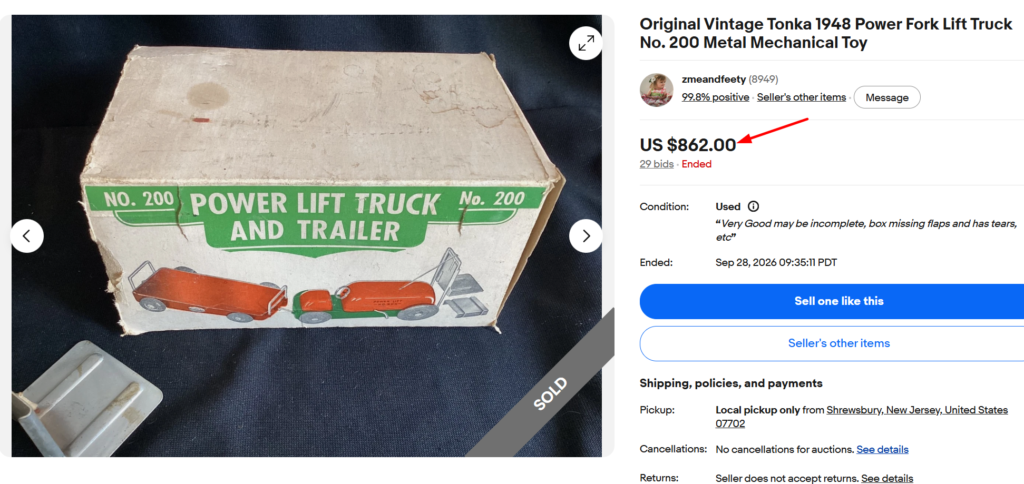
Sold for $862
Minnesota-based Mound Metalcraft was initially set out to make garden tools, but because of the success of its pressed-steel trucks, it was renamed Tonka Toys in 1955.
The name came from a Dakota Sioux word meaning “great” or “big.” Early trucks were built tough; paint wear is expected, but it’s the original decals that drive their value.
Most collectible Tonka Trucks:
- No. 100 Steam Shovel from 1947 (One of the first 2 Mound Metalcraft toys)
- No. 150 Crane (1947)
- 1950s semis and fire trucks
- Mighty Dump Truck (1964)
8. Mr. Potato Head (1950s)
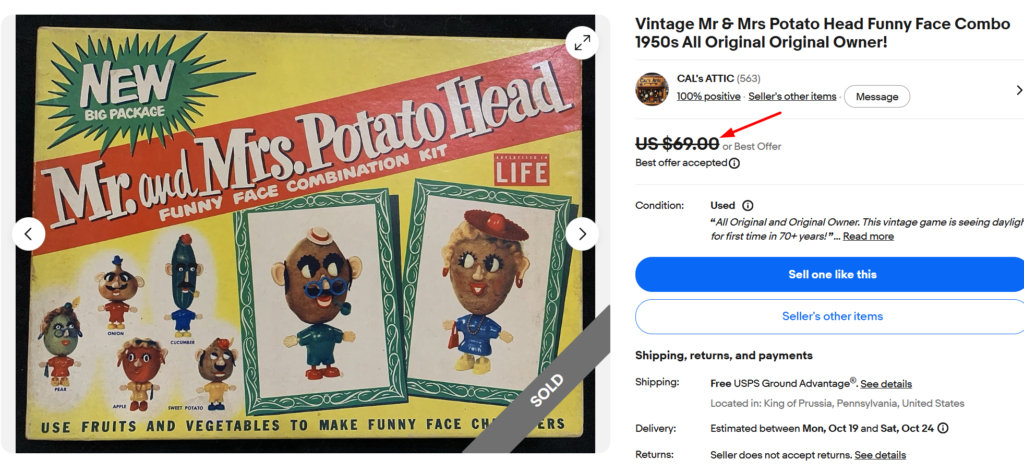
Sold for $70
Hasbro launched Mr. Potato Head in 1952, and it went on to become the first toy to be advertised on TV. The idea behind the toy actually came from George Lerner.
Despite the name, early kits had no potato, since kids used a real one. And collectors love those parts-only kits, the 1953 Mrs. Potato Head and boxed sets from before the 1964 plastic body.
9. Matchbox Cars (1953)
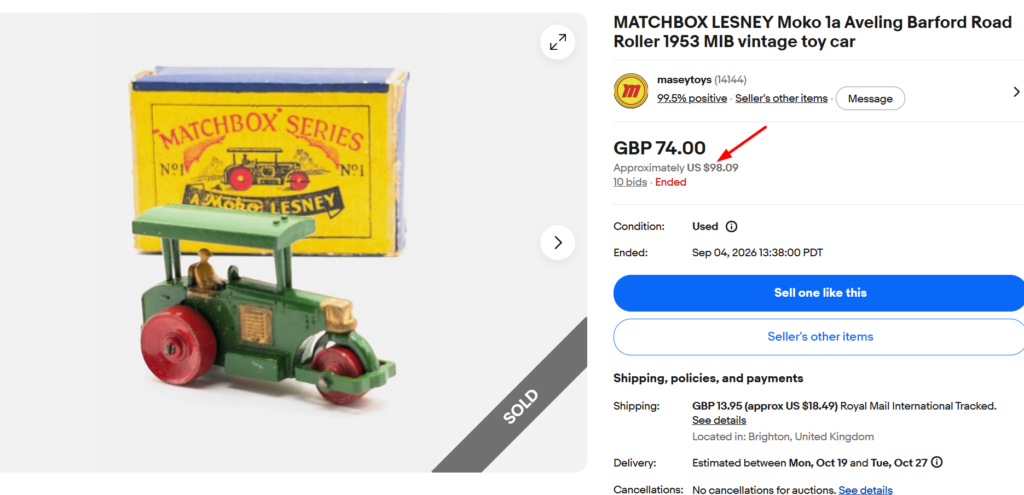
Sold for $98
Jack Odell designed a miniature road roller so that his daughter could carry it to school inside a matchbox. Then the English company Lesney Products released the Matchbox line in 1953.
The wheels of earlier Matchbox cars were made of metal, and those of later ones were silver, gray, and black plastic.
Old Matchbox cars collectors hunt:
- “A Moko Lesney” boxed models
- Pre-Superfast (before 1969) regular-wheel cars
- Coronation Coach (1953): Lesney’s first million-seller
10. Barbie (1959)
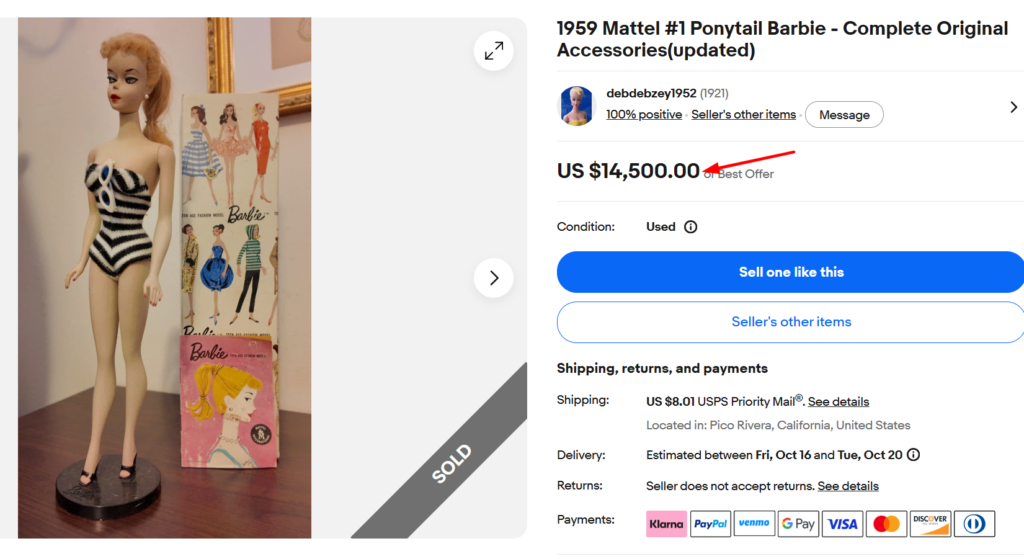
Sold for $14,500
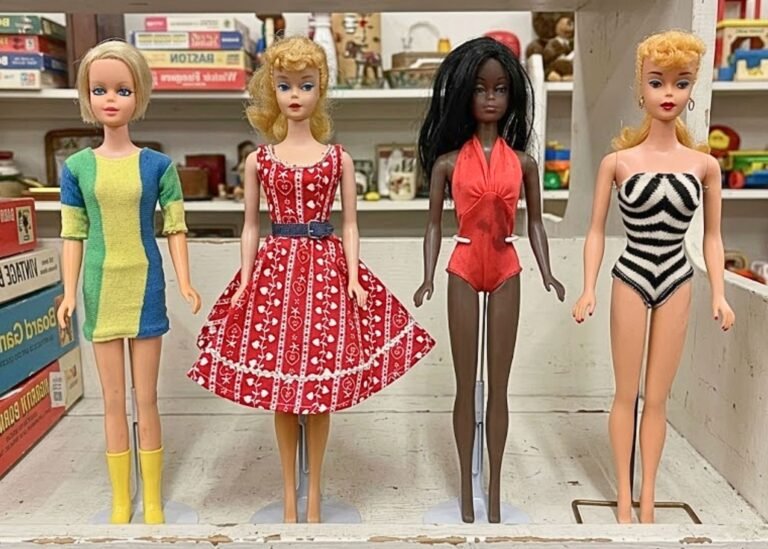
The credit for Barbie dolls goes to Ruth Handler, who noticed that her daughter enjoyed playing grown-up games with paper dolls and convinced Mattel to make an adult fashion doll.
Barbie debuted at the New York Toy Fair in March 1959, wearing a black-and-white striped swimsuit and a ponytail. The rest is history.
Most Valuable Barbies to find:
- 1959 #1 Ponytail Barbie (copper tubes in the foot holes).
- 1959 #2 Ponytail Barbie (foot holes without tubes)
- 1961 Bubble Cut Barbie
- Original Ken (1961)
Handy Tip: Early Barbies are dated using their feet, face paint, and hair, so be careful when determining whether one is a #1 Barbie.
11. Etch A Sketch (1960)
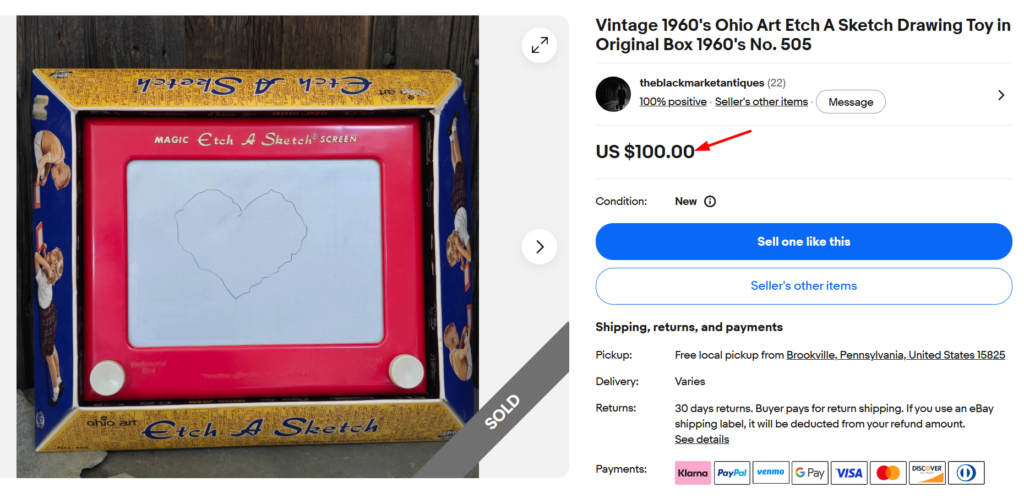
Sold for $100
An Etch A Sketch toy works with aluminum powder and small plastic balls to let kids draw on the screen.
French electrician André Cassagne unveiled his version, “L’Écran Magique,” at the 1959 Nuremberg Toy Fair. There, Ohio Art bought it, named it Etch A Sketch, and launched it in July 1960 for only $2.99.
The red border and white knobs are virtually the same, so collectors use the packaging to date the model. Earliest packed examples can fetch $100.
12. G.I. Joe Figures (1964)
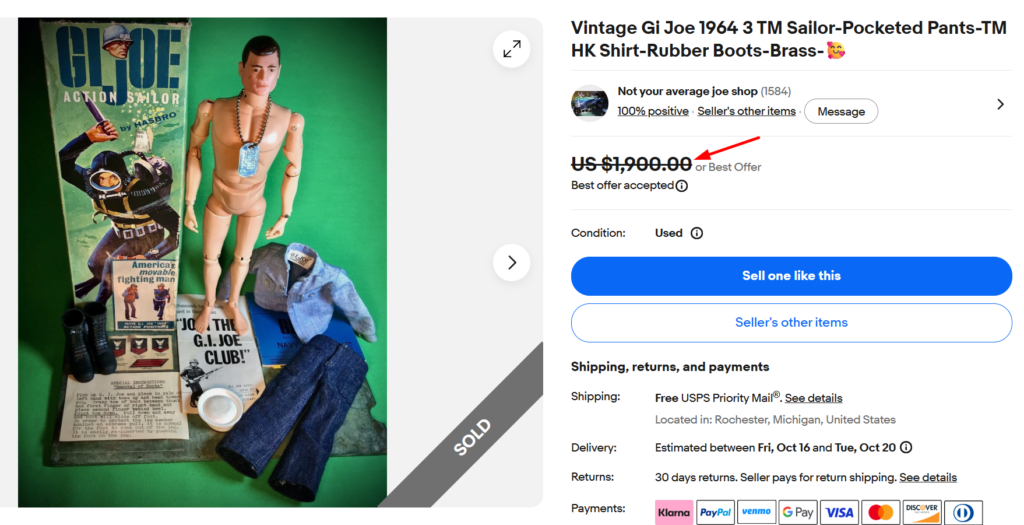
Sold for $1,900
These are among the most popular 1960s toys. Hasbro introduced the G.I. Joe toy line in 1964 as a “movable fighting man” that was 12 inches tall. The term “action figure” was used instead of “doll,” making it easy to market to boys.
There were initially four Joes, representing the Army, Navy, Marines, and Air Force. They all have a tiny scar on the right cheek, helping to distinguish authentic Hasbro Joes from fakes.
Most sought-after G.I. Joe Figures:
- 1964 first-year figures: Soldier, Sailor, Marine and Pilot, ideally boxed.
- Action Nurse (1967)
- Adventure Team (1970s)
- A Real American Hero (1982) with card
13. Hot Wheels (1968)
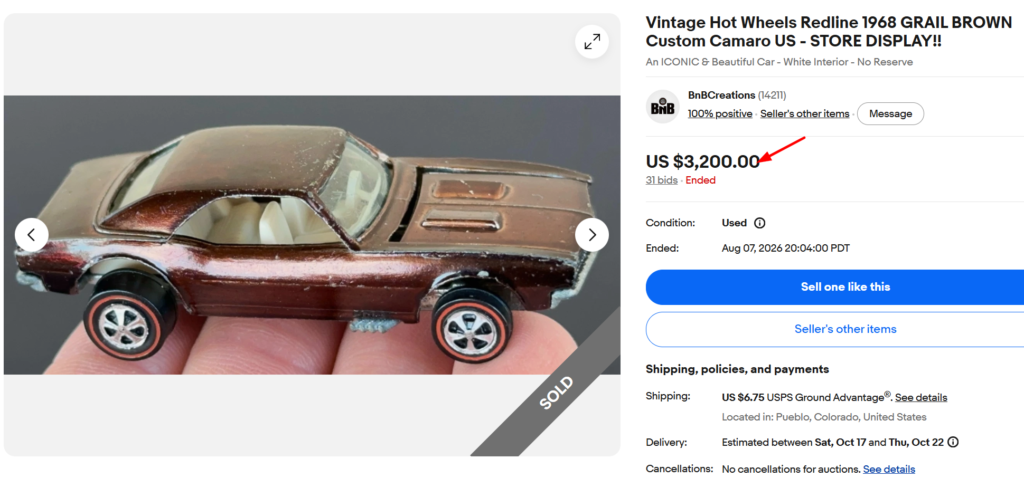
Sold for $3,200
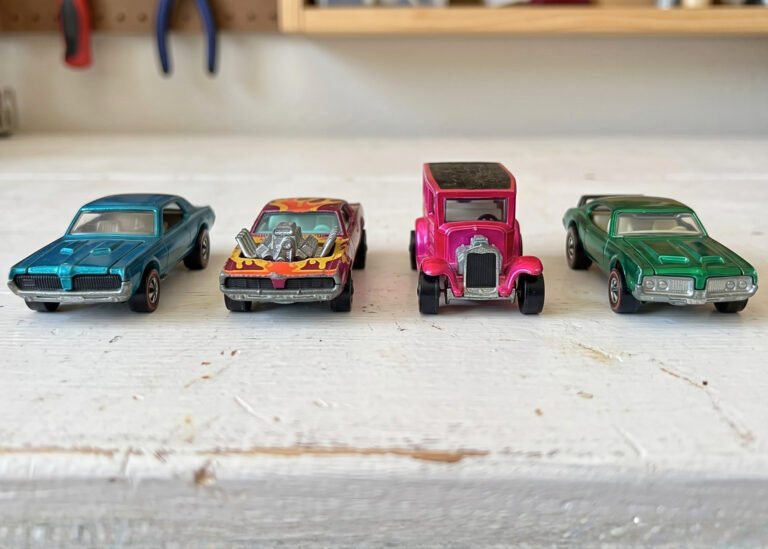
Mattel released Hot Wheels in 1968 to outmarket Matchbox Cars. The first cars hit the market in 1968 with their speedy, frictionless wheels, California custom design, and Spectraflame colors on metal.
Cars made through 1977 have a red stripe on the tires and are popular as “Redlines.” That stripe is what differentiates a later model from the original ones.
Highest-selling Hot Wheels cars:
- The first “Sweet 16” cars (1968), including the Custom Camaro
- Pink Rear-Loading Beach Bomb (1969)
- Rare Spectraflame colors, like hot pink and other scarce shades
14. Rubik’s Cube (1974)
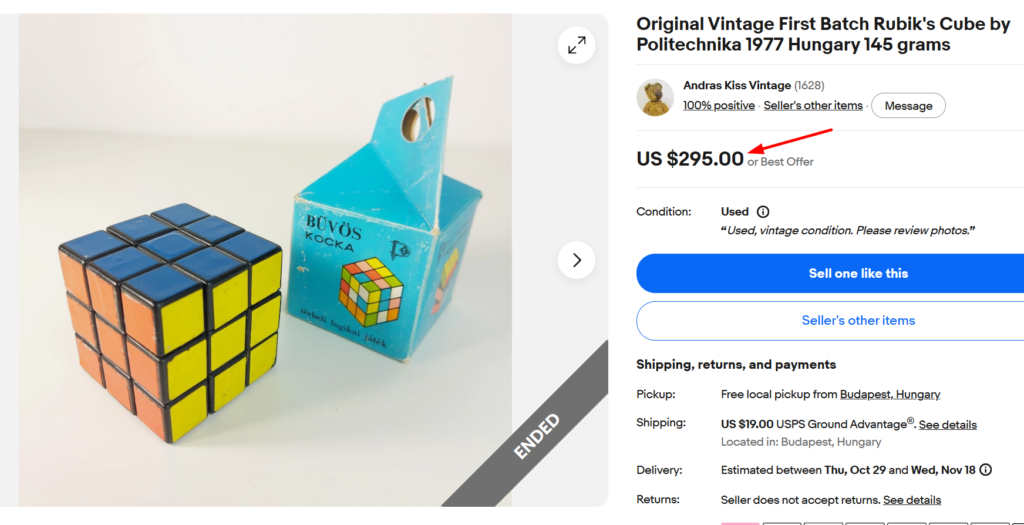
Sold for $295
Ernő Rubik first made the Rubik’s Cube in Budapest in 1974, and Ideal Toy Company marketed it internationally in 1980. The original Hungarian “Magic Cubes” from 1977 and the first edition Ideal Cubes (which may not have a logo on the white face) are the most collectible today.
15. Star Wars Kenner Action Figures (1978)
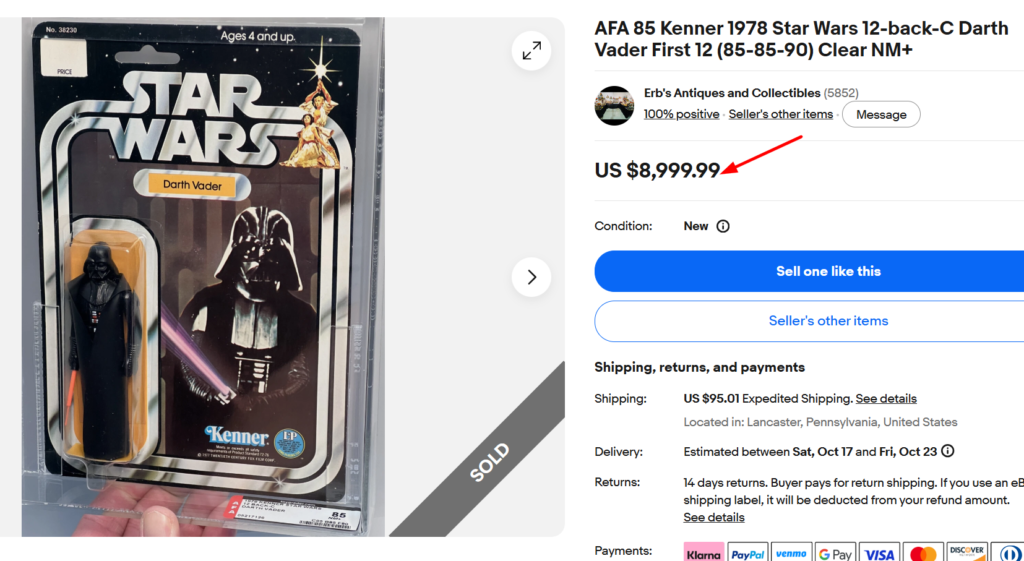
Sold for $9,000
The Kenner company got the Star Wars toy license but could not make figures by Christmas 1977. So, they introduced an “Early Bird Certificate Package” that children mailed in. The figures first arrived in early 1978.
The first 12 figures came in packages known today as “12-backs”. The series continued until 1985. Sealed and carded Original 12-back figures are the most popular.
16. Cabbage Patch Kids (1983)
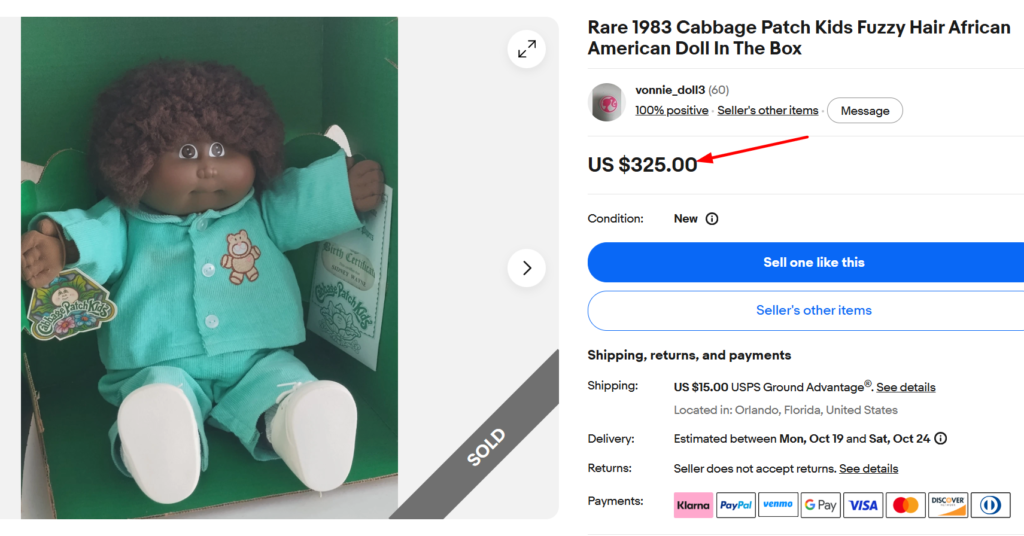
Sold for $325
Xavier Roberts started with hand-stitched dolls called “Little People,” sold with adoption papers at Babyland General Hospital in Cleveland. Each one was one of a kind, all signed by hand.
Coleco released plastic-headed Cabbage Patch Kids in 1983, which quickly became a hit. The first-year dolls have a black signature on the bottom as an ID.
17. Transformers (1984)
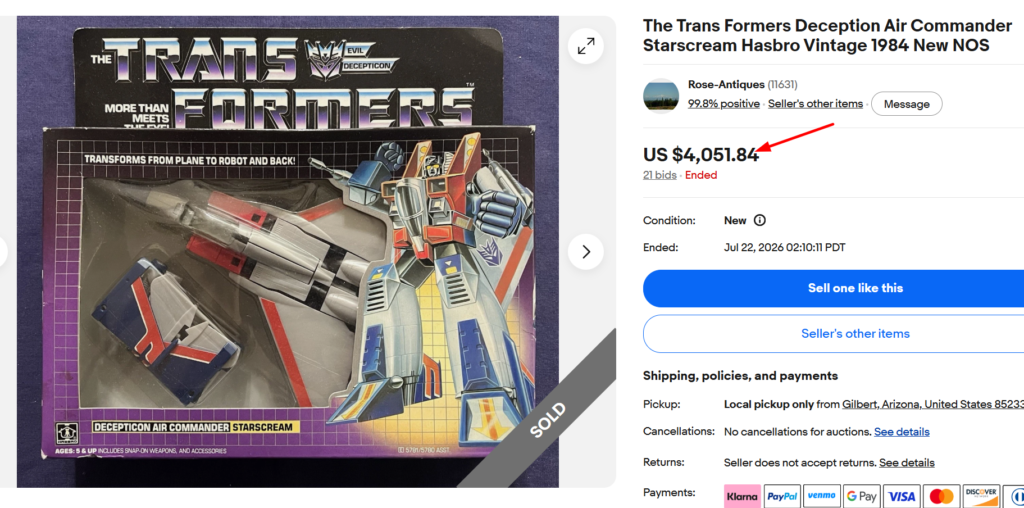
Sold for $4,051
The Transformers debuted in 1984 with a cartoon that instantly made them popular. Hasbro made these based on toy robots from Japan’s Takara, specifically from the Diaclone and Micro Change lines.
The toys from 1984 to 1990 are usually referred to as “Generation 1” or “G1,” and these are the most collectible ones, especially with all the weapons and accessories. Packed ones sell for thousands of dollars today.
Most famous Transformers of all time:
- Optimus Prime (1984)
- Megatron (1984)
- Jetfire (1985)
- Omega Supreme (1985)
- Fortress Maximus (1987)
18. Beanie Babies (1993)
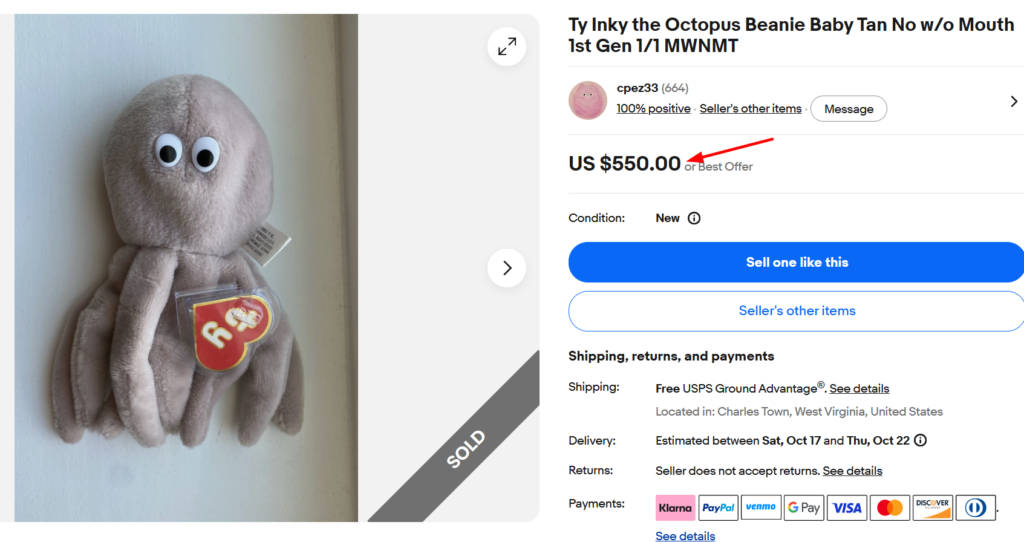
Sold for $550
Ty Warner launched its Beanie Babies line at the toy fair in New York in 1993. They hit the market in 1994 for about $5, and by late 1995, people lined up to get theirs.
Ty discontinued the popular designs on purpose, which then drove the craze and now drives the collector value. But most sell for very little today, so check tag details instead of trusting “rare” claims online.
Rare Beanie Babies to look for:
- The Original Nine (1993)
- Early swing tags (1994 to 1995)
- Royal Blue Peanut
19. Tickle Me Elmo (1996)
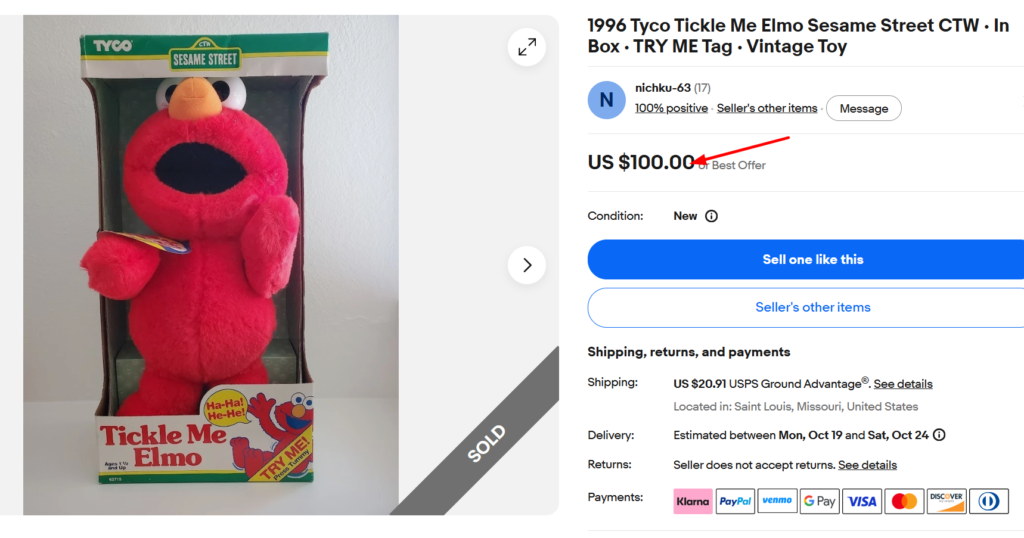
Sold for $100
The Tickle Me Elmo doll was the hot Christmas gift of 1996 when Rosie O’Donnell showed it on TV. The dolls, which originally sold for $28.99, later resold for as much as $1,500. Collectors love the original 1996 Tyco version in boxes.
What Makes an Old Toy Collectible (and Worth Money)?
Age is just one thing; it alone doesn’t make an old toy valuable. Other factors that determine the final value are:
- Original box – Packaging can matter as much as the toy.
- Condition – Clean, working toys with original paint win.
- First editions – Early production runs draw the most interest.
- Completeness – Missing parts drag value down.
- Rarity – Short runs and odd variations are hardest to find.
The most famous old toys were loved hard and played with too much. So, clean, complete, and boxed examples are hard to find now. Before you donate your childhood toy box, see if you have one of the most popular ones.