
That cookie jar shaped like Santa Claus on grandma’s kitchen counter after forty Christmases might actually be worth way more than the cookies that have been stored in it.
Vintage Christmas cookie jars by companies like Fitz and Floyd, McCoy, Lenox, and Holt-Howard have become one of the hottest Christmas collectibles. This list highlights rare vintage Christmas cookie jars every collector is looking for.
How to Spot a Rare Vintage Christmas Cookie Jar (Easy Checklist)
It is not that challenging to tell the difference between a rare Christmas cookie jar and a regular piece. You just have to turn the jar upside down and check these things:
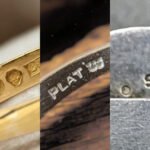
- Maker’s name on the base – Look for names like McCoy, Fitz and Floyd (FF), Lenox, Spode, Holt-Howard (HH), Napcoware, or Pfaltzgraff, with either a copyright date or item number. Stamp markings identifying McCoy pottery didn’t begin until about 1938, so earlier McCoy pieces could be unmarked.
- Country of origin – “Made in USA” indicates the older American potteries. “Made in Japan” indicates the newer potteries like Holt-Howard and Napco. “Made in China” is nearly always a sign that the piece was made after the 1990s.
- Original lid – This is critical to remember, above all else. If the lid on the jar is not original but a replacement, the value of the whole piece drops by half.
- Paint and glaze condition – Cold-painted details (paint added after firing instead of below the glaze) fade quickly. An intact, undimmed paint job on a jar dating from the 1950s or 1960s will increase its value significantly.
- Clay color underneath the foot ring – The genuine vintage McCoy has a buff, tan, or gray clay underneath the glaze. A white clay underneath the “McCoy” marking on a jar is a warning.
- Crazing pattern – Fine, uneven micro-cracks in the glaze are normal on old jars. Too uniform, too obvious a pattern usually means a modern fake that’s been artificially aged.
Easy Tip: Cookie jars are one of the most-faked American pottery pieces. If the price seems too low for a “McCoy Christmas Tree” listing, it’s probably fake. So, always cross-check the shape with a genuine reference list.
Most Valuable Vintage Christmas Cookie Jars That Sell Big Today
Below are some of the most collectible Christmas-themed cookie jars from the top makers, their key features, and their current market values.
1. McCoy Christmas Tree Cookie Jar
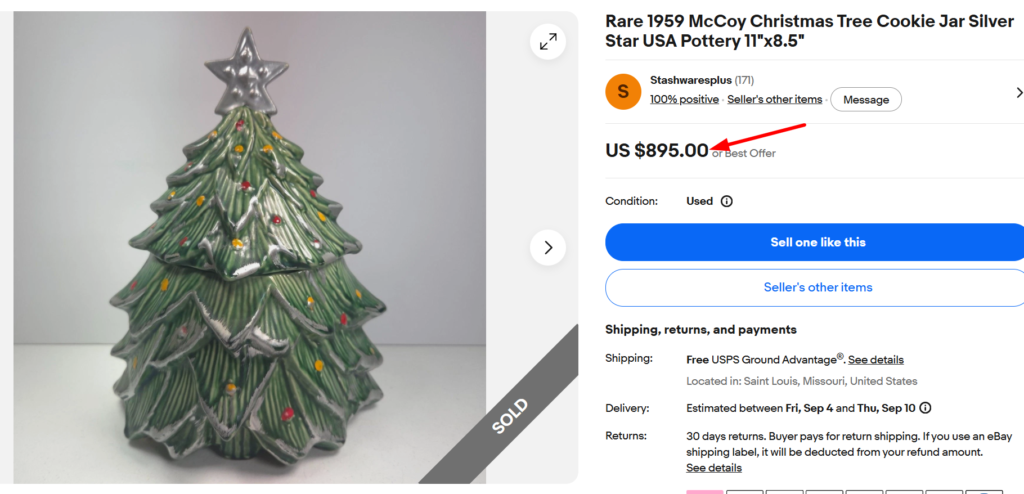
Sold for $895
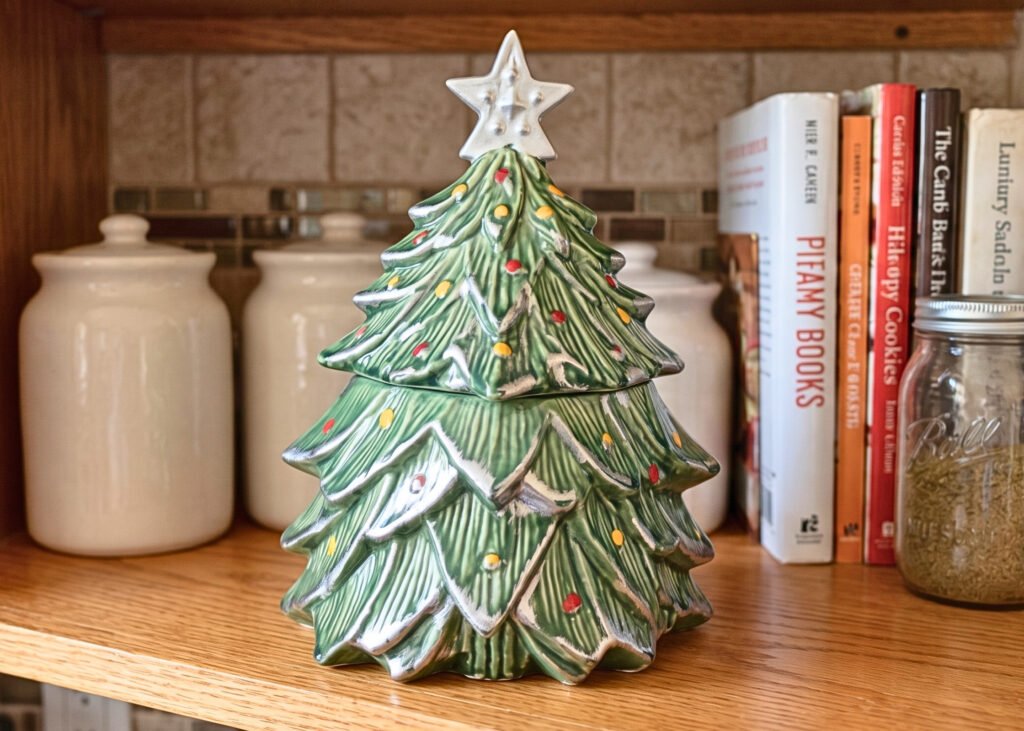
The McCoy Christmas Tree is certainly one of McCoy’s rarest holiday-themed cookie jars. This jar features an evergreen tree painted by hand, red and gold ornaments hanging from the branches, and a star on top as the handle’s lid.
There is also the signed version of this piece, which stands miles apart. A numbered version from a total of 575 of the McCoy Ltd. Gold Bow Christmas Tree, personally signed by the McCoys, can reach up to $2,000.
- Estimated Value: $200 to $700; signed rare version $1,500+
- Production Years: Late 1950s and reissued 1970s
- What to Check: Star lid, hand-painted gold trim
2. Fitz and Floyd Kringle Santa Cookie Jar
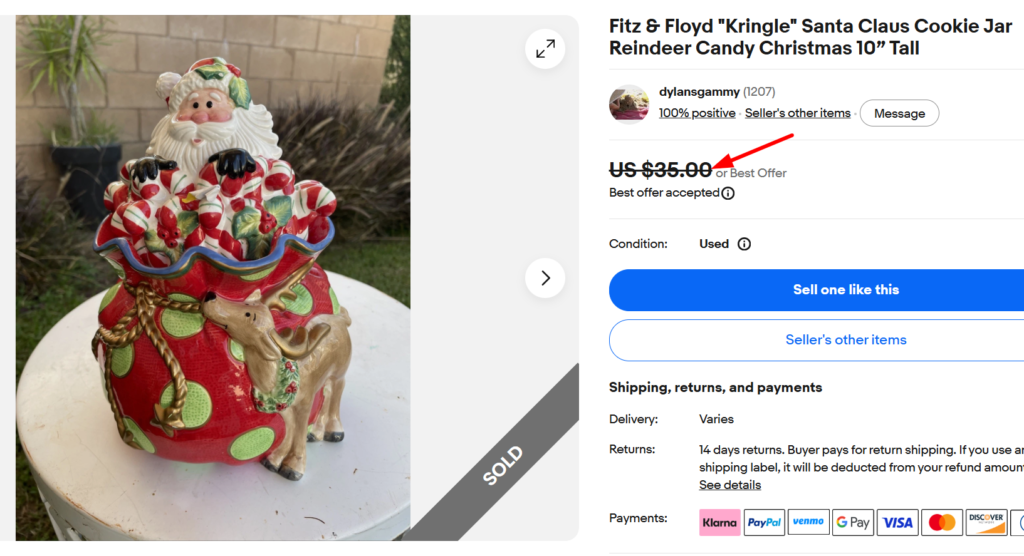
Sold for $35
Fitz and Floyd’s Santa cookie jars are some of the easiest Christmas collectibles from the ’80s and ’90s. The Kringle Santa cookie jar features the traditional seated Santa dressed in his famous red outfit with a bag of toys and hand-painting.
Since Fitz and Floyd made a number of Santa cookie jars in different variations, prices depend on the particular version, its size, and even if it still comes with the original box.
- Estimated Value: $30 to $150 (specialty Santas: $200 to $400)
- Production Years: 1980s through early 2000s
- What to Check: FF backstamp, hand-painted face detail
3. Fitz and Floyd Crystal Winter Santa Cookie Jar
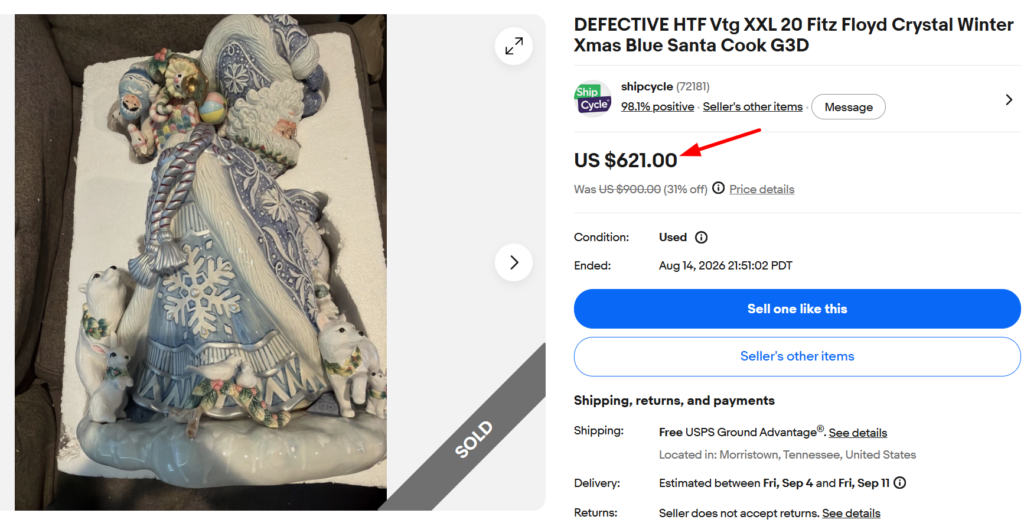
Sold for $620
This Crystal Winter Santa was part of the brand’s Crystal Winter Collection. It measures about 20 inches high, featuring Santa with foxes, polar bears, doves, and many other winter animals around him, all painted in beautiful hand-painting.
This item was made only for one holiday season, until it was retired, which makes it collectible in the secondary market. Considering its large size, the condition of the small attached animals drives value.
- Estimated Value: $250 to $700
- Production Years: Limited one-year run
- What to Check: Attached animals intact, no glue repairs
- Quick Facts: Heavy piece; lid alone weighs about 4 lbs
4. Lenox Holiday Cookie Jar (Holly and Berries Pattern)
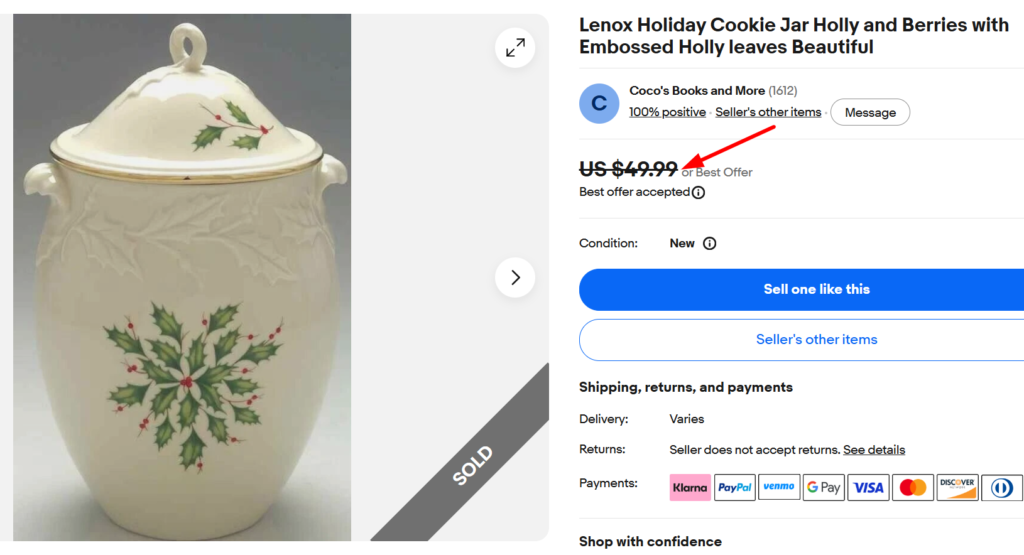
Sold for $50
The Lenox Holiday pattern with its red holly berries and green leaves around the rim is easily the most recognized fine-porcelain Christmas jar in American homes. It’s white porcelain with the holly transfer print, gold rim trim, and a sit-in lid. The matching dinnerware line keeps demand steady.
5. Spode Christmas Tree Cookie Jar
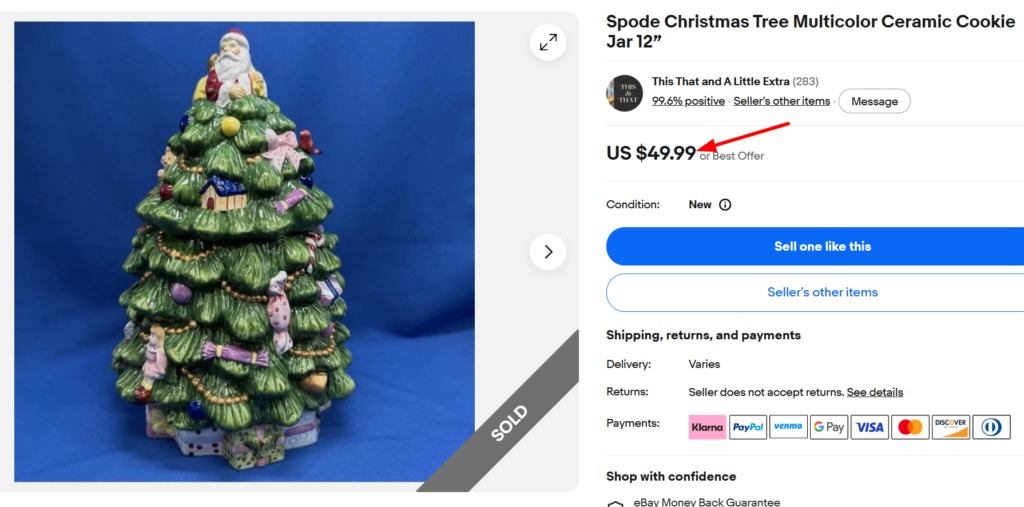
Sold for $50
Spode’s Christmas Tree design began in 1938 and is one of the most successful patterns in ceramics of the twentieth century. This cookie jar is decorated with the iconic tree print, gifts at the bottom, and a Santa print in rich reds, greens, and gold against a white background.
Older Copeland-Spode backstamped versions from the 1950s and 60s pull noticeably better prices than the modern Spode reissues.
- Estimated Value: $75 to $250 (older Copeland pieces higher)
- Production Years: 1938 to present; older marks worth more
- What to Check: Copeland Spode backstamp, transfer alignment
6. Holt-Howard Pop-Up Santa Cookie Jar (1960)
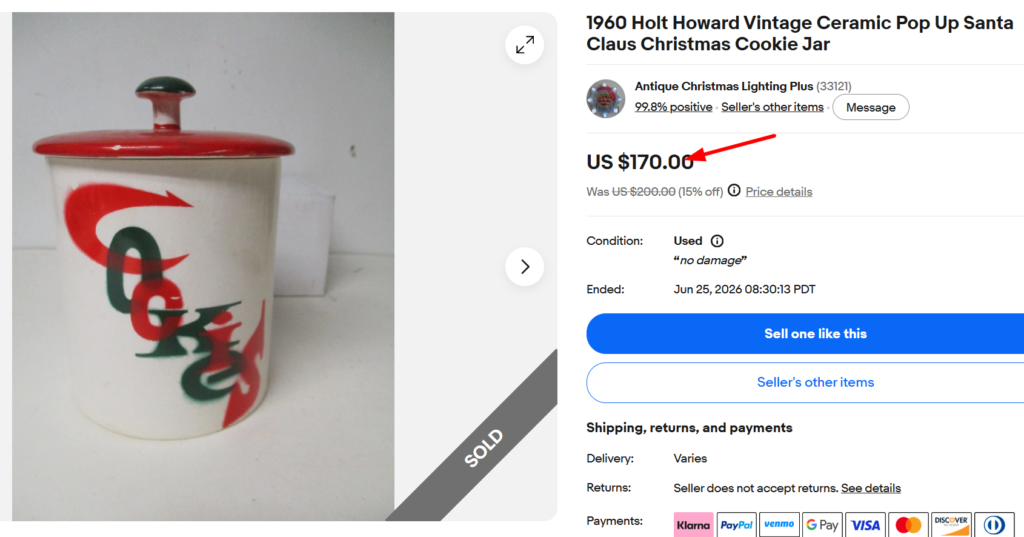
Sold for $170
This is one of Holt-Howard’s most inventive Christmas pieces. It’s a white ceramic jar with “COOKIES” spelled out in bold red and green lettering, topped with a red domed lid and a small green knob. Inside, a spring-mounted Santa pops up when the lid is lifted, holding a tiny “Just Take 1” sign.
- Estimated Value: $150 to $250
- Production Years: 1960 to early 1960s
- What to Check: Pop-up Santa mechanism, red lid paint
- ID Notes: Marked HH Japan; Santa often lost or broken
7. Napco Christmas Santa Cookie Jar
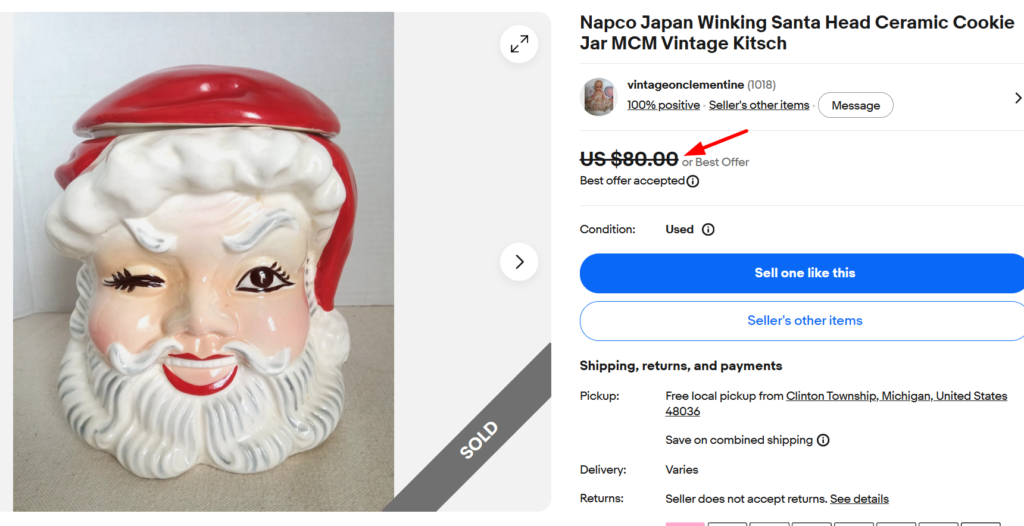
Sold for $80
Napco was a Cleveland-based importer that had its Christmas ceramics made in Japan through the 1950s and 60s. The Winking Santa is a hand-painted piece with bright red details.
Cold paint around the rim and hat wears easily, so a jar with clean, bright color is genuinely scarce. Also, NapcoWare pieces normally carry a gold and red foil sticker reading “NapcoWare, Made in Japan.”
- Estimated Value: $60 to $250
- Production Years: 1950s and 1960s
- What to Check: Napco item number, Japan mark or foil label
8. Pfaltzgraff Christmas Heritage Cookie Jar
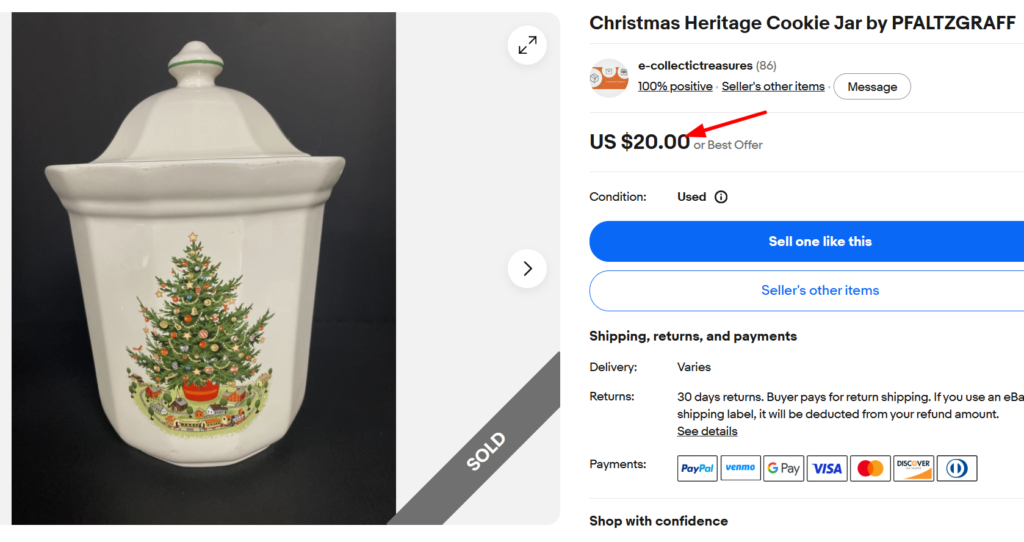
Sold for $20
“Christmas Heritage” is Pfaltzgraff’s most well-known holiday collection, manufactured during the 80s and 90s.
It is white stoneware with a transfer pattern of holly leaves, berries, and pine cones in green and red, and it features a rubber gasket lid seal. There are so many out there that prices remain affordable.
- Estimated Value: $15 to $90
- Production Years: 1980s to 1990s (pattern retired)
- What to Check: USA or York, PA backstamp, rubber seal condition
- Quick Notes: Retired pattern; matching pieces trade often
9. Department 56 Snowman Cookie Jar
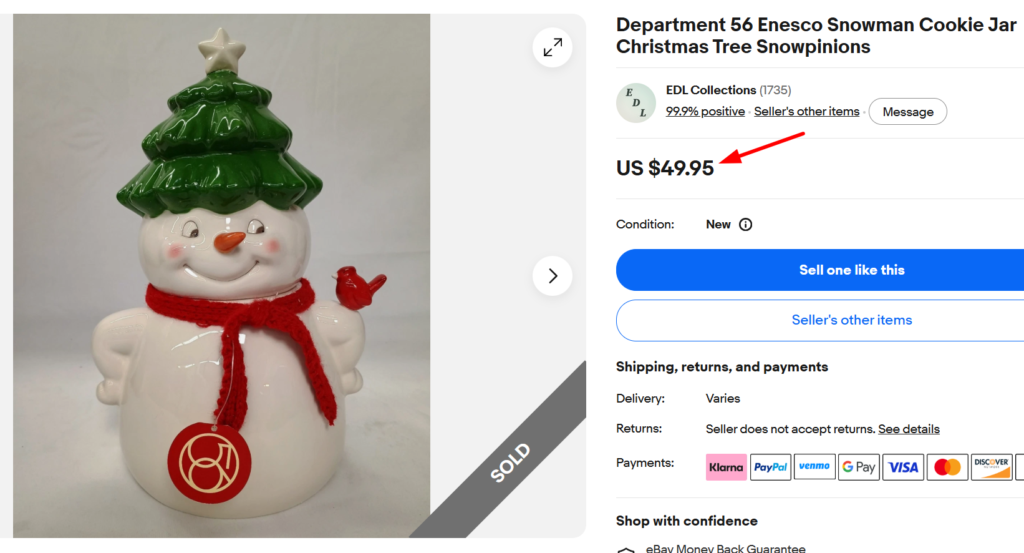
Sold for $50
Though most famous for their ceramic Christmas villages, Department 56 also made some very good holiday cookie jars. Snowman versions tend to be glazed in a pearlescent manner with cardinals or holly on top hats.
The scarves and buttons on these jars were cold-painted.
Retired Dept 56 pieces, especially the ones from limited holiday collections, are especially valuable. So a jar tagged with an early Department 56 sticker and original box will always outpace a similar-looking unbranded snowman.
- Estimated Value: $40 to $150
- Production Years: 1990s through 2000s
- What to Check: Dept 56 stamp or sticker, sculpted lid intact
10. Waterford Holiday Heirlooms Santa Cookie Jar
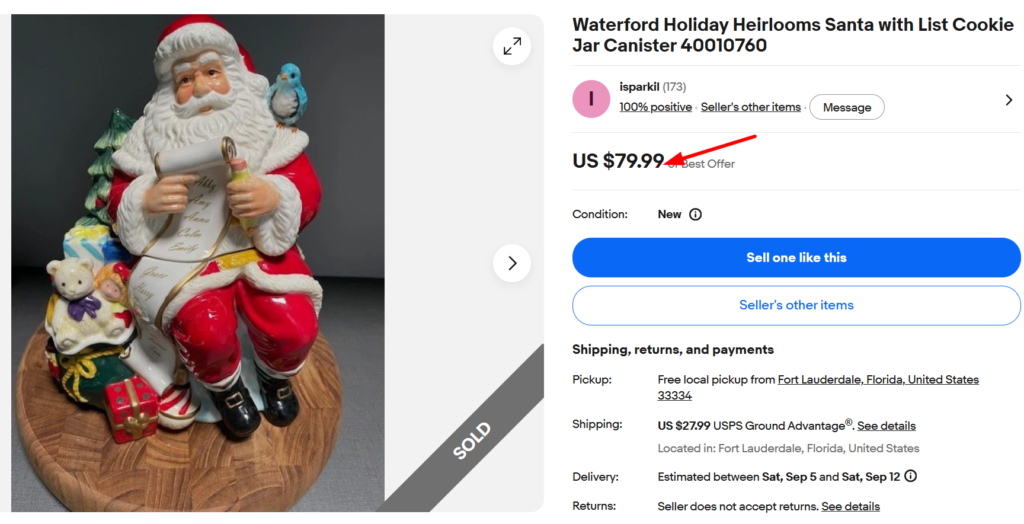
Sold for $80
Waterford launched the Holiday Heirlooms ceramic line in the early 2000s as a giftware extension of the crystal brand. The Santa jar (item 130667) shows a seated Santa in a red and gold suit, built with two separate lidded compartments. Musical versions of this line command more.
- Estimated Value: $80 to $250 (musical versions: $200 to $400)
- Production Years: Early 2000s (limited edition)
- What to Check: Item number 130667, both lids intact
- Value Notes: Original box essential for top prices
What Actually Drives the Value
Below are the key factors that separate a $30 Christmas cookie jar from a $300 one. Keep these in mind whether you’re buying or selling.
- Maker beats all else. Markings such as Fitz and Floyd, McCoy, or Holt-Howard will add 5 to 10 times to the price of an exact replica that lacks markings. So, turn the jar around right away.
- The lid accounts for about half the value. A lid that is replaced will reduce the value by 40 to 60 percent. Check to see whether the lid matches the base by the glazing, weight, and wear patterns.
- Condition of cold-painted design is essential. Painted features added after firing fade with time and washing. The presence of fresh and undamaged paint will raise the price by twice compared to a similar jar with worn paint design.
- Original box and packaging will raise the price by 20 to 40 percent, particularly those from the 1990s and 2000s made by Waterford, Hallmark, and Fitz and Floyd.
- The season is important. Christmas jars have their prices increased by 20 to 30 percent in October and November. Put the listing when people buy presents.
- Rarity beats age. A limited collection of 2005 Hallmark can earn more than a common 1950s import. Short production, retiring designs, and annual editions are more valuable than the age of the jar.
If you’re hunting, the best places are estate sales in October and November, church rummage sales after the holidays, and Facebook Marketplace. And make sure to check the base mark, the lid pattern, and condition before buying (or selling one).