
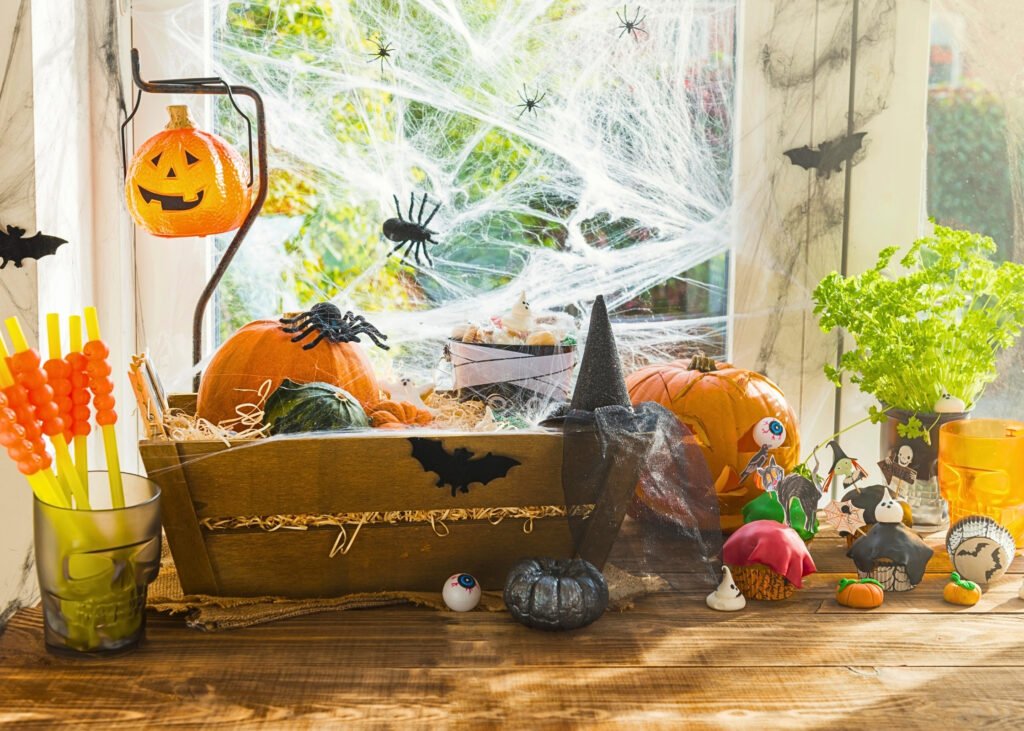
Still own that box of your grandma’s Halloween decorations in the attic? It might hold something more valuable than you think. From the crinkled Beistle black cat to the papier-mache jack o’lantern, some of these things sell for hundreds.
So here’s a collector’s list of the most collectible vintage Halloween decoration items that deserve a closer look before trading, and what people are paying for them today.
Halloween Decoration Timeline by Era
To value an item, you have to understand when it was created. Vintage Halloween is divided into eras for collection purposes, each with its own style, materials used, and upper range on the price scale.
- Antique era (1900 to 1930s) – German-made items are common. Embossed postcards, embossed composition candy boxes, and papier-mache jack-o’-lanterns make up this era.
- Golden age (1940s to 1950s) – Items are American-made now. Beistle’s die-cuts are hugely popular, Gurley starts making poured wax candles, and tin litho noisemakers decorate all parties.
- 1960s – First plastic blow-molds, hard plastic Rosbro figures become very common, paper decorations are colorful and affordable.
- 1970s – The golden years of blow-molded plastics. Empire, General Foam, and Union Products make large-scale JOLs and ghosts; fluorescent Beistle cut-outs come around.
- 1980s – Ben Cooper costumes make their last splash in popularity; ceramic haunted houses and Fitz & Floyd cookie jars populate department stores.
- 1990s – Point where many collectors decide that an item is not yet vintage, but Beetlejuice and early Freddy items are becoming popular already.
Vintage Halloween Manufacturers You Should Know
These six names are always mentioned in this hobby. Knowing their logos will help you estimate their value easily.
- Beistle Company (1900 – present) – Cardboard die-cuts, honeycomb centerpieces, articulated skeletons and cats. Beistle’s original items from the 1920s and 1930s are the top pieces.
- Dennison Manufacturing (1844 – 1990) – Crepe paper, party items, Bogie Books. The Halloween tablecloths and party kits from the 1920s are the items that everyone is after.
- Gurley Novelty Company (1930s – 1970s) – Figural wax candles in witches, ghosts, cats and pumpkins. The small store display pieces are the sleeper items.
- Empire Plastics and General Foam (1960s – 1990s) – The blow mold giants. Rarity and original cords are what drive the high values.
- Ben Cooper (1937 – 1988) – Boxed vinyl costumes with hard plastic masks. The licensed items, such as Superman and other monsters, are what drive the most value.
- Rosen/Rosbro Plastics (1940s – 1960s) – Hard plastic candy containers, pull toys, and figural wheels. Providence, Rhode Island factory items set the market standard.
11 Most Collectible Halloween Decoration Items to Save
Okay, let’s dig into the best items that will be making some serious cash. Here are the top Halloween decor items that fetch impressive prices today. A few of them may be lurking in your attic right now.
1. German Paper Mache Jack o’ Lanterns (1910s to 1930s)
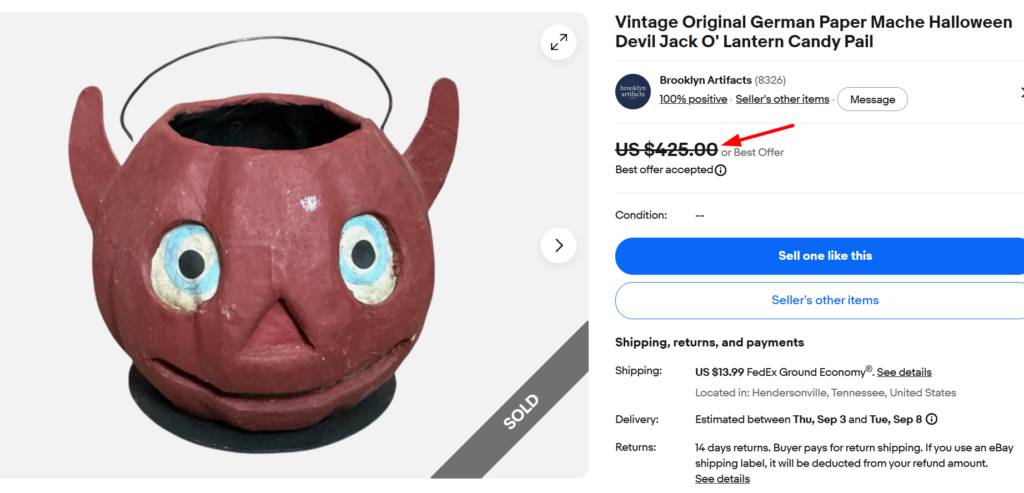
Sold for $425
If you’re hunting for antique vintage Halloween collectibles, German papier-mache jack o’ lanterns should top your list. These were made from pressed paper pulp with hand-painted faces and original paper inserts behind their eyes. They’ve held their value better than just about anything else in the category.
Fine-quality jack o’ lanterns exhibit fine detailing, muted orange coloring, and crinkled pulp texture. Those with rare facial variations, such as the cat, devil, or vegetable man types, can fetch high prices.
- Estimated Value: $150 to $1,500+ (rare designs higher)
- Production Years: 1910s to early 1930s
- What to Check: Original paper face insert, muted colors, pulp texture
- Quick Notes: Reproductions feel lighter and too bright
2. Beistle Die-Cut Cats & Witches (1920s to 1940s)
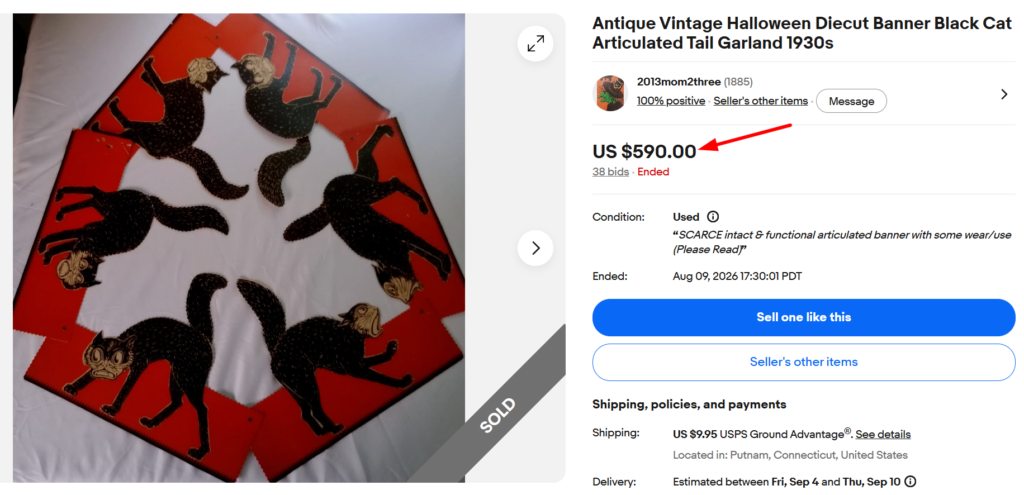
Sold for $590
Most people think of the Beistle company of Shippensburg whenever the term “vintage Halloween decor” comes to mind. The die-cut cardboard cats, witches, and skeletons of the 1920s and early 1930s by Beistle are the best pieces in this field.
In particular, the famous “Jazz Cat Band” collection of the 1930s, the black cat with an arched back, and tall skeletons are the pieces that start heated discussions.
- Estimated value: $75 to $3,700+ based on design and condition
- Production Years: 1920s to early 1940s (originals); reissues from 2003 onward
- What to Check: Double-sided printing; “Beistle” or “E.H. Luhrs” mark
Easy Tip: Original Beistle pieces have double-sided printing (printed on one side; other side is blank or very light). Some early pieces even have an original price tag from 8 cents to 12 cents printed on their back side.
3. Empire and General Foam Blow Molds (1960s-1980s)
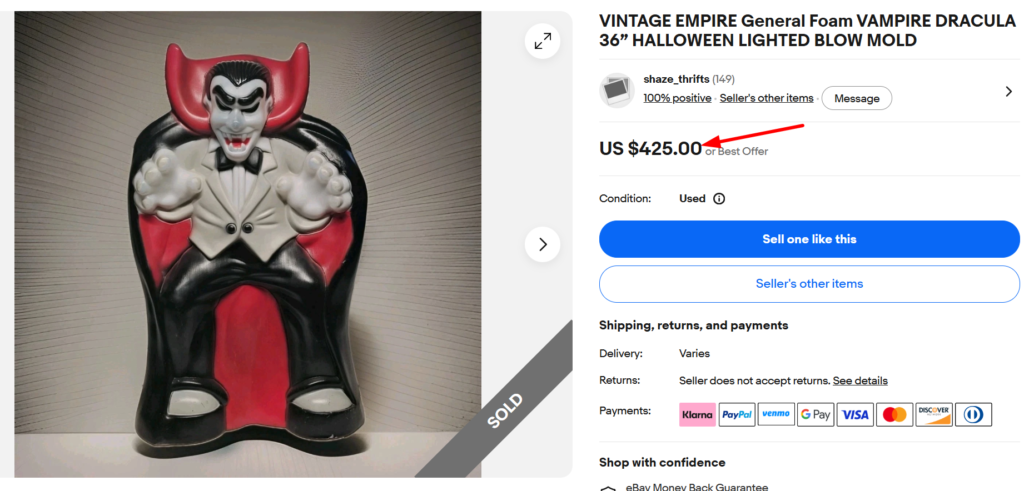
Sold for $425
Blow molds are the Halloween comeback of the past five years, prices having skyrocketed since 2020 and continuing. Empire Plastics, General Foam, and Union Products make up the trifecta in this genre.
Rare styles fetch good money at the moment. General Foam’s Grim Reaper usually sells for $100-$250, and the Empire Witch on Broom from the 1960s is a genuinely scarce style.
Note: Pay attention to the embossed manufacturer logo on the back/bottom.
- Estimated Value: $50 to $400+ for rare designs
- Production Years: Mid 1960s through late 1990s
- What to Check: Embossed maker mark, thick plastic, original cord
4. Gurley Halloween Candles (1940s to 1960s)
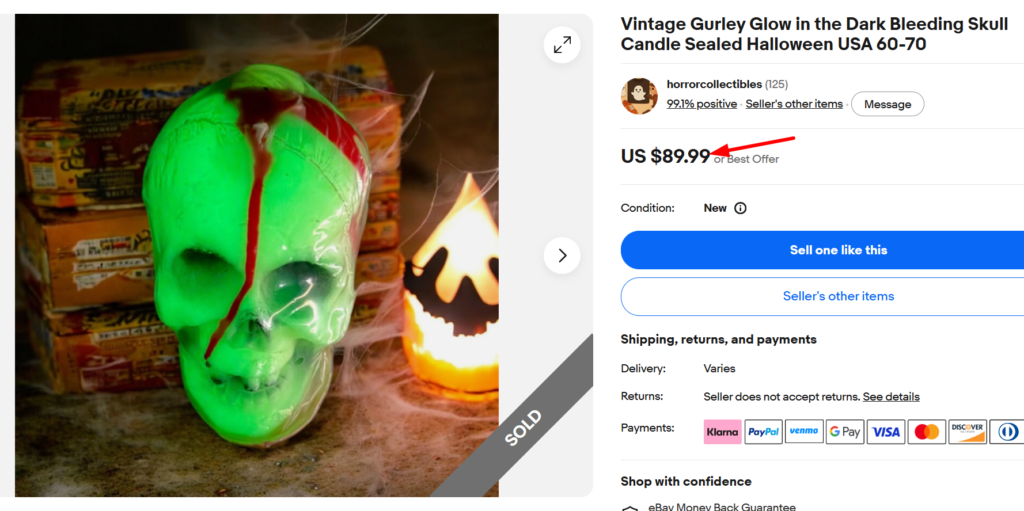
Sold for $90 (glow in the dark)
The Gurley Novelty Company from Buffalo, New York made wax figurine candles for many decades, and nearly every American child has seen one at least once.
The most popular forms included witches, ghosts, cats, and pumpkins; all around three to six inches tall with a cardboard base.
Common Gurley candles sell for $8 to $20, although rare early examples and those for stores are priced way higher.
- Estimated Value: $8 to $50 average; store displays $200+
- Production Years: 1940s through 1960s (peak production)
- What to Check: Original Gurley cardboard base label
- Quick Notes: Never store in heat; wax melts fast
5. Kirchhof and U.S. Metal Toy Tin Noisemakers (1930s to 1960s)
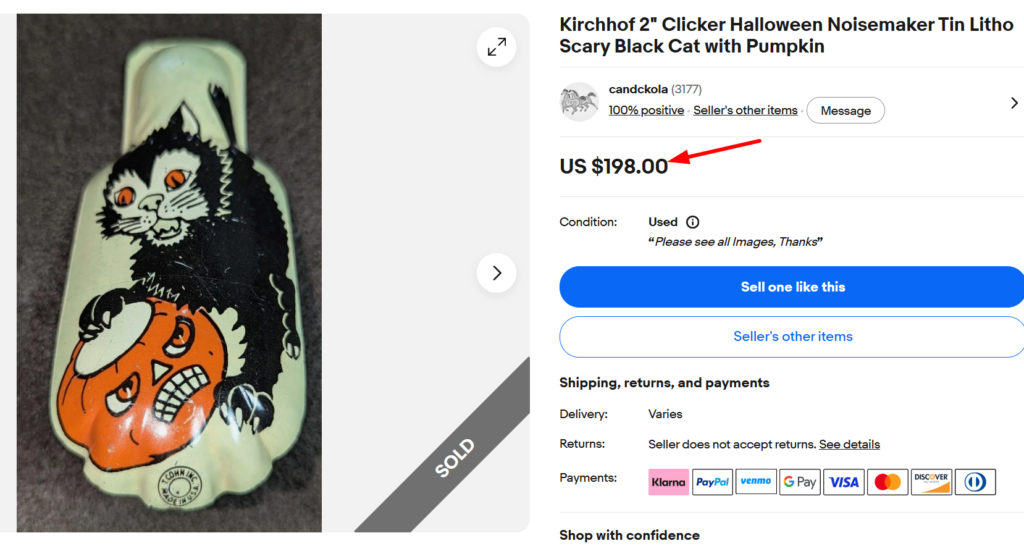
Sold for $200
Everyone recalls these from school Halloween parties in the 1950s, especially from Kirchhof (“Life of the Party Products”) and U.S. Metal Toy. These have ratchets, clangers, horns, and tambourines decorated with witches, black cats, and devils lithographed on metal.
Regular varieties fetch from $15 to $40, but rare Kirchhof designs can reach up to $250 to $500. Rusting on tin is a crucial value factor.
- Estimated Value: $15 to $600+ for rare Kirchhof designs
- Production Years: Late 1930s through 1960s
- What to Check: Maker mark on rim, working mechanism, sharp litho
6. German Composition Candy Containers
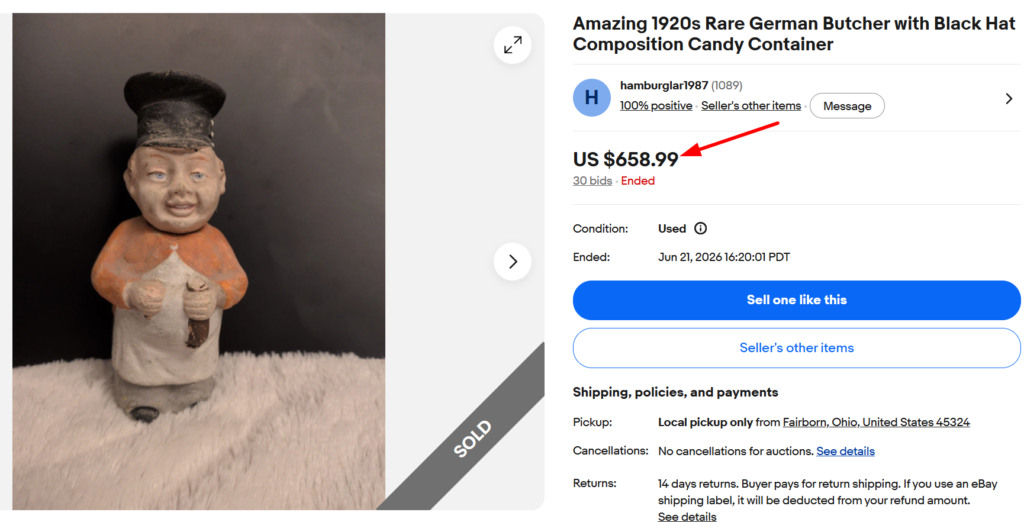
Sold for $660
Just as popular as the papier-mache lanterns are the German composition candy containers. These are tiny, heavy composition figures of witches, cats, pumpkins, and people made from a paper pulp mixture, often mounted on cardboard bases with a small candy chamber inside them.
Their delicate nature makes surviving examples very rare. Those in good condition usually sell for $100-$400, while the rare figural styles such as the witch with the jack-o-lantern head often exceed $500.
- Estimated Value: $100 to $600+ depending on figure
- Production Years: 1900 to early 1930s
- What to Check: “Germany” ink stamp on base, composition weight
7. Ellen Clapsaddle and John Winsch Postcards (1905-1915)
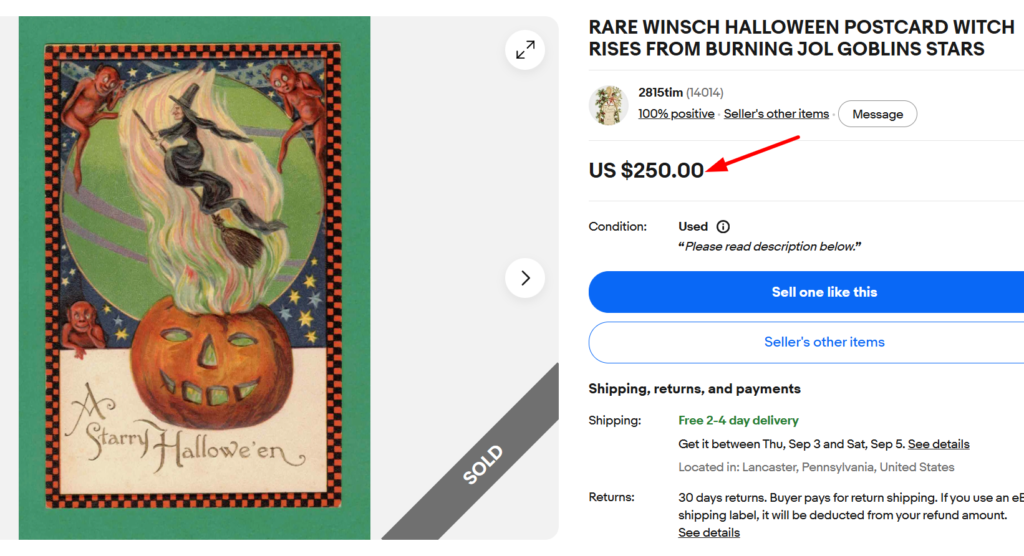
Sold for 250
1905 to 1915 is the golden period for Halloween postcards, but there are two names that rule in collecting. Ellen Clapsaddle was known for her lovely Halloween child drawings marked with a signature on the front of the cards. John Winsch produced elaborate, embossed Halloween cards with witches, JOLs, and black cats.
A common Ellen Clapsaddle Halloween postcard costs $20 to $60, while a rare “Wolf” series can go for $100 to $600.
- Estimated Value: $20 to $600+ (high for rare designs)
- Production Years: 1905 to 1915 (pre-WWI printing in Germany)
- What to Check: Divided back, artist signature, “Hallowe’en” spelling
8. Ben Cooper Boxed Halloween Costumes (1950s-1980s)
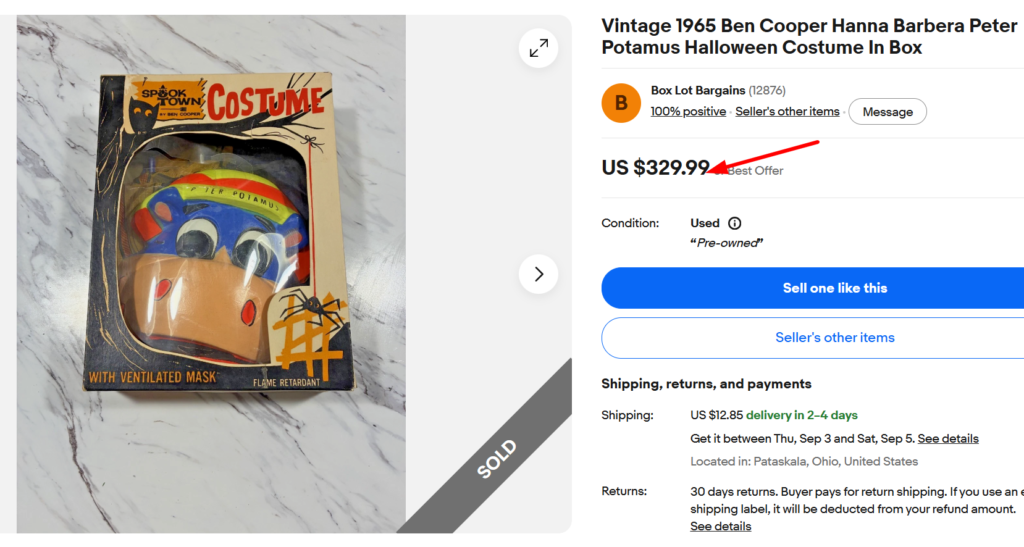
Sold for $330 (boxed)
Ben Cooper was the biggest Halloween costume maker in America during the 1950s to the 1980s, and their boxed vinyl costumes are nostalgia collectors’ items, especially boxed costumes.
Licensing character costumes, such as Superman, Batman, early Star Wars, and monster masks such as Dracula and Frankenstein, fetch the highest values. Masks without costumes usually go for $15 to $50.
- Estimated Value: $30 to $300+ with original box
- Production Years: 1950s through late 1980s
- What to Check: Original box, complete mask elastic, licensed character
9. Rosbro (E. Rosen) Hard Plastic Containers (1950s)
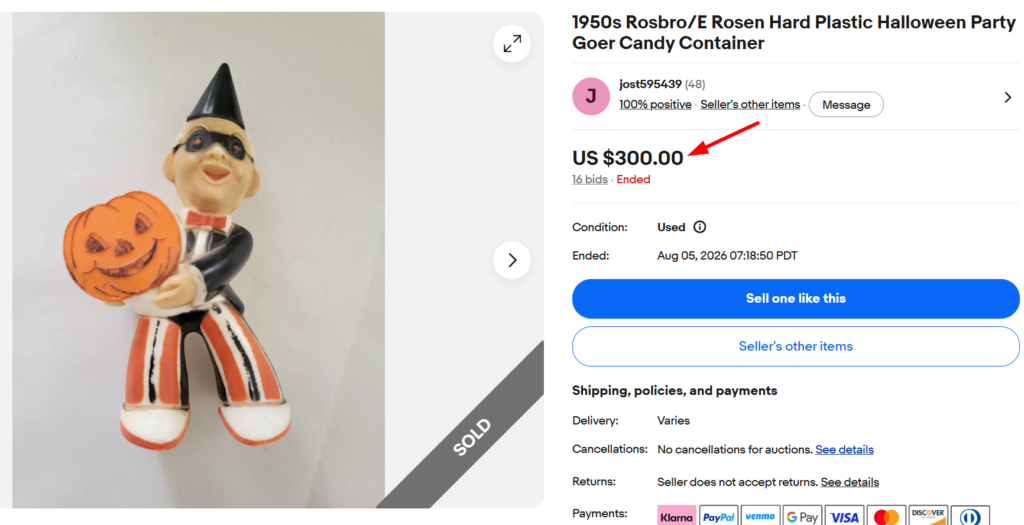
Sold for $300
Rosen Plastics of Providence, Rhode Island (sold as Rosbro) made some of the most collected hard plastic Halloween candy containers of the mid-century.
Bright orange and black witches holding jack o’ lanterns, black cats pushing pumpkins on wheels, and clown pull toys all came from their molds.
Common pieces sell for $40 to $100, and rare combinations like a cat pushing a pumpkin on wheels plus a Zook design can bring $300 to $500 at auction.
- Estimated Value: $40 to $500 for rare combos
- Production Years: Early to late 1950s
- What to Check: Vibrant orange color, no cracks, original details
- Quick Notes: Cellophane candy bag originally sat inside opening
10. Dennison Halloween Crepe Paper and Bogie Books (1910s – 1930s)
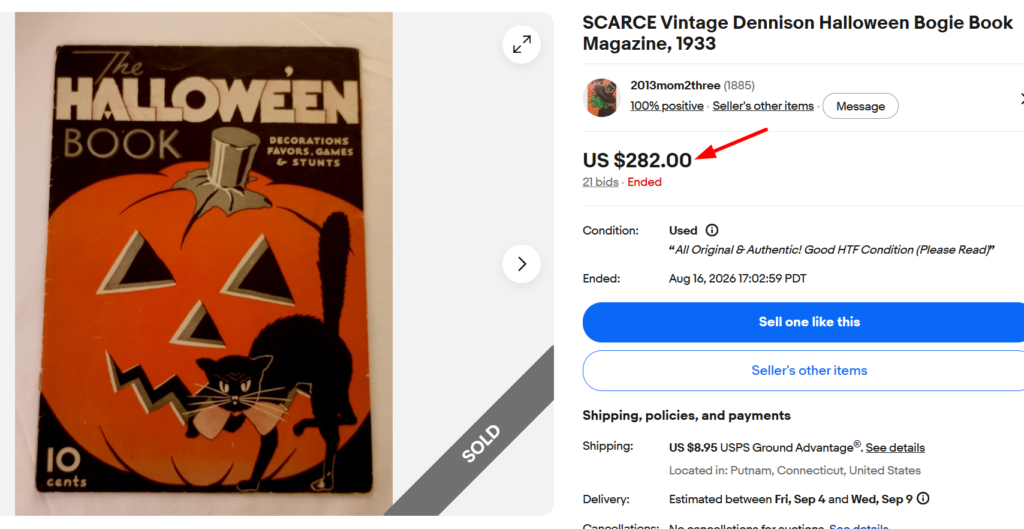
Sold for $285
Another big name in early American Halloween paper items besides Beistle is Dennison. These crepe paper table covers, napkins, and party aprons printed in the 1920s feature the classic witch, black cat, and JOL motifs.
The sealed crepe paper bolts and full table covering sets are their sleepers. Their annual Bogie Books of party ideas published from 1912 to 1935 are used as the bible by collectors for dating purposes.
- Estimated Value: $50 to $800+ (high for rare items)
- Production Years: 1912 through mid 1930s
- What to Check: “Dennison” or licensed mark, uncut condition
- Quick Notes: Bogie Books date other Dennison pieces precisely
11. Fitz & Floyd Halloween Cookie Jars (1988 to 1990s)
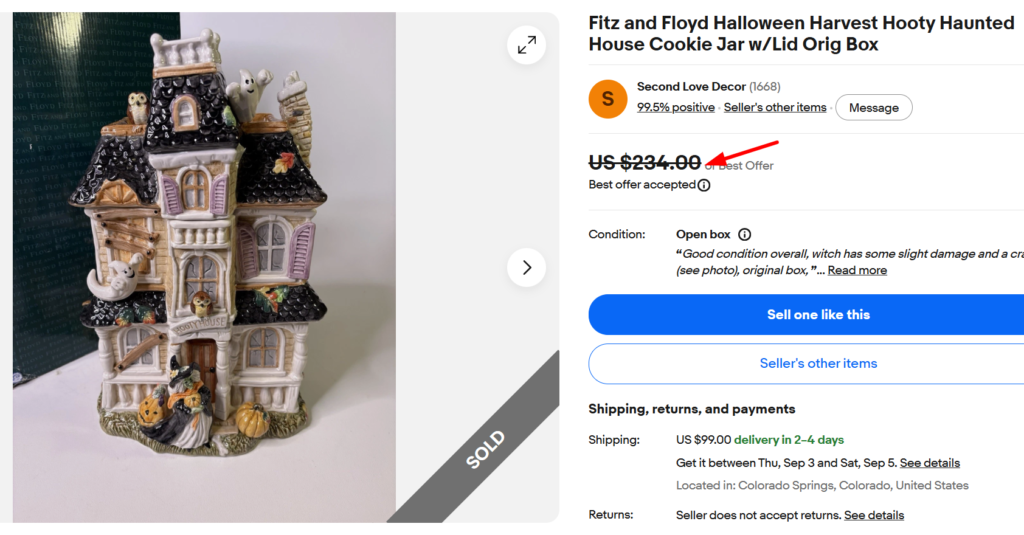
Sold for $235
Fitz & Floyd cookie jars are not very old, but they’ve earned their spot. Their Halloween line launched around 1988, and pieces like the “Ghosts and Ghouls” haunted house, the witch cookie jar, and the “Scaredy Cat” jar are quite collectible.
Prices moved up sharply after 2020. The witch cookie jar, boxed and unused, now sells in the $150 to $320 range, and the “Halloween Harvest Haunted House” figurine cookie jar is highly collectible. Retired and boxed always wins.
- Estimated Value: $80 to $400+ (retired, with box)
- Production Years: 1988 through mid-1990s (Halloween line)
- What to Check: Fitz & Floyd base stamp, no chips or crazing
What Makes Vintage Halloween Decorations Desirable?
There are only five criteria that matter, and their importance ranks as follows: age, rarity, condition, maker, and desirability.
1920s German papier-mache pumpkin is better than a 1970s Beistle cat pretty much always, except for a rare Beistle design of the 1970s in excellent condition, which may turn the tables around.
Original packaging is by far the most significant factor affecting value. A boxed Ben Cooper Superman costume will fetch up to four times the price of an unboxed one. So does Beistle die-cut in its header-card packaging and blow mold with original cord and factory tag.
Condition is also more important than you think because Halloween decorations were designed to be used once and disposed of, so well-preserved examples are quite rare.
Any fading, tape stains, joint splits, lack of inserts, or repainting on blow molds reduces the value significantly. Horror imagery indicates the age and collectibility of a piece.
Vintage Halloween memorabilia is one of the fastest-growing collectibles today, and most high-value pieces still hide in attics, basements, and estates. Know the brands, read the markings, and keep an eye out for original packaging when buying or selling any items.