
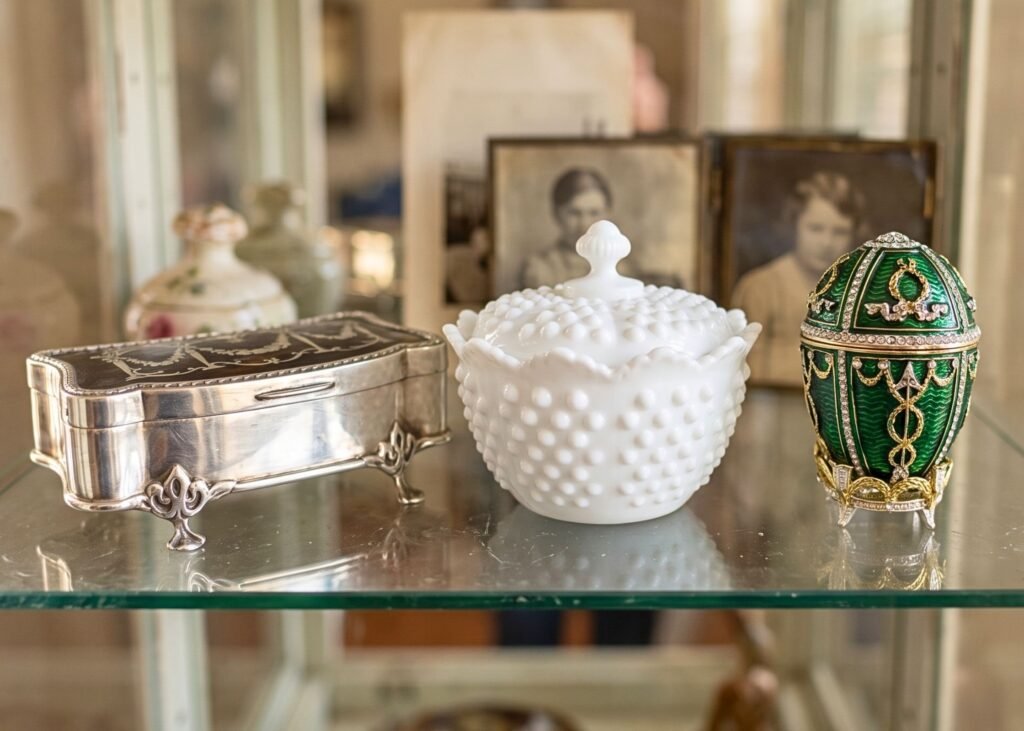
A trinket box is a small lidded box of less than six inches, used for storing rings, earrings, pins, or trinkets on the dresser. The word came into use during the Victorian period, but the item dates back to the snuff and patch boxes of the 18th century.
In the Victorian period (1837-1901), each middle-class house needed a matching box in porcelain, silver, or glass for the vanity. And many china, porcelain, and glass makers provide the same. After World War II, American importers like Lefton, Fitz and Floyd flooded the market with hand-painted Japanese porcelain boxes that are now collectible.
If you have a small old trinket box in your grandma’s vanity, this guide will help you identify it, know its worth, and cross-check it against the rarest designs.
5 Factors That Drive the Value of Old Trinket Boxes
Antique and vintage trinket boxes can range from $10 to $1,000, or even more, depending on several factors:
- Maker – A marked Limoges peint main box sells for many times what an unmarked porcelain box brings, even if they look nearly identical.
- Rarity – Retired designs, limited editions, and short production runs push the price up fast.
- Condition – Chips on the rim, hairline cracks, missing lids, or repainted lids kill value.
- Material – Hand-painted porcelain, sterling silver, and antique cloisonné, beat pressed glass or resin.
- Provenance and packaging – Original box, certificate, and paperwork can double the price on collector-grade pieces.
Collectible Old Trinket Box Designs & Makers Worth Knowing
The below-listed collection is the most attractive vintage trinket box designs by the most notable makers, from $30 mid-century items to $500+ figures from Limoges.
1. Victorian Sterling Silver Heart Trinket Box
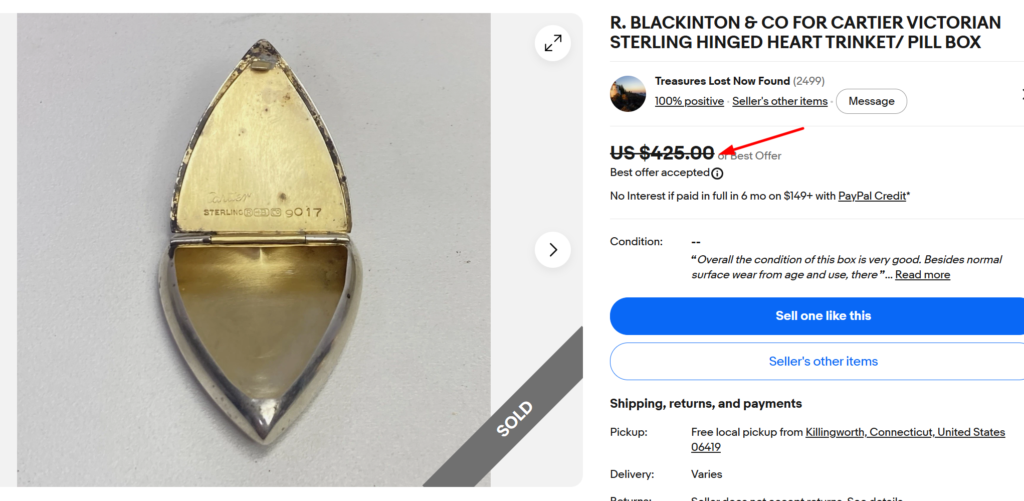
Sold for $425
Victorian sterling silver trinket boxes are the most expensive antique pieces. Heart-shaped ones from around 1890 to 1910, made by English or American silversmiths like William Kerr, Gorham, or Birks, are the most sought after.
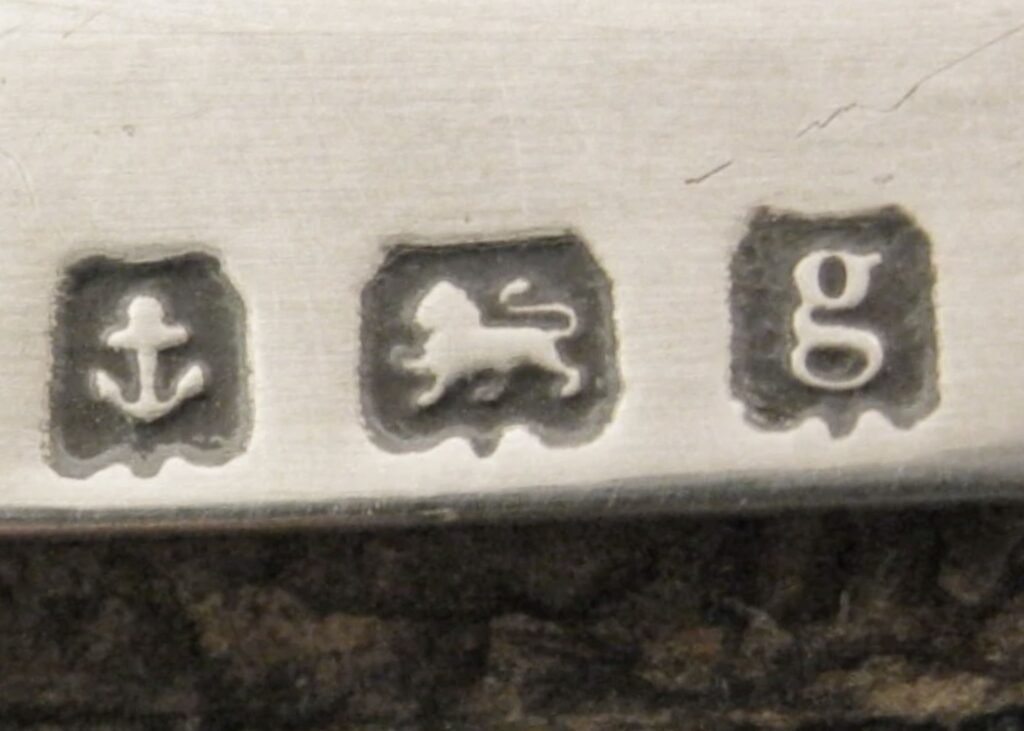
Look for the sterling hallmark (a lion passant for English silver) plus a date letter and maker’s mark on the base. Interior velvet linings and fitted ring holders add real value.
- Estimated Value: $250 to $900+
- Production Years: 1880s to 1910s
- What to Check: Sterling hallmark and maker’s stamp
2. Rochard Limoges Peint Main Figural Box
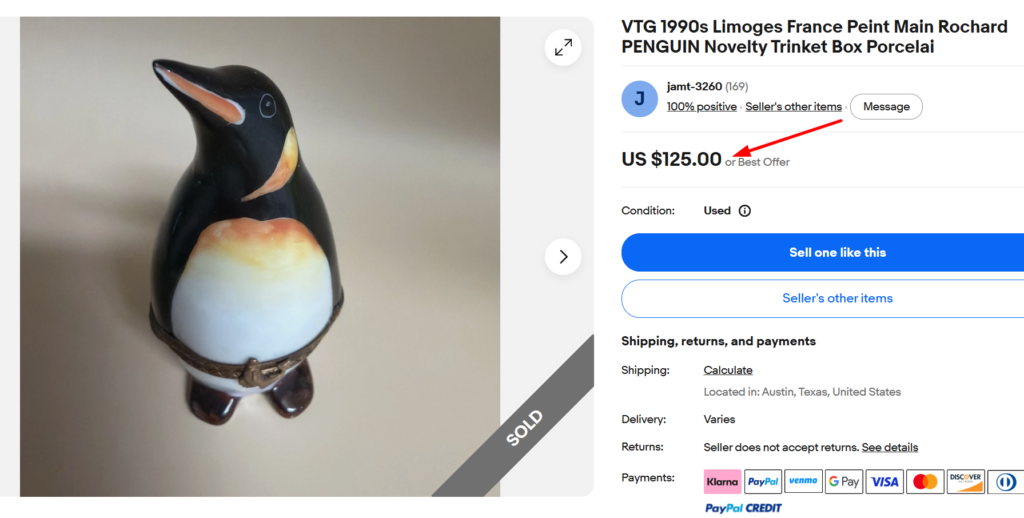
Sold for $125
Rochard is one of the top three Limoges decorating studios, along with Artoria and Chamart. Their peint main figurals (think golf bags, cactus plants, or animals) are the ones collectors hunt.
So the value driver is really the artist. Each piece is signed with the decorator’s initials on the base, and Rochard’s brushwork tends to be tight and detailed, with rich color layering under the glaze.
- Estimated Value: $120 to $450
- Production Years: 1970s to present
- What to Check: Red “Peint Main Limoges France” stamp
- Quick Notes: Signed by decorator, brass clasp closure
3. Artoria Limoges Retired Character Box
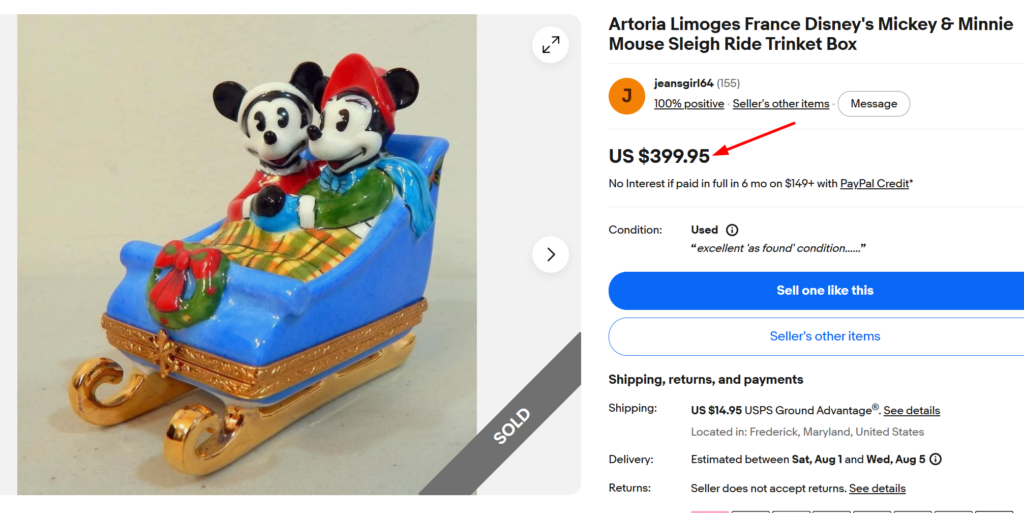
Sold for $400
Artoria made Limoges boxes for licensed brands like Disney, Peanuts, and Coca-Cola. Those retired character boxes are now the ones bringing the real money.
A Garfield with Pooky trinket box, for example, can push past $200 when it’s mint with the original packaging. The base always reads “Artoria Limoges, Peint Main, Made in France” plus a limited edition number.
- Estimated Value: $80 to $350
- Production Years: 1980s to early 2000s
- What to Check: Numbered base, artist initials
4. Capodimonte Cherub Trinket Box (Crown N Mark)
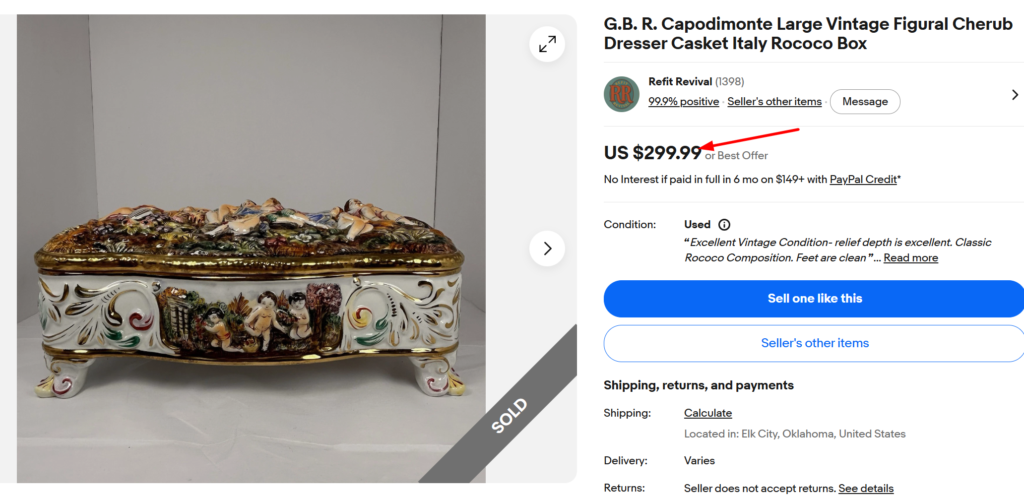
Sold for $300
Capodimonte boxes with cherub scenes and gilt trim are the classic Italian collectible. But here’s the catch. The crown over N mark was never trademarked, so many “Capodimonte” pieces were made by other Italian factories after the original Royal Factory closed in 1817.
Early 20th-century pottery is made of soft-paste porcelain, translucent, and individually sculpted roses or figures. Modern replicas are light and have glue marks from the roses that are glued on.
- Estimated Value: $25 to $150 (typical); $300+ (early sculpted)
- Production Years: Late 1800s to present
- What to Check: Blue underglaze N with crown
5. PHB Porcelain Hinged Box (Midwest of Cannon Falls)
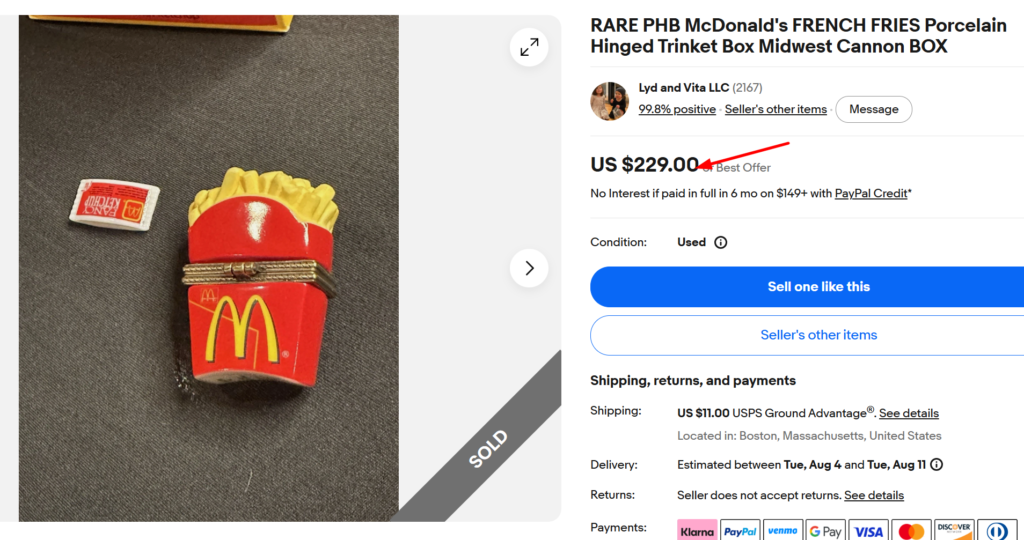
Sold for $230
Midwest of Cannon Falls made these porcelain hinged boxes, called PHBs, in the 1990s and early 2000s. All were retired between 1999 and 2001, which is why they’ve picked up steam with collectors.
Each box was Limoges-style, figural, and came with a tiny matching trinket inside (a mini hat inside a Laurel and Hardy bowler, a bottle opener inside a Coca-Cola cap). Rare designs like Old Spice or licensed characters bring the most.
ID Note: The base of genuine pieces is marked “PHB Porcelain Hinged Box, Midwest of Cannon Falls.”
- Estimated Value: $15 to $85
- Production Years: 1990s to 2001 (retired)
- What to Check: Matching tiny trinket inside
- Quick Notes: Complete piece with trinket doubles value
6. Waterford Crystal Lismore Trinket Box
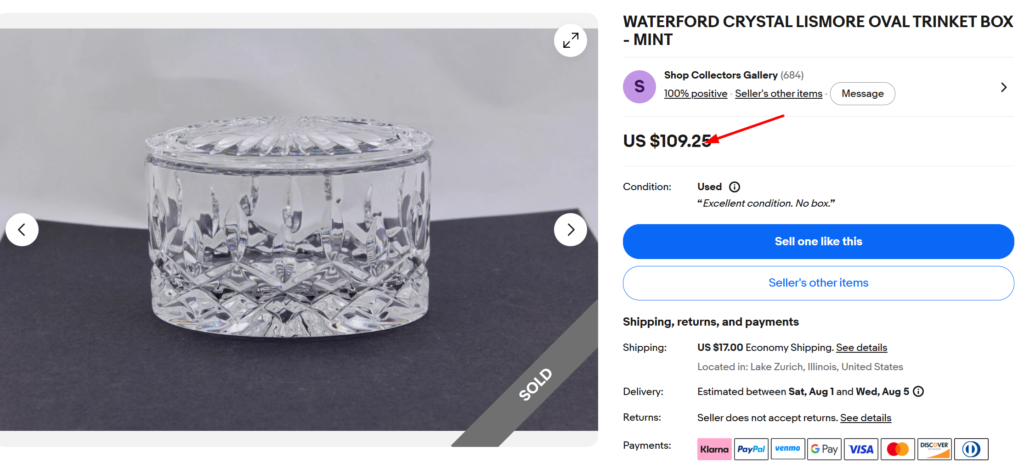
Sold for $110
The Lismore pattern is the world’s most famous cut crystal design, created by Miroslav Havel in 1952 at Waterford. It features alternating diamond cuts and tall vertical wedge cuts inspired by the Gothic architecture of Lismore Castle.
On a trinket box, the pattern wraps the sides and the fitted lid. Look for the acid-etched “Waterford” signature on the base.
ID Note: Pieces marked “Marquis by Waterford” are the affordable, machine-cut secondary line and sell for less.
- Estimated Value: $45 to $180
- Production Years: 1952 to present
- What to Check: Acid-etched Waterford signature
7. Herend Porcelain Fishnet Box
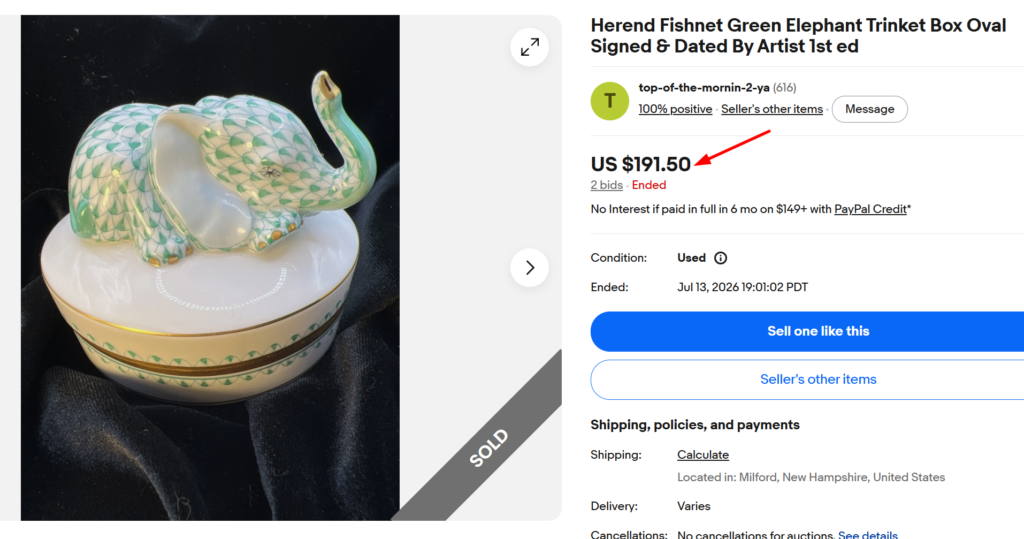
Sold for $191
Herend has been producing hand-painted porcelain in Hungary since 1826. Their signature fishnet pattern is scale-like painted decoration in a grid, first developed in 1858, and it wraps around small animal-shaped boxes in colors like rust, green, blue, or the rare Rothschild Bird design.
Each scale is painted by hand across an uneven surface, which is why the pattern looks like it’s moving. Modern printed fakes look flat and mechanical in comparison.
- Estimated Value: $150 to $600+
- Production Years: 1858 to present
- What to Check: Blue Herend Hungary shield mark
8. Halcyon Days Bilston & Battersea Enamel Box
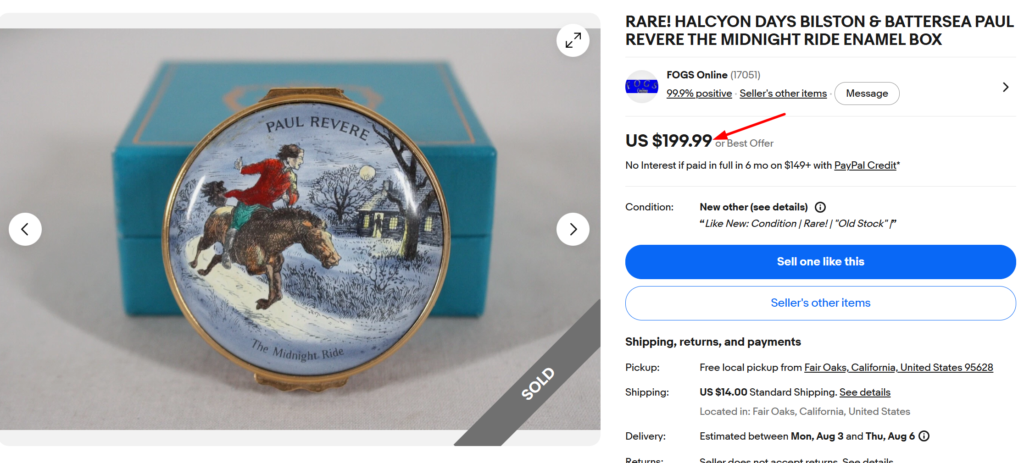
Sold for $200 (with box)
Halcyon Days produced enamel on copper boxes in the classic Bilston and Battersea tradition. Limited editions like royal weddings, cathedrals, and Wimbledon centenaries are the ones to grab, especially with original certificates of authenticity.
Also, check for the stamp “Halcyon Days” with the year or commemorative theme on the base. So condition matters here more than most, since chips to the enamel drop the value dramatically.
- Estimated Value: $40 to $200 (regular); $200 to $500 (limited editions)
- Production Years: 1950 to present
- What to Check: Halcyon Days Enamels backstamp
9. Faberge-Style Enamel Egg Trinket Box
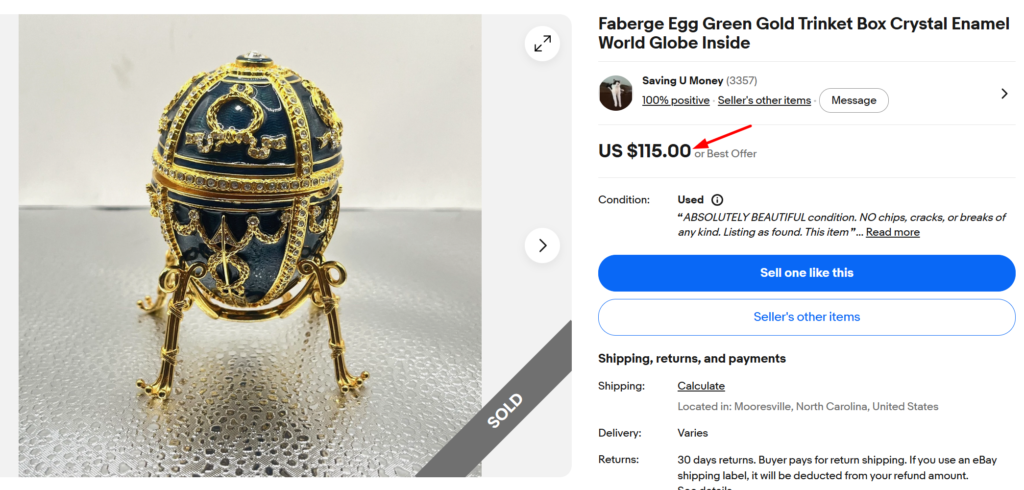
Sold for $115
Actual imperial Fabergé eggs live in museums. But Faberge-style enameled egg boxes made from the 1990s onward by companies like Joan Rivers and various Russian workshops are extremely collectible today.
They’re built from enameled pewter or metal with Swarovski crystal accents, hinged at one end with a magnetic or clasp closure. The base is usually stamped with the maker’s mark and a limited edition number.
- Estimated Value: $25 to $150
- Production Years: 1990s to present
- What to Check: Maker mark and edition number
- Interesting Facts: Never actual Fabergé, always “style”
10. Fitz and Floyd Ceramic Figural Trinket Box
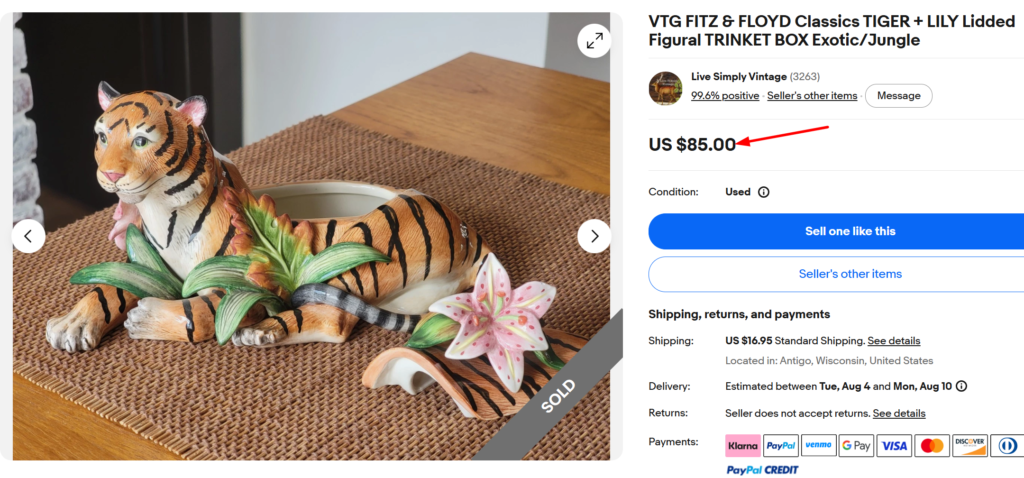
Sold for $85
Fitz and Floyd started importing whimsical ceramics from Japan in 1960, and by the 1980s, their figural trinket boxes had become a serious collectible category. Cats, dogs, teapots, cottages, and Christmas designs are the most common.
The base is marked “Fitz and Floyd” with the year, and pieces from discontinued lines like the vintage Christmas or Renaissance series bring the highest prices. Look for original hangtags, which most collectors usually throw away, but shouldn’t.
- Estimated Value: $20 to $95
- Production Years: 1960 to present
- What to Check: Fitz and Floyd base stamp with year
- Quick Notes: Retired Christmas designs bring the most
11. Wedgwood Blue Jasperware Heart-Shaped Box
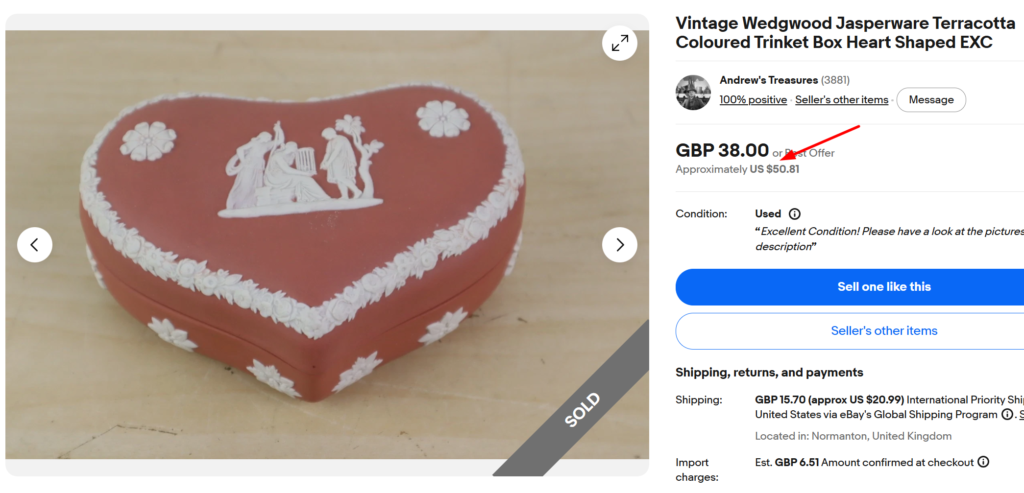
Sold for $50
Wedgwood’s blue jasperware heart is among the most recognized shapes. The classic pale blue matte finish with white raised bas-relief figures (a low-relief sculpting technique) has been made since the late 1700s, but most of what you see today is 20th-century.
Look at the base for the impressed “WEDGWOOD MADE IN ENGLAND” mark. Colors matter here. Blue is common, but sage green, black basalt, lilac, and pink run much higher.
- Estimated Value: $20 to $85 (blue), $80 to $200+ (rare colors)
- Production Years: 1960s to present (heart shape)
- What to Check: Impressed Wedgwood England mark
- Quick Notes: Pink and lilac fetch the most
12. Fenton Milk Glass Hobnail Trinket Box
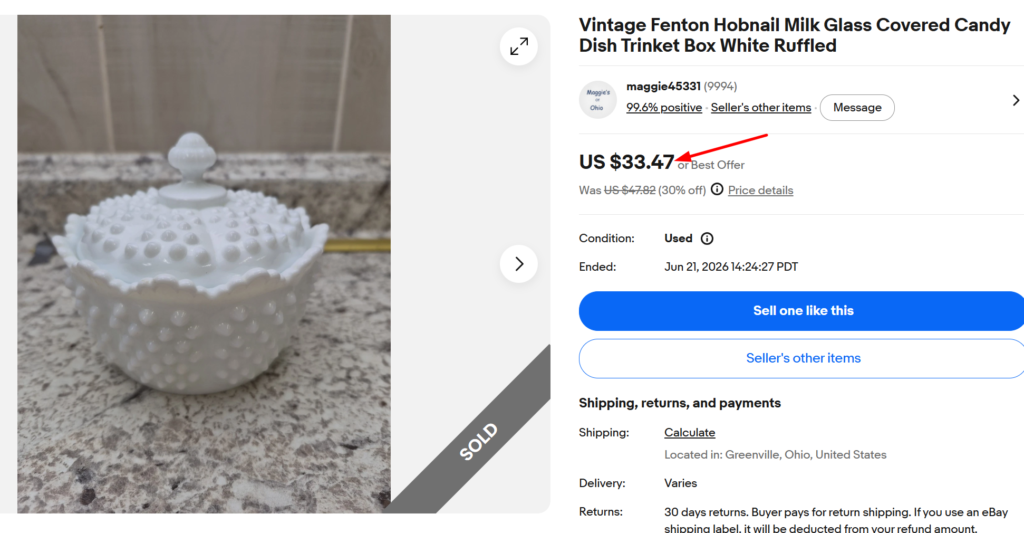
Sold for $35
Fenton introduced the hobnail pattern in 1939, and by 1952, the milk glass hobnail was their most popular design. The pattern shows raised, bumpy dots (hobnails) across the surface. On trinket boxes, it usually comes as a footed round shape with a matching lid.
Look for the raised oval Fenton logo on later pieces, or a silver foil sticker. Colored hobnail like cranberry, blue opalescent, or topaz runs much higher than milk white.
ID Note: Fenton hobnails are sharper than the Anchor Hocking version, and pre-1970 pieces are unmarked. Also, Cranberry and opalescent boxes are worth 3x milk box.
- Estimated Value: $20 to $75 (milk); $60 to $180 (cranberry)
- Production Years: 1939 to 2011
- What to Check: Sharp hobnails, oval Fenton mark
How to Identify an Antique or Vintage Trinket Box?
Before you buy anything or price something you already own, you need to work through the base and the details. Here’s the order I use.
Step 1: Check the Bottom for Marks
Flip the box over and check the base for marks. Look for an impressed backstamp (a mark pressed into the clay before firing), a painted underglaze mark, or a foil sticker.
- Green vs. red Limoges marks: A green underglaze mark usually indicates the porcelain blank was made in Limoges. A red overglaze mark shows the piece was hand-decorated. Genuine hand-painted pieces read “Peint Main” (French for “hand-painted”) and often carry a decorator studio name like Rochard, Artoria, Chamart, or Castel.
- Wedgwood: An impressed “WEDGWOOD” stamp with “Made in England” dates the piece to the 20th century. Just “Wedgwood” without “England” is earlier.
- Capodimonte: A blue underglaze crown over the letter “N” is the classic mark, but the Naples crown and N were never trademarked, so many Italian and even German factories used their own version.
- Lefton China: A gold crown stamp with “Lefton China Hand Painted” plus a red foil “Exclusives Japan” sticker points to the 1950s through the 1970s.
- Made in Occupied Japan: This mark was only used from 1946 to April 1952, when Allied forces occupied Japan. A small window that dates the piece precisely.
Pro Tip: Pieces with both a fired stamp AND an intact foil sticker often sell for 20 to 30 percent more. Most stickers got peeled off decades ago, so a surviving one is a real bonus.
Step 2: Identify the Material
Run your finger over the surface first, then tap the side gently with a fingernail. That single test tells you more than most people think.
- Porcelain has a clear ring when tapped and feels smooth and cool.
- Bone china is thinner, whiter, and often translucent when held to light.
- Milk glass is opaque white glass, not ceramic. Look for a mold seam.
- Cloisonné is enamel held between thin metal wires soldered to a copper or brass body.
- Enamel on copper feels heavier than porcelain and shows a metal rim.
- Alabaster is a real stone. Cold to the touch, veined, and much heavier than a resin fake.
- Papier-mâché is light, lacquered, and often hand-painted in floral designs.
Step 3: Read the Style Cues
The design easily gives away the box’s manufacturing period. Victorian boxes incorporate flowers, cherubs, and gold scrolls. The Art Nouveau boxes (from around 1890 to 1910) have flowing plants, long-haired females, and dragonflies.
The Art Deco boxes (1920s to 1930s) utilize geometrical designs, steps, chromes, and bold colors. The mid-century boxes from Japan and Italy are more imaginative, featuring animals, flowers, and pastel colors.
Step 4: Antique, Vintage, or Reproduction
Antique means at least 100 years old. Vintage covers roughly 20 to 99 years. Reproductions are the tricky ones, and most modern fakes give themselves away in three spots: the base feels too smooth, the paint looks printed instead of brushed, and the hinge is a cheap stamped metal instead of a proper brass fitting.
ID Note: If the “hand-painted” flowers all look identical from box to box, it’s a decal transfer, not real hand-painting. Genuine peint main pieces have small brushstroke variations you can feel with your thumbnail.
If you’ve got a trinket box sitting on your dresser, flip it over tonight and check the base. That single move might turn a five-dollar thrift find into a $200 sale. Or it might just tell you the story of who made it and when, which is honestly half the fun of collecting.