
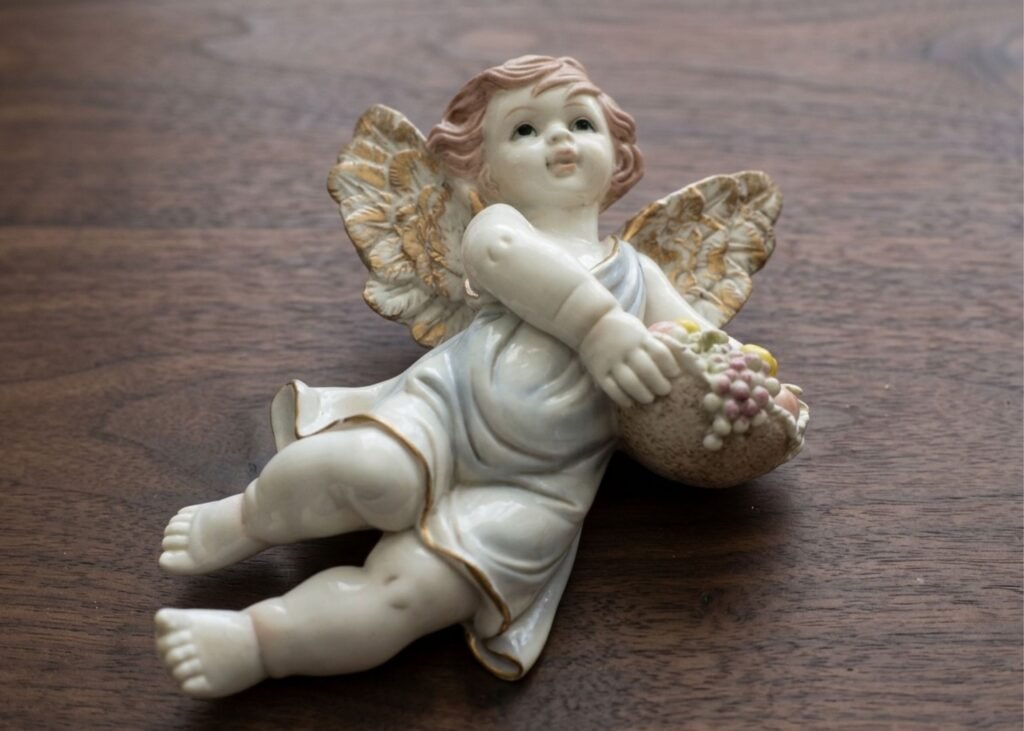
Porcelain Angels originated from Meissen in the year 1710 as the first European producer of hard-paste porcelain. By the mid-1700s, the modeler Johann Joachim Kaendler of Meissen had made angels whose standards are unmatched today.
Through the 1800s, Dresden studios in Saxony developed the famous Dresden lace technique. After World War II, the export wave changed everything.
GIs returning from Germany brought Hummels with them, Lladrós emerged from Spain in the 1950s, and Japanese manufacturing plants distributed large quantities of inexpensive angels through companies such as Lefton, Napco, and Enesco.
This explains why many homes in America continue to display a collection of them. But most people don’t know what these figurines are worth today or how to identify them. This guide will help you with the same.
What Makes an Antique Porcelain Angel Figurine Valuable?
Most porcelain angels you’ll come across at an estate sale or in your mother’s curio cabinet will sell for $10 to $40. But certain pieces bring $400, $800, or even a few thousand at auction.
Five major things that drive the value of porcelain angel figurines are:
- Maker Reputation – Meissen cherubs dating back to 1850 will sell for ten times more than Lefton angels produced in 1955, regardless of size. Meissen, Sèvres, Lladró, Dresden studios, and pre-1950 Hummel collectibles lead the way in terms of value.
- Age and Rarity – Pieces that were made using retired molds or belong to limited edition collectibles, as well as items produced for only a brief time frame, such as the Occupied Japan era from 1945 to 1952, are considered highly valuable.
- Condition – Chips on lace, broken wings, missing fingers, hairline cracks, and heavy crazing all cut value sharply. For Dresden lace, especially, a chipped skirt can drop a figurine from $800 to under $200.
- Originality – Original paint, original gilt, and no restoration matters. Repainted faces and re-gilded wings hurt collector value.
- Demand – Angel figurines are related to the holiday season, Christmas. So, these sell for the highest prices from October through December. Christmas-themed and birthday-month series spike during the holidays.
12 Rare and Valuable Porcelain Angel Figurines
Here are some of the most collectible, high-value antique porcelain angels that collectors chase today, with what to check on each one, and what they are actually worth.
1. Meissen Cupid Flaming Hearts Cherub Figurine (L108)
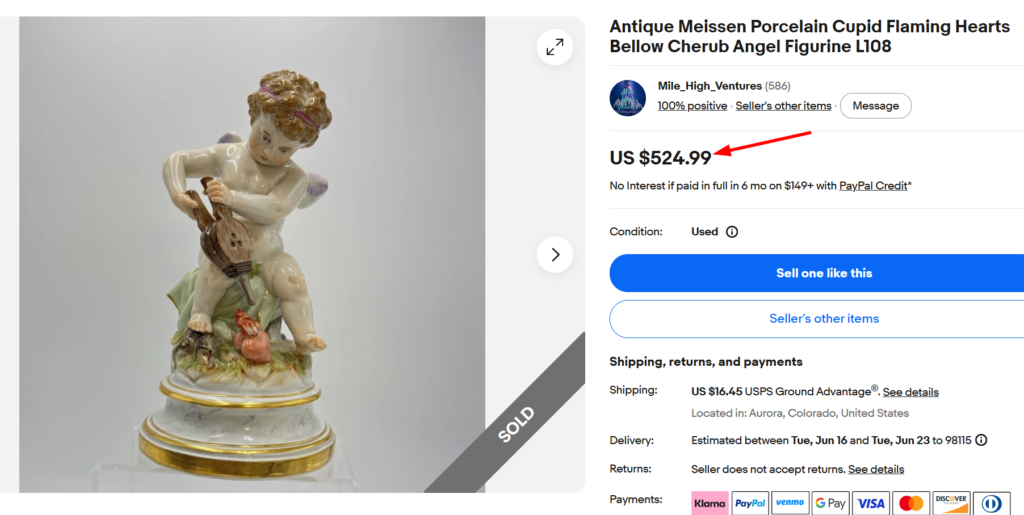
Sold for $525
This is part of the famous Meissen L Series, also called the Love Series or Devotional Series, modeled by Heinrich Schwabe between 1877 and 1880. Each L-numbered piece shows Cupid in a different romantic allegory.
The L108 shows him kneeling and working bellows to fan the flames of two burning hearts on the ground.
Look for the blue underglaze crossed swords mark, plus an incised “L108” and impressed painter and former numbers on the base. The gilt-rimmed circular socle is original.
- Estimated Value: $400 to $900 (restored), $1,200 to $2,500+ (mint)
- Production Years: Modeled 1877–1880; produced late 19th–20th century
- What to Check: Crossed swords mark, L108 incised, gilt socle
- Quick Notes: Schwabe L Series has 100+ love allegories.
2. Lladró Heaven and Earth Figurine (01824)
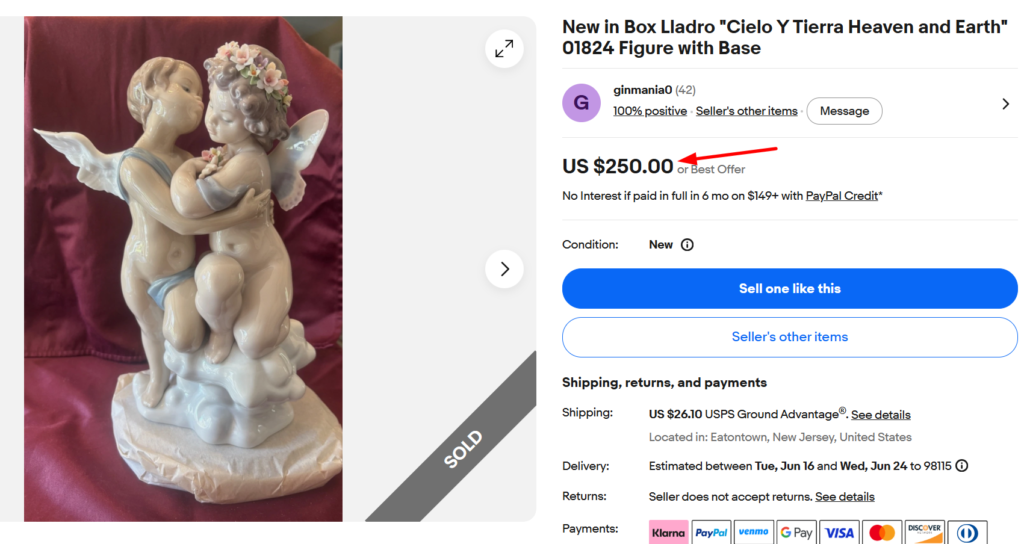
Sold for $250
Heaven and Earth was a limited edition made by Lladró in 1998 and is limited to a production run of only 5,000 statues.
You’ll see two cherub figures here, the male being with wings that are of an angel, representing heaven, while the female is with butterfly wings, representing earth.
The base of the figurine carries the blue Lladró tulip logo with model number 01824 and edition number 5,000. The original box can double the resale value because most have been discarded.
- Estimated Value: $200 to $400 (no box), $400 to $700+ (mint with box)
- Production Years: 1998 (issued and retired in the same year)
- What to Check: #01824 backstamp, edition number, wood base intact
- Quick Notes: Both wing types are unusual in a single Lladró piece.
3. Hummel “Festival Harmony with Flute” HUM 173
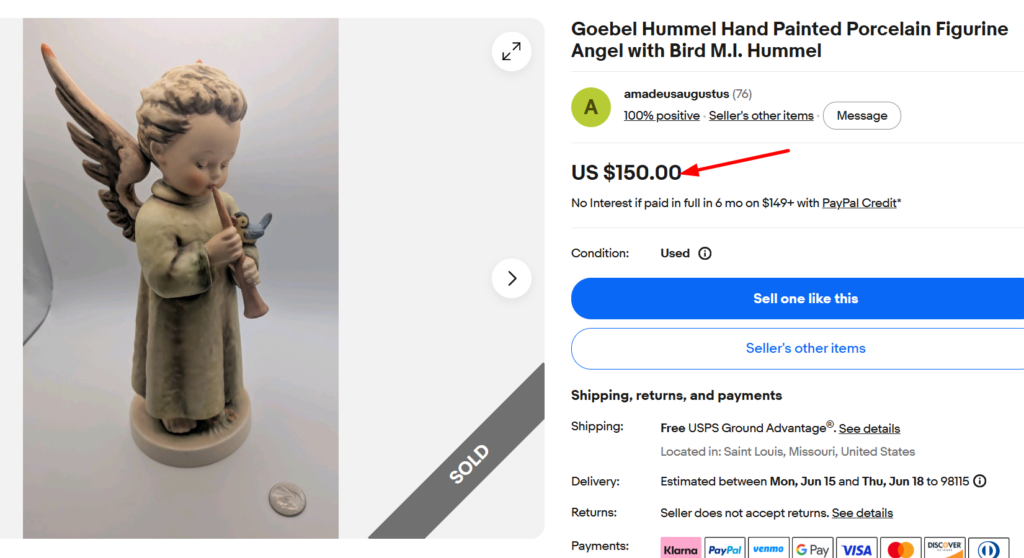
Sold for $150
Festival Harmony Angel was modeled by Reinhold Unger in 1947. The figurine shows an angel dressed in robes playing a flute, with a little blue bird sitting on the flute. It was first released in only an 11-inch size, but Goebel released the 8-inch 173/0 version in 1958.
Look for the incised HUM 173 or 173/0 on the base, the Goebel TMK mark, and the M.I. Hummel signature on the side of the base. The earliest pieces with Crown Mark TMK-1 and Full Bee TMK-2 marks are the most desirable.
- Estimated Value: $60 to $180 (TMK-5/6), $250 to $1,500+ (TMK-1/2 large)
- Production Years: 1947 (large 173); 1958–1972 (small 173/0)
- What to Check: HUM 173 incised, TMK mark, blue bird on flute.
- Quick Notes: Companion piece HUM 172 (Mandolin) often sold as a pair.
4. Charlot Byj Angel With Teddy Bear Figurine
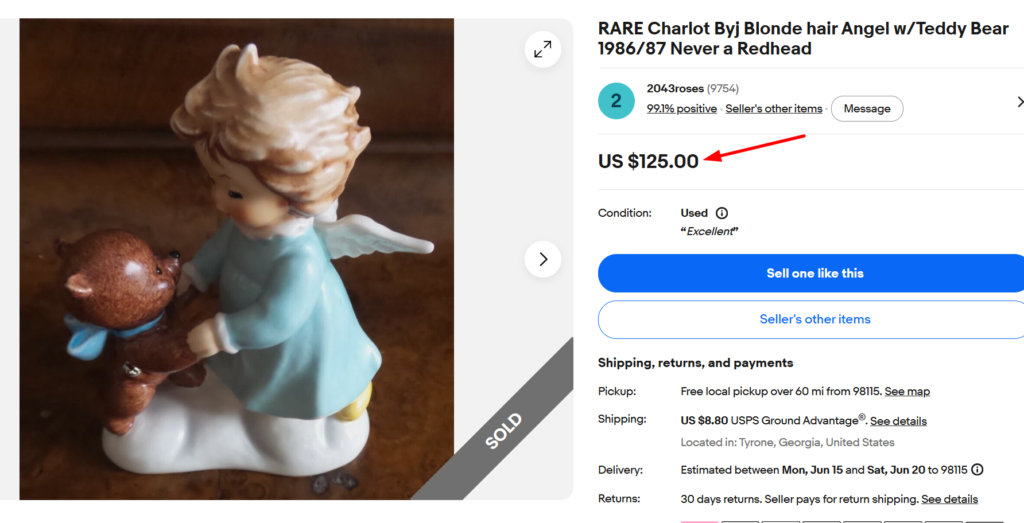
Sold for $125
Charlot Byj was an American illustrator whose greeting card characters caught Franz Goebel’s eye in the mid-1940s. The production period of Goebel’s figurines ran from 1957 to 1988.
The two major series were the well-known Redheads series and the rare Blondes series, along with some brown-haired figures. This Blonde Angel with Teddy Bear is one of the harder pieces to find, since the Blonde series ran in smaller numbers than the Redheads.
You will see the incised Byj mark, the Goebel trademark stamp TMK, and the Charlot Byj mark at the back of the base.
- Estimated Value: $80 to $200 (Blondes), $250 to $500+ (rare variants)
- Production Years: 1957 to 1988 (Charlot Byj line)
- What to Check: Byj number, “Charlot Byj” signature, TMK mark
- Quick Notes: Blonde series scarcer than Redheads.
5. Hummel “Heavenly Angel” HUM 21
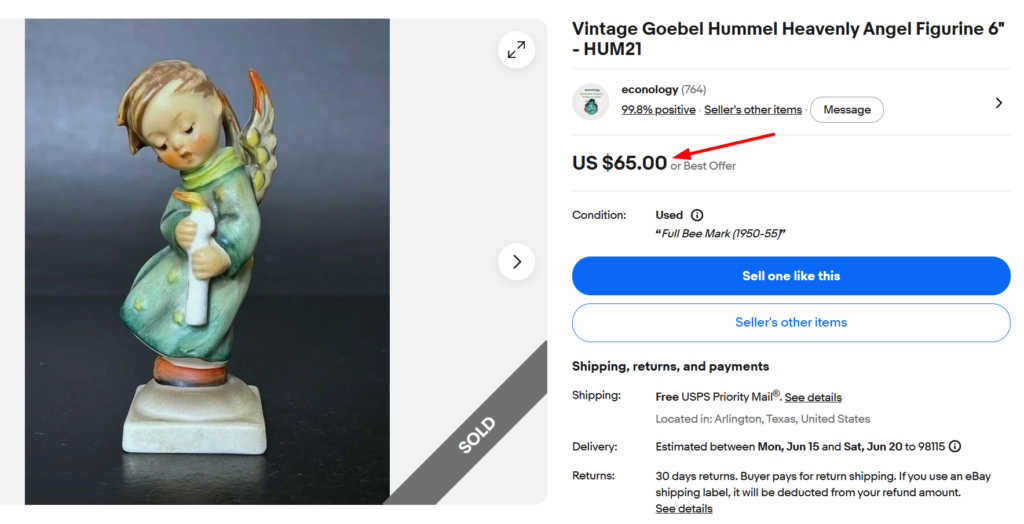
Sold for $65
One of the earliest Hummel figures created was “Heavenly Angel,” introduced in 1935. The doll, originally crafted by Reinhold Unger, holds a lighted candle in both of her hands and is available in many sizes, including 21/0 (4.5 inches tall) and 21/III (9 inches tall).
The figurine also appeared on the first M.I. Hummel annual collector plate in 1971.
Early TMK-1 Crown Mark and TMK-2 Full Bee versions from 1935 through 1959 bring the strongest prices. The Crown Mark pieces marked just “Germany” (not “West Germany”) predate 1945 and are the rarest of all.
- Estimated Value: $80 to $350 (small sizes), $500 to $1,800+ (large or early marks)
- Production Years: 1935 to present
- What to Check: Goebel TMK mark, size designator, candle intact
- Quick Notes: “Germany” mark pre-1945, rarest of all.
6. Goebel Madonna and Child #10/I “Flower Madonna”
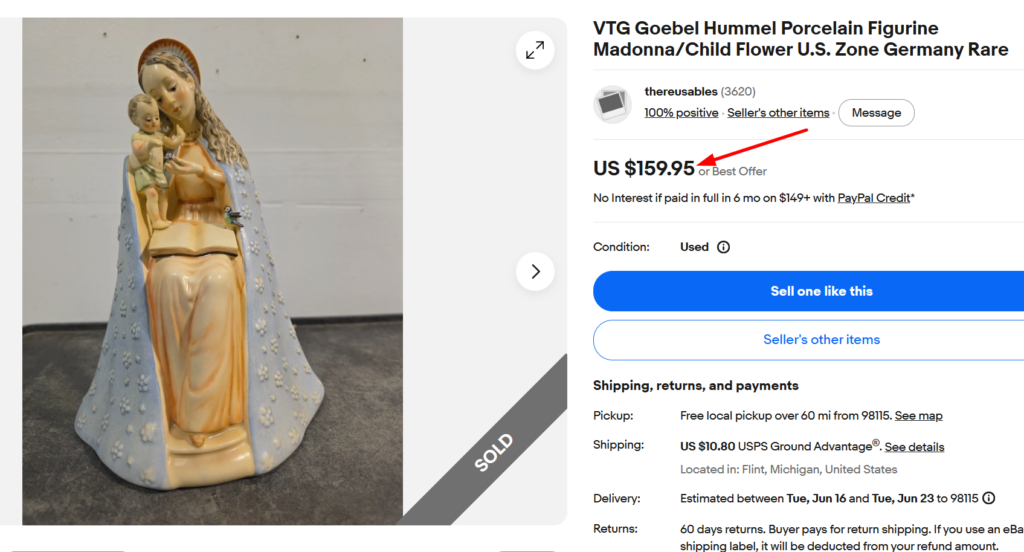
Sold for $160
Not really an angel, yet the Flower Madonna is found in most Hummel angel collections because she was created in 1935, alongside original Hummels, by Reinhold Unger.
The #10/I figure is approximately 8 to 9 inches in height and shows Mary holding the Christ child while flowers wrap around the base. The piece comes in colored versions and a rarer all-white version.
The Full Bee TMK-2 mark from 1950 to 1959 is most common, and Crown Mark TMK-1 pieces are scarce. The white version with a brown cloak is rarer than the standard blue cloak and brings a premium.
- Estimated Value: $40 to $90 (later marks), $150 to $400+ (TMK-1 or TMK-2)
- Production Years (of the pattern): 1935 to present
- What to Check: Goebel TMK mark, 10/I incised, cloak color
- Quick Notes: Brown cloak rarer than blue, white scarcer still
7. Lladró “Heavenly Harpist” #5830
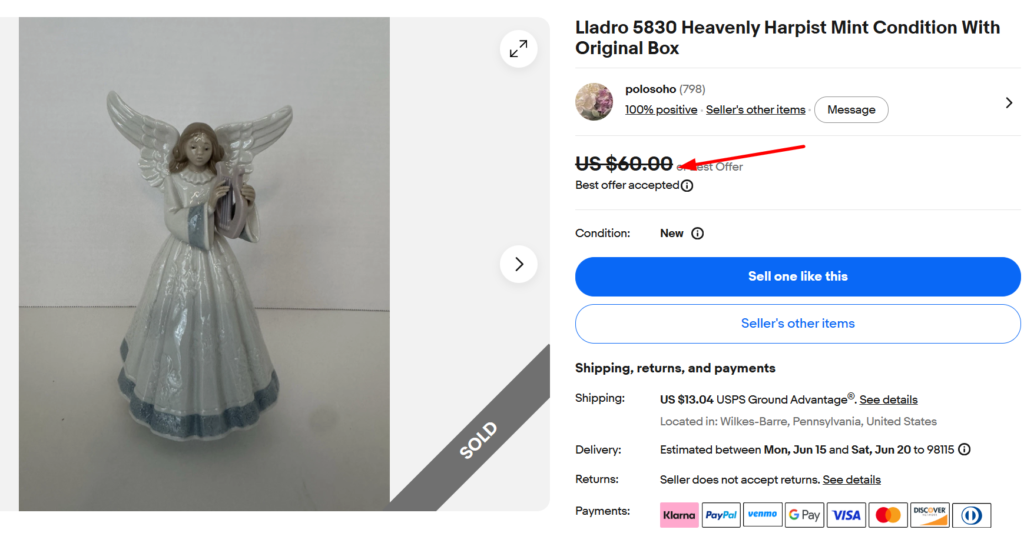
Sold for $60
This 7-inch-tall glazed porcelain angel was made by Francisco Catalá and was released in 1991. The angel sits on a cloud and plays a harp painted blue and white, Lladró’s iconic matte porcelain face.
This figurine was then retired the following year, meaning that this particular figurine was only made for around a year. This makes it rare for collectors of Christmas items by Lladró.
Look for the blue Lladró backstamp with model number 5830 incised. Original boxes nearly double the resale value, since this piece was often given as a Christmas gift, and the boxes are rare today.
- Estimated Value: $90 to $200 (no box), $180 to $300+ (with box)
- Production Years: 1991 to 1992
- What to Check: Blue tulip backstamp, #5830 incised, harp intact
- Quick Notes: Companion pieces include Angelic Cymbalist, Strings.
8. Occupied Japan Cherub Figurine
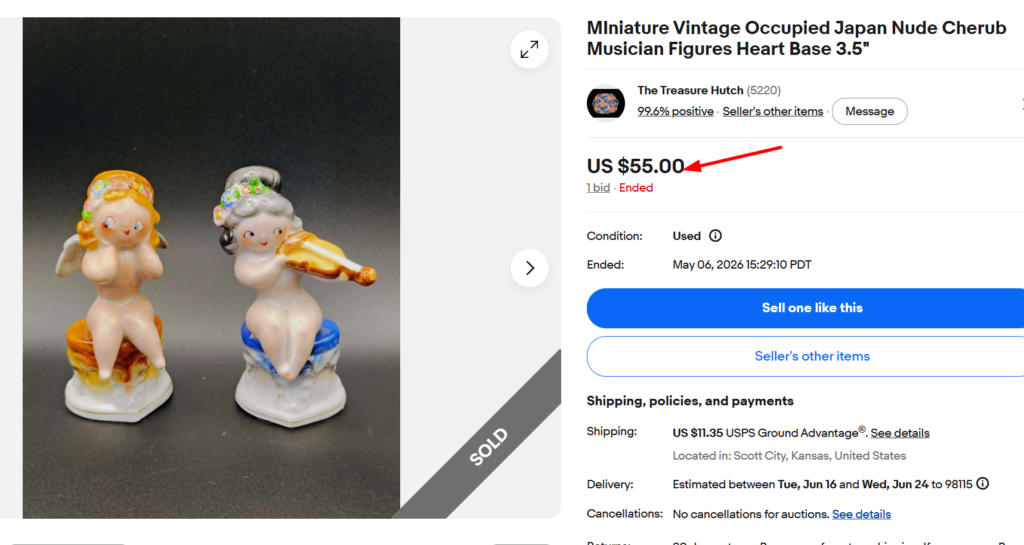
Sold for $55 (pair of two)
The mini angels or cherubs were manufactured in Japan from 1945 until 1952, which was during the period of occupation by American forces, and the goods had to bear the imprint of “Occupied Japan” or “Made in Occupied Japan”.
These miniature figures vary in height from three to six inches and resemble late Victorian European designs. The black ink “Occupied Japan” stamp on the base is the hard date marker.
Anything with this mark is 1945–1952, period. Most pieces are inexpensive, but well-painted angel pairs and larger pieces with detailed gilt sell for more.
- Estimated Value: $8 to $30 (small singles), $50 to $300+ (large or pairs)
- Production Years: 1945 to 1952
- What to Check: “Occupied Japan” stamp, paint quality, gilt details
- Quick Notes: Less valuable; “Made in Japan” mark alone means post-1952.
9. Napco Birthday Angels A1361–A1372 (Spaghetti Trim)
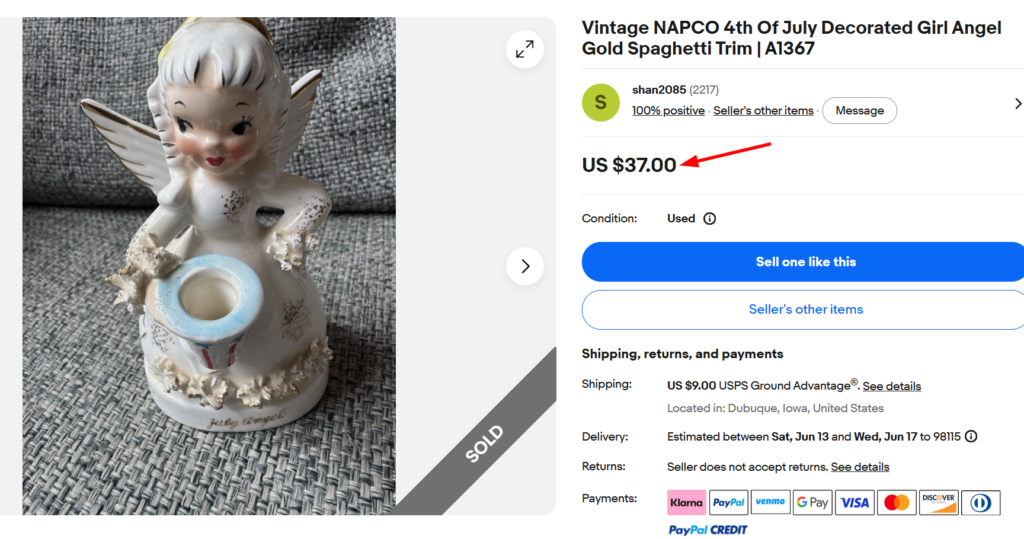
Sold for $37 (single)
The Napco Birthday Angel dolls were introduced in 1956, with model numbers ranging from A1361 to A1372, representing each month, starting with January and ending with December. They are distinguished by their “spaghetti trim,” an ornate, textured porcelain coil resembling fur or lace at the hem of the doll’s dress.
The 1956 date is often incised on the base alongside the model number. Bell versions have existed for some months, with a small clapper inside the dress. Made in Japan during the post-Occupied Japan export boom.
- Estimated Value: $12 to $40 each, $250 to $500+ for full sets
- Production Years: 1956 (initial release)
- What to Check: A1361–A1372 incised, spaghetti trim, foil label
- Quick Notes: Bell versions scarcer than figurines.
10. Lefton Birthday Angels Series #3332
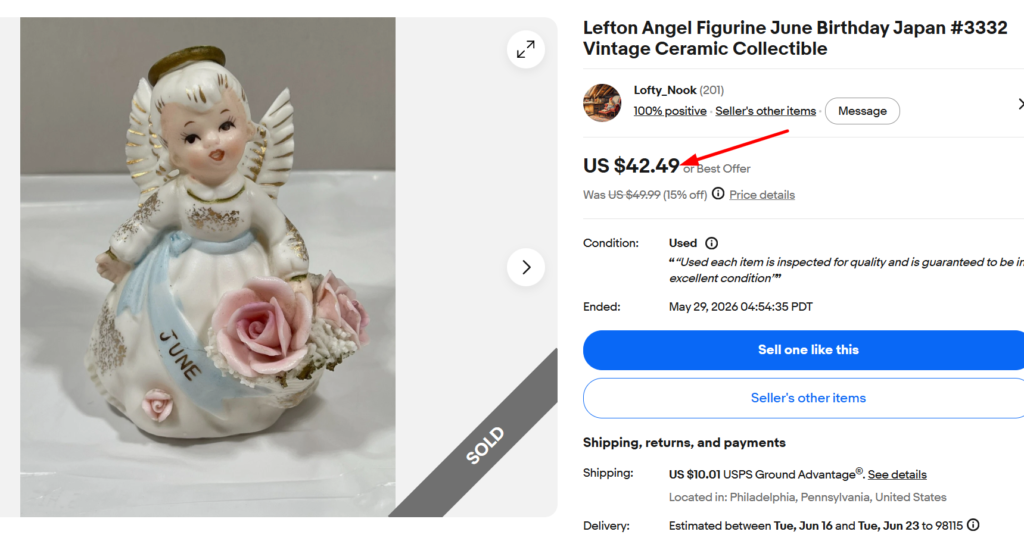
Sold for $42 (single)
The Lefton Birthday Angel series is one of the most collected mid-century lines. Every month has an angel girl figurine made of porcelain measuring 4 inches with a flower or an item that is symbolic for the particular month in hand.
April girl has daisies, July girl has firecrackers, while December girl has holly. Each piece is hand-painted on hand-painted bisque and partly glazed.
Look for the incised KW3332 number on the base, plus the red Lefton foil sticker if it’s still attached. Original stickers add to the resale price.
- Estimated Value: $10 to $35 each, $200 to $500+ for full sets of 12
- Production Years: 1950s to 1980s
- What to Check: KW3332 mark, red foil sticker, month symbol
- Quick Notes: Complete 12-month sets bring real premium.
11. Royal Doulton “Christmas Angel” HN3733
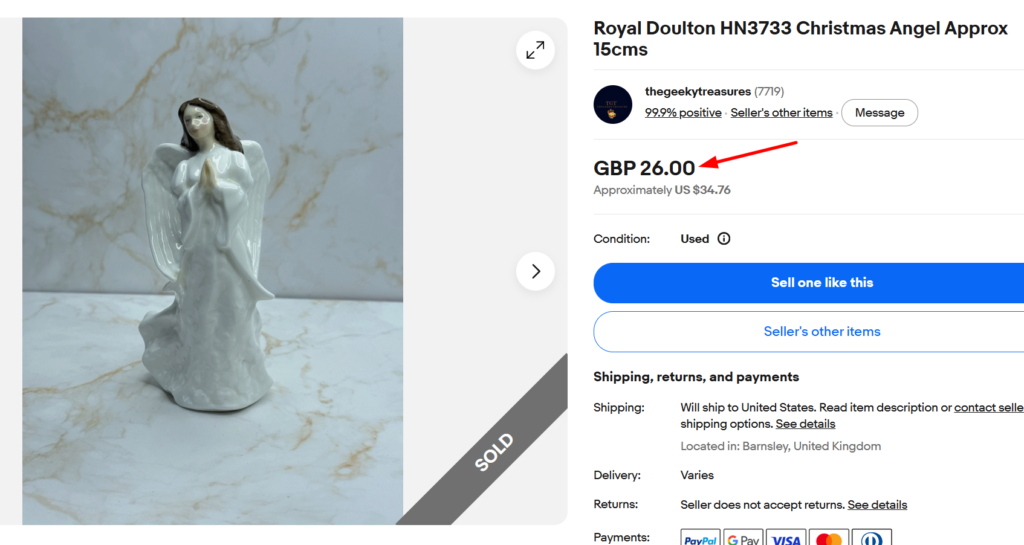
Sold for $26
Designed by Alan Maslankowski, this figurine was released between 1996 and 1998. This is one of the pieces included in the Sentiments collection of Royal Doulton. This 5.75-inch English bone china angel carries a Christmas tree in front of her white robes trimmed in gold.
The HN numbers for Royal Doulton are important in identifying it. It has a backstamp that features the company’s logo, the Lion and Crown, the inscription “Royal Doulton” in script, and its HN3733 number, along with the name of the figurine.
The rarity of this piece comes from the three-year manufacturing period.
- Estimated Value: $20 to $85 (no box), $60 to $130 (with box)
- Production Years: 1996 to 1998
- What to Check: HN3733 backstamp, gold trim intact, Christmas tree
- Quick Notes: Maslankowski designed many Sentiments pieces.
12. Hummel “Angel Trio” Candleholders (HUM 38, 39, 40)
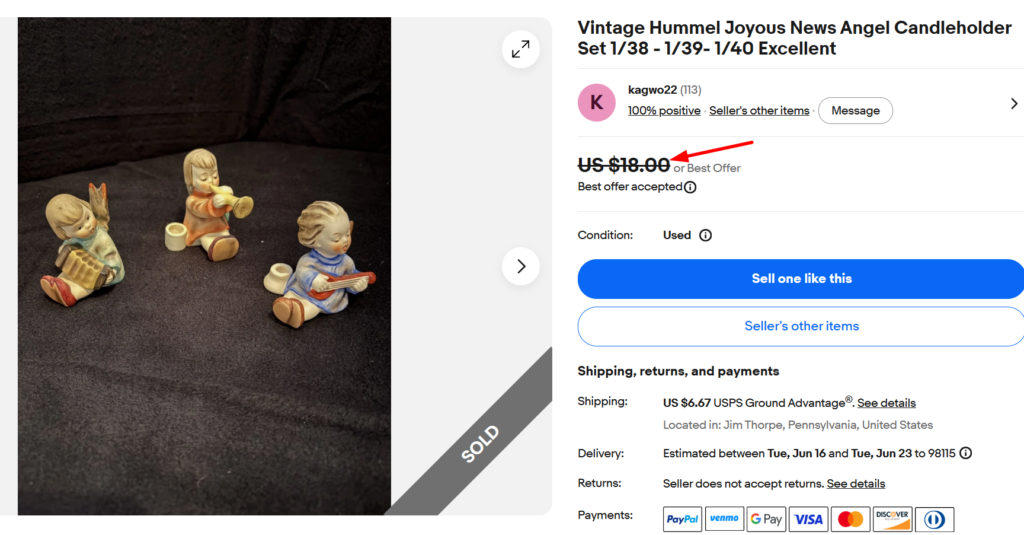
Sold for $18 (set of 3)
Angel Trio is a set of three tiny candelabra, measuring roughly 2 inches high, created by Reinhold Unger in 1935. HUM 38 features a lute player, HUM 39 plays the accordion, and HUM 40 plays the trumpet.
They were almost always sold as a set in old Goebel catalogs. Older pieces have a wider base and a taller candle cup, then switched to a lower cup around TMK-3.
Shoe color varies between purple, brown, tan, and green, which helps collectors date variants. Purple shoes are scarcer and command a premium.
- Estimated Value: $40 to $120 each, $150 to $400+ for early sets
- Production Years: 1935 to present
- What to Check: Wide vs narrow base, shoe color, candle cup height
- Quick Notes: Purple shoe variant adds premium.
How to Identify Antique Porcelain Angel Figurines
Identification of an antique or vintage porcelain angel figurine is not that challenging if you know what signs to check. From maker marks to physical features and wear and tear, here’s what you need to check first:
Reading Maker’s Marks on the Base
To spot an antique angel figurine, the base is the first place to check. Hallmarks and maker marks are where dating gets precise. Here are the most common marks you’ll find on antique and vintage porcelain angel figurines:
- Meissen Crossed Swords – Two swords are crossed in underglaze blue. Dating back to the year 1722, with minor variations for dating particular eras. Pommels can be seen after about the year 1815 on the handles of the swords.
- Dresden Blue Crown – A small crown in underglaze blue, often with “Dresden” or “Saxony” written below. Used by various Dresden studios from 1883 onward. Not a single factory, but a group of decorating studios.
- Goebel “Full Bee” (TMK-2) – A large bee inside a “V,” used from 1950 to 1959. Pieces with this mark are mid-century Hummels and bring strong prices.
- Lladró Tulip Mark – A blue stylized flower with “Lladró Made in Spain.” The accent over the “o” and slight changes in the logo help date pieces from the 1960s forward.
- Capodimonte Crown Over N – A blue crown above the letter N, used on Italian-made pieces. The trademark isn’t restricted, so quality varies wildly. Real Royal Naples pieces are 18th century, but most “Capodimonte” you’ll see today is mid-20th century or later.
- Lefton “KW” or Red Foil Sticker – Numbers like KW1929 or KW3332 incised or stamped on the base. Earlier pieces have a red foil sticker that often falls off over time.
- Napco Labels – Number codes like A1928 or S1392, often with a foil “Napco” sticker. Birthday Angel series numbers are well-documented.
- Made in Occupied Japan – Stamped in black ink on pieces made between 1945 and 1952 for US export. The mark was required by US occupation authorities and is a hard date range. Any “Occupied Japan” mark dates the piece to that 7-year window.
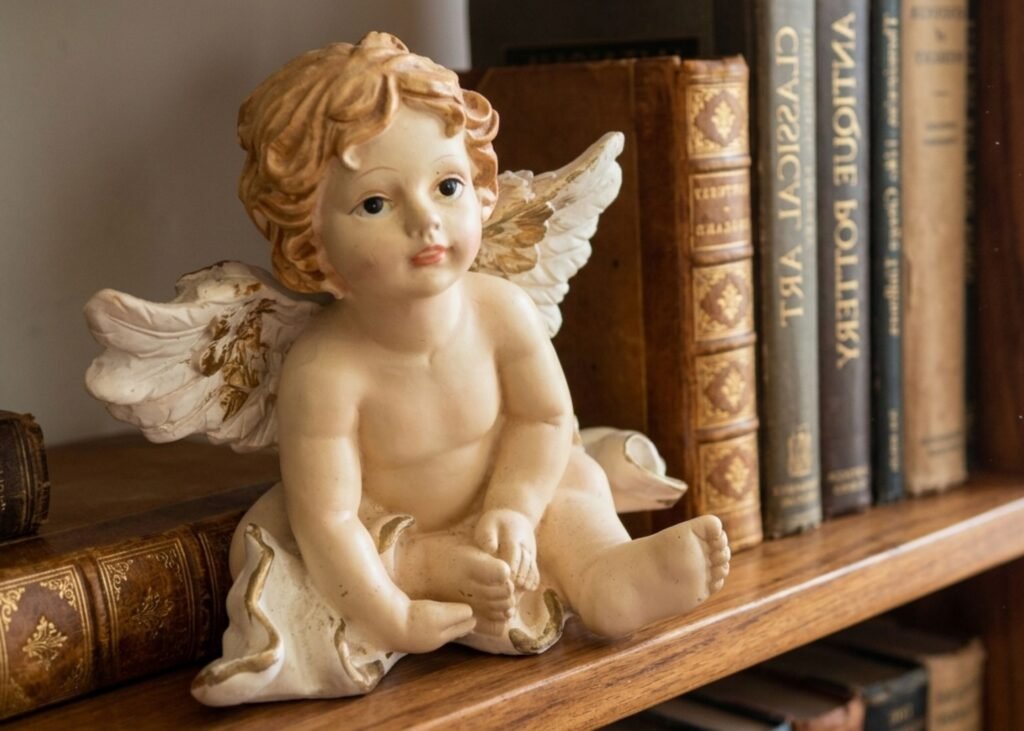
Reading the Porcelain Itself
True hard-paste porcelain would feel dense, cool, and heavy relative to its weight. Porcelain, known as bisque or biscuit, would be the porcelain that is unglazed and has a somewhat chalky feel.
Most cherubs and putti will be made from bisque porcelain. The glazed porcelain will have a gloss finish. Soft paste porcelain was used in early French ceramics.
Run a finger across the unglazed base ring at the bottom. Older pieces feel slightly rough and have small kiln grit or wear marks. Modern reproductions tend to feel smoother and more uniform.
Spotting Age Through Wear and Painting
Hand-painted details show small brush variations, like uneven thickness on a wing tip or a slightly off-center eye. Transfer-printed or decal designs from later production look perfectly uniform.
Crazing (fine cracks in the glaze) builds up slowly over decades. It’s a sign of age, but not always good news because heavy crazing drops value on most pieces.
Lastly, gilt wear on gold details is normal on Victorian and Edwardian pieces. The original gilt has a slightly mellowed, warm tone. Re-gilded or repainted gold looks bright and harsh.
Common Fakes and Reproductions
The Capodimonte “crown N” mark is unprotected, so anyone can use it. Many “Capodimonte” angels on eBay are modern resin or Italian-imported ceramic with no real connection to the historic factory.
Dresden lace gets faked, too. Observe the lace directly: authentic Dresden lace is extremely delicate, nearly as thin as paper, and fragile. Reproduction lace tends to be heavier, more evenly crafted, and stiffer in texture. Original lace often has damage that lowers its worth.
Handy Tip: If a piece is claimed to be “antique” but it has a “Made in China” or “Made in Taiwan” stamp, the country-of-origin mark alone proves it was made after 1891, when US law required imports to carry one. Most “Made in China” porcelain is post-1980s.
If you’ve got an inherited porcelain angle, the first step is always the same. Check and photograph the base, and look up the mark. Most porcelain angels are common, but the ones that aren’t can be worth real money.