
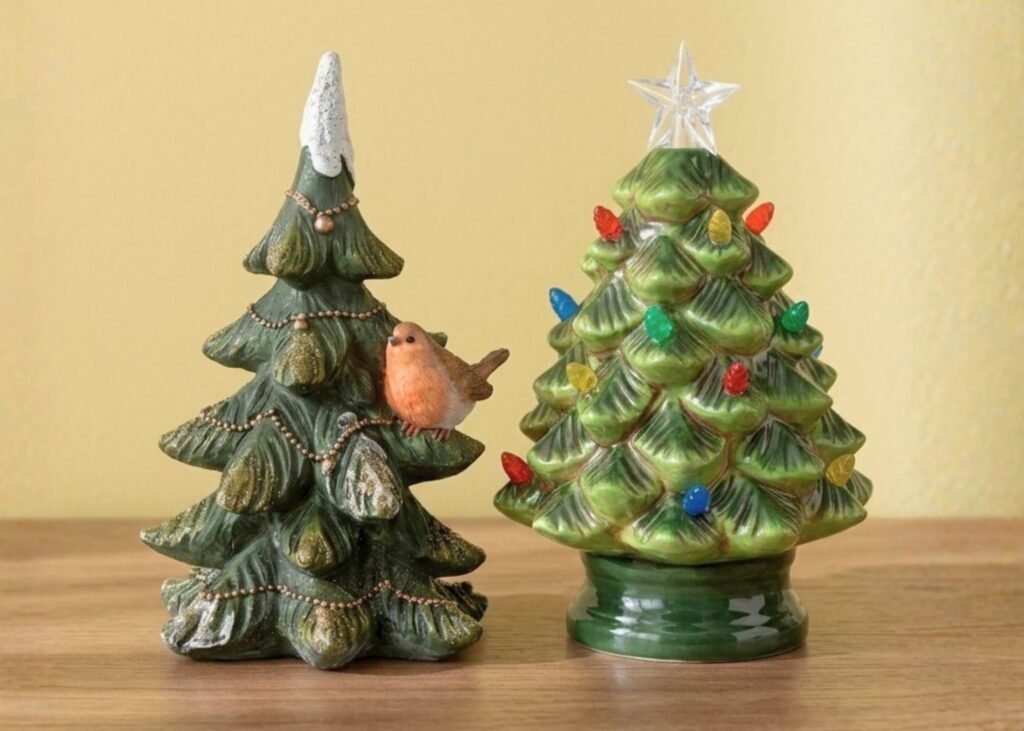
Ceramic trees started off in the 1940s with private potters making one-off trees at home. These early pieces had tiny glass bulbs that lit up individually, and they’re some of the rarest you’ll ever come across today.
Things changed in 1958, when the Atlantic Mold Company copyrighted its now-famous A-64 tree design. The tree mold spread fast. Through the 1960s and 70s, families began local studios to make their own. Holland Mold, Arnel’s, and Nowell’s all started their own designs.
By the late 1980s and 90s, the popularity declined due to cheaper imports and busier lives. Atlantic Molds closed in 1999 and sold its molds onward, which is why you’ll still find new trees today that look identical to the old ones.
In this guide, you’ll learn to identify vintage ceramic Christmas trees, rare models from major makers, and what they’re worth today.
How to Identify a Real Vintage Ceramic Christmas Tree
Ceramic christmas trees look quite similar to each other. To identify an original vintage example, you need to assess the following five key things:
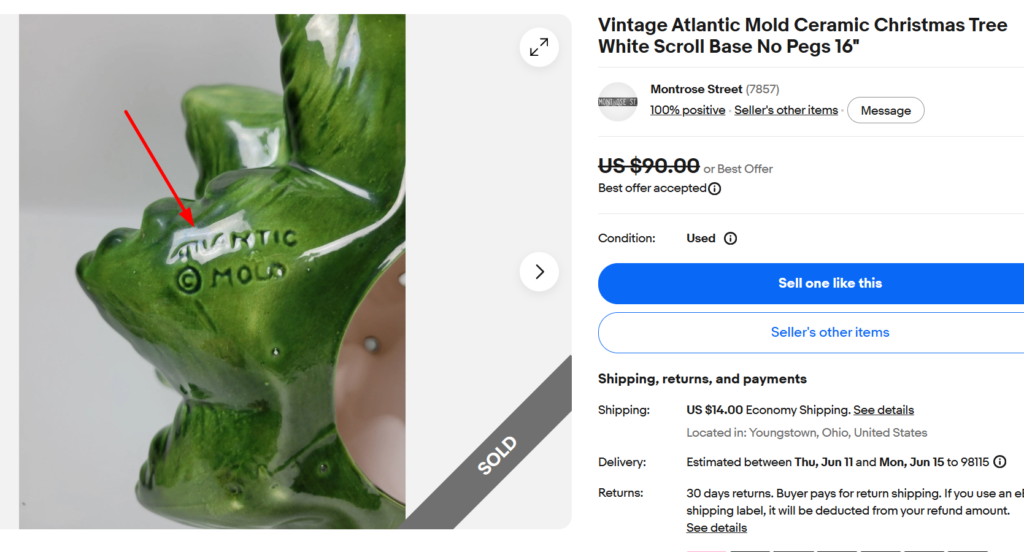
- Maker Stamps – Look for “Atlantic Mold,” “Holland Mold,” “Arnel’s,” “Nowell,” or “Dogwood Ceramic” pressed into the bottom. A clear maker mark is the best sign you’ve got an original. If the base has no name at all, it’s still possibly vintage, but harder to date.
- The Number Trick – Truly old trees are usually individually numbered by the studio that fired them, often along with the painter’s initials and a year. Manufactured new trees don’t follow any such number system.
- Date Stamp of the Mold vs. Manufacture Date – A stamp reading “1958” or “1974” refers to when the mold was copyrighted; it does not refer to the manufacture date of your individual tree. The A-64 mold lasted for many decades.
- Bulbs and Lights – Original 1940s and early 50s trees used small glass bulbs that lit up one by one. From the 1960s on, plastic peg bulbs took over, with a single bulb at the base lighting everything from inside. Plastic bulbs in bird, dove, star, or twist shapes are normal for vintage. Sleek LED uplights and printed logos point to modern copies.
- Weight and Finish – Older trees feel heavier and slightly rough where they were hand-finished. The glaze can show fine crackling, called crazing, which is a good age sign on its own.
Handy tip: A signed base with painter’s initials, the firing year, and a clear mold mark is the most desirable combination. Such pieces are highly collectible.
How to Date Your Ceramic Tree by Decade?
Ceramic trees from different eras show distinctive features, which can help you date them. And knowing the rough era helps you set a realistic value:
- 1940s and Very Early 50s – Hand-thrown, glass-bulb trees made by private potters. Very rare. Hardest to find, highest value when authentic.
- Late 1950s to Mid 1960s – First wave of Atlantic A-64 trees. Glass bulbs gave way to plastic pegs. Often heavier ceramic and thicker paint.
- 1970s – The golden era. Most vintage trees you’ll see today are from this decade. Plastic bird, dove, twist, and star bulbs are standard. Many have music box bases.
- 1980s – Production tailed off, but molds were still active. Trees feel lighter, and the paint is usually thinner.
- 1990s and Later – Mass-produced overseas imports start showing up. Atlantic closed in 1999, but its molds were sold and reused.
How Much Is a Vintage Ceramic Christmas Tree Worth?
Most vintage ceramic Christmas trees sell for $40 to $150 today. Common 1970s Atlantic Mold trees in good shape sit around $80 to $150. Add a working music box, a rare color, or an unusual feature, and the price climbs up to $200 to $400 or more in the holiday season.
The very high-end pieces include pre-1958 glass-bulb trees, oversized two-piece trees with music boxes and all original bird lights, or trees with paperwork from a known studio. These can hit $300 to $500+.
The five things that drive the value of a ceramic Christmas tree are: the maker, the bulbs, the size, the condition, and the time of year you sell. Holiday prices in November and December run a lot higher than off-season July prices.
Features That Make Ceramic Christmas Trees Valuable
The base model green ceramic tree shows up everywhere and is quite common. What makes the piece rare and valuable are the features that are hard to find today, such as:
- Original boxes and paperwork, which almost never survive.
- Original glass bulbs from pre-1960 pieces. These rarely survive.
- Working music box bases that still play tunes like Silent Night or O Christmas Tree.
- Bird, dove, or angel-shaped plastic lights still all present and matched.
- Snow-flocked or pearlized finishes in their original condition.
- Nativity scene bases with hand-painted figures inside.
- Unusual colors: pink, blue, white-and-gold, silver, mother-of-pearl.
- Large size, especially trees over 22 inches tall in two-piece form.
10 Valuable Vintage Ceramic Christmas Trees (Brands & Styles)
Let’s take a look at some of the most popular vintage ceramic Christmas trees from the top makers that sell well today at online sales as well as antique stores.
1. Vintage Lava Volcano Pearl Essence Tree
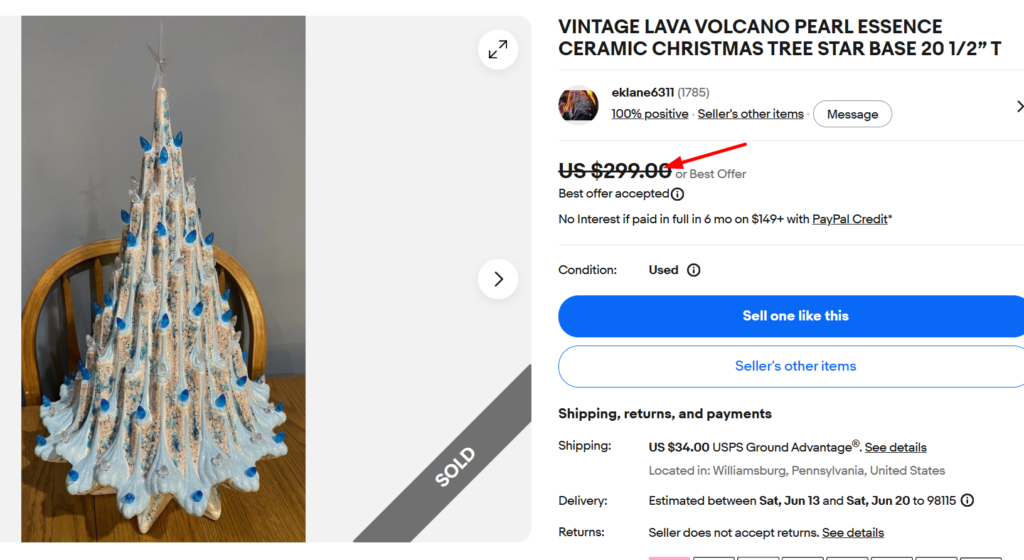
Sold for $300
This example is an outlier in the vintage ceramic tree category. The “Lava Volcano Pearl Essence” finish combines a pearlized base glaze with a speckled lava-style overglaze, giving the surface that mottled icy-blue-and-cream texture. It’s a 1970s specialty finish that very few painters ever used.
At 20.5 inches with a star-shaped base, clear icicle accents, and matched blue peg lights, this piece is a valuable find. Specialty glazes like this are what separate $80 trees from $300 ones.
- Estimated Value: $150 to $350
- Production Years: 1970s
- What to Check: Pearl glaze, lava speckle, icicle accents
- Quick Notes: Rare specialty finish, few were ever made.
2. Atlantic Mold White Ceramic Tree with Blue Bird Lights
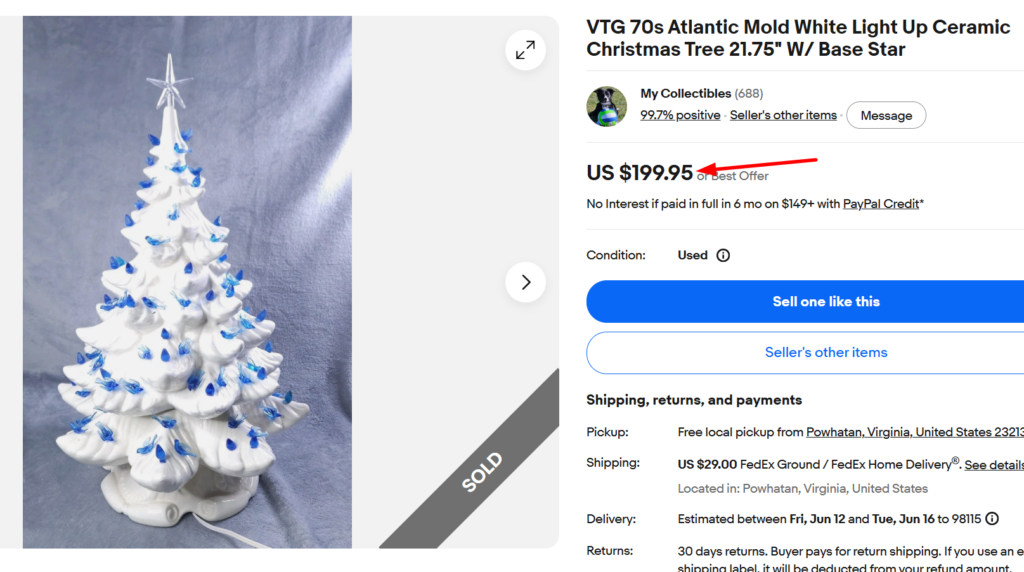
Sold for $100
This is a tall example of an Atlantic Mold tree made back in the 70’s, using the rarer white glaze and complemented by blue plastic peg lights all around. At almost 22 inches tall, this example tops the average 14” to 18” tabletop height, which adds to the value.
The clear star topper and scrolled curved base are classic Atlantic A-series features. White, clean, no discoloration at all, along with a complete set of matching blue light bulbs, can reach up to $200.
- Estimated Value: $150 to $250
- Production Years: 1970s
- What to Check: White stays white, full blue bulb set
- Quick Notes: Tall size plus rare color combo drives price.
3. Atlantic Mold Two-Piece Tree with Music Box Base
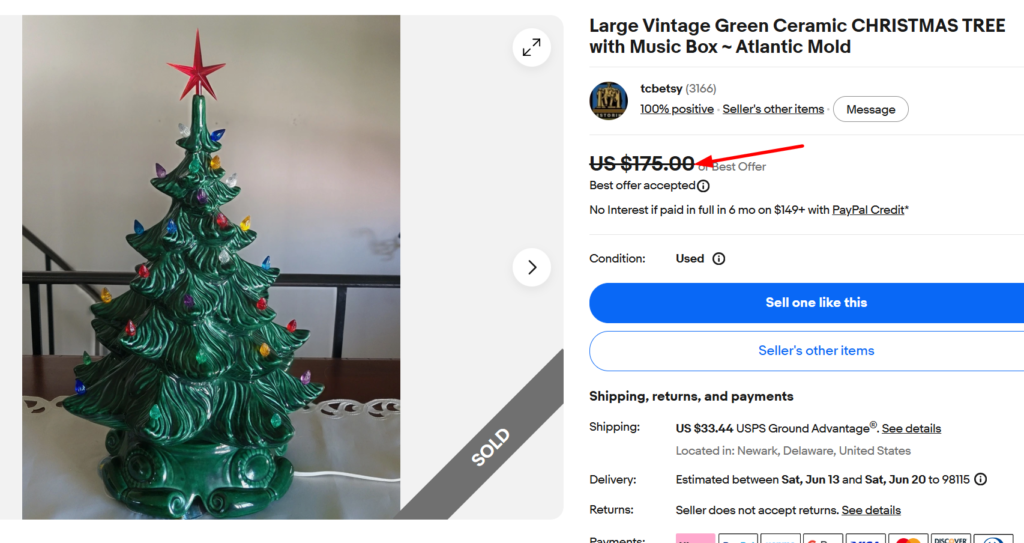
Sold for $175
The two-piece design separates the tree from the base, with the music box housed inside the base. Atlantic and Arnel both made music box versions in 16 to 18 inches.
The advantage of the two-piece form is easier storage, but it also means more parts to lose. So, a complete set with both pieces, the working music box, and the original star is where the most value lies.
- Estimated Value: $130 to $280
- Production Years: 1970s
- What to Check: Both pieces match, music box works.
- Quick Notes: Mismatched bases are common pitfalls.
4. Vintage NorwellBlue Ceramic Christmas Tree
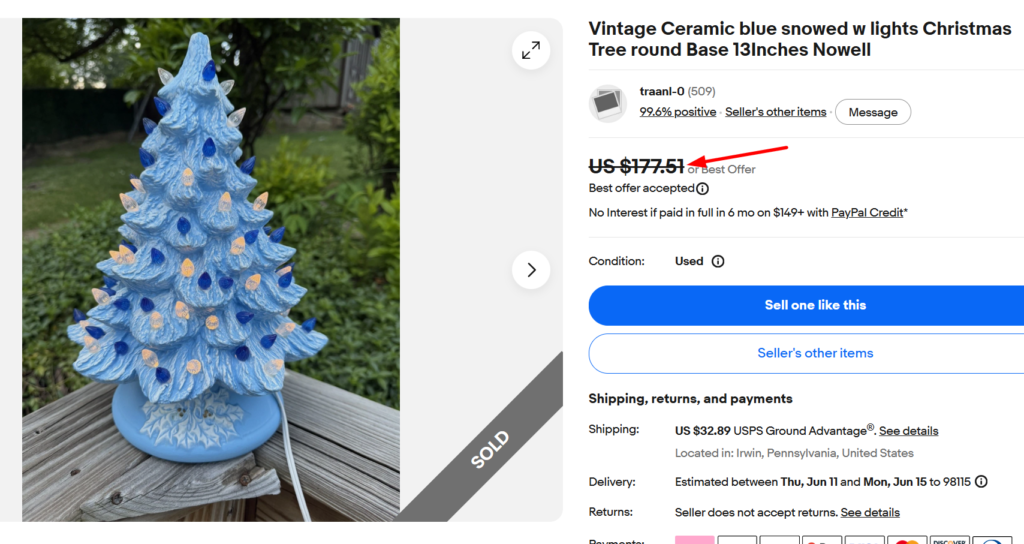
Sold for $177
True blue trees are uncommon. Most were custom paint jobs by the original ceramics class painter, which means you’re really buying a one-off rather than a standard production color. Some came out icy pale, others a deeper cobalt.
Because each blue tree was a personal choice, no two examples usually look the same, and that uniqueness drives the price for the right buyer.
- Estimated Value: $80 to $200
- Production Years: 1970s, occasional 80s
- What to Check: Even blue glaze, signed base.
- Quick Notes: Often hand-customized.
5. Atlantic Mold A-64 Green Tree with Bird Lights
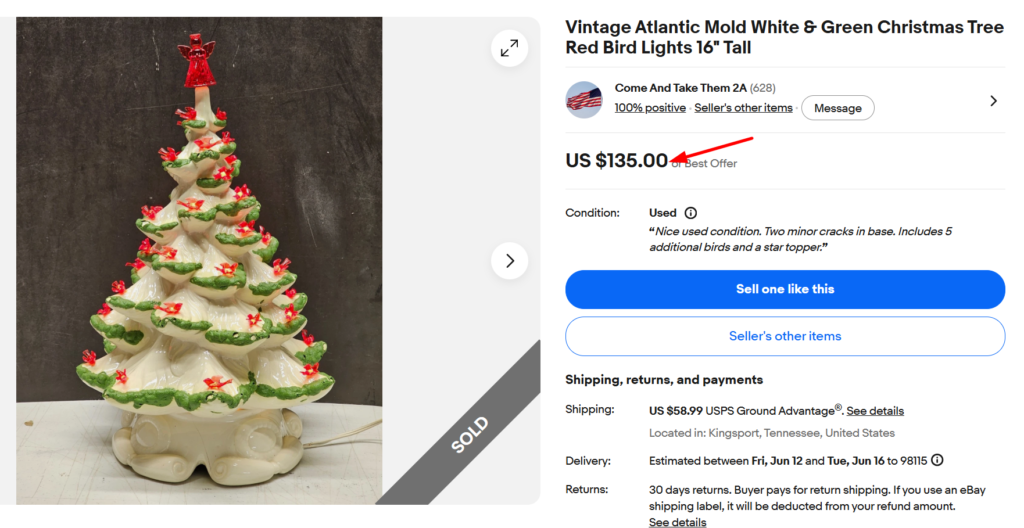
Sold for $135
This is the classic shape of the “vintage ceramic Christmas tree” most people know of. Atlantic’s A-64 design, first copyrighted in 1958, kept running for four decades.
The 1970s green version with a glossy glaze, a scrolled base, and original bird-shaped plastic lights is the most collectible piece of this category. A complete set with all original birds and the lit star is worth the most.
- Estimated Value: $80 to $180
- Production Years: 1958 mold, peak 1970s
- What to Check: Scrolled base, bird lights, signed bottom
- Quick Notes: Most common style, condition decides price
6. Holland Mold Multicolor Light Christmas Tree
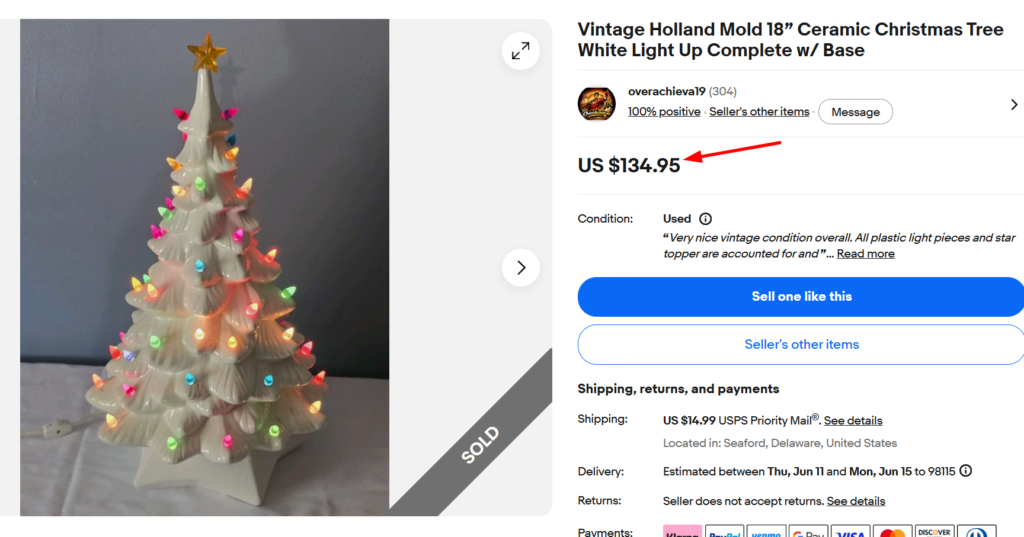
Sold for $135
A complete Holland Mold tree in the 18-inch size is one of the most balanced finds you can come across. White glaze, the gold star topper still attached, and a full set of mixed-color flame-tip peg lights in pink, orange, yellow, green, blue, and red.
Holland’s tree shape is a little rounder than the Atlantic A-64, with softer, curved branch tips. A clean white finish with no yellowing keeps the price firmly in the upper tier.
- Estimated Value: $100 to $180
- Production Years: 1970s to 1980s
- What to Check: HM stamp, gold star, full light set.
- Quick Notes: White glaze plus mixed flames is popular
7. Atlantic Mold 1975-Dated White and Gold Tree
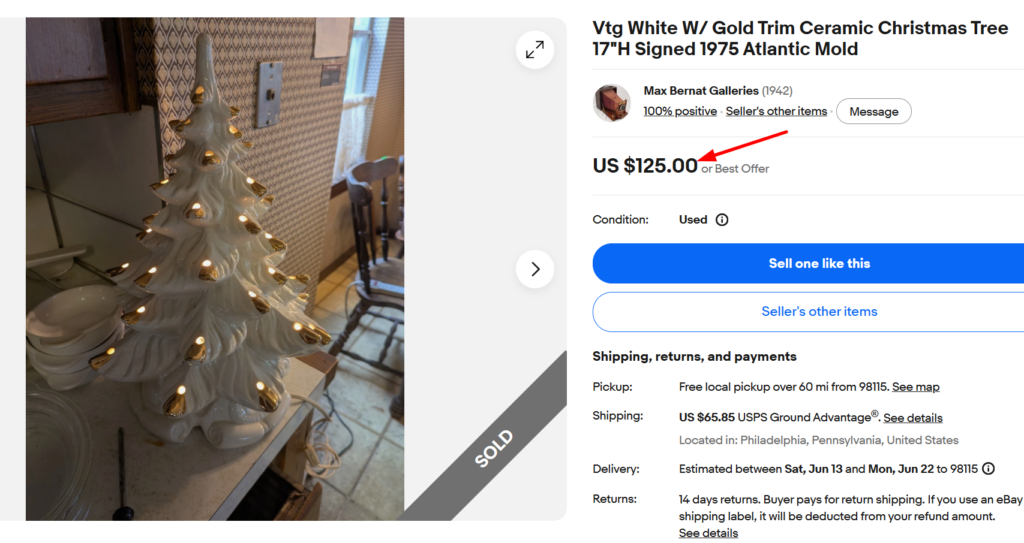
Sold for $125
Although the “1975” marking does not necessarily mean that this piece was produced that year, the white-and-gold variant certainly became popular during the mid-1970s.
Look for crisp gold accents on each branch tip and a matching star. White-and-gold pairs are collected more than plain green, because they’re harder to find clean.
Check for yellowing in the white glazing and chips to the gold tips; this significantly decreases its value.
- Estimated Value: $100 to $250
- Production Years: Mid 1970s, mold dated 1975
- What to Check: Gold tip wear, clean white glaze.
- Quick Notes: Less common than green, more collectible.
8. Nowell’s Mantel Tree with Holly Base
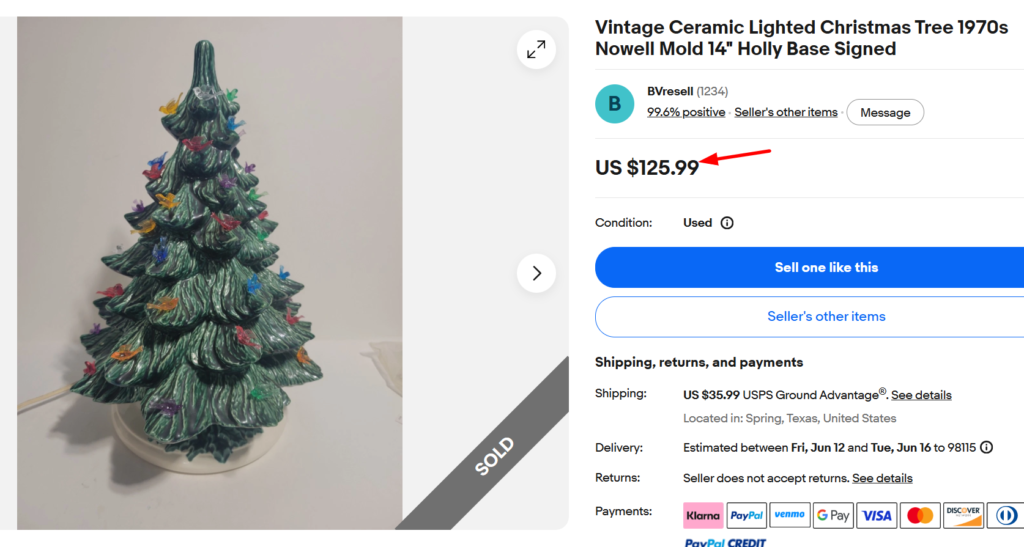
Sold for $125
Nowell’s is the maker behind many of the tall, narrower trees that sit on a holly-leaf base. The mantel version stands about 16 to 18 inches and was designed to fit on a fireplace shelf.
Trees with the original star, holly base, and full set of mixed bird and twist lights tend to bring the strongest interest. Most trees’ bases were replaced, so finding an original is a real deal.
- Estimated Value: $90 to $200
- Production Years: 1970s to early 1980s
- What to Check: Holly base original, signed Nowell on the base.
- Quick Notes: Original bases are important for the highest value.
9. Pink Ceramic Christmas Tree
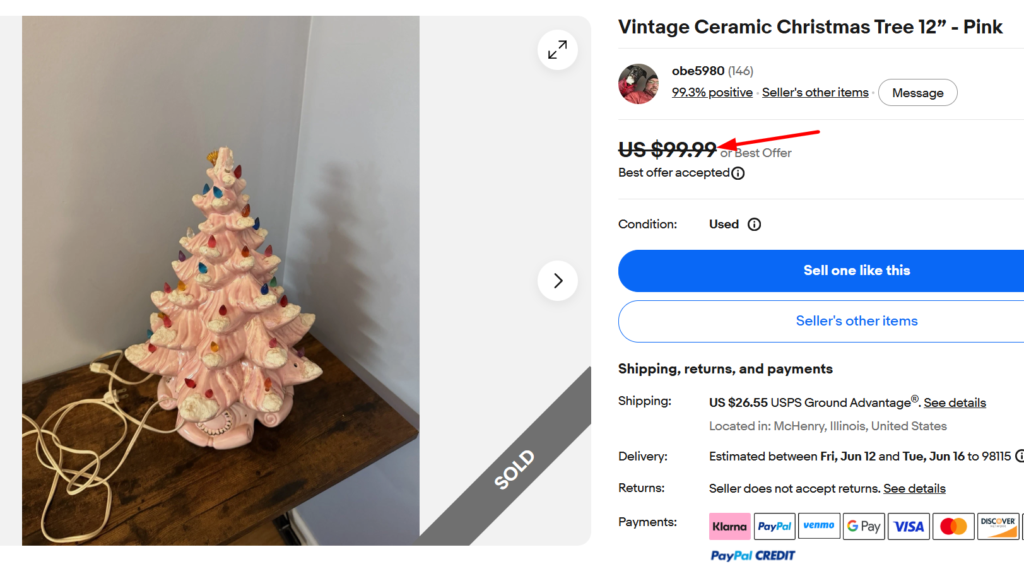
Sold for $100
Pink trees are generally rare. Most studios painted in standard greens and whites, so pink was usually a special request from the painter.
Both Nowell’s and Atlantic molds show up in pink, and the color tends to skew slightly mauve rather than bright pink. Condition matters even more here because the soft pink glaze shows chips and stains very clearly.
- Estimated Value: $80 to $200
- Production Years: 1970s, sometimes early 80s
- What to Check: Even pink glaze, no fading
- Quick Notes: Rare color with growing collector interest.
10. Arnel’s 1976 Lighted Tree with Flocked Snow
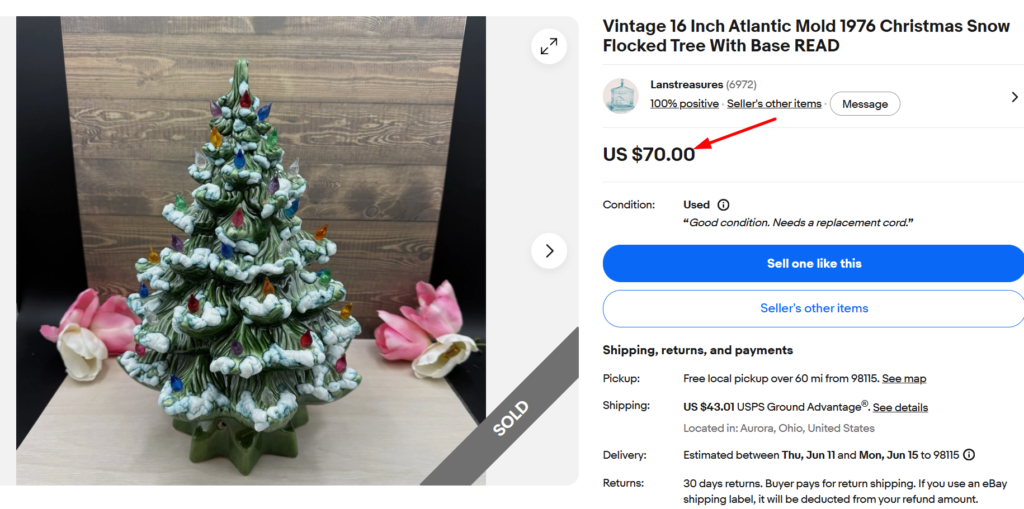
Sold for $70
Arnel’s pieces from Beaverton, Oregon, often feature their distinctive, deeper green base and a slightly softer tree silhouette. The flocked-snow version from the mid-70s has a fine white texture on the branch tips that looks like real snow.
Check the flocking carefully. It’s usually fragile and rubs off with age, so well-preserved examples are rare to find and, hence, valuable.
- Estimated Value: $100 to $200
- Production Years: Mid to late 1970s
- What to Check: Snow flocking intact, Arnel’s stamp on the base.
- Quick Notes: Pacific Northwest provenance is common.
If you’ve got a ceramic tree that matches what you saw on this list, keep it safe until November or early December and list it then. Seasonal demand can push prices up. Also, don’t forget to check the marks, original paint, and rare features for the best value.