

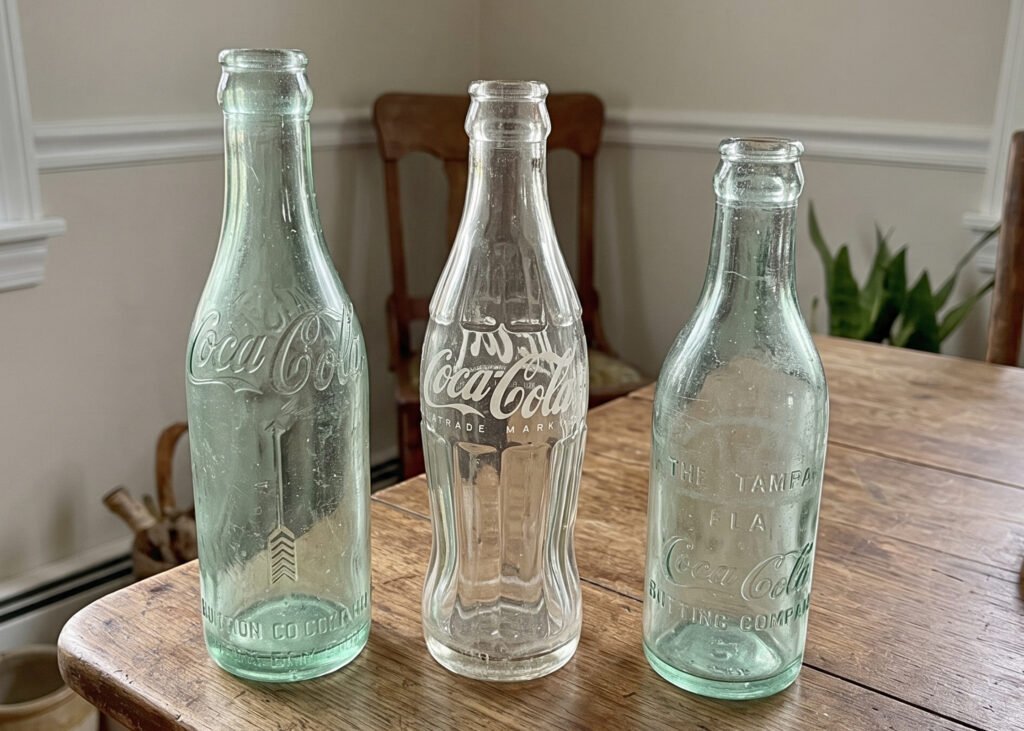
Most old Coke bottles have a similar story. Someone finds an old box of green glass bottles with a town name embossed at the bottom, in the barn, basement, or grandpa’s garage.
But the big question is, are they worth anything? The honest answer? Most sell for a few dollars, but a few antique Coke bottles can fetch hundreds or thousands.
This guide keeps it practical. It explains how to read the markings, the vintage Coke bottles that collectors are actually after, and the price at which they are usually sold.
Are Old Coke Bottles Worth Anything?
They are, but certainly not as much as many think. Coca-Cola has produced billions of contour bottles, and most of the green ones from the 1950s sell between $1 and $15. And that goes for most of the bottles most families have kept.
The top value lies in the older bottles. Hutchinson bottles, straight-sided bottles from before 1916, and early contours with a 1915 patent date are among the most valuable old Coke bottles.
How to Identify Antique Coke Bottles?
Identifying an old Coke bottle comes down to reading the bottle itself. Most of what you need to know is stamped right there on the bottle. Go through the following checks in order, and you will easily figure out a bottle’s age and authenticity.
The Bottle’s Shape
The bottle’s shape immediately tells you what time period it is from. There have been three major types in Coke bottle history, and each one is easily identifiable by how it looks.
- Hutchinson (c. 1894 – 1910s) – Short and stout, this bottle has a thick round lip and an internal wire loop closure (stopper). No crown cap.
- Straight-sided (c. 1900 – 1916) – Tall with straight sides and a crown cap lip. These bottles are most often amber or clear glass and have “Coca-Cola” in script.
- Contour or “hobbleskirt” (1916 – now) – The classic Coca-Cola contour (curvy, ribbed) shape. The name comes from a style of narrow hemmed skirt from the 1910s.
The Patent Date on the Side
The patent lines give an exact date. For contour bottles, check the center of the bottle, right below the Coca-Cola logo. The text here can narrow the age down to roughly ten to fifteen years.
- “Bottle Pat’d Nov. 16, 1915” – This bottle was made between 1917 and the late 1920s.
- “Bottle Pat’d Dec. 25, 1923” – It is known as the “Christmas Coke” and was made between 1928 and 1938.
- “Pat. D-105529” – These bottles are called “D-Pat” and were produced between 1938 and 1951.
- “In U.S. Patent Office” – These bottles were produced between 1951 and the late 1950s.
- Painted labels – Introduced in 1957.
The City and State on the Bottom
Next, flip the bottle over. Embossed Coca-Cola bottles usually have the name of the town where the bottle was bottled on the base. That’s also where the real value lies, because Coca-Cola’s own bottle specs called for the ordering city to appear there.
Large cities such as Atlanta or Chicago show up all the time, so they don’t fetch that much. On the other hand, a small-town plant that shut down early may be worth many times more, especially for collectors who belong there.
The Date Code and Glass Maker’s Mark
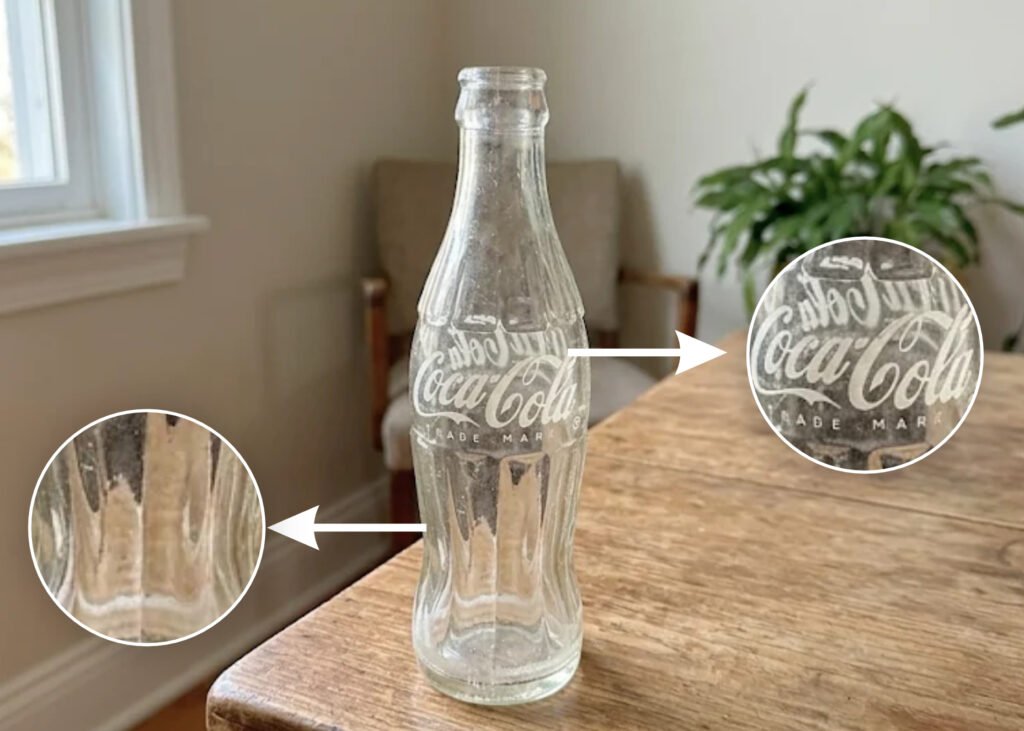
Starting in 1919, Coca-Cola insisted that all glass companies put their individual trademark and the manufacturing year on every bottle. The trademark appears next to a two-digit number near the heel of the bottle.
The two-digit number will be the manufacturing year. So, a “58” next to the trademark would indicate 1958. Below are some of the common trademarks found on old Coca-Cola bottles:
- C in a circle – Chattanooga Glass Company, one of the biggest Coke bottle makers.
- LGW – South Carolina’s Laurens Glass Works.
- ROOT – Root Glass Company of Terre Haute, Indiana, the contour bottle’s original maker.
- L-G – Liberty Glass Company of Oklahoma.
- An “I” inside an oval and diamond – Owens-Illinois Glass Company.
The Glass Color
Glass color can help determine both age and value.
For example, straight-sided bottles were usually amber or clear, with amber being the color that collectors seek out. The early contours were produced in clear, aqua, ice blue, and green until green became the standard color in 1923.
This light green color is known as Georgia green, named after Coca-Cola’s home state. This was the standard color for decades, so an example of a contour bottle in another color needs more research.
Embossed vs. Painted Labels
The older Coke bottles feature an embossed logo and lettering. In 1957, painted labels became popular, known as ACL (applied color label), in which white or red lettering was fired directly onto the glass.
Normally, the embossed bottles are older and therefore rarer. Bottles with painted labels in the 1960s and 1970s were very common, although brightly colored labels and unusual locations may attract collectors.
The Bottle Size
For many years, the regular Coke bottle was 6 ounces and later 6½ ounces. These sizes are most commonly found with embossed town names. The larger King Size and Family Size bottles came in 1955, in 10, 12, and 26-ounce sizes.
Bottle size alone is usually not enough to make it collectible. However, oversized bottles in good condition, especially King Size bottles with nice paint, will sell steadily to collectors completing their collection.
How to Spot Reproduction Coke Bottles?
Reproductions of antique bottles are common, and some were made by Coca-Cola itself. For example, the company reissued the Christmas bottle in 1989, and those copies are common.
Modern diamond label and Hutchinson-style bottles have been sold in stores too.
So check for modern signs. Look for date codes from the 1980s or later, “replica” text, perfectly even color, and labels that look too fresh. Genuine early bottles usually show tiny bubbles in the glass and honest wear on the base.
10 Valuable Coke Bottles That Are Worth a Lot Now
And now the bottles that collectors seek out. These include the early Hutchinsons to a unique prototype, with real values and identification tips.
1. Hutchinson-style Coca-Cola Bottle
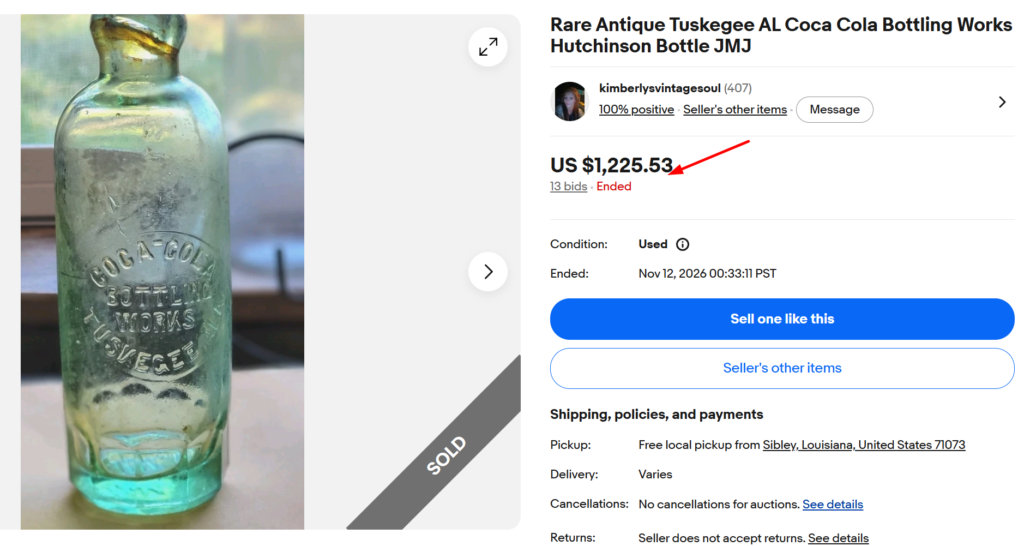
Bottled Coke started here. In 1894, Joseph Biedenharn used Hutchinson bottles in Vicksburg, and a few other early bottlers followed. All were capped with a rubber disc inside a wire ring in the bottle neck.
Look for the Coca-Cola name on the glass, either in script or inside a slug plate (a round embossed panel naming the bottler). Small-town plates, like Tuskegee, Alabama, are the ones collectors chase hardest.
Only the Coca-Cola-marked bottles are worth money, with a Jasper, Alabama bottle selling for $6,765 in 2024.
- Estimated Value: $1,000 to $7,000+
- Production Years: c. 1894 to 1910s
- What to Check: Wire stopper, Coca-Cola script
- Quick Notes: Must show Coca-Cola or Biedenharn name
2. Amber straight-sided Coca-Cola Bottle
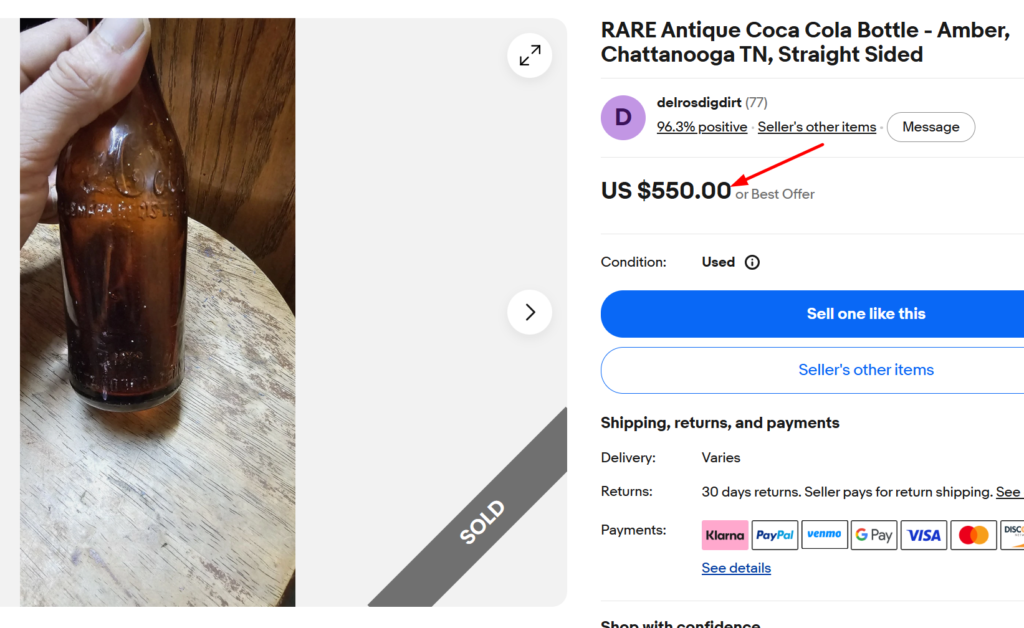
Local bottlers moved to straight-sided bottles with crown caps after 1900, and many were amber glass. “Coca-Cola” script was embossed on the bottle body, and the bottling town’s name often appears close to the bottom.
Amber is what the collectors like best in this period. So, a clear script, a rare small town, and a nice lip will take these bottles way above the value of clear ones.
- Estimated Value: $40 to $1,000+
- Production Years: c. 1900 to 1916
- What to Check: Amber glass, embossed script logo
- Quick Notes: Town rarity drives the biggest premiums
3. Clear and Ice Blue Early Contour Bottle
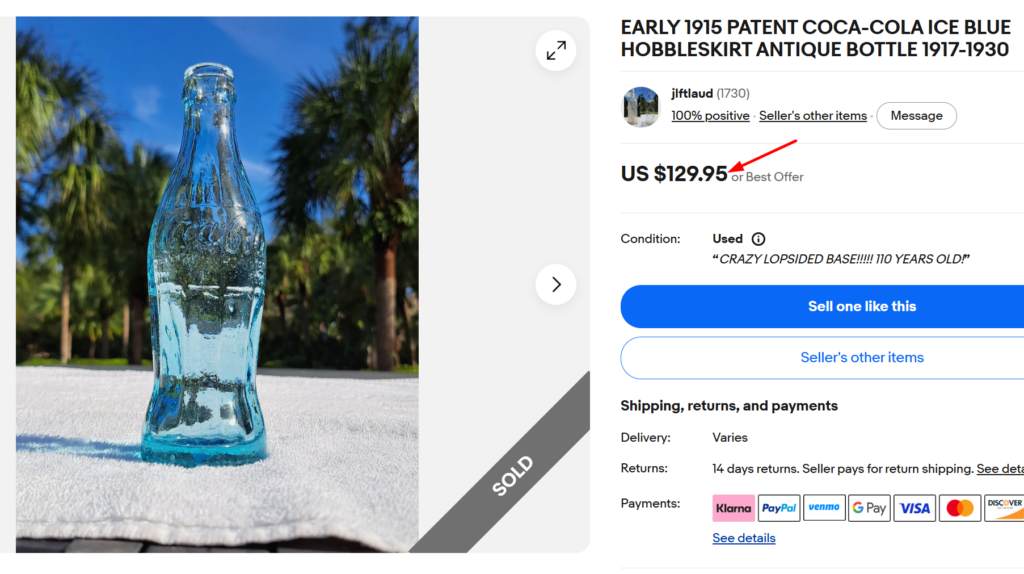
While many think that the Coke bottles were always green, some of the earliest contours weren’t. Before 1923, contour bottles came in clear, aqua, and ice blue.
The green color became standard after 1923. Hence, any contour that is not green should be closely inspected. These bottles sell better when the patent line and town name are clearly marked.
- Estimated Value: $75 to $400+
- Production Years: c. 1916 to 1923
- What to Check: Non-green tint, 1915 patent
4. Coca-Cola Fountain Syrup Bottle & Jug
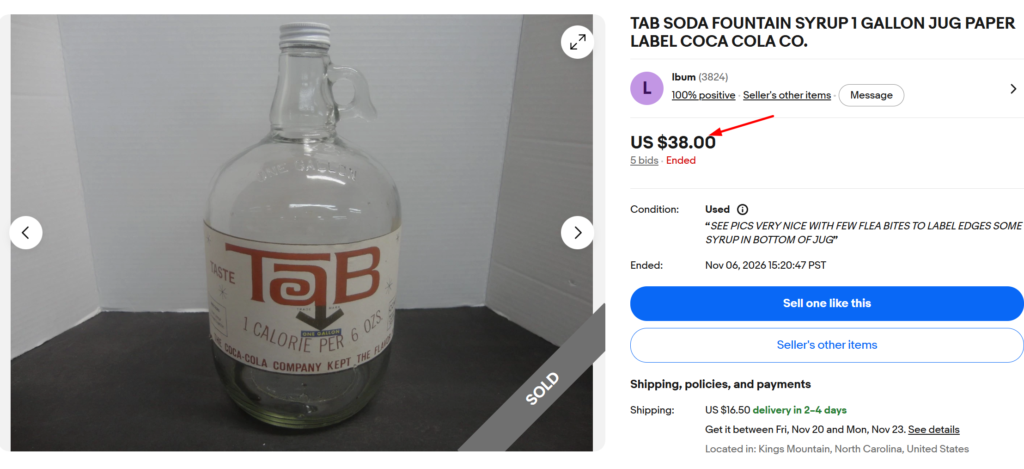
Soda fountains made Coke from syrup, which came in glass bottles and one-gallon jugs with paper labels. Early bottles had “Drink Coca-Cola” labels, while later jugs had Coca-Cola Company products such as TAB, first introduced in 1963.
This one is all about the label. The pre-1940 labels in bright colors are the best, while the 1960s and 1970s jugs have only fair value.
- Estimated Value: $30 to $800+
- Production Years: c. 1910s to 1970s
- What to Check: Paper label, brand name
- Quick Notes: Some labels are later-added reproductions
5. Coke Pat’d Nov. 16, 1915 Bottle
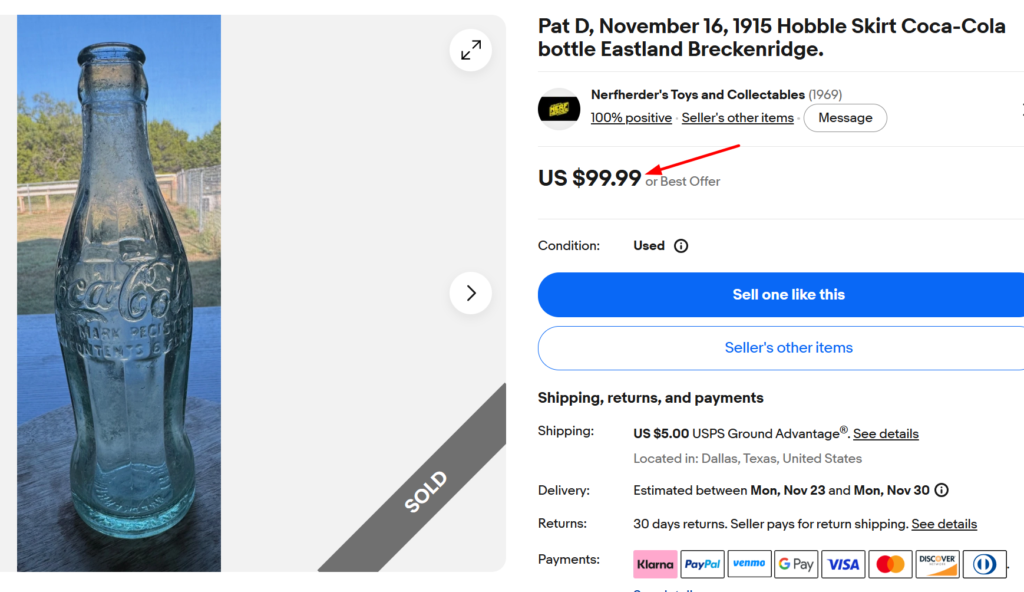
This is the first production contour bottle. Root Glass won the design contest for Coca-Cola, and the bottles with the patent line of 1915 began arriving at the bottlers in 1917. By 1920, most factories had converted.
Read the text under the script carefully, since some bottlers continued to use these molds until the late 1920s. Root bottles, early molds, and small-town bases take these beyond regular contour prices.
- Estimated Value: $40 to $500
- Production Years: c. 1917 to late 1920s
- What to Check: “Nov. 16, 1915” patent line
- Quick Notes: Sometimes nicknamed the “Thanksgiving Coke”
6. “Christmas Coke / Pat’d Dec. 25, 1923″ Bottle
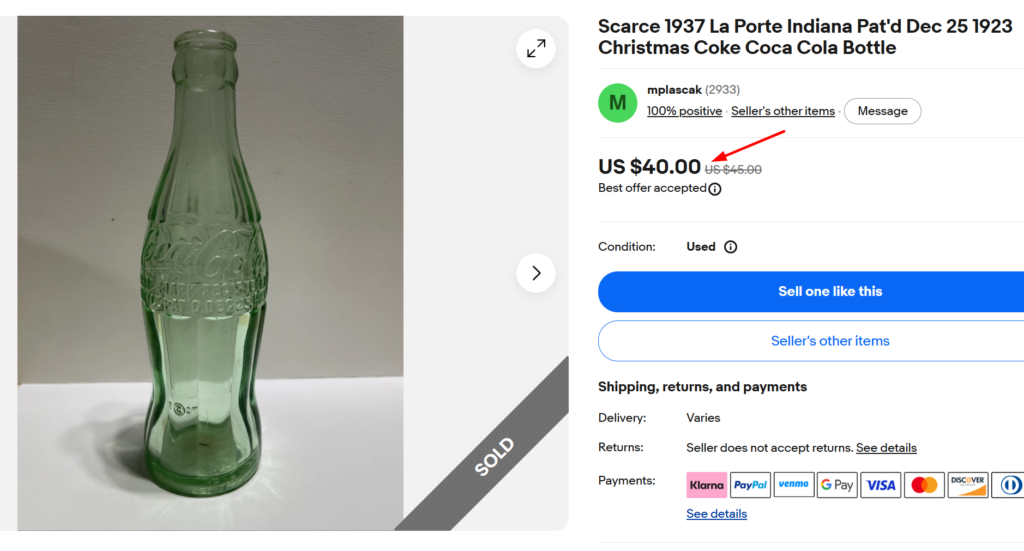
The patent office granted patents on Tuesday, and in 1923, Tuesday was Christmas Day. That’s how the bottles marked “Pat’d Dec. 25, 1923,” got their nicknames. These were made in the millions from around 1928 to 1938, so they are usually common.
- Estimated Value: $10 to $200+
- Production Years: c. 1928 to 1938
- What to Check: “Dec. 25, 1923” patent line
- Quick Notes: Coca-Cola issued reproductions in 1989
7. Embossed Diamond Straight-Sided Coca-Cola Bottle
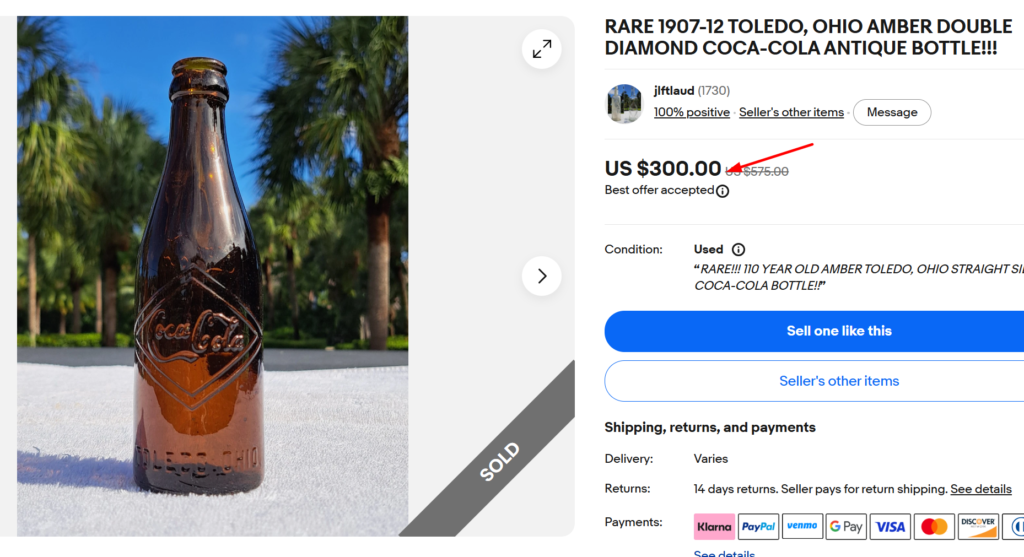
A few bottlers molded the diamond label within the glass itself. These straight-sided bottles have the Coca-Cola script embedded inside the diamond shape, so it can’t be soaked away like paper labels.
The bottler from Toledo, Ohio, employed amber bottles around the early 1910s. Make sure the script indeed says Coca-Cola, as some other bottlers used similar diamond-embossed bottles for their other soda varieties.
- Estimated Value: $150 to $500+
- Production Years: c. 1907 to 1912
- What to Check: Script inside embossed diamond
- Quick Notes: Diamond flavor bottles aren’t Coke bottles
8. Unopened Coke Bottle with Original Cap (1920s to 1970s)
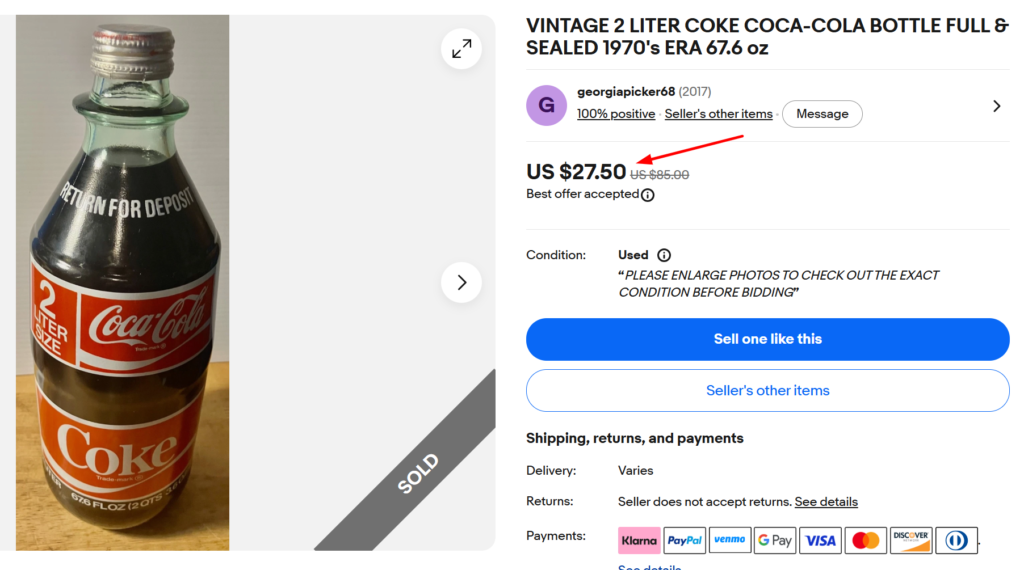
Before plastic, Coca-Cola sold its biggest family bottles in thick glass. These 2-liter bottles held 67.6 ounces, had a painted label, and many were marked “Return for Deposit,” so most went back to the bottler.
The plastic 2-liter arrived in 1978 and quickly replaced glass. So, full, sealed glass bottles with the original metal screw cap are rare, especially with clean paint.
- Estimated Value: $20 to $50
- Production Years: c. 1970s
- What to Check: Metal screw cap, painted label
- Quick Notes: Plastic 2-liters have far less value
9. Commemorative/Anniversary Bottle (c. 1960s to 1990s)
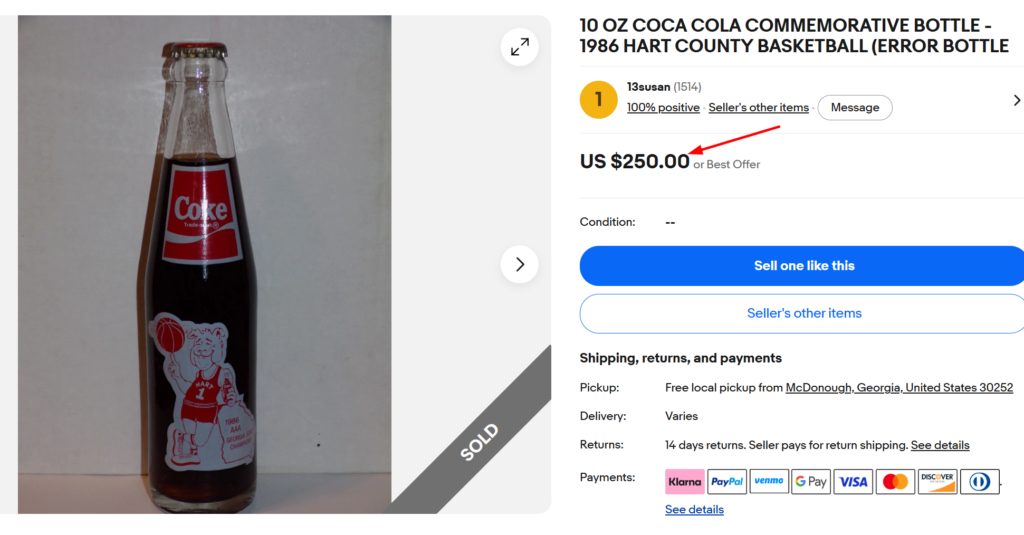
Since the 1960s, local bottlers have released painted label bottles to commemorate anniversaries, championships, and hometown events.
Sports bottles, like this 1986 Hart County, Georgia, basketball series, were mostly produced for local collectors.
These are affordable because many people stored them in bulk. But printing errors, rare occurrences, and completely sealed bottles are the exceptions.
- Estimated Value: $5 to $250+
- Production Years: c. 1960s to 1990s
- What to Check: Event text, unfaded paint
- Quick Notes: Printing errors fetch the biggest premiums
10. D-Patent and 6½ oz rare town bottles
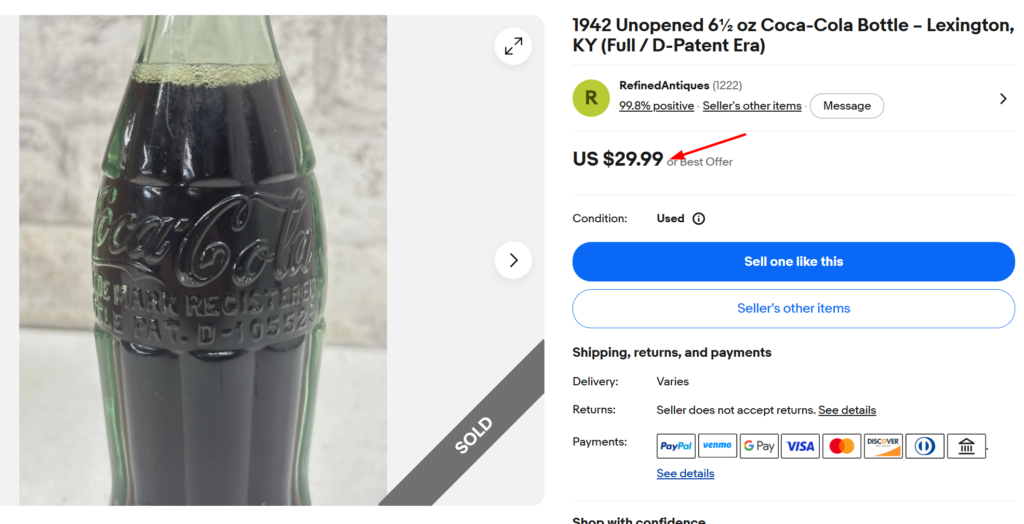
“D-Pat” bottles with “Pat. D-105529” stamping are from 1938-1951 and come from hundreds of different towns. Later embossed 6½ oz bottles carried town names into the 1950s too.
Most are common, which is why the town becomes a crucial factor. A short-lived factory or a distant one could easily turn a $5 bottle into a $100 bottle.
- Estimated Value: $5 to $150+
- Production Years: 1938 to late 1950s
- What to Check: D-105529 mark, town name
Antique & Vintage Coke Bottle Values by Year
For quick valuation of your old bottle, use the table below. It puts each period next to the prices that bottles from that period usually go for.
| Era | Bottle Type | Typical Value |
| c. 1894 to 1910s | Hutchinson | $1,000 to $7,000+ |
| c. 1900 to 1916 | Straight-sided | $25 to $1,000+ |
| c. 1917 to late 1920s | “Pat’d Nov. 16, 1915” contour | $40 to $500 |
| c. 1928 to 1938 | “Pat’d Dec. 25, 1923” Christmas Coke | $10 to $200+ |
| 1938 to 1951 | “Pat. D-105529” D-Pat | $5 to $150+ |
| 1951 to late 1950s | “In U.S. Patent Office” | $5 to $25 |
| 1957 onward | Painted (ACL) label | $1 to $15 |
Where to Sell Old Coke Bottles?
eBay remains the largest marketplace for most bottles. Search for your particular bottle and use the filter to view only sold listings. List your bottle with the patent line and town, as collectors tend to search with these details.
High-value Coca-Cola bottles should be marketed in other channels. For example, Morphy Auctions hosts regular auctions of soda and advertising bottles. Bottle shows and the Coca-Cola Collectors Club would also be ideal venues to find collectors of rare towns.
Most vintage Coke bottles are worth only a few bucks, and that’s fine. But the ones that do have value tend to give it away in a few ways. So, before you pack up that case of bottles from the garage, turn them over and read them.
Found this guide useful?
Save it for later
Share it with someone
Keep the old finds coming
New guides and finds worth looking for, delivered to your inbox.
Keep exploring
More guides in Vintage Glass
 13 finds13 Old Glass Bowls Worth Money: Top Makers, Patterns & ValueTop sale $797
 11 findsOld Libbey Glassware: How to Spot Rare Vintage PiecesTop sale $595
 12 findsCollectible Red Glass: 12 Rare Vintage Pieces to Look For TodayTop sale $550
 9 finds9 Types of Vintage Tea Cups That Are Highly Collectible TodayTop sale $289