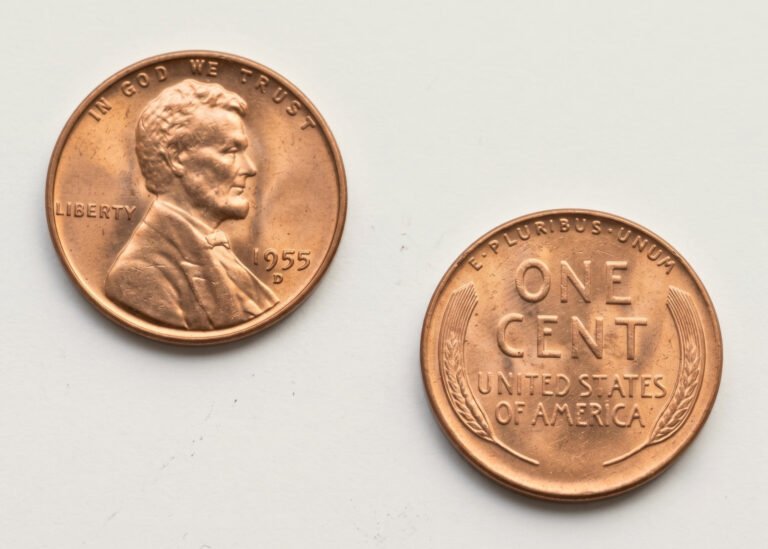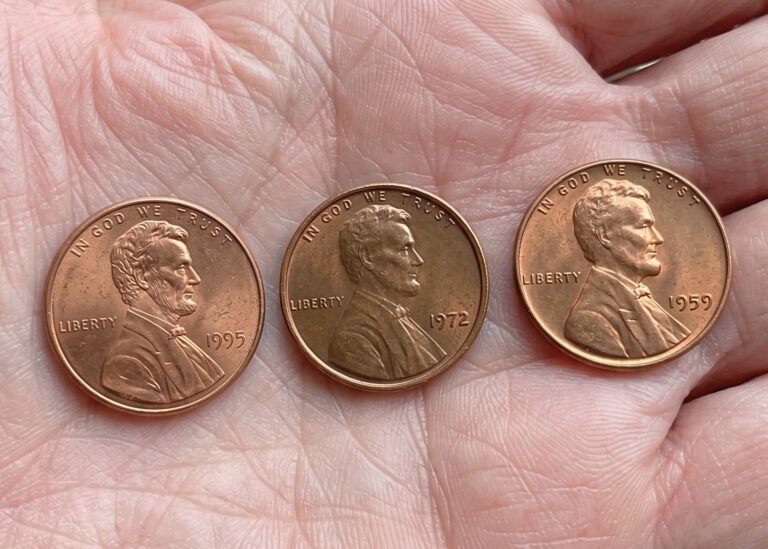

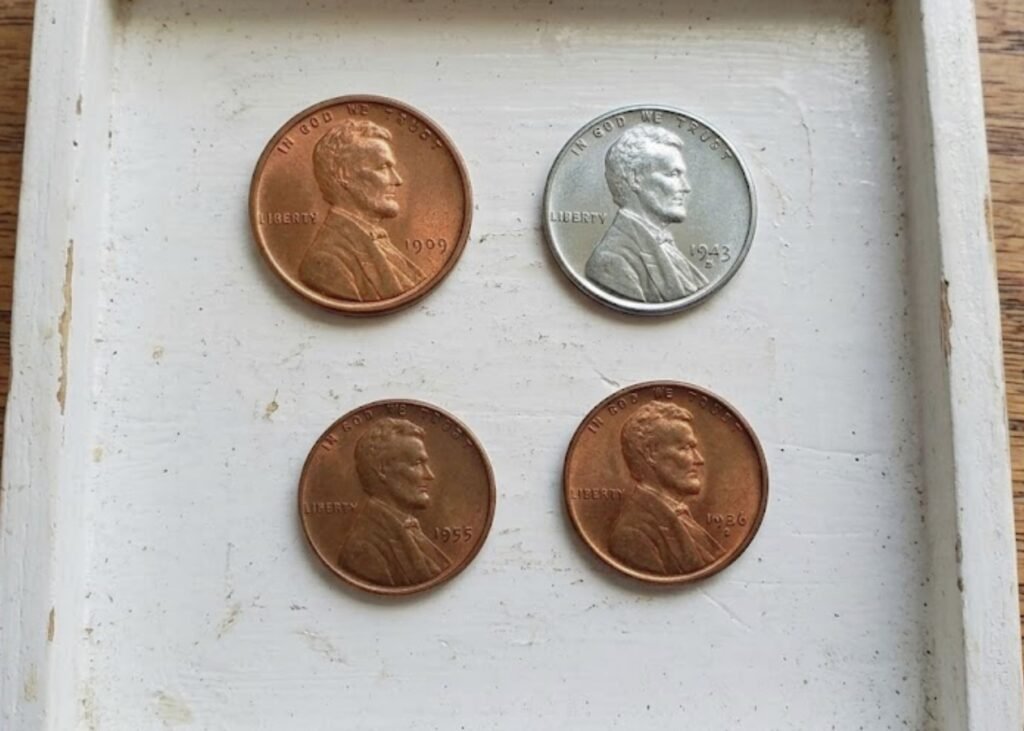
The Lincoln cent showed up in 1909 to celebrate the 100th anniversary of Abraham Lincoln’s birth. It was the first regular U.S. coin featuring a real human, and not Lady Liberty.
Sculptor Victor David Brenner designed both sides; Lincoln’s portrait on the front, two wheat ears framing “ONE CENT” on the back. That wheat reverse stuck around until 1958, when the Lincoln Memorial design took over.
During these fifty years, many penny varieties came out in different years from different mints. This list shows the most valuable wheat cents that collectors chase today!
What Makes a Wheat Penny Valuable?
Before we get into the list, here’s what actually drives the price of a Lincoln penny.
Date and mint mark
The mint mark sits below the date on the front. No letter means Philadelphia, “D” is Denver, and “S” is San Francisco. Some years and mint combos had tiny mintages.
Mint Errors
Beyond the specific dates and mint marks above, some errors can show up on almost any wheat cent and make it worth more than face value. Below are the key wheat penny errors worth checking in any year:
- Doubled die obverse or reverse. Real doubling shows raised, separated lettering, not flat shelf-like marks.
- Off-center strikes. The bigger the miss, the better, but the full date has to stay visible.
- Repunched mint marks (RPMs). Look for a shadow of the mint mark punched twice in slightly different spots.
- Die breaks and cuds. Raised blobs of metal where the die cracked and left extra material on the coin.
- Wrong planchet errors. Coins struck on the wrong metal blank, like a 1943 struck on bronze.
Condition
Condition is crucial for value. A crisp red uncirculated coin can be worth ten or twenty times a worn brown example of the same date. For coins, condition is professionally assessed on a grade scale.
Color Designation
Color matters a lot for Lincoln pennies. For uncirculated coins, collectors label them Red (RD), Red-Brown (RB), or Brown (BN). Red pennies are usually the uncirculated ones and are worth the most.
15 Most Valuable Lincoln Wheat Cents Worth Finding in Your Collection
1. 1944 Steel Lincoln Wheat Penny
Estimated Value: $75,000 to $400,000+
What to Check: Silver color, sticks to the magnet
Quick Notes: Weighs 2.7g, do the magnet test.
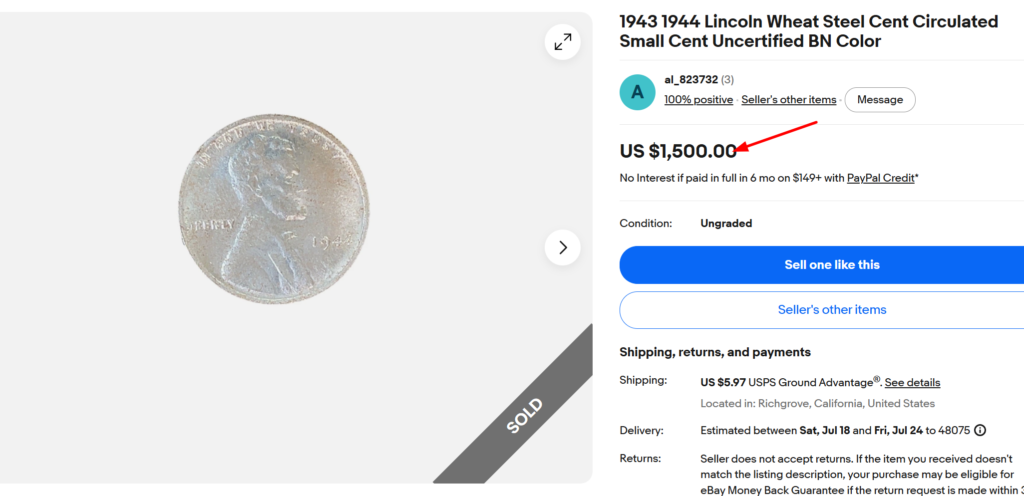
This is like the reverse of the 1943 copper mistake. By 1944, the mint went back to copper, but a few steel planchets left over from 1943 got struck with 1944 dies. The result is a silvery 1944 penny that looks totally out of place among copper cents.
Only fewer than 40 genuine examples exist across all mints, and the 1944-S is the rarest, with only two known.
2. 1943-D/D Lincoln Wheat Steel Penny
Estimated Value: $70 to $21,000+
What to Check: Ghost “D” below and left of main D
Quick Notes: Magnetic, weighs 2.7g, FS-501
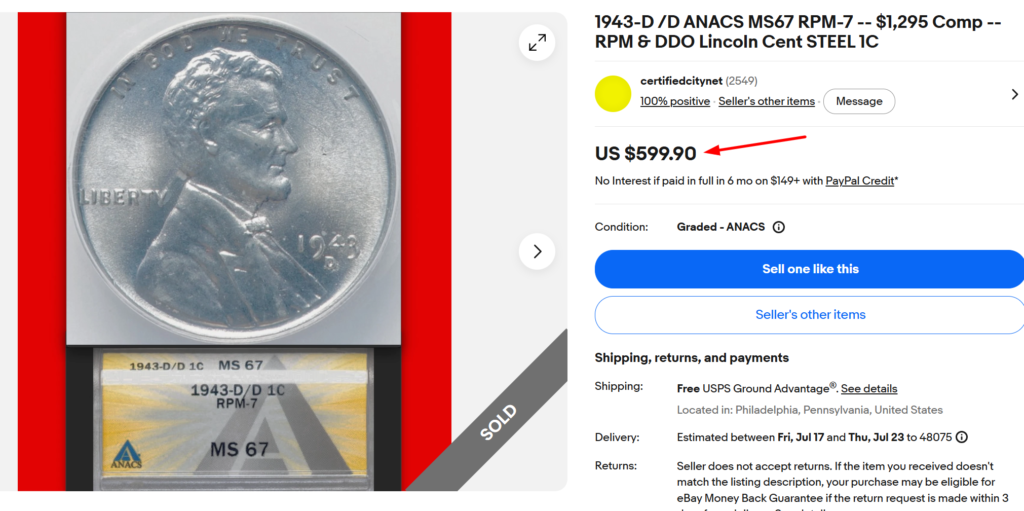
Back in 1943, mint marks were still punched into each working die by hand. On this one, the Denver worker missed and struck the “D” twice. So you get a clear ghost “D” sitting just below and to the left of the main mint mark.
Use a 10x loupe to check for real serif shapes on the ghost D. Machine doubling looks flat and shelf-like, but a true RPM shows rounded, raised secondary letters. Only 3,000 to 5,000 examples survive, so values remain high.
3. 1909-S VDB Lincoln Wheat Penny
Estimated Value: $700 to $150,000+
What to Check: “S” mint mark, “VDB” on reverse
Quick Facts: Only 484,000 minted
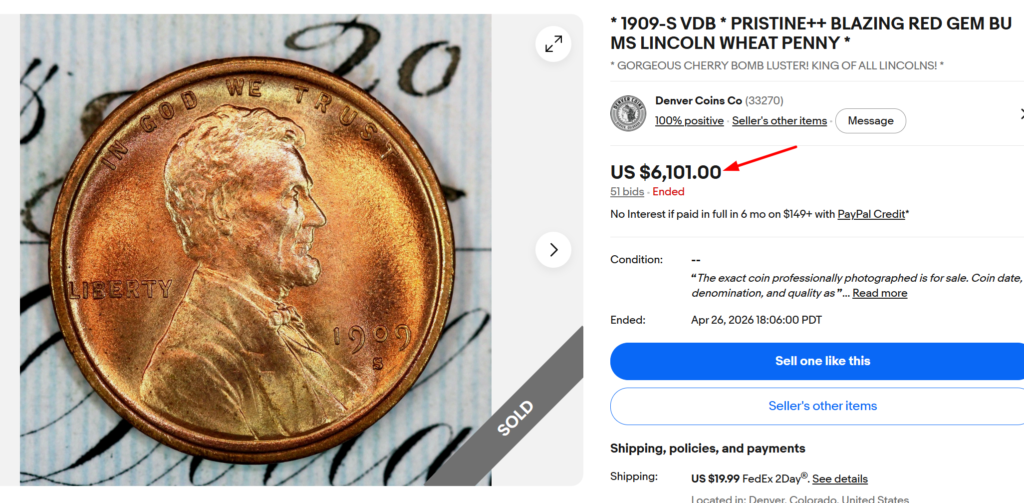
The 1909-S VDB is the most famous key date among the wheat cents. Only 484,000 were made in San Francisco before public complaints about designer Brenner’s prominent initials forced the mint to remove them from the reverse.
Flip the coin over and look at the bottom rim between the wheat stalks. If you see “V.D.B.” and an “S” under the date on the front, it’s this rare coin.
4. 1909-S Lincoln Wheat Penny (No VDB)
Estimated Value: $150 to $10,000+
What to Check: “S” under date, no VDB initials
Quick Facts: 1,825,000 mintage
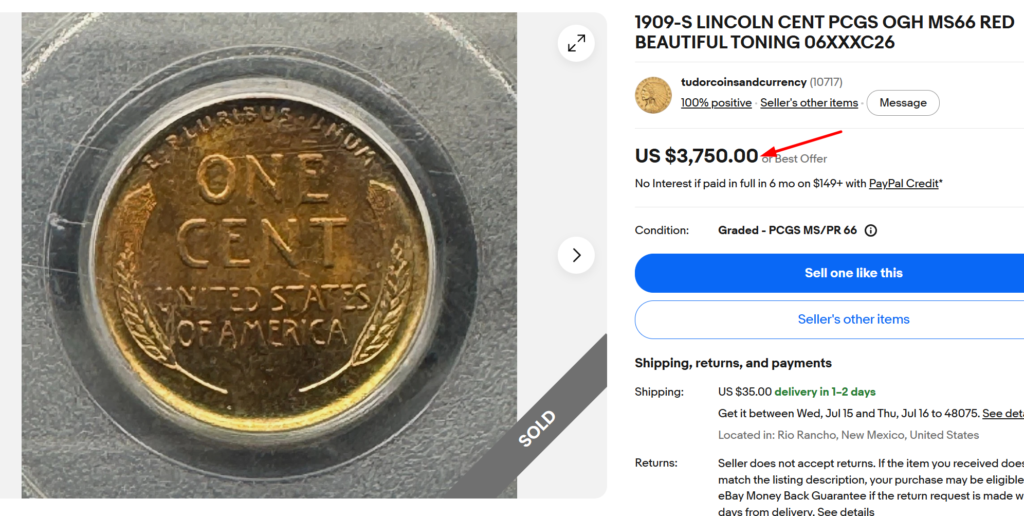
After the mint pulled the VDB initials off the reverse mid-year, San Francisco kept striking 1909 cents without them. A total of 1,825,000 no-VDB pennies were made, which may sound like a lot, but really isn’t for a Lincoln cent.
Identification is simple: the bottom of the reverse is smooth with no letters between the wheat stalks. Due to its low mintage, this coin is also worth a lot in high grades.
5. 1914-D Lincoln Wheat Penny
Estimated Value: $200 to $150,000+
What to Check: “D” mint mark under date
Quick Facts: Only 1,193,000 struck
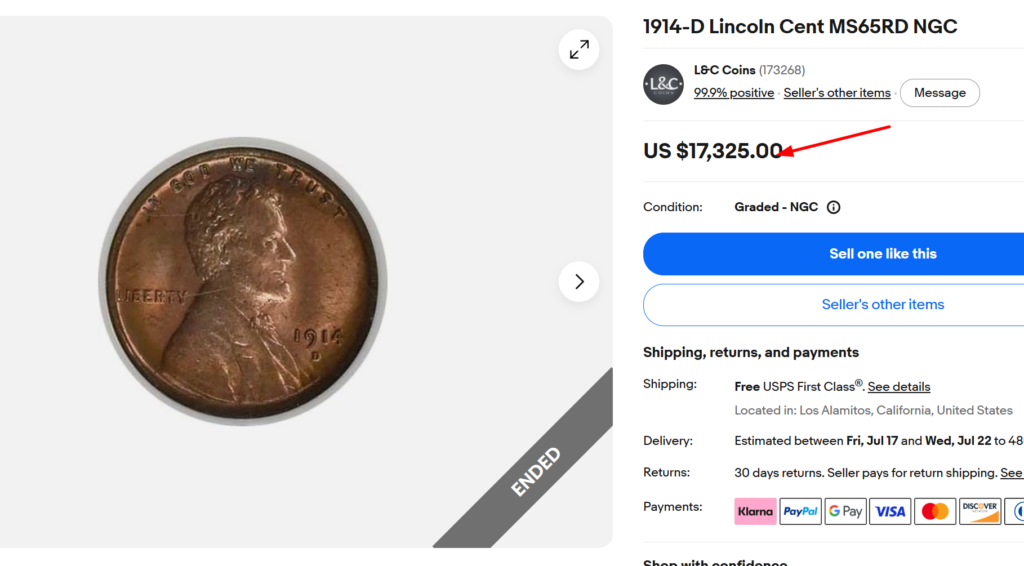
The 1914-D is the second big key date in the series. This one, in high grades, is harder to find than the 1909-S VDB. Denver struck just 1,193,000 of them, and most got used up in circulation before people realized they were worth saving.
That “D” under the date is what you should look for. Fakes are made by adding a “D” to a regular 1914 Philadelphia penny, so always get it authenticated by PCGS or NGC.
6. 1922 No D Strong Reverse Wheat Penny
Estimated Value: $600 to $92,000+
What to Check: No mint mark, sharp reverse
Interesting Facts: Only Denver made 1922 cents
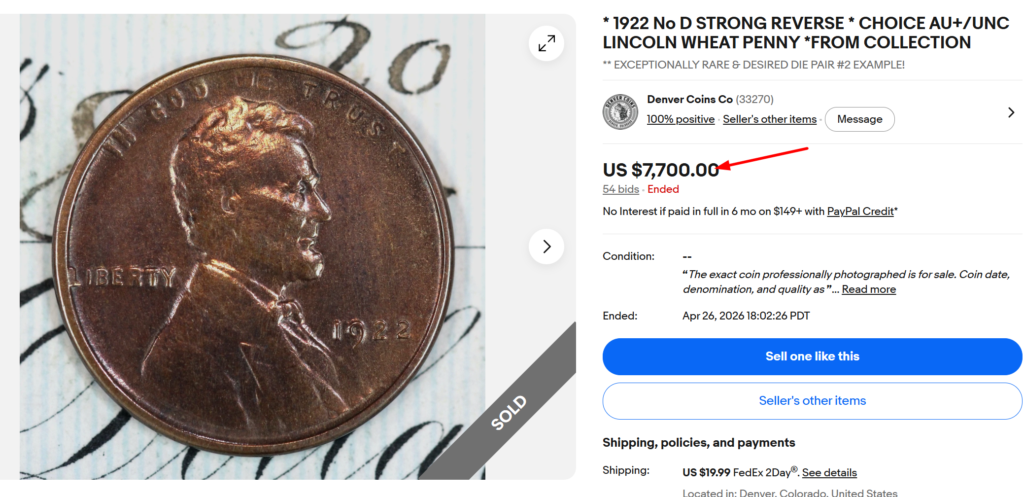
In 1922, only the Denver Mint made pennies. So every 1922 penny should have a “D.” But a die clash and heavy grinding at Denver erased the mint mark off some dies, creating a 1922 penny with no mint mark at all.
The trick is telling the valuable “Strong Reverse” version apart from the less valuable “Weak Reverse” variety. Both lack the D, but the Strong Reverse shows sharp, crisp wheat stalks on the back.
7. 1955 Doubled Die Obverse Wheat Penny
Estimated Value: $1,000 to $125,000+
What to Check: Doubling on date and letters
Quick Facts: Doubling is visible without magnification.
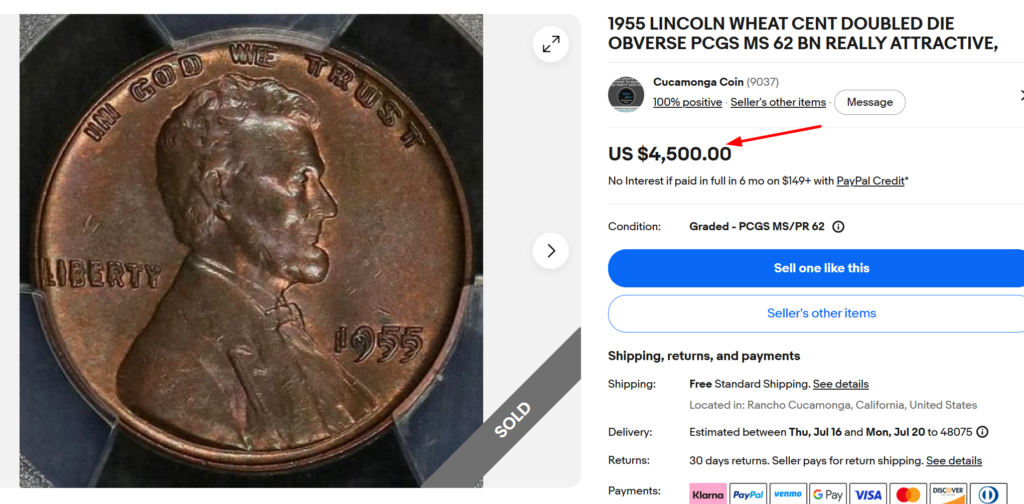
The 1955 DDO is the most famous doubled die in all of U.S. coinage. Around 24,000 escaped from the Philadelphia mint into circulation, mostly in change given out with packs of cigarettes in Massachusetts and New York.
The Double Die effect is so prominent that you do not even need a magnifier. The date “1955,” plus “LIBERTY” and “IN GOD WE TRUST,” all show clear, wide doubling.
Still, pay close attention as machine doubling may look similar, but it isn’t worth anything.
8. 1958 Doubled Die Obverse Wheat Penny
Estimated Value: $200,000 to $1,100,000+
What to Check: Bold doubling on “LIBERTY” and motto
Interesting Fact: Only three known examples
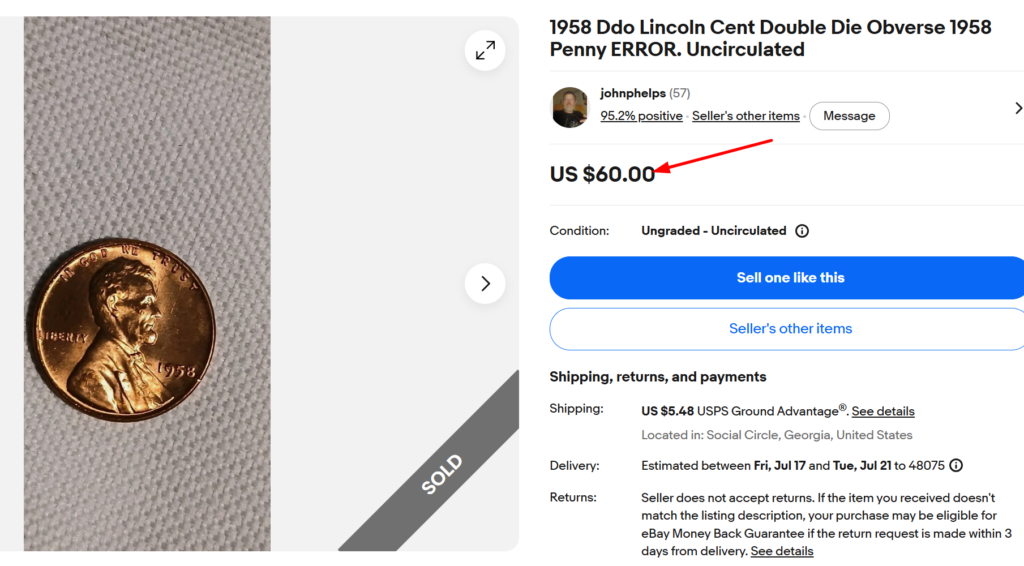
This is easily one of the rarest Wheat pennies since only three genuine examples exist. In January 2023, the finest one sold at GreatCollections for over a million dollars, making it the first Lincoln cent ever to cross that mark.
The doubling on this coin is also quite dramatic, with sharp, obvious separation on “LIBERTY,” on “IN GOD WE TRUST,” and on the “1958” date itself. So if you spot one, get it authenticated fast.
9. 1917 Doubled Die Obverse Wheat Penny
Estimated Value: $150 to $120,000+
What to Check: Doubling in date and motto
Quick Notes: Only about 200 examples known
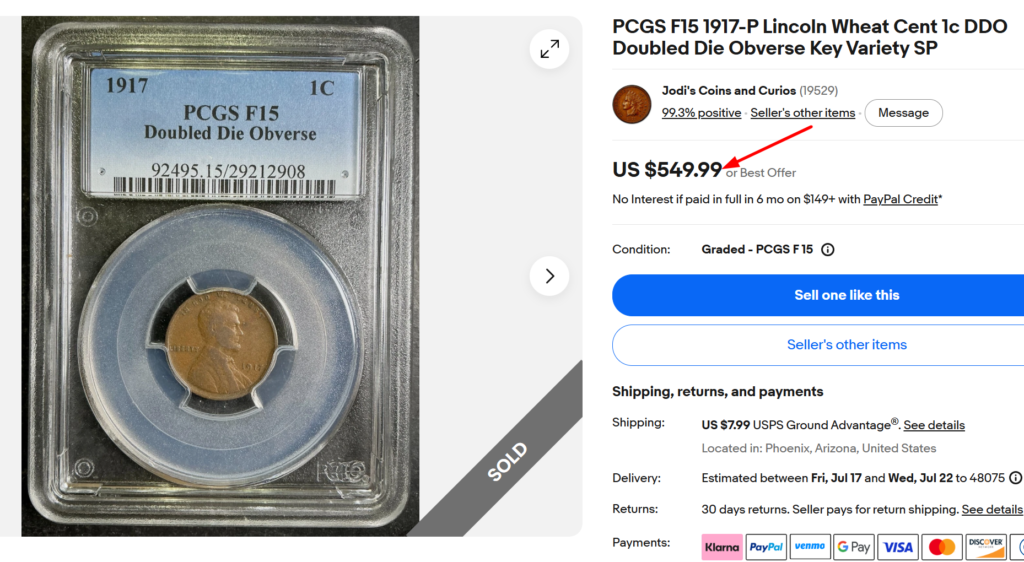
The 1917 DDO is one of the oldest major doubled dies in the series, and only around 200 are believed to exist across all grades. It’s rarer than the famous 1955 DDO, but way less famous.
The doubling shows up most clearly on the date and on “IN GOD WE TRUST” up top. Look at the “9” and “7” in the date first. Those two digits show the strongest doubling and are the easiest way to confirm a real one.
10. 1931-S Lincoln Wheat Penny
Estimated Value: $80 to $38,000+
What to Check: “S” mint mark, Depression era
Quick Notes: 866,000 mintage, second lowest
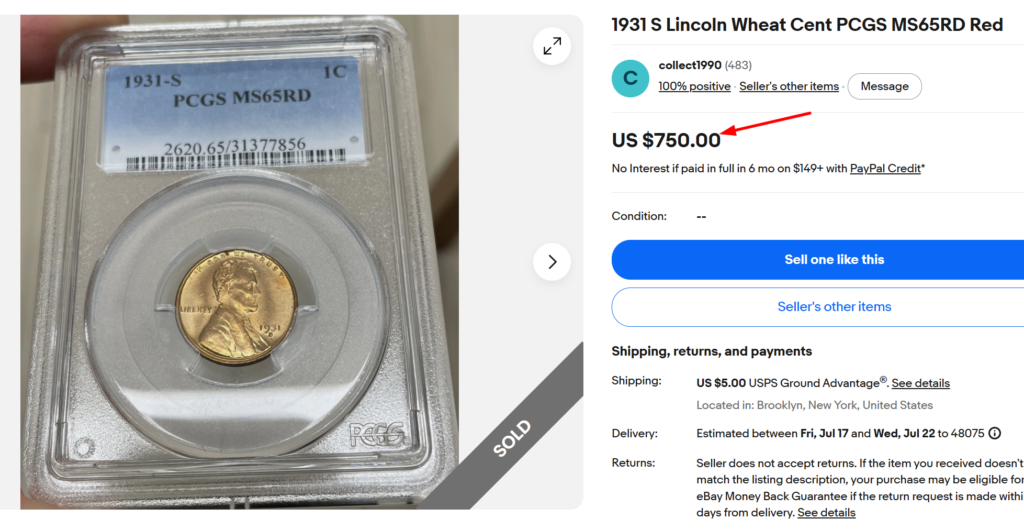
The 1931-S is a Great Depression coin, struck when nobody had extra pennies to spend, so the mint only made 866,000 of them. That’s the second-lowest regular-issue mintage in the entire wheat cent series.
Collectors hoarded them, so many examples survive in nice condition. But watch out for altered 1930-S or 1931 Philadelphia coins with added mint marks.
11. 1936 Doubled Die Obverse Wheat Penny
Estimated Value: $150 to $34,000+
What to Check: Doubling on “LIBERTY,” date, motto
Quick Notes: Three DDO types exist (FS-101 best)
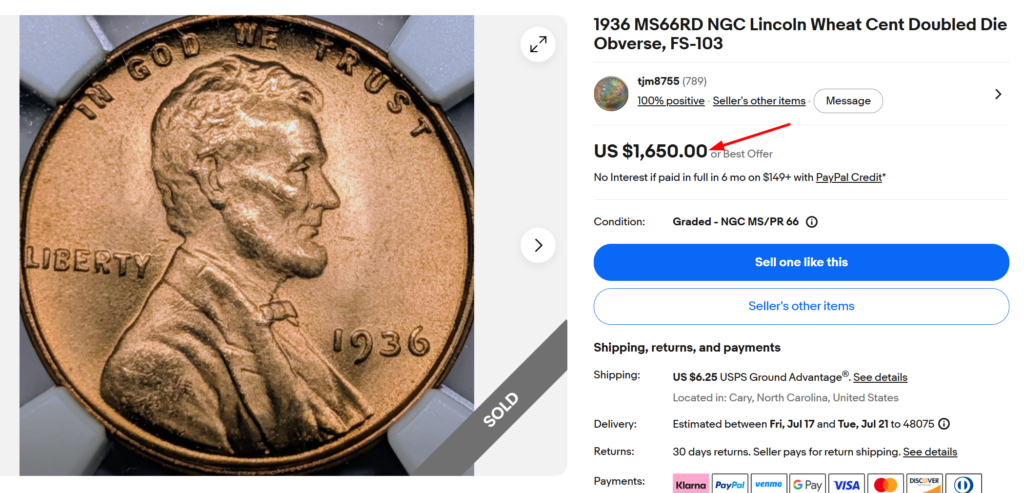
The 1936 DDO is not much talked about, but it’s actually rarer than the 1955 doubled die. Firstly, three DDO types exist for this particular cent, and all three are worth money in nice grades.
The PCGS estimates fewer than 300 Type 1 examples exist; the Type 1 (FS-101) shows the boldest doubling on “LIBERTY,” “IN GOD WE TRUST,” and the date.
You might need a 5x or 10x loupe to pick it out on lower-grade coins. Type 2 and Type 3 varieties also exist with weaker doubling in different spots.
12. 1944-D/S Overmintmark Wheat Penny
Estimated Value: $50 to $50,000+
What to Check: “S” traces under the “D” mark
Quick Notes: Two varieties, FS-511 and FS-512
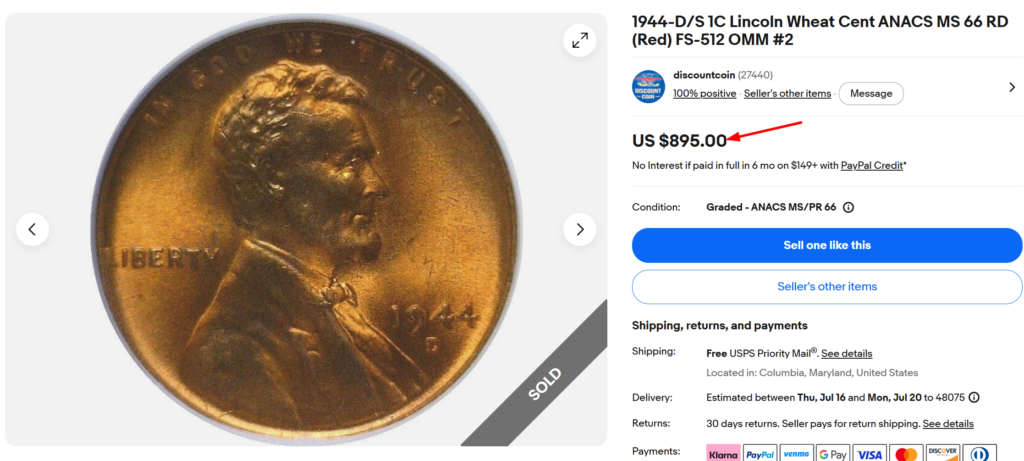
These coins were made when the working dies with San Francisco “S” mint marks were sent to Denver. The workers punched the “D” mark on them without fully removing the “S” first.
So under 10x magnification, you can spot curved bits of the old “S” sticking out around the “D.”
There are two key varieties to know: The FS-511 variety shows the “S” curves poking out to the lower-left. FS-512 shows remnants to the right. Both are true overmintmarks and sell well in high grades.
13. 1926-S Lincoln Wheat Penny
Estimated Value: $15 to $90,000+
What to Check: “S” mint mark, strong strikes
Quick Notes: Extremely rare in Red MS-65
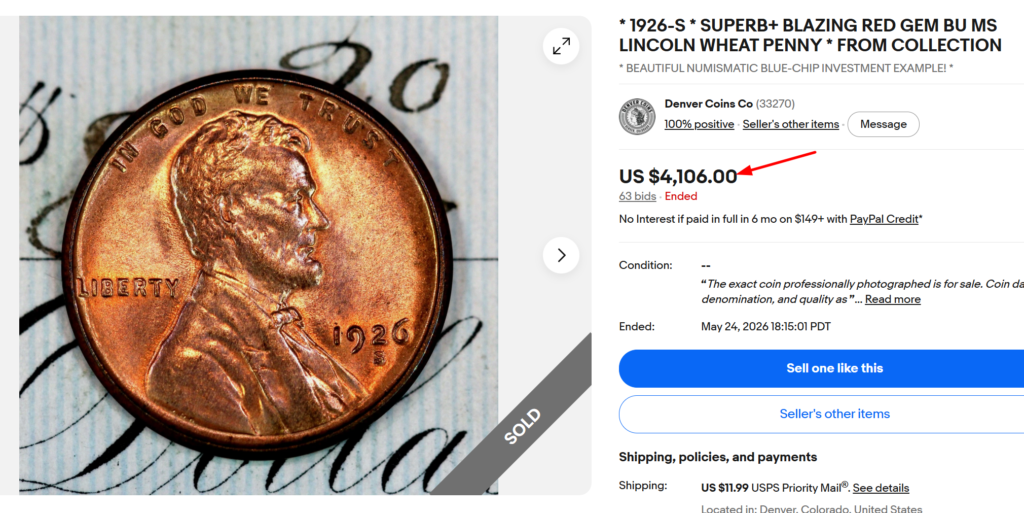
The 1926-S is not as rare, since the mintage was 4.5 million, so circulated examples are pretty affordable. But it’s a classic “condition rarity.” Finding one in Mint State Red condition is nearly impossible.
One MS-65 Red example sold for over $90,000, which is exceptional for a coin that’s cheap in worn grades. So condition and color really are everything with this date.
14. 1911-S Lincoln Wheat Penny
Estimated Value: $28 to $2,000+
What to Check: “S” mint mark under date
Quick Notes: Only 4,026,000 minted, semi-key
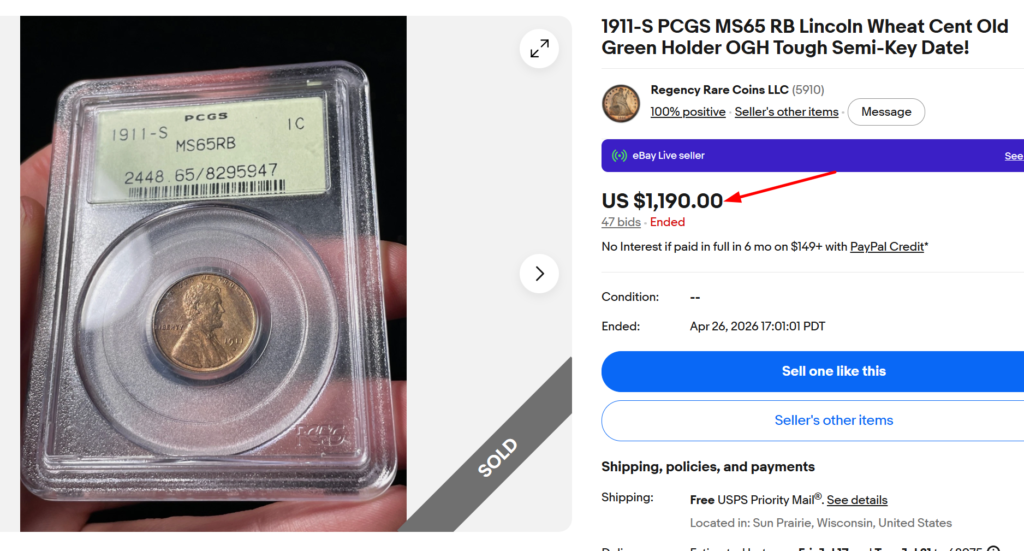
The 1911-S is a semi-key date that a lot of new collectors overlook. San Francisco struck only 4,026,000, and most were heavily used during the 1910s and 1920s, so nice examples are genuinely scarce.
Check for that “S” below the date, and pay attention to the sharpness of Lincoln’s hair and beard details for grading. Worn grade examples aren’t worth much, but a clean Mint State Red example can bring up to a thousand dollars easily.
15. 1943-S Wheat Penny Struck on a Silver Dime Planchet
Estimated Value: $2,000 to $9,000+
What to Check: Slightly smaller diameter, soft rim details
Quick Notes: 90% silver planchet, weighs ~2.5g
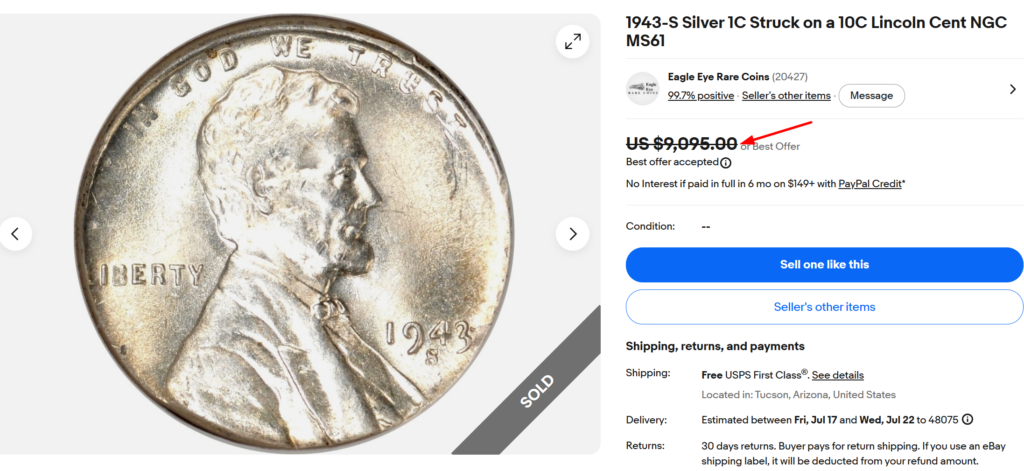
A 1943-S wheat cent got struck on a silver dime blank instead of the usual zinc-coated steel planchet. So the coin looks almost normal at first glance, since 1943 steel cents already have that silver-gray color from the zinc coating.
The softness on the rims and around Lincoln’s shoulder is a simple giveaway. The dime planchet is slightly smaller than a cent blank, so parts of the border strike weakly.
Wheat pennies are one of the most accessible coins. These are often found in jars, old rolls at the bank, in shoeboxes at estate sales. But when you know what to look for, you can spot valuable wheat pennies easily.