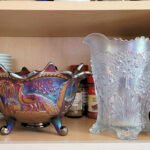

Milk glass has been around since the 16th century, but it really took off in America during the late 1800s and early 1900s. It gets its signature milky appearance from adding bone ash, tin dioxide, or other opacifiers to the molten glass mixture.
Companies like Fenton, Westmoreland, and Adelphi started mass-producing these white pieces, and they became popular for everyday use and decorative purposes. It could mimic the look of porcelain at a fraction of the cost.
Today, vintage milk glass has become seriously collectible. Certain rare patterns, colors (yes, milk glass came in colors beyond white), and manufacturer marks can fetch hundreds or even thousands of dollars!
High-Value Milk Glass Pieces Worth Money!
1. Fenton – Burmese milk Glass Epergne.png
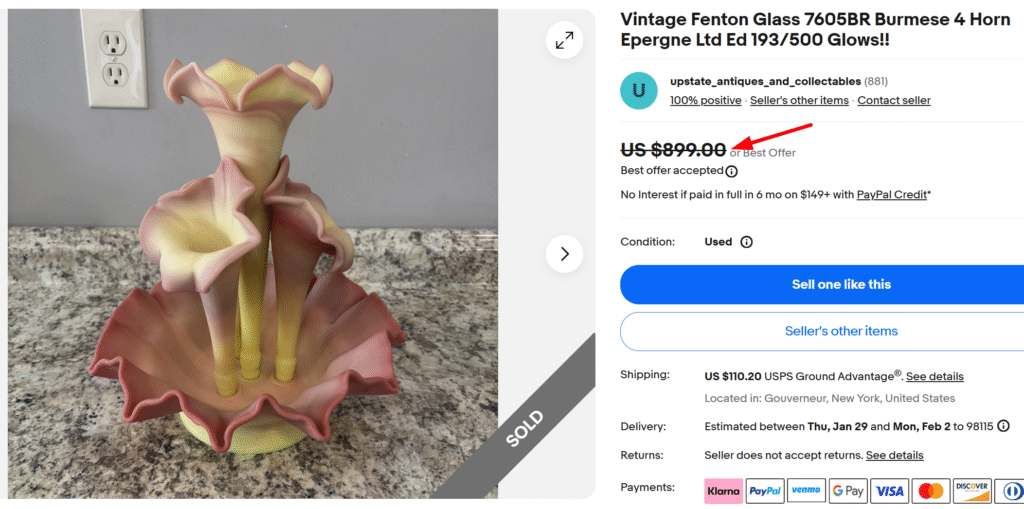
ESTIMATED PRICE – $500-$1,000
This elaborate 4-horn epergne was part of Fenton’s limited production runs, with only 193 out of 500 pieces made! Burmese glass has a unique color gradient from pink to yellow, looking exquisite!
The complex shape of this vase with multiple hand-shaped trumpets fitted into a ruffled base, and the unique milk glass color make these pieces super valuable!
2. Fenton – Hobnail Milk Glass Punch Bowl Set
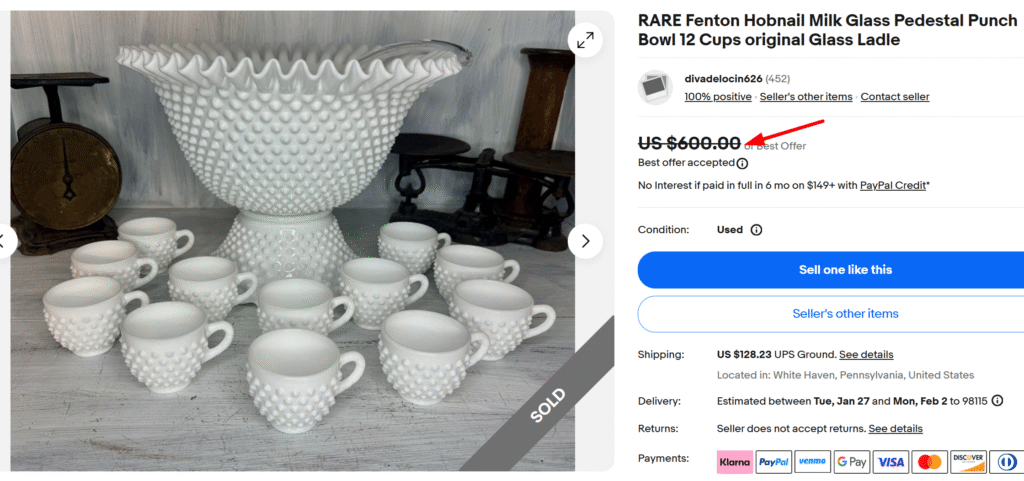
ESTIMATED VALUE – $200-$600+
Fenton’s iconic “Hobnail” is a holy grail for vintage glass collectors! The company made hobnail punch bowl sets from the 1950s through the 1980s, and they’re still super collectible. Complete sets with the original ladle, pedestal base, matching cups, and metal hooks can sell for hundreds!
3. Jeanette – Shell Pink Punch Bowl Set
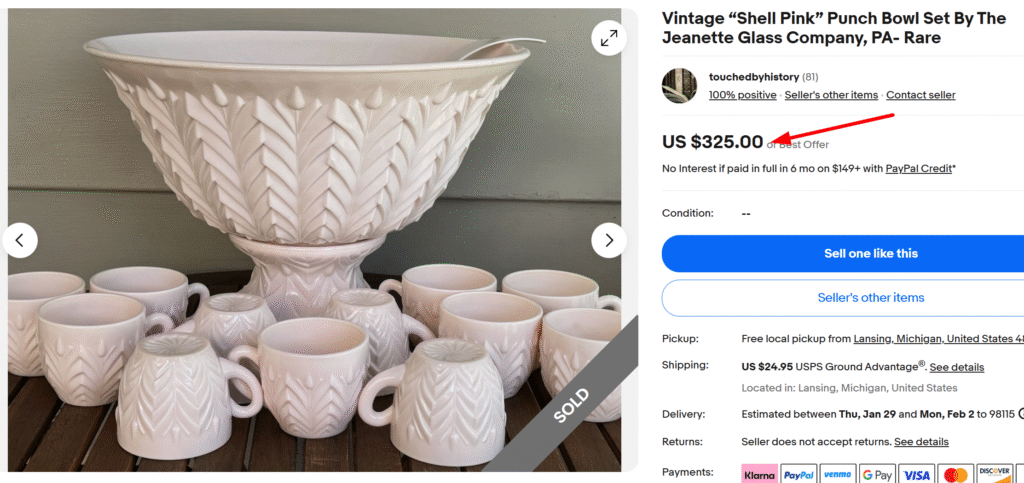
ESTIMATED VALUE – $100-$350
Jeanette introduced Shell Pink milk glass in 1958 and discontinued it just one year later, in 1959, making this extremely short-run highly collectible. This feather-pattern punch bowl set, including the bowl, pedestal base, 12 cups, and a ladle in shell pink, is quite rare!
4. Westmoreland – Jadiete Paneled Grape Bowl
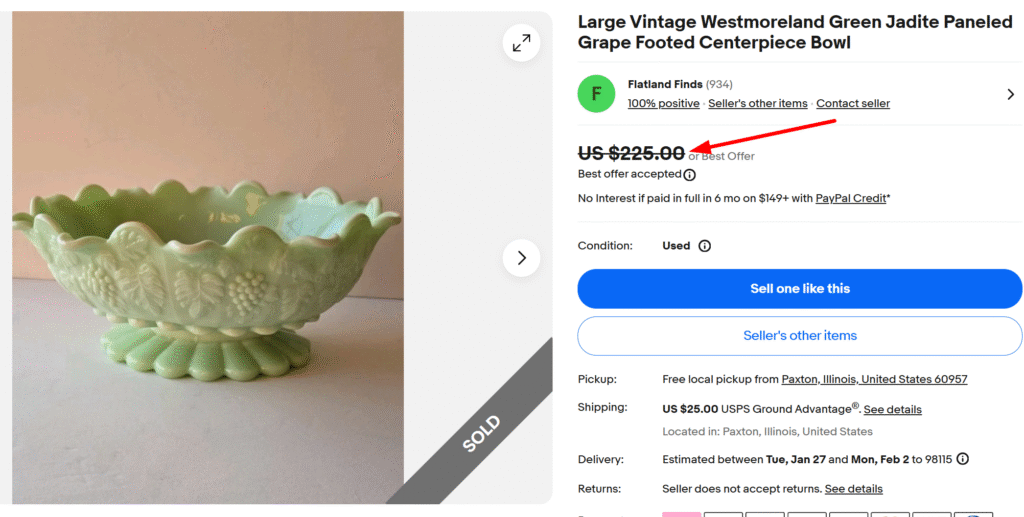
ESTIMATED VALUE – $80-$300
Green jadeite milk glass in Westmoreland’s Paneled Grape pattern is rarer than standard white versions, since it was produced in smaller quantities. Westmoreland also made this pattern in almond and crystal, but green jadite examples are particularly sought-after.
5. Boston & Sandwich – Pekingese Dog Covered Dish
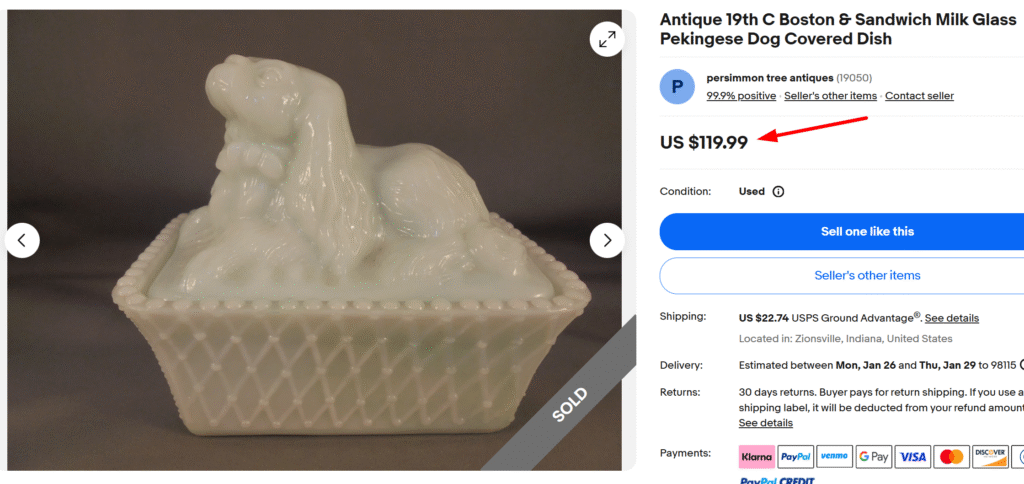
ESTIMATED VALUE – $50-$150
Boston & Sandwich Glass Company operated from 1825 to 1888, making this 19th-century covered dish a true antique. The Pekingese dog sits atop a ribbed basket-weave base with superb details. Only a few makers made Pekingese-themed pieces, making this design uncommon!
6. Atterbury – Fox on Nest Covered Dish
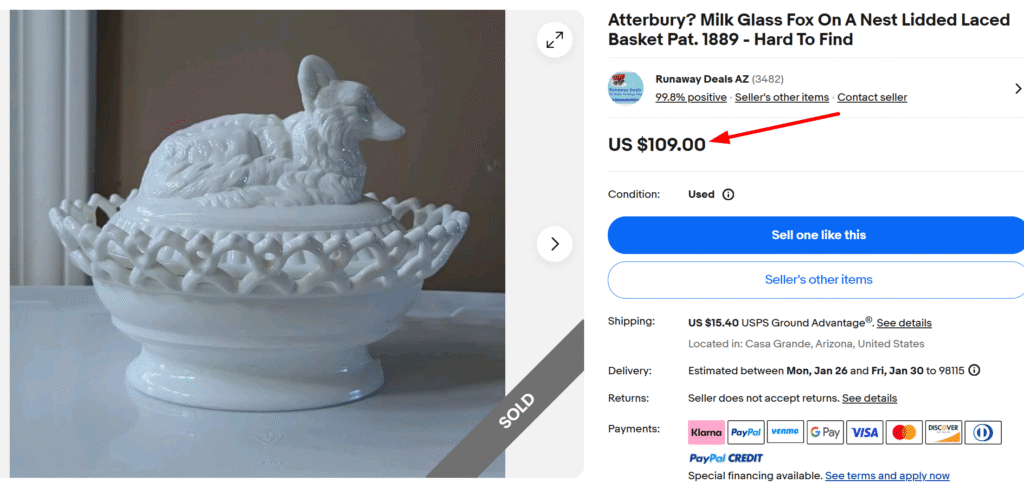
ESTIMATED VALUE – $50-$150+
Thomas B. Atterbury patented this fox design on August 6, 1889, featuring intricate detailing of fur texture, pointed ears, and molded glass eyes. The fox rests atop a lacy basket-weave base that served as both a decor piece and a covered dish.
Atterbury operated from 1859 to 1902, and authentic pieces bear the patent date on the inside of the lid. The delicate lace edge makes pristine examples scarce.
7. Westmoreland – Paneled Grape Punch Bowl Set
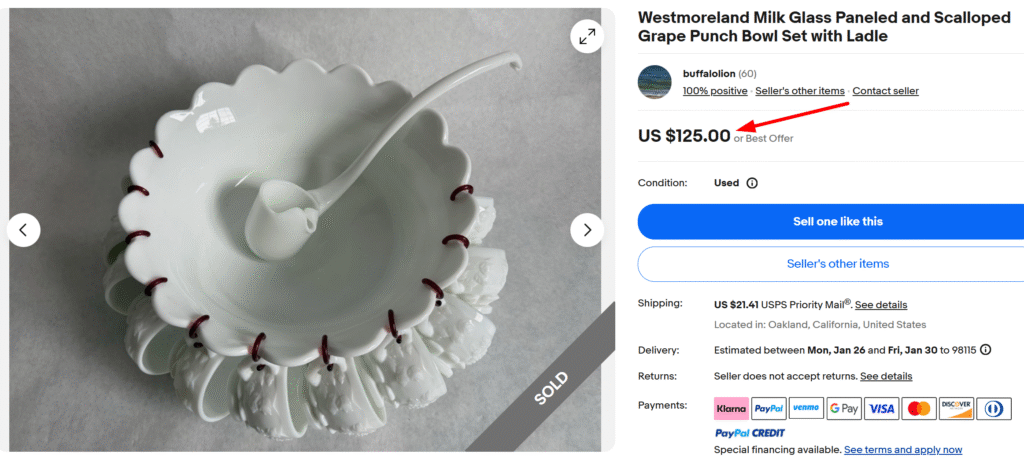
ESTIMATED VALUE – $100-$300+
This elaborate 15-piece set features Westmoreland’s signature “Grape and Vine” pattern (raised grape cluster and vine details) in raised relief across all the pieces. The pattern’s incredible detail makes complete, undamaged sets valuable. And sets with the original Westmoreland logo are also rare!
Tips for Identifying & Valuing Vintage Milk Glassware
You may find many white glassware pieces in the antique shops or garage sales, but REAL milk glass is just different! Below are some key features to spot it:
Check Visual & Physical Features:
- Hold the piece up to the light! Authentic vintage milk glass should have a slight translucency, especially around thinner edges. Blue, pink, and green milk glass varieties have it, too.
- Real milk glass has a warm, creamy white tone rather than stark white (which often indicates newer reproductions).
- Authentic milk glass tends to be heavier and thicker than modern reproductions. It should feel substantial in your hand.
Identify Marks & Makers:
If not all, many vintage milk glass pieces show some marks in different forms. These markings can help a lot in verification as well as valuation. Here’s what to look for:
- Maker’s marks – Usually found on the bottom and sometimes on the sides of the pieces. These can help identify the manufacturer (Fenton, Westmoreland, etc.)
- Mold numbers – These are also found on the base or underside and help date production and identify specific patterns.
- Paper Labels – Most pieces lose their labels, but if still attached and intact, they can help verify the maker and the specific line or collection.
Here are some key Manufacturers to know:
- Fenton – Often marked with “Fenton” in script or an oval logo
- Westmoreland – Look for a “W” inside a keystone or “WG” marks
- Atterbury – Early producer, pieces rarely marked but identifiable by pattern
- Imperial Glass – Sometimes marked with an “I” superimposed over a “G.”
Recognize the Pattern & Color:
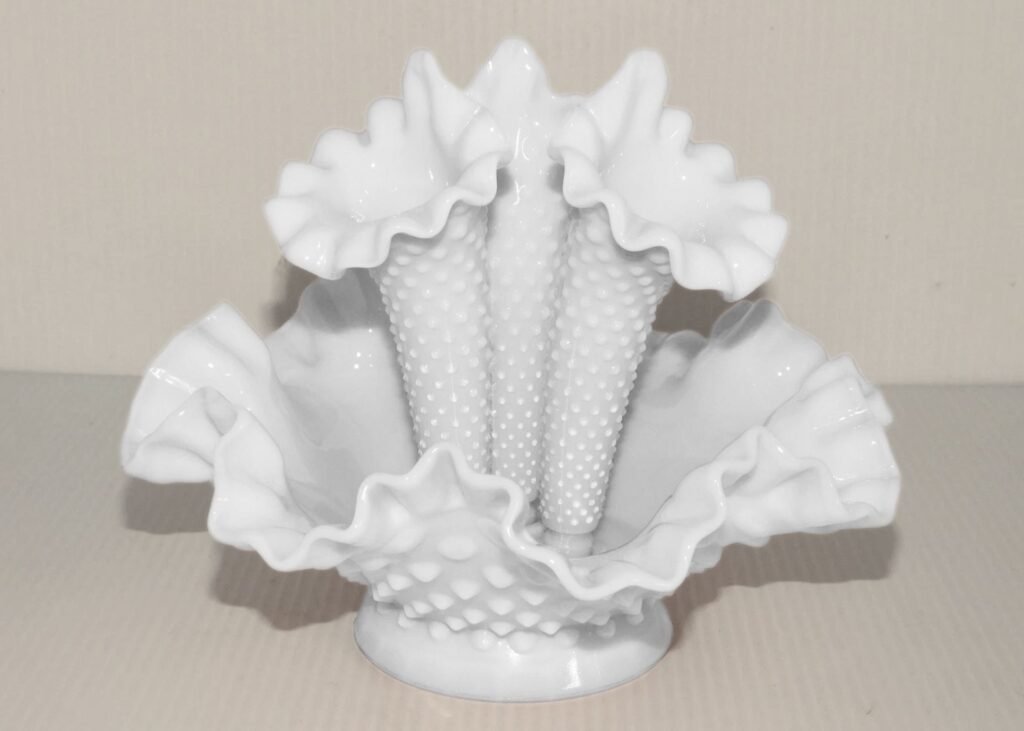
Milk glass was released in numerous patterns by different makers, with Fenton’s “Hobnail” being the most popular one! Certain patterns command premium prices because of limited production runs or unique designs.
So, try to identify the piece’s pattern using brand catalogs, guides, and online references. “Hobnail,” “Silvercrest,” and “Paneled Grape” are some of the most popular milk glass patterns!
Similarly, unusual or experimental colors can multiply the value several times that of standard white pieces. Some of the most common milk glass colors are:
- Jadeite (milky green)
- Custard Glass (Opaque Yellow-Green)
- Burmese & Rosalene (The “Blush” Colors)
- Delphite Blue (Opaque Pastel Blue)
Assess the Condition:
Closely examine your vintage milk glassware for chips, cracks, or roughness along edges and raised details. These minor damages can significantly reduce the value (around 20-50%).
Also, check for cloudiness or staining inside vases and containers, and wear on bases where pieces sat on surfaces.
Collector’s Tip: Minor manufacturing flaws, such as bubbles, slight imperfections, are acceptable and don’t usually impact value.
Check the Size & Completeness:
Size also plays a huge role in the value of vintage milk glassware. Larger serving pieces, punch bowls, and elaborate centerpieces cost more than small pieces like bowls and cups.
Also, complete sets, like a whole punch bowl set, cups, and a ladle, are worth more than the sum of their individual pieces.