
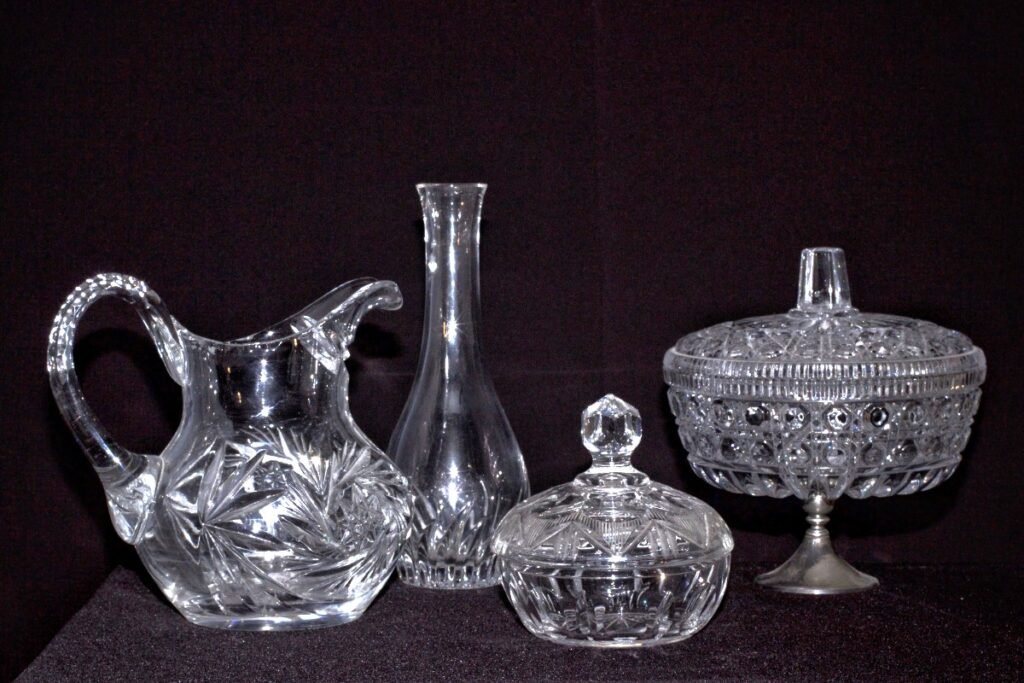
A vintage crystal wine glass and a regular wine glass might look similar at first glance, but there is a huge difference: one can cost $5, and the other can sell for up to $5,000 at an auction!
That’s right. Some vintage crystal glassware pieces are fetching thousands of dollars today. The trick is knowing what separates a valuable Baccarat goblet from ordinary glassware.
Here’s your complete guide to identifying and valuing vintage crystal glassware, with real examples of rare finds worth serious money!
About Crystal Glassware!
Crystal glassware, as we know it, began in England during the late 1600s. George Ravenscroft developed lead crystal (also called flint glass) around 1676, creating a material that was clearer, heavier, and more brilliant than standard glass.
This innovation changed the glassmaking industry and established England as a crystal powerhouse for the next two centuries. By the mid-1700s, Irish crystal makers in Waterford became popular, producing some of the most sought-after pieces!
The 1800s saw the rise of European manufacturers, like Baccarat and Lalique. American companies began crystal production quite late, with Steuben establishing itself in 1903.
Overall, crystal production stretched from the Victorian era through the mid-20th century. While production methods have evolved, vintage pieces from these historical periods remain highly collectible today!
How to Identify Authentic Crystal Glassware?
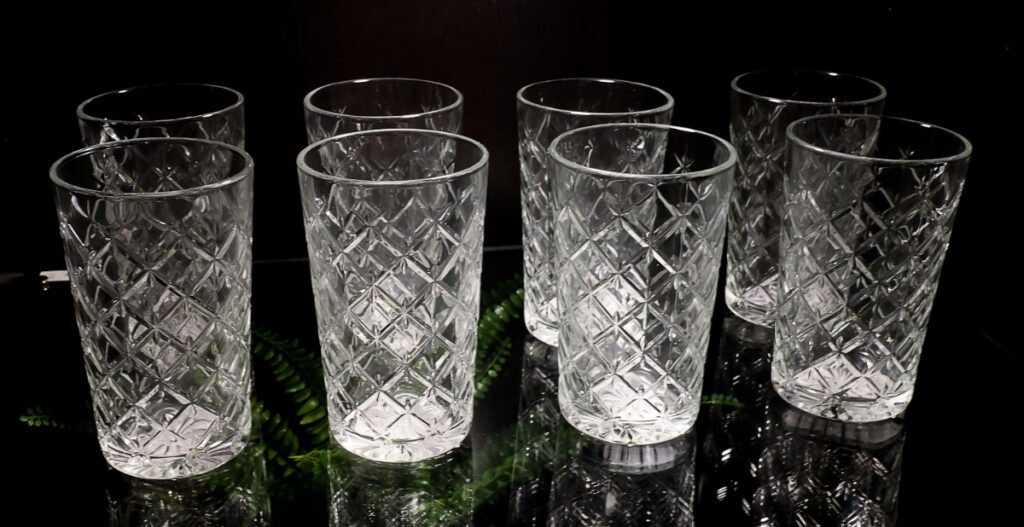
Distinguishing genuine crystal from ordinary glass isn’t that difficult; you just need careful observation and a few simple tests!
Physical Features:
- Weight and Density – Authentic Crystal contains lead oxide (about 24% or more in full lead crystal), which makes it noticeably heavier than regular glass. Pick up a piece and compare it to a standard drinking glass; the weight difference should be obvious.
- Clarity and light Refraction – Crystal shows great clarity with minimal bubbles or imperfections and creates small rainbows (similar to a prism) against natural light. The higher the lead content, the better the clarity and refraction.
- Temperature – Hold it against your cheek briefly. Real Crystal feels cooler to the touch initially and stays cool longer than glass because it conducts heat differently.
The Sound Test:
The ring test is perhaps the most satisfying method!
Gently tap the rim of a crystal piece with your fingernail or flick it lightly with a moistened finger. Authentic crystal produces a clear, resonating musical tone and gradually fades. Regular glass makes a dull clunk with no resonance.
Examining Cuts and Patterns:
Quality crystal has sharp, precise cuts with clean edges that feel crisp to the touch. Plus, the pattern is mostly symmetrical and deeply etched.
Simply, run your fingers across the surface. You should feel distinct ridges and valleys in cut crystal. Pressed glass patterns feel smoother and less defined.
Maker’s Marks:
While this is the most reliable way of identifying, not all vintage crystalware bears marks. But many pieces do!
So, examine the bottom carefully under good lighting. Marks may be etched, stamped, or molded into the glass. Prestigious makers like Waterford, Baccarat, Lalique, and Steuben typically marked their pieces, though marking practices varied by era and manufacturer.
Finding the Value of Vintage Crystal Glassware!
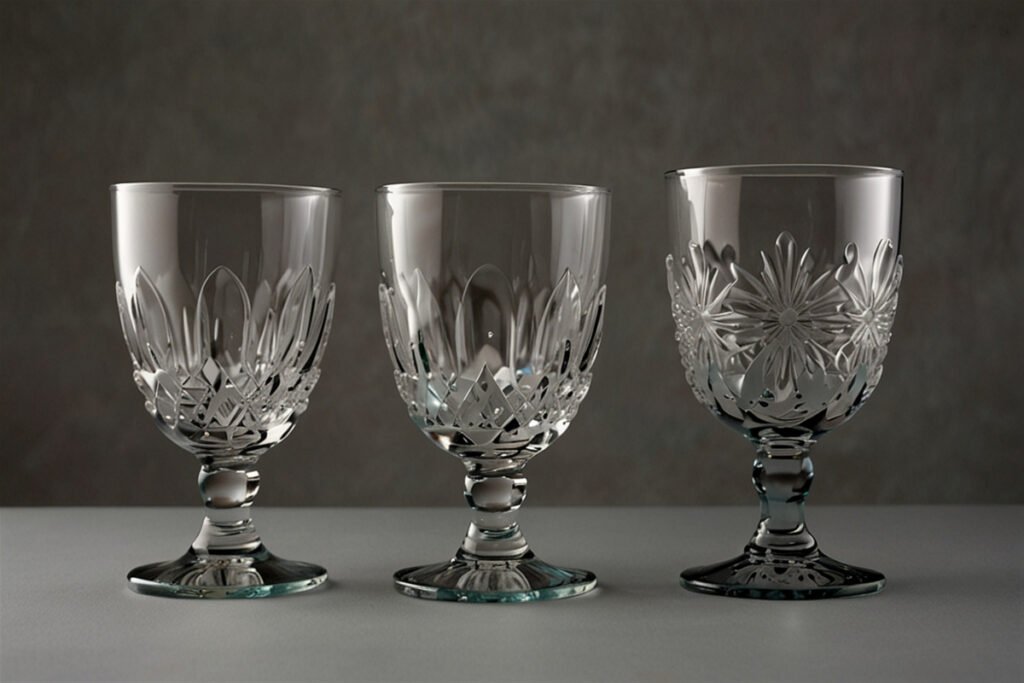
To find out why one crystal piece sells for thousands while another sells for twenty dollars, you need to examine several key factors, as follows:
- Brand Reputation – It plays a huge role in pricing. Pieces from legendary houses like Baccarat, Waterford, Saint-Louis, Lalique, and Steuben are usually worth the most, for their superior craftsmanship, innovative designs, and unmatched quality.
- Rarity – The rarer a crystal piece, the more valuable it is! Things that indicate rarity are: limited production runs, discontinued patterns, rare color variations, experimental design, or pieces made for specific events or royalty; these items hold more value as they become harder to find.
- Condition – Critical, as collectors want pristine pieces with no damage and brilliant clarity. Chips, cracks, cloudiness, and repairs significantly decrease worth. Even minor rim chips can reduce value by 50% or more.
- Pattern Complexity – Intricate hand-cut patterns that needed skilled artisans get more respect than simple designs. Likewise, art glass pieces with unique colors or techniques, like cameo glass, sell for higher prices!
- Completeness: Collectors usually pay more for complete sets they can actually use or display together. So, a full set in a discontinued Waterford pattern will be worth more than the sum of its individual pieces. Single pieces can also be valuable if exceptionally rare!
- Age: Older crystal doesn’t automatically become more valuable. But a mass-produced crystal bowl from 1920 might be worth less than a limited-edition piece from 1980. Also, items from popular periods are more valuable, like
- Art Nouveau (1890-1910)
- Art Deco (1920s-1930s)
- Mid-Century Modern (1950s-1960s)
Most Valuable Crystal Glassware Pieces Ever Sold!
Let’s take a look at some rare vintage crystal glassware items that can actually sell for big money!
1. Waterford Crystal Nativity Set
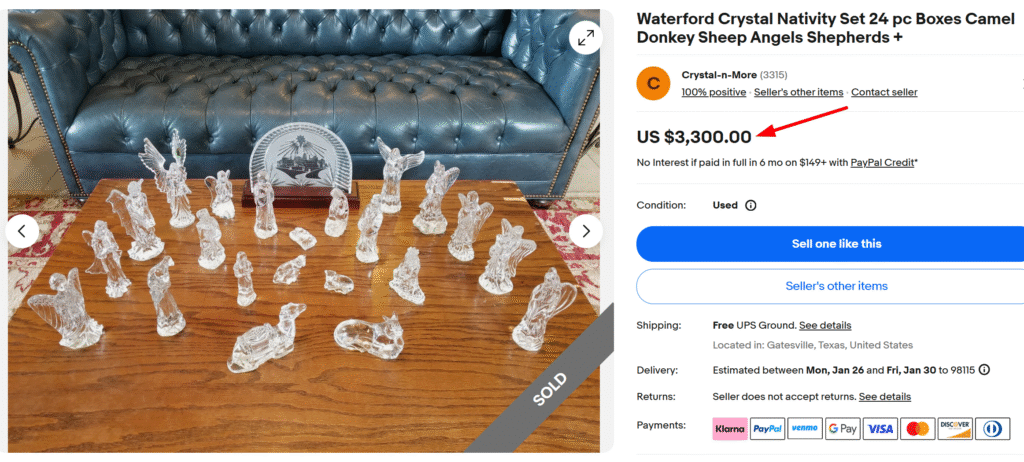
SOLD FOR $3,300
Waterford produced this Christmas nativity collection from 1994 to 1999 and then retired it. It includes Mary, Joseph, baby Jesus, three wise men, shepherds, angels, animals (camel, donkey, sheep), and the manger backdrop.
These pieces were mostly sold individually, making complete sets super rare!
2. Baccarat Liquor Cave Crystal Glassware
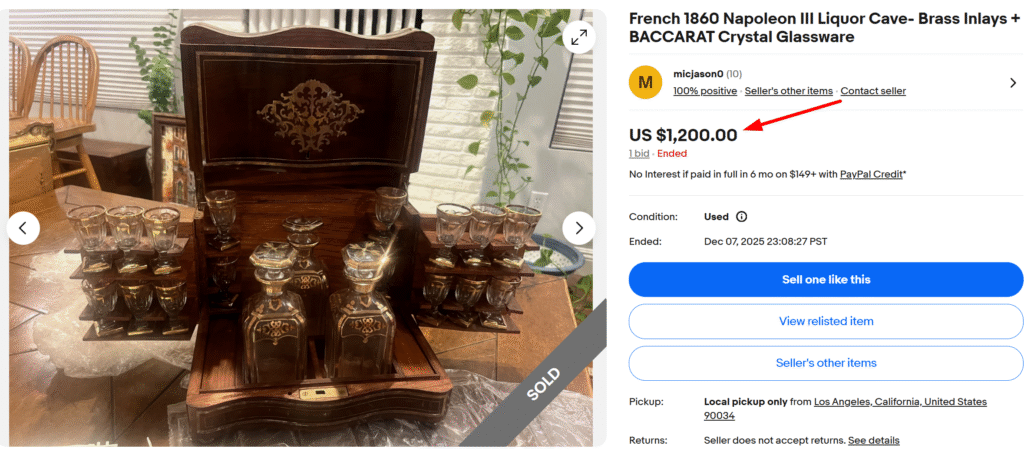
SOLD FOR $1,200
This rare Napoleon III-era antique “cave à liqueur” service set from Baccarat features detailed Boulle-style brasswork and hand-painted gold details! The set includes four crystal decanters and sixteen glasses housed in a decorated ebonized wood box!
3. Saint-Louis Tommy Ruby Red Glasses
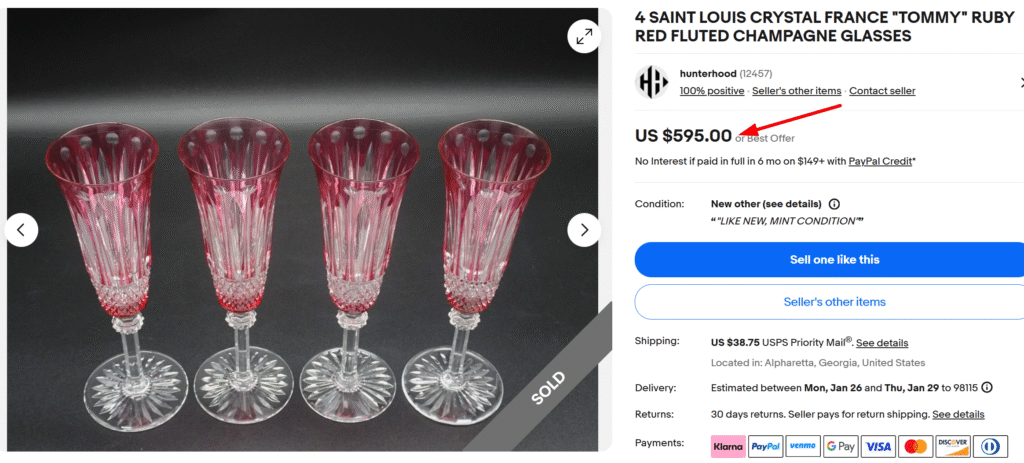
SOLD FOR $595
The Tommy pattern debuted in 1928 and gained fame at a 1938 Versailles banquet for King George VI. Ruby red colored crystal glass was made by adding gold to the mixture, making them expensive and limited. Finding a matching set of four in mint condition is a big deal!
4. René Lalique Bacchantes Vase
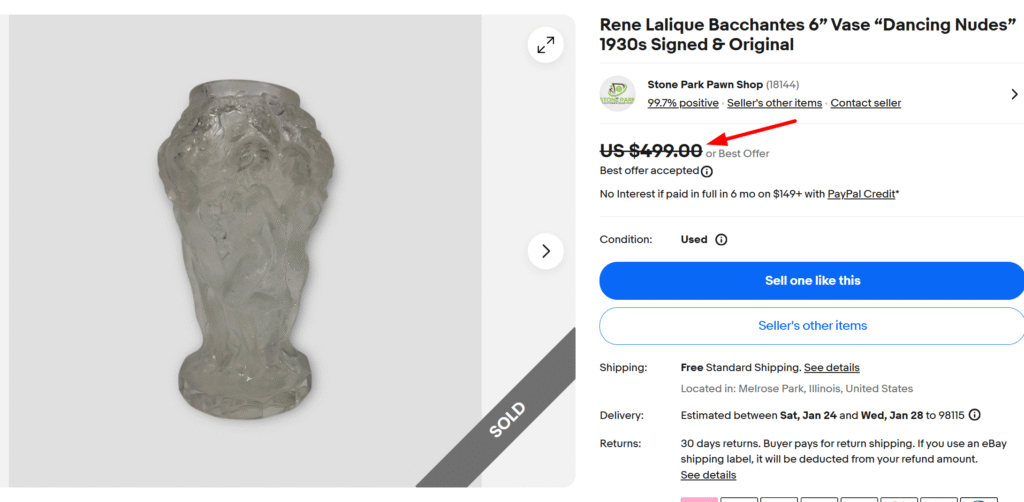
SOLD FOR ALMOST $500
This 6-inch frosted Bacchantes vase features dancing nude female figures in high relief circling the vase, an original 1927 design. The frosted finish with a slight gray patina is characteristic of authentic vintage examples.
5. Baccarat Harcourt Water Goblets
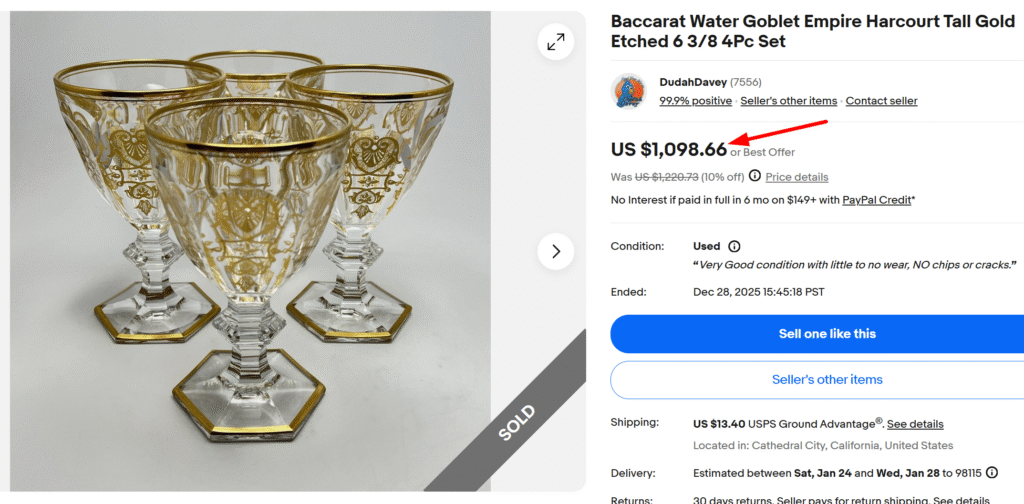
SOLD FOR ALMOST $1,100
This goblet set features the Empire variation of Baccarat’s classic “Harcourt” pattern, a more luxurious version with gold gilded decoration on the flat-cut bowl and foot. This luxury crystal design is known for its unique architectural form with a hexagonal base and six flat-cut facets!
6. Steuben “Heritage Gazelle” Vase Glass
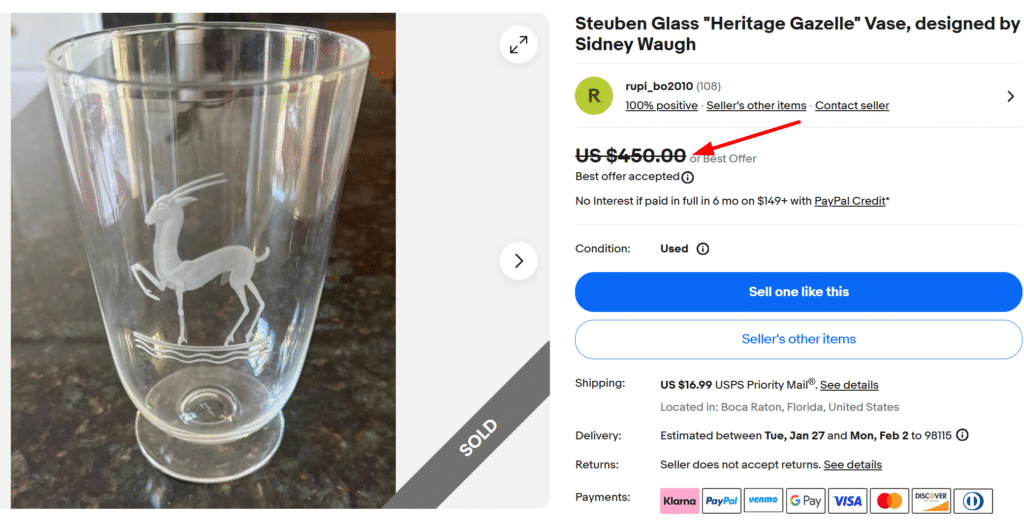
SOLD FOR ALMOST $450
This piece is from the Heritage Series reissue in 1989, based on Sidney Waugh’s original 1935 “Gazelle Bowl” design. This vase features copper-wheel-engraved gazelles on clear crystal! The Heritage Gazelle vases were limited editions released as part of Steuben’s “Heritage Series!”